

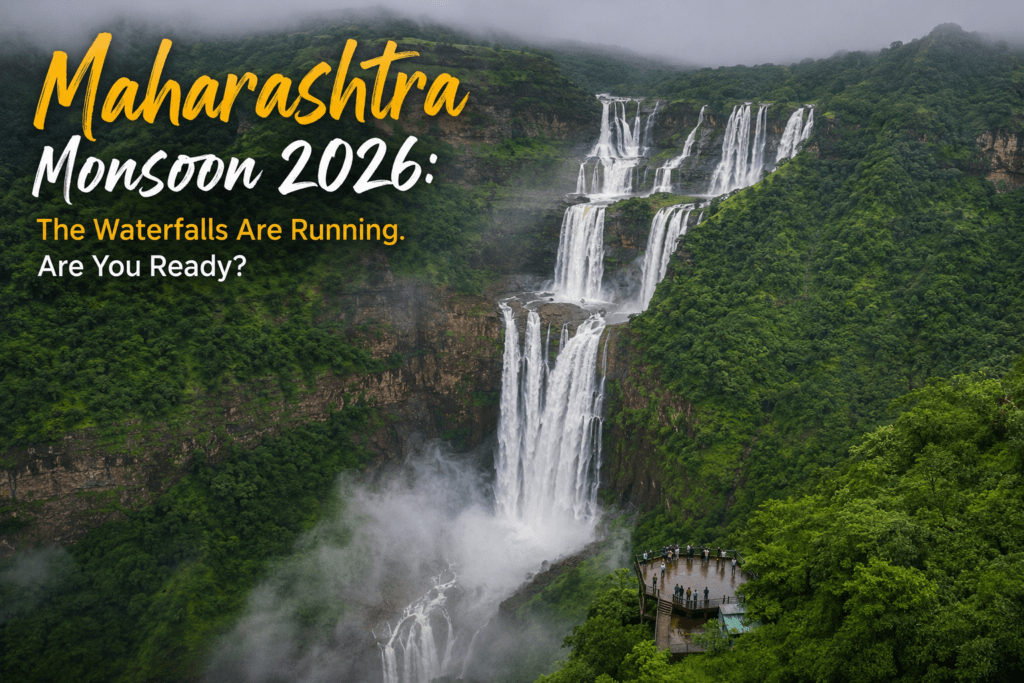
IMPORTANT FOR 2026 MONSOON SEASON: Maharashtra receives some of India’s heaviest rainfall — certain waterfall zones receive over 3,000mm annually. Swimming near waterfalls during peak monsoon (July–August) is genuinely dangerous — flash floods, sudden surge in water level, and slippery rocks cause fatalities every monsoon season. This guide includes specific safety advisories for every waterfall. Please read the safety section before your visit.
The Monsoon That Changes Everything
My first Maharashtra waterfall was an accident.
I was 23, driving from Pune to Nashik in the second week of July, and somewhere on the Nashik highway, the rain got heavy enough that I pulled over at what looked like a roadside viewpoint. I stepped out of the car into warm rain, walked to the railing — and stopped.
There was a waterfall where there had been no waterfall on any map I’d seen. A wide, white cascade falling from the basalt cliff above, into a pool below that was already turquoise-green and full, surrounded by grass so impossibly green it looked like someone had turned the saturation up on the entire valley.
I stood there for forty minutes in the rain. My companion, who had been asleep in the car, woke up, came to find me, and then also stood there for twenty minutes without saying anything.
We didn’t make it to Nashik that day.
That’s the thing about Maharashtra’s waterfalls that no Instagram reel can convey — they appear suddenly, they’re often better than expected, and they have a specific quality in monsoon light that makes normal life feel, temporarily, like something you left somewhere and don’t immediately need to collect.
Maharashtra has over 100 named waterfalls and several hundred unnamed seasonal cascades that appear in the June-September window and vanish by December. This guide covers 30+ of them — popular, offbeat, and a few that only the villagers at the base know about.
The monsoon of 2026 begins in June. You have time to plan this properly. Let’s start.
Quick Reference: Maharashtra Waterfalls 2026
| Category | Details |
|---|---|
| Best season | Monsoon: July–September (peak flow) |
| Post-monsoon | October–November (safe, still flowing, clearer views) |
| Avoid | December–May (most waterfalls dry or minimal) |
| Highest waterfall | Vajrai/Thoseghar (500m+) — highest in Maharashtra |
| Closest to Mumbai | Chinchoti (60km), Pandavkada (45km), Bhivpuri (85km) |
| Best for families | Lingmala (Mahabaleshwar), Kune Falls (Lonavala), Someshwar (Nashik) |
| Best for adventure | Devkund, Bhivpuri (rappelling), Malshej (canyoning), AMK region |
| Best for content creators | Devkund, Thoseghar, Malshej Ghat, Dudhsagar, Amboli |
| Free entry | Most — some forest entry fees ₹20–100 |
| Emergency helpline | 112 |
Seasons — The Single Most Important Thing to Get Right
Why Monsoon Is the Answer (And Why You Need to Be Smart About It)
Monsoon is here, and it’s the perfect time to explore the breathtaking waterfalls of Maharashtra. From lush greenery to the thundering sounds of water cascading down, these natural wonders offer an unforgettable experience.
This is true. It is also incomplete.
Maharashtra’s monsoon is not a gentle affair. The Western Ghats receive 200–400cm of rainfall in four months. The waterfalls that look photogenic in your friend’s September Instagram are, in July, roaring walls of water that have killed people who got too close without understanding what they were looking at.
The intelligent approach: monsoon is the right season — but timing within the monsoon matters enormously.
The Month-by-Month Guide
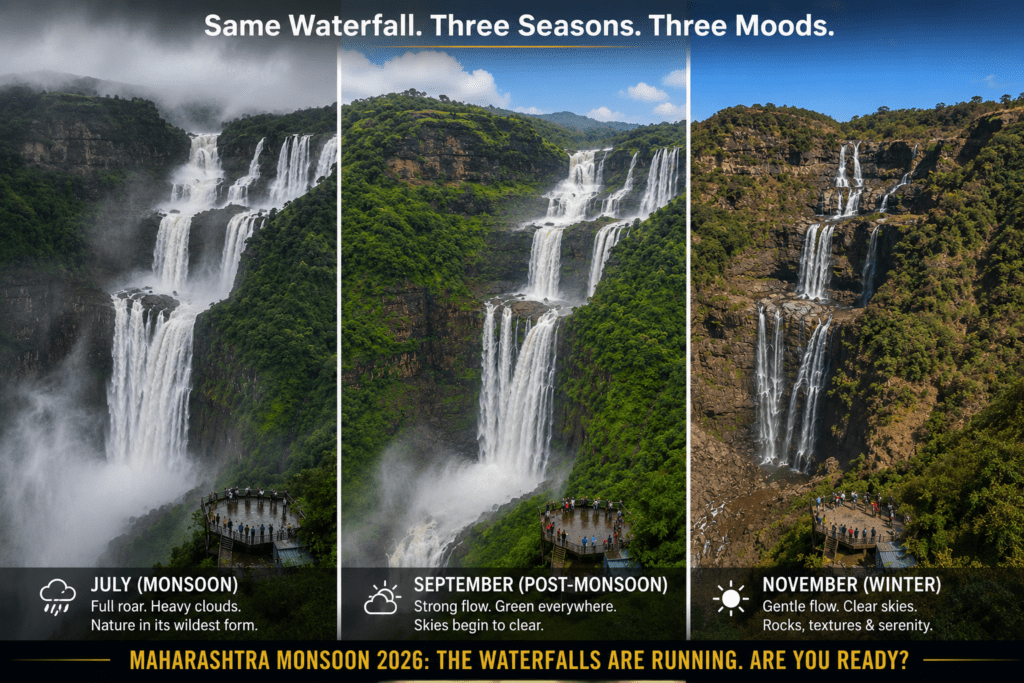
June (Early Monsoon) — ⭐⭐⭐⭐ The monsoon arrives on the Konkan coast around June 1–5 and reaches the Sahyadri range within a week. By mid-June, waterfalls that were completely dry are already running. The advantage: trails are not yet crowded, water levels are rising but not yet dangerous, the first green flush of the hills is the most vivid of the year.
Best for: Waterfalls accessible by road (Thoseghar, Umbrella Falls, Kune Falls), early monsoon photography, avoiding weekend crowds that peak in July–August.
July–August (Peak Monsoon) — ⭐⭐⭐⭐⭐ (WITH CAUTION) This is when Maharashtra’s waterfalls are at their most spectacular — and their most dangerous. The Thoseghar main cascade roars at maximum volume. Devkund’s plunge pool fills completely. Malshej Ghat becomes a series of hundreds of waterfalls visible from the road. The scene is extraordinary.
The caution: July–August waterfall levels can surge rapidly and without warning after heavy rainfall upstream. Never enter the water in July–August except at designated safe zones. Never trek to waterfalls in heavy ongoing rain — trails wash out and water levels spike unpredictably.
Best for: Viewpoint waterfalls (Thoseghar, Malshej, Randha), experienced trekkers (Devkund, Bhivpuri), photographers.
September — ⭐⭐⭐⭐⭐ (BEST OVERALL) September is the sweet spot that every experienced Maharashtra waterfall person recommends — and that most first-timers miss by coming in August. The rain is lighter (not stopped — still monsoon), the trails are firm enough for confident walking, the waterfalls are still at excellent volume, and the crowds of August have reduced. Thoseghar Falls is best visited during the monsoon season from July to November when the cascades are at their fullest and most spectacular.
Best for: All waterfalls. September is the month to plan.
October–November (Post-Monsoon) — ⭐⭐⭐⭐ The rain stops, the trails dry, and most major waterfalls continue running from the stored groundwater and slow drainage of the Ghats. The views are clearer, the air is cooler, and some waterfalls (Devkund, Lingmala) are actually safer for swimming in October than in August. The atmosphere is less dramatic but more comfortable.
Best for: Families with children, those who want to swim, beginners, trekking-to-waterfall combinations.
December–May — ❌ Most Sahyadri waterfalls are dry or minimal. The Konkan-region waterfalls (Amboli, Sawatsada) hold water slightly longer. Perennial rivers create some year-round flow at a few locations (Lingmala’s mini-fall, Someshwar Nashik). Not recommended for waterfall tourism.
Maharashtra Fort Trek Guide 2026
The Waterfalls — Complete 2026 Guide
TIER 1: ICONIC POPULAR WATERFALLS
1. THOSEGHAR WATERFALLS — Maharashtra’s Most Spectacular Cascade
Location: Thoseghar village, Satara District Google Maps address: Thoseghar Waterfalls, Thoseghar, Satara, Maharashtra 415013 Height: 500+ metres (main cascade) — among the tallest in India Type: Series of multiple cascades — main plunge + multiple subsidiary falls Distance from Mumbai: ~280km via Mumbai-Pune Expressway and NH-48 Distance from Pune: ~140km via NH-48 (Satara highway) Distance from Satara: ~26km (40 minutes by road) Entry fee: ₹30 per person (Maharashtra Forest Department) Timings: 9am–5pm (closed on entry after 4pm)
Best season: July to November
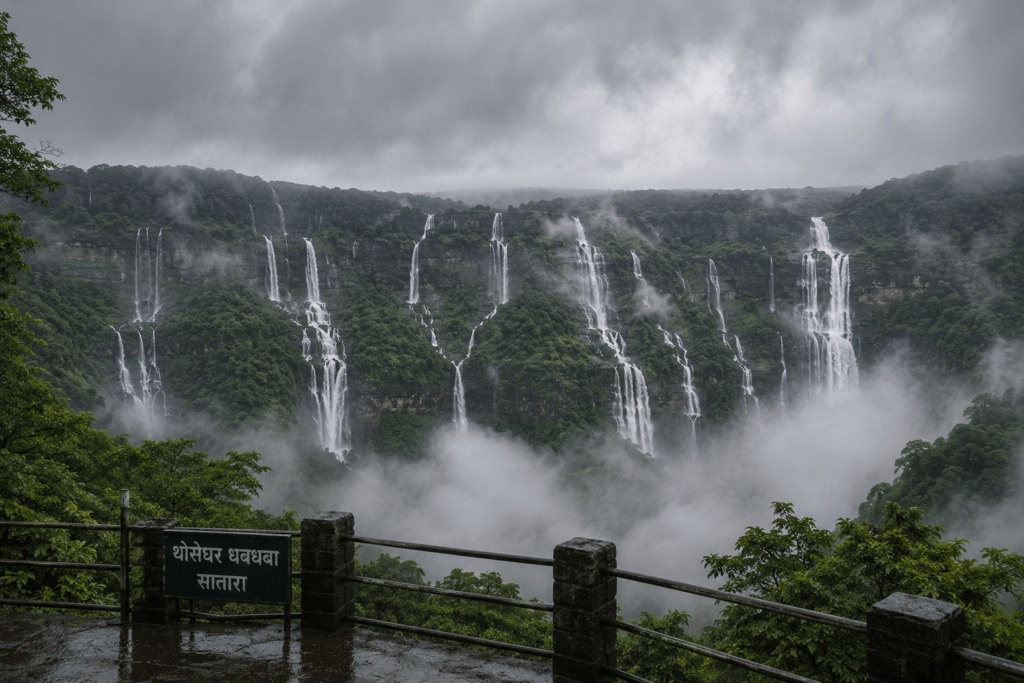
The experience: Tucked away in the serene village of Thoseghar, this is one of the most spectacular waterfalls in Maharashtra. Cascading from a height of over 500 meters, Thoseghar Waterfalls are a visual treat during monsoon when the entire region turns misty and mystical. The viewing platform gives a panoramic view of the multiple falls. What sets this waterfall apart is the way it forms a series of mini-falls alongside the main plunge, creating a layered view that photographers love.
The Thoseghar experience is unique in Maharashtra because it’s not one waterfall — it’s a series of 15–20 cascades of varying heights falling simultaneously down a wide cliff face. The viewing platforms allow you to see multiple falls simultaneously. In peak monsoon, the entire cliff face appears to be flowing.
There’s a hidden viewpoint slightly off the main trail, known only to a few regular visitors, where you can sit quietly, eat your bhajiyas, and hear the waterfall echo across the valley, offering a serene and peaceful experience.
Difficulty: Easy — well-maintained viewing platforms, minimal walking Who can do it: All ages including children and seniors Trek from base: 10-minute walk from parking to main viewpoint
Pros:
- The most visually dramatic waterfall in Maharashtra
- Multiple cascades visible simultaneously from one viewpoint
- Well-maintained by forest department with proper pathways
- Entry fee ensures some crowd management
- Combine with Kaas Plateau (UNESCO wildflower plateau, 22km away) and Sajjangad Fort
Cons:
- Entry to the base of the main fall is restricted for safety
- 5pm closing means late arrivals miss afternoon light
- Satara is 3.5–4 hours from Mumbai — requires planning
- Very busy July–August weekends
Activities beyond viewing:
- Photography from multiple platforms (different falls, different angles)
- Combine with Kaas Plateau (UNESCO site) — September wildflower season
- Sajjangad Fort (Sant Ramdas samadhi) — 30 minutes from Thoseghar
Transport:
- By bus: Pune to Satara (MSRTC, 2 hours, ₹180) → Satara to Thoseghar (auto/taxi, 26km, ₹400–600)
- By car: Mumbai → 280km | Pune → 140km. Good road throughout.
- By 2-wheeler: Pune to Thoseghar is a beautiful ride — NH-48 through Khandala, Satara bypass.
Places to stay near Thoseghar:
- Satara city hotels: Budget ₹800–1,500 | Mid-range ₹2,500–5,000
- MTDC Resort, Kaas (seasonal): ₹3,000–5,000/night
- Homestays in Satara district: ₹600–1,200 including meals
Itinerary from Pune (1 day):
- 6am: Depart Pune by car
- 10am: Kaas Plateau (en route, Sept–Oct for wildflowers)
- 11:30am: Thoseghar Waterfalls
- 1pm: Lunch at Satara
- 3pm: Sajjangad Fort (optional)
- 7pm: Return to Pune
Budget per person (1 day from Pune):
- Budget (shared cab + entry): ₹800–1,200
- Mid-range (own car + meals): ₹1,500–2,500
Content creator potential: ⭐⭐⭐⭐⭐ — Multiple simultaneous waterfalls, layered photography angles, mist photography, monsoon drama at full volume. Best Reels/YouTube content in October when mist clears slightly for depth visibility.
2. DEVKUND WATERFALL — The Most Beautiful Plunge Pool in Maharashtra
Location: Near Bhira village, Raigad District Google Maps address: Devkund Waterfall, Bhira Village, Raigad, Maharashtra 402306 Height: Approximately 80 metres Type: Plunge waterfall into a natural pool Distance from Mumbai: ~170km via Khopoli Distance from Pune: ~110km via Tamhini Ghat Trek distance: 5–6km one way from Bhira village Trek duration: 2.5–3 hours one way (easy-moderate pace)
Best season: August–October (July is often too dangerous for the pool)
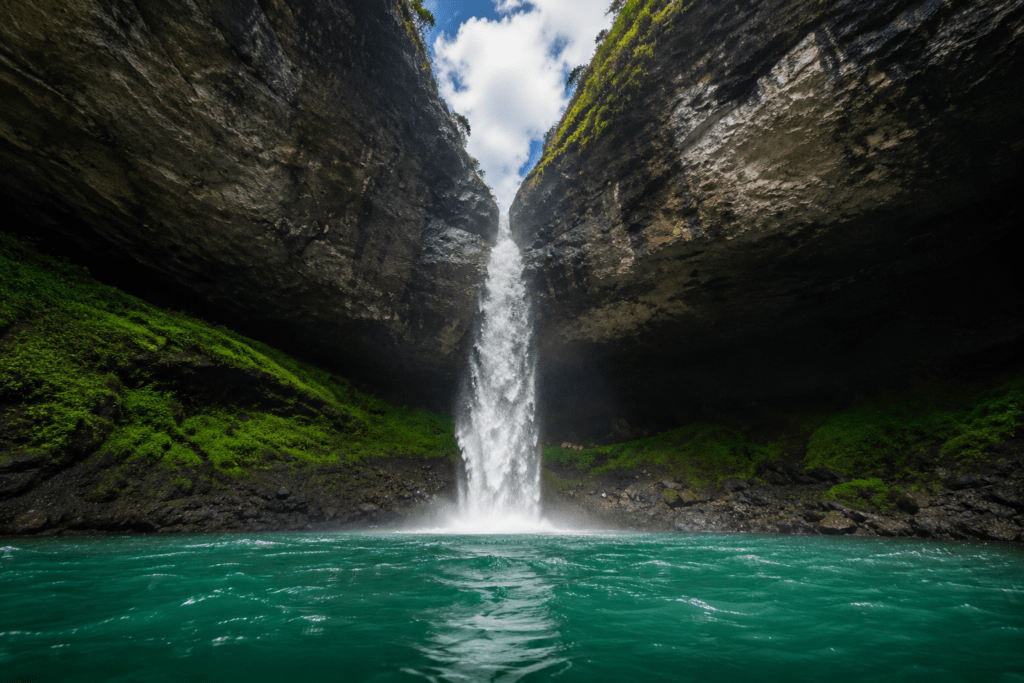
The experience: Generally described as the “Bathing Pond of Gods,” Devkund is a scenic plunge waterfall surrounded by dense forests. The journey to Devkund is itself a treat, cutting across verdant trails and streams that gurgle through them. The natural lake created at the foot of the falls is the perfect place for a refreshing dip, and thus it is popular for day excursions and picnics.
Devkund is the waterfall that people return to. The plunge pool — a natural oval of deep emerald-green water at the base of an 80-metre drop — is the finest swimming hole in Maharashtra. In September-October, when the current in the pool has settled from peak monsoon rage, swimming to the base of the waterfall itself is possible. This is one of the most memorable natural swimming experiences available anywhere in India.
Devkund Waterfall, near Bhira in Maharashtra, is a stunning monsoon destination for adventure seekers. The brief forest hike to Devkund is picturesque, particularly when it rains and tiny streams and waterfalls emerge.
Difficulty: Easy to Moderate — the trek is through forest with some stream crossings Who can do it: Ages 10+ with reasonable fitness. Stream crossings require care in peak monsoon. Best month for swimming: September–October (July–August current too strong)
Pros:
- The plunge pool is extraordinary — one of the finest natural swimming spots in Maharashtra
- The forest trek to reach it is itself beautiful — multiple small waterfalls visible en route
- Relatively uncrowded compared to Lonavala/Mahabaleshwar waterfalls
- Camping possible at Bhira village (local operators available)
Cons:
- No facilities at the waterfall itself — pack your food and water
- The current in July–August is dangerous for swimming — strictly viewpoint only
- Forest department may restrict entry on some monsoon weekends (check before going)
- Last 15km to Bhira is a narrow road — difficult at night or in heavy rain
Activities at Devkund:
- Swimming in the plunge pool (September–October only)
- Photography of the emerald pool and the cascade
- Picnic at the riverside below the falls
- Night camping at Bhira village (advance booking required)
Transport:
- By car: Mumbai → 170km via Khopoli-Kolad or via Pune-Tamhini. The Tamhini Ghat route from Pune (110km) is recommended for its scenic drive.
- By train: Mumbai → Karjat (local train, ₹60), then private taxi to Bhira (45km, ₹1,500–2,000)
- By 2-wheeler: Possible but the Tamhini route has sharp curves — experienced riders only
Places to stay:
- Bhira village homestays: ₹500–1,000/person including meals
- Kolad campsites: ₹1,500–3,000/person (organized camping with meals)
- Tamhini Ghat resorts: ₹4,000–10,000/night (mid-range to premium)
Itinerary from Mumbai (overnight):
- Friday 5pm: Depart Mumbai via Khopoli
- Friday 8pm: Bhira village — dinner and sleep (homestay ₹500)
- Saturday 6am: Begin trek to Devkund
- Saturday 9am: Devkund — swim (September/October), photography
- Saturday 12pm: Lunch at riverside
- Saturday 2pm: Return trek
- Saturday 5pm: Back at Bhira, drive Mumbai
- Saturday 9pm: Mumbai
Budget per person (overnight): ₹1,500–2,500
Content creator potential: ⭐⭐⭐⭐⭐ — The emerald pool is extraordinary for underwater photography, the forest trail has multiple small cascade moments, and the main plunge with the pool reflection is one of the best waterfall shots in Maharashtra.
3. KUNE FALLS — The Three-Tiered Giant Near Lonavala
Location: Between Lonavala and Khandala, Pune District Google Maps address: Kune Falls, Khandala, Pune, Maharashtra 410301 Height: 200 metres (14th highest waterfall in India) Type: Three-tiered waterfall Distance from Mumbai: ~80km via Mumbai-Pune Expressway Distance from Pune: ~70km via Mumbai-Pune Expressway Trek from viewpoint: 5 minutes from the road
Best season: July–September
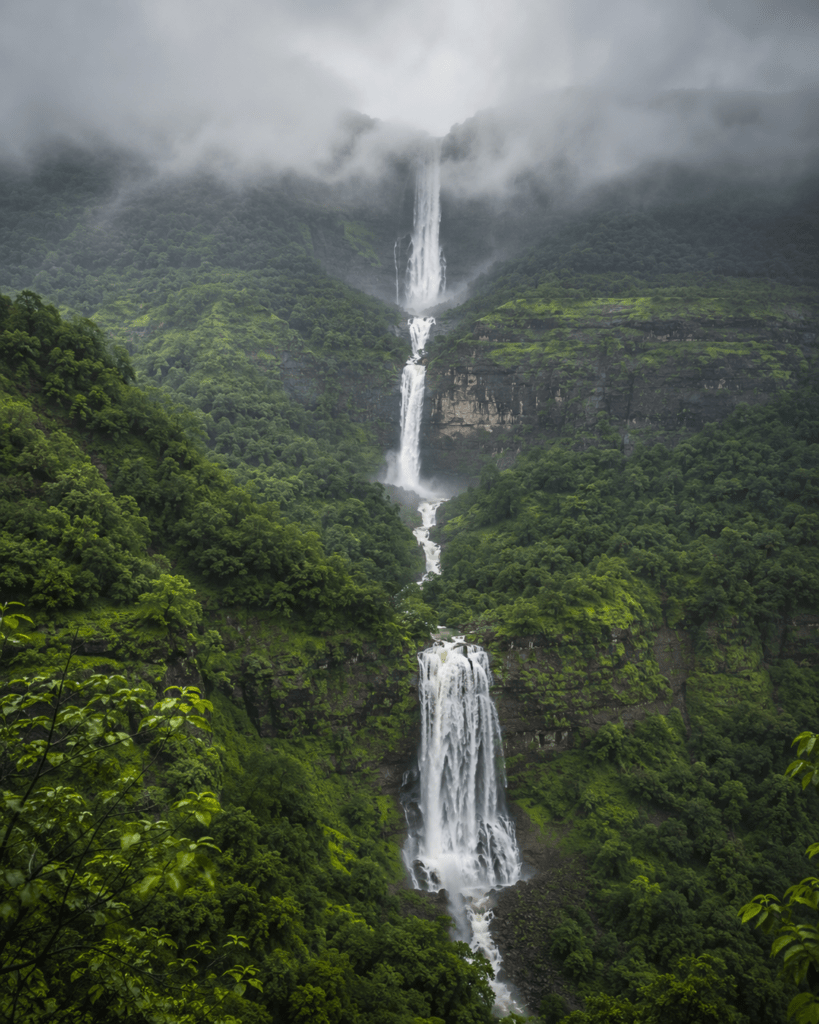
The experience: Kune Falls lies at an altitude of 622 m set against the stunning backdrop of the famous Sahyadri Mountains. It is a three-tiered waterfall cascading down from a height of 200 m and is a must include tourist place in Lonavala tour packages. The waterfall is divided into 2 sections and the highest drop at this three-tier waterfall is of about 100 m. The falls attracts tourists in large numbers during the rainy season when the waterfall is in its peak form and flows down with a huge gush.
Kune Falls, situated quietly between Lonavala and Khandala, is one of the most scenic waterfalls in Maharashtra and has appeared in more movie shots than you’d think. And yet, most tourists speed past it, distracted by chikki shops.
Difficulty: Easy — minimal walking, accessible by road Who can do it: All ages — families, senior citizens, children
Activities:
- Photography from viewpoint (multiple tiers visible simultaneously)
- Bathing at the base pool (accessible via private property — permission sometimes granted)
- Combine with Lonavala/Khandala sightseeing — Duke’s Nose viewpoint, Bhushi Dam, Tiger’s Leap
Transport:
- By train: Mumbai/Pune → Lonavala (local/express train) → auto to Kune Falls
- By bus: MSRTC to Khandala
- By car: Mumbai → 80km, Pune → 70km. Expressway throughout.
Content creator note: Kune Falls is an awe-inspiring spectacle, particularly when shrouded in the monsoon clouds. The cloud-waterfall combination at Kune in July–August is exceptional for drone photography and atmospheric shots.
4. MALSHEJ GHAT WATERFALLS — The Waterfall You Don’t Have to Trek To
Location: Malshej Ghat, Pune/Ahmednagar District border Google Maps address: Malshej Ghat, Malshej, Pune, Maharashtra 412401 Height: Multiple cascades — 50m to 200m+ various Type: Seasonal cascade series along a mountain ghat road Distance from Mumbai: ~130km via NH-61 (Nashik highway) Distance from Pune: ~130km via Junnar/Otur Distance from Nashik: ~110km
Best season: July–September (peak) — the entire ghat transforms
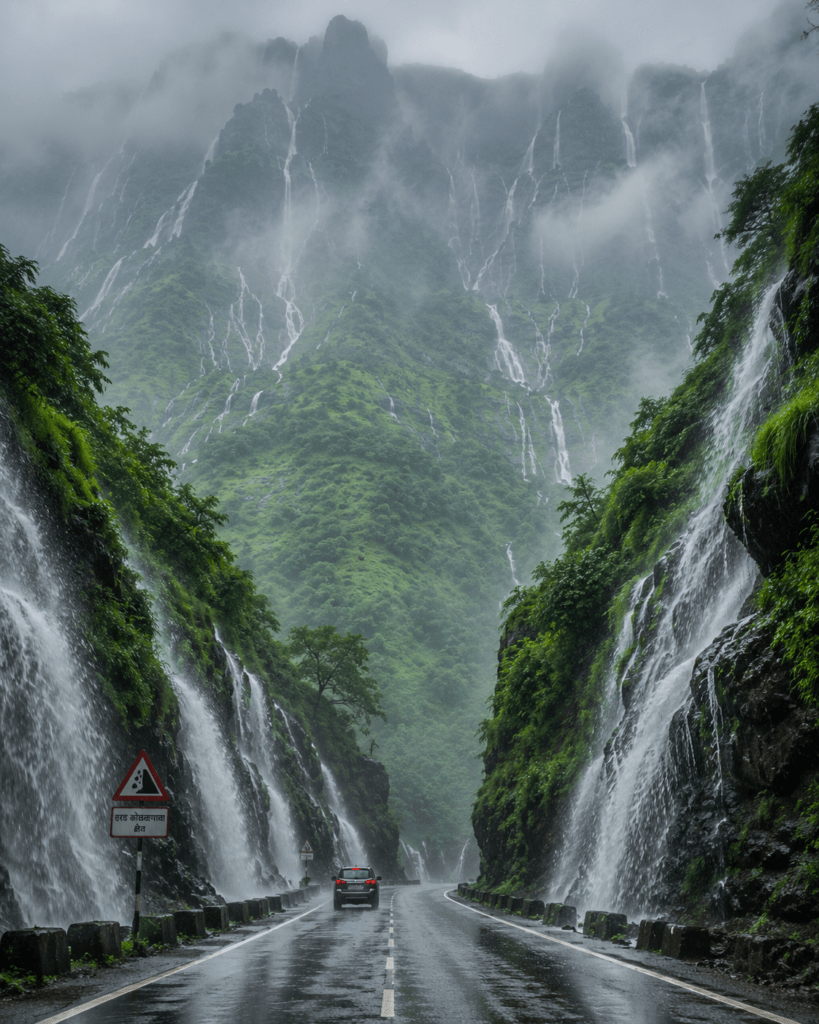
The experience: Malshej Ghat is home to several cascading falls across its length. From long streams gushing down from great heights to mini sprays, the falls at the Ghat are all equally bewitching.
Malshej Ghat, a mountain pass located in the Western Ghats, is brought to life with myriad seasonal waterfalls during monsoon season. The whole area becomes a wonderland of mist, with cascades seeming to exist virtually wherever you glance.
Malshej Ghat is unique because the waterfalls come to you. The mountain road through the ghat has dozens of cascades visible from the car window, roadside viewpoints, and a 2-kilometre section where waterfalls appear on both sides of the road simultaneously. You don’t need to trek — you drive through a waterfall corridor.
The flamingo sightings from October–November add a wildlife dimension that no other waterfall destination in Maharashtra offers.
Difficulty: Easy — many accessible from the road Who can do it: All ages, truly all fitness levels
Activities:
- Roadside waterfall stops and photography
- The designated Malshej Ghat viewpoints
- Flamingo watching (October–November, Pimpalgaon Joge Dam area)
- Harishchandragad trek base (nearby — combination popular)
- Naneghat historical pass — 1.5-hour trek from base
Transport:
- By bus: Mumbai → Junnar (MSRTC, ST bus from Mumbai Central, 4 hours, ₹200) → local transport to Malshej
- By car: Mumbai → 130km via NH-61 (Kalyan-Nashik road, turn at Murbad)
- By 2-wheeler: Popular bike ride — the ghat section is spectacular but slippery in rain
MTDC Resort Malshej: The only accommodation directly at the ghat — ₹2,500–5,000/night. Book months in advance for monsoon. Literally surrounded by waterfalls.
5. LINGMALA WATERFALL — Mahabaleshwar’s Family Favourite
Location: Mahabaleshwar, Satara District Google Maps address: Lingmala Waterfall, Mahabaleshwar, Satara, Maharashtra 412806 Height: 500 feet (main) | 50 feet (mini waterfall) Distance from Pune: ~120km Distance from Mumbai: ~252km Trek from parking: 30 minutes to main viewpoint
Best season: July–October
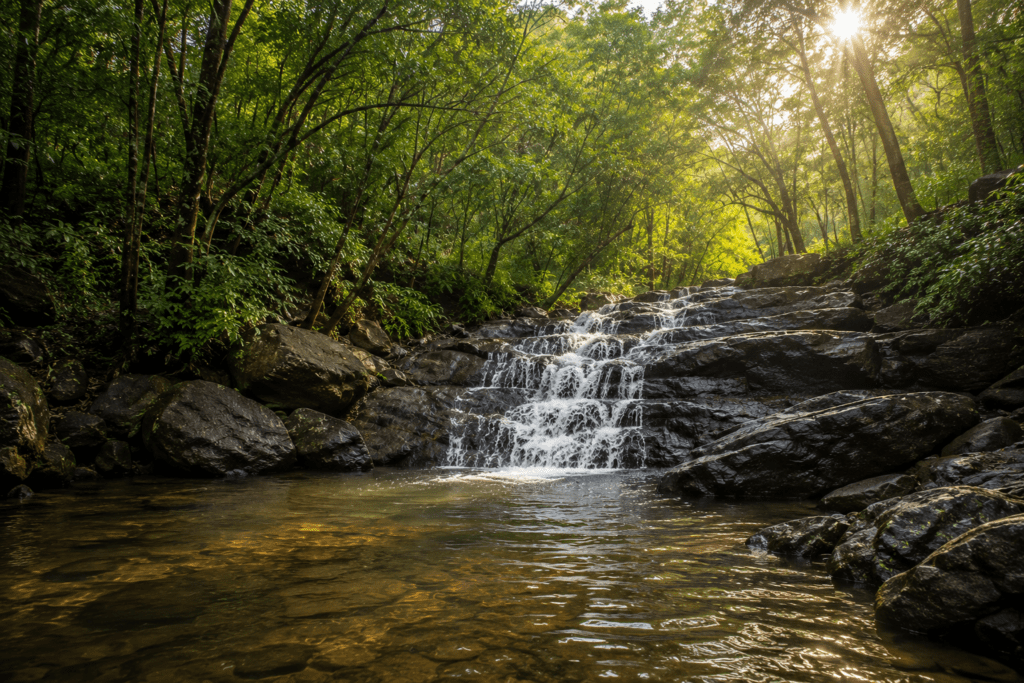
The experience: Situated at an altitude of 1278 m, Lingmala Waterfall is formed by the Venna River. There are two waterfalls — one mini waterfall, and the main waterfall which falls from a height of 500 feet. The mini waterfall is safe and suitable for swimming and playing in the water. One has to walk for 30 minutes to reach the viewpoint of the main waterfall from the mini-falls.
Lingmala is the family waterfall of Maharashtra — two experiences in one short visit. The mini waterfall at the start of the trail is a gentle cascade into a shallow pool that families with children absolutely love. The main waterfall, a 500-foot plunge visible from a viewpoint, is dramatic and impossible to miss.
Difficulty: Easy Who can do it: All ages including toddlers (mini waterfall area)
Activities:
- Wading at mini waterfall pool (children especially)
- Photography of main waterfall viewpoint
- Strawberry farm visit (Mahabaleshwar is the strawberry capital of India)
Transport:
- By bus: Pune → Mahabaleshwar (MSRTC, 3.5 hours, ₹250)
- By car: Pune → 120km | Mumbai → 252km
6. UMBRELLA FALLS (BHANDARDARA) — When a Dam Becomes a Waterfall
Location: Bhandardara, Ahmednagar District Google Maps address: Umbrella Falls, Wilson Dam, Bhandardara, Ahmednagar, Maharashtra 422604 Height: Not a natural waterfall — formed by Wilson Dam overflow Distance from Mumbai: ~177km Distance from Pune: ~156km
Best season: Strictly July–September when dam overflows
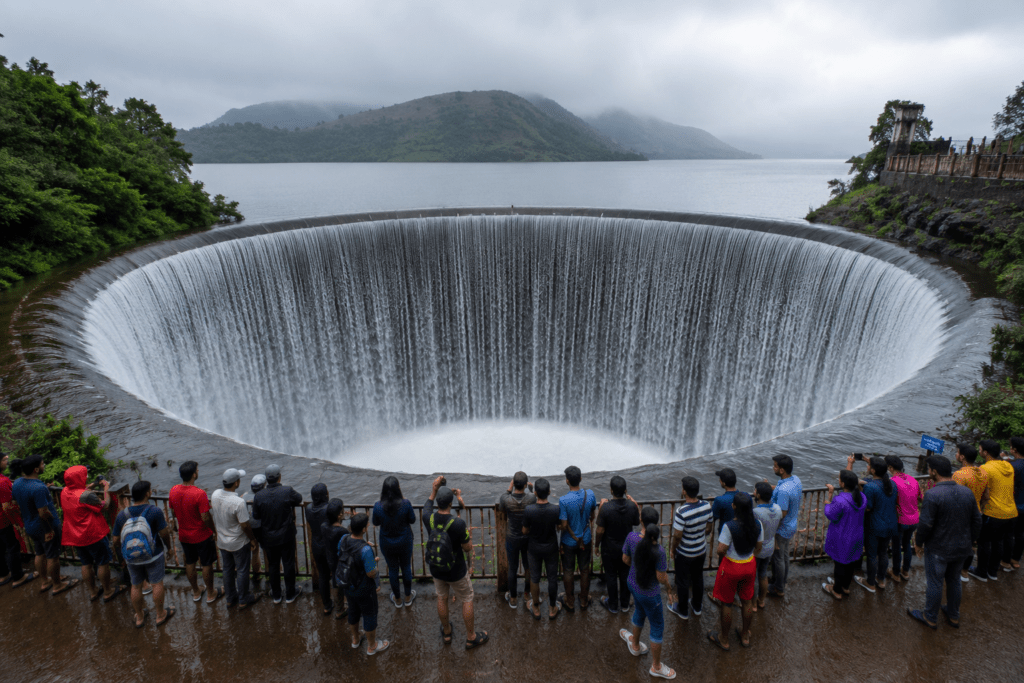
The experience: When the Wilson dam overflows during monsoon, water gushes out from a small opening in its northern end over a semicircular rock, forming the picturesque Umbrella Falls. There is a bridge right below the waterfall, tourists can get a full view of the waterfalls standing on the bridge. The waterfalls can be enjoyed only during the monsoon season, when the dam reaches full capacity.
The Umbrella Falls is a beautiful seasonal waterfall situated at the Bhandardara Dam in Ahmednagar district. It is 500m from Bhandardara Bus Stop.
The Umbrella Falls is unique — it’s a man-made waterfall born of dam overflow, and when it runs, it’s one of Maharashtra’s most photogenic. The water falls in a perfect circular curtain over the semicircular overflow structure. The best part: it’s a 500m walk from the bus stop, making it the most accessible waterfall on this list.
Combine with Ratangad Fort (25km), Randha Falls (10km from Bhandardara), and Kalsubai Peak for a complete Bhandardara weekend.
Transport:
- By bus: Mumbai → Kasara (local train) → Ghoti (bus, ₹80) → Bhandardara (bus/jeep, ₹50)
- By car: Mumbai → 177km | Pune → 156km
7. RANDHA FALLS — The Thunderous River Drop
Location: Rajur-Bhandardara Road, Ahmednagar District Google Maps address: Randha Falls, Bhandardara Road, Ahmednagar, Maharashtra 422604 Height: 170 feet (52 metres) Distance from Mumbai: ~177km Distance from Pune: ~156km
Best season: July–October
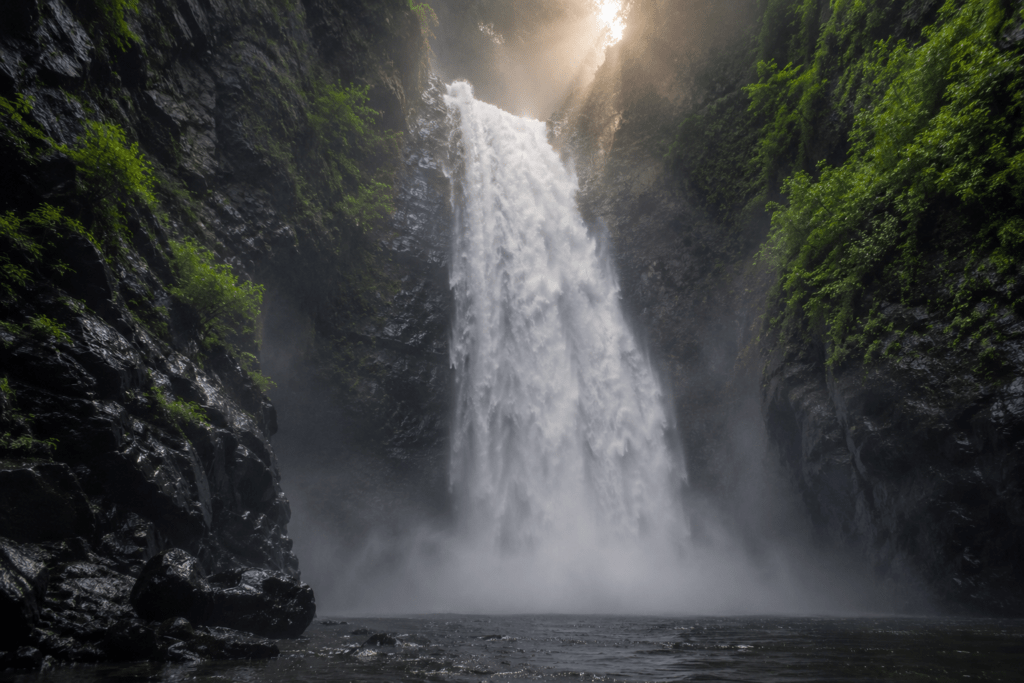
The experience: A gem of the Sahyadris, Randha Falls plunges over 170 feet into a gorge, surrounded by the lush hills of Bhandardara. During monsoon, its volume intensifies dramatically. Randha is one of the few waterfalls in Maharashtra where you can view the fall both from the top and the gorge below.
The lush, forested surroundings of the falls make it an ideal visit for nature lovers and photographers alike.
The Pravara River drops 170 feet into a stunning gorge. The surrounding rocky ledges are home to colonies of bees — massive hanging hives visible under the rock overhangs. A temple on the river bank adds cultural dimension. The gorge view from the bottom is one of the most dramatic perspectives available at any Maharashtra waterfall.
Activities:
- Viewpoint from above (roadside) and below (short descent to gorge)
- Temple visit at the river bank
- Photography of the bee colonies (from a safe distance — do not approach)
8. PANDAVKADA WATERFALL — Mumbai’s Own Monsoon Escape
Location: Kharghar, Navi Mumbai Google Maps address: Pandavkada Waterfall, Kharghar, Navi Mumbai, Maharashtra 410210 Height: 107 metres Distance from Mumbai: ~45km via Sion-Panvel Highway Distance from Pune: ~110km
Best season: July–September
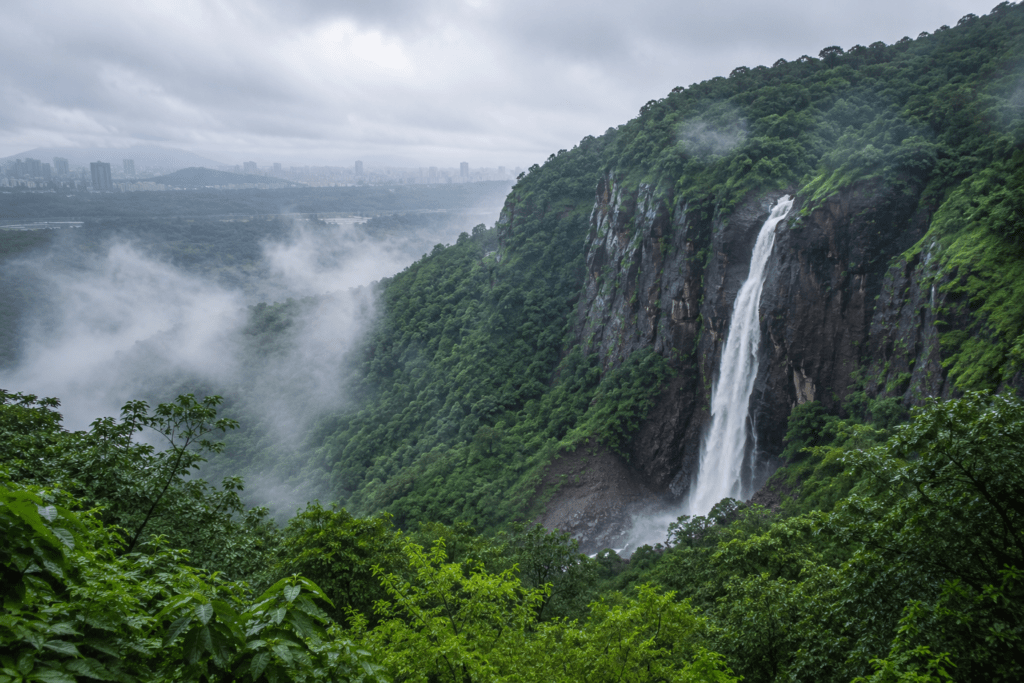
The experience: Pandavkada Waterfall, located in Kharghar near Mumbai, is a stunning monsoon attraction. Cascading from a height of 107 meters, this waterfall is a favorite among locals and tourists. The monsoon season brings the waterfall to life, creating a refreshing escape for nature lovers. Easily accessible from Mumbai, Pandavkada Waterfall is a great spot for a quick day trip.
At 45km from Mumbai, Pandavkada is the closest significant waterfall to the city. Reachable by Navi Mumbai metro to Kharghar station and then a short auto ride. This makes it genuinely accessible without a car — a remarkable convenience for Mumbai’s non-driving population.
Difficulty: Easy — short trail from parking Transport:
- By metro/train: Navi Mumbai Metro → Kharghar station → auto to trailhead
- By car/2-wheeler: Sion-Panvel Highway → Kharghar
9. CHINCHOTI WATERFALL — Vasai’s Green Secret
Location: Near Vasai, Palghar District Google Maps address: Chinchoti Waterfall, Kaman Village, Vasai, Maharashtra 401208 Distance from Mumbai: ~60km via Mira-Bhayandar Road
Best season: June–September
The experience: Chinchoti Waterfall, located near Vasai, is a popular monsoon destination for families and casual trekkers. The easy trek through lush greenery leads to this picturesque waterfall, which is especially stunning during the rainy season. Just a short drive from Mumbai, Chinchoti Waterfall is a perfect spot for a quick monsoon getaway.
There is a serene trail through the woods near Kaman Village that takes you to this lesser-known waterfall. It is advisable to avoid taking bath here during peak monsoon months as the flow of the stream tends to grow wickedly intense.
Transport:
- By train: Mumbai Western Railway → Vasai Road station → auto to Kaman village
10. BHIVPURI WATERFALL (KARJAT) — Adventure Hub With Rappelling
Location: Karjat, Raigad District Google Maps address: Bhivpuri Waterfall, Karjat, Raigad, Maharashtra 410201 Height: Multiple cascades — tallest approximately 70 metres Distance from Mumbai: ~85km via Karjat Distance from Pune: ~120km
Best season: July–October
The experience: A delight for adventure seekers, Bhivpuri Waterfall at Karjat has not just spectacular beauty but also offers a chance to rappel. The trek to the falls via a scenic trail in a short distance is an excellent monsoon outing from Mumbai and Pune.
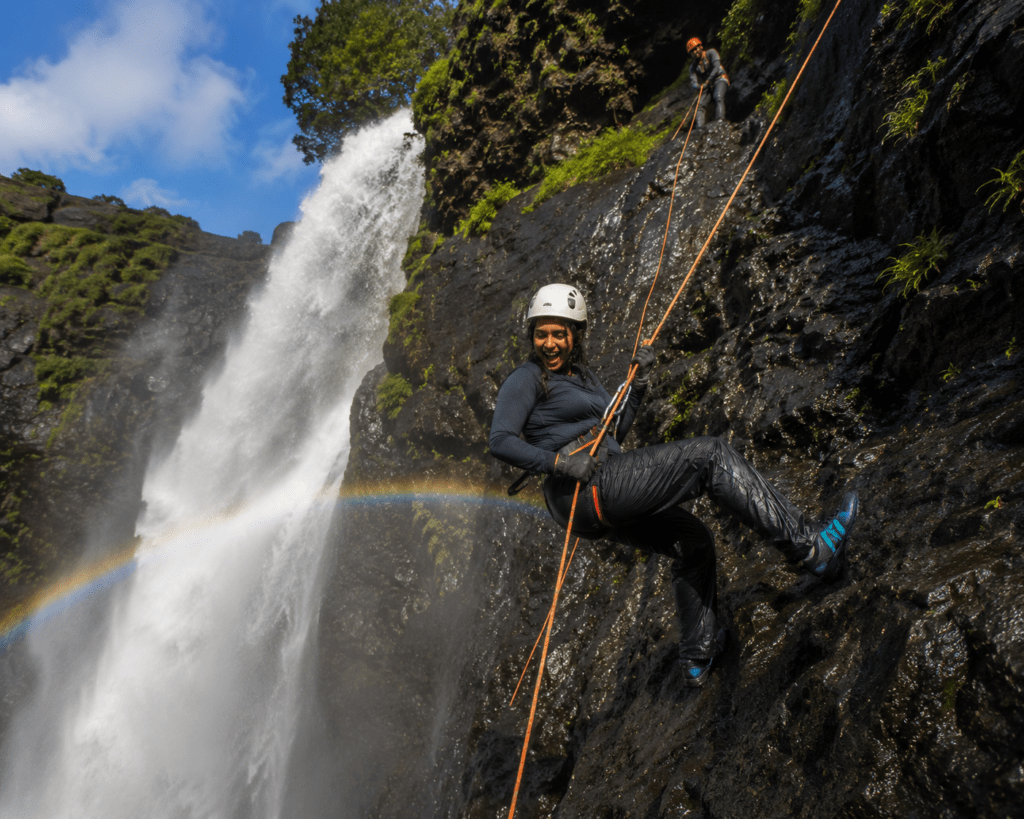
Bhivpuri is the adventure waterfall of Maharashtra — and the primary reason it stands out is the rappelling (abseiling) available directly beside the falls. Multiple adventure operators in Karjat offer guided rappelling alongside the Bhivpuri cascade, which is one of the most dramatic rope descent experiences in the state.
Rappelling at Bhivpuri:
- Available: July–October with registered adventure operators
- Height: 50–70 metres depending on the specific descent line chosen
- Cost: ₹800–1,500 per person for guided rappel (instructor, equipment, safety briefing included)
- Operators: Adventure Pulse, Karjat Adventure, multiple operators based in Karjat market
Difficulty: Trek Easy | Rappelling — Beginner to Intermediate (operators provide training) Who can rappel: Ages 12+ (weight limit 90kg at most operators)
Activities:
- Rappelling beside the waterfall
- Swimming in lower pools (October, when current is manageable)
- Short nature trek through Karjat’s forest
Transport:
- By train: Mumbai CST → Karjat (local train, ₹60, 1.5 hours). Trek starts near Bhivpuri Road station.
- By car: Mumbai → 85km | Pune → 120km. Good road to Karjat.
Itinerary from Mumbai (day trip):
- 6am: Train Mumbai CST → Karjat
- 8am: Karjat — local transport to waterfall base
- 9am: Begin trek + rappelling session
- 12pm: Lunch at Karjat market
- 2pm: Train back to Mumbai
Budget: ₹1,500–2,500 per person including rappelling
TIER 2: EXCELLENT OFFBEAT WATERFALLS
11. AMBOLI WATERFALL — The Western Ghat’s Green Jewel
Location: Amboli hill station, Sindhudurg District Google Maps address: Amboli Waterfall, Amboli, Sindhudurg, Maharashtra 416510 Height: Multiple cascades in the Amboli area Distance from Mumbai: ~490km via NH-66 Distance from Pune: ~390km via Kolhapur
Best season: July–September
The experience: Amboli Waterfall is a popular tourist spot in Maharashtra, located near the hill station of Amboli. It becomes especially attractive during the monsoon season when the water flow increases and the surroundings turn green. The cool weather and natural setting make it a great place to relax and enjoy a short trip.
Amboli is the highest monsoon rainfall zone in Maharashtra — and the region’s waterfalls reflect this with extraordinary power. The area around Amboli has three or four distinct named waterfall viewpoints all within 5km, plus dozens of unnamed roadside cascades. The Hiranyakeshi River source springs from a cave near Amboli — one of the most unusual natural features in Maharashtra.
Amboli is genuinely far from Mumbai/Pune — it works as a 2-night destination, combining waterfalls, the Amboli hill station, the Vengurla coastal area (45km), and the Sawantwadi Palace.
Activities:
- Multiple waterfall viewpoints in the immediate area
- Hiranyakeshi River source visit
- Amboli sunset point
- Sindhudurg Konkan coastal exploration (45km)
Stay: Amboli has multiple hotels and resorts — ₹2,000–8,000/night.
12. VAJRAI WATERFALL (BHAMBAVLI) — India’s Tallest Waterfall Claim
Location: Near Satara, Satara District Google Maps address: Vajrai Waterfall, Bhambavli, Satara, Maharashtra 415501 Height: Claimed at 560+ metres (disputed — but one of the tallest in India)
Best season: July–September
The experience: Science might disagree, but Bhambavli Vajrai Waterfall is one of the best waterfalls in Maharashtra that makes you question your textbook knowledge. The protected area around the waterfall means you shouldn’t expect to wade around too much, but there’s something oddly soothing about just standing still and watching water take its sweet time.
Vajrai is primarily a viewpoint waterfall — the protected forest zone means you observe it from a distance, but at 560+ metres claimed height, the view is breathtaking. Combine with Thoseghar (30km) and Kaas Plateau for a complete Satara waterfall weekend.
13. DUGARWADI WATERFALL — Nashik’s Well-Kept Secret
Location: Near Nashik city, Nashik District Google Maps address: Dugarwadi Waterfall, Dugarwadi, Nashik, Maharashtra
Best season: July–September
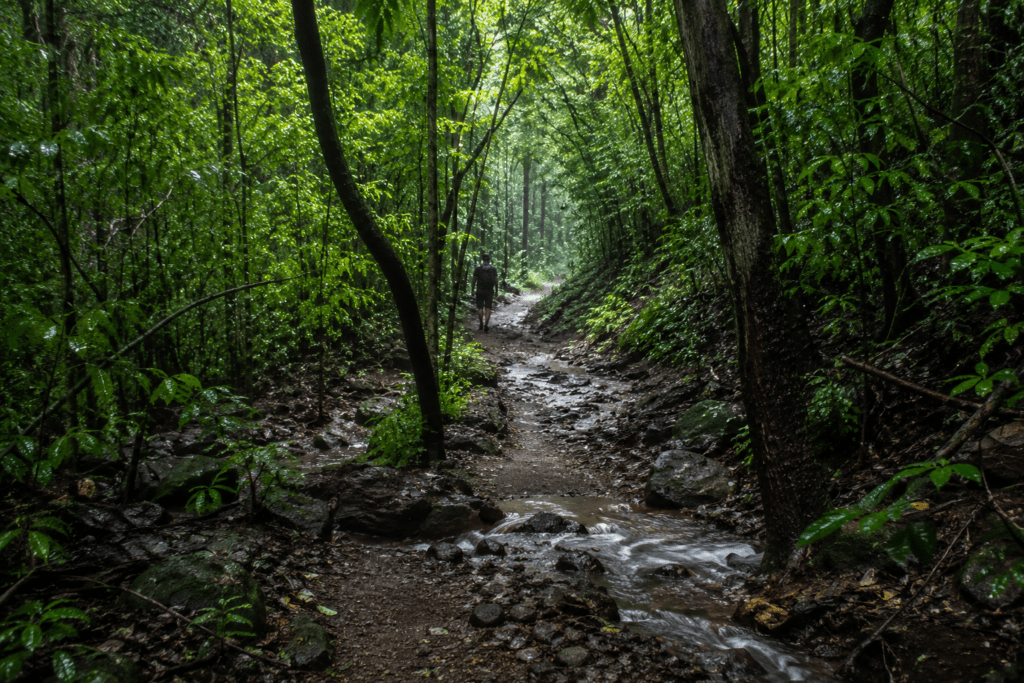
The experience: Dugarwadi Waterfall near Nashik is one of those hush-hush spots. You won’t see too many people here, which is a blessing if you’re not into crowds. The charm? You need to trek a bit through a sleepy forest trail to reach this hidden waterfall near Nashik. It’s muddy, yes, and slightly slippery, but also incredibly quiet. The waterfall here doesn’t scream for attention; it hums.
Situated in Nashik, Dugarwadi Waterfall offers a picturesque setting with its cascading waters and surrounding greenery. It’s a must-visit during the monsoon.
Dugarwadi is Nashik’s hidden gem — the locals who live 20km from Nashik city know about it; most of the wine-touring crowd who visits Nashik in autumn has never heard of it. The forest trail is genuinely quiet — birdlife, occasional sambar deer sightings, and the waterfall as a reward.
Transport from Nashik: 30–40km, requires private vehicle for the last section.
14. SOMESHWAR WATERFALL — Nashik’s Urban Retreat
Location: Near Gangapur, Nashik District Google Maps address: Someshwar Waterfall, Gangapur, Nashik, Maharashtra 422013 Height: 10 metres Distance from Nashik: ~9km
Best season: Monsoon and immediate post-monsoon
The experience: Someshwar Waterfalls is formed over the holy River Godavari. Also known as Dudhsagar Waterfalls, Someshwar Waterfalls is one of the most favourite tourist places in Nashik. The place turns very picturesque during the monsoon as there is a huge water flow and also a lot more greenery around. There is also a Balaji Temple near the waterfall which is a must-visit. Timings: 6 AM to 6 PM. Entry: Free.
Only 9km from Nashik Central, Someshwar is the city’s most accessible waterfall — perfect for an evening outing, a morning walk, or combining with Gangapur Dam visit. The Balaji Temple and the Godavari riverbank setting make it pleasant for non-trekkers.
Best for: Nashik residents, families with young children, senior citizens, combining with Gangapur Dam.
Transport from Nashik: Auto/taxi ₹100–200. PMPML bus to Gangapur Dam stop.
15. SAWATSADA WATERFALL — The Ghat Wonder Near Chiplun
Location: Near Chiplun, Ratnagiri District Google Maps address: Sawatsada Waterfall, Chiplun, Ratnagiri, Maharashtra 415605 Distance from Mumbai: ~260km via NH-66 coastal road
Best season: July–September
The experience: One can watch this huge waterfall from the Mumbai-Chiplun road. So, in case if you are pressed for time, you can just make a quick stop here and take a few photos. Emerges from the Sawatsada cliff, Sawatsada is a seasonal waterfall that can only be seen in its full glory during the rainy season. Due to its unique beauty and white appearance, it is always a delight for photographers, and nature enthusiasts alike. In the rainy season, the fall of water is strong and one needs to be careful near this waterfall, as it could turn out to be dangerous.
Sawatsada is on the Konkan coastal highway — for anyone driving the Mumbai-Goa NH-66 in monsoon, it’s a mandatory stop. The waterfall is visible from the road and the 2-minute stop delivers extraordinary photography.
16. ADAI WATERFALL — Panvel’s Quiet Morning Secret
Location: Near Panvel, Raigad District Google Maps address: Adai Waterfall, Adai Village, Panvel, Raigad, Maharashtra 410206
Best season: July–September
The experience: Adai Waterfall, situated near Panvel, is a hidden monsoon treasure just a short drive from Mumbai. Surrounded by dense forests and rocky terrain, this waterfall offers a tranquil escape from the city’s chaos. The monsoon season brings the waterfall to life, creating a serene ambiance perfect for relaxation. If you’re looking for a peaceful day trip near Mumbai, Adai Waterfall is an excellent choice.
Adai is 40km from Mumbai via Panvel — accessible enough for a before-9am visit that gets you back before Mumbai’s midday heat. Small, quiet, with good forest trail atmosphere.
17. DHODANI WATERFALL — Panvel’s Hidden Trekking Fall
Location: Near Panvel, Raigad District Distance from Mumbai: ~55km
The experience: Dhodani Waterfall, near Panvel, is a serene monsoon retreat surrounded by lush greenery. This hidden gem is a favourite among trekkers and adventure enthusiasts. The waterfall is easily accessible from Mumbai, making it a great day-trip destination during the monsoon. The cascading waters and peaceful ambiance provide a refreshing escape from the city’s hustle and bustle.
Dhodani requires a short forest trek — 30-40 minutes through Panvel’s forest cover. The trail involves some rock-hopping and is best done with local guide knowledge on the first visit.
18. ASHOKA WATERFALL — Igatpuri’s Hidden Monsoon Gem
Location: Near Igatpuri, Nashik District Google Maps address: Ashoka Waterfall, Igatpuri, Nashik, Maharashtra 422403
Best season: July–September
The experience: Ashoka Waterfall, located near Igatpuri, is one of the most serene waterfalls near Mumbai and Pune. During the monsoon, this hidden gem transforms into a breathtaking cascade surrounded by lush greenery. The soothing sound of water and the cool mist make it a perfect monsoon getaway for nature lovers and photographers.
Igatpuri is known for its meditation centre (Vipassana) but has excellent surrounding nature — Ashoka Waterfall is 30 minutes from Igatpuri town through forest. Combines well with Tringalwadi Fort.
TIER 3: OFFBEAT — ONLY LOCALS KNOW THESE
19. BENDEWADI WATERFALL — Lonavala’s Hidden Gem
Location: Khandi area near Lonavala, Pune District
The experience: Bendewadi waterfall is a hidden gem of Khandi area which is unknown beautiful waterfall located in Bendewadi village of the Lonavala region. It is surrounded by lush greenery and perfect for a serene getaway. Best visited during the peak monsoon season.
In the same geography as Kune and Bhushi Dam but known almost exclusively to Lonavala-area locals. No entry fee, no tourist infrastructure, no crowd. The trail involves knowing which dirt road to take from Bendewadi village — ask at the village itself.
20. NANEMACHI WATERFALL — The Route That Only Trekkers Know
Location: Near Lonavala/Tamhini region, Pune District
The experience: These aren’t just the usual Instagram-famous waterfalls near Mumbai. We’re going off the beaten path to explore hidden gems like Nanemachi, each bursting with personality and local tales.
Nanemachi is accessed via a trail that branches off the main Tamhini Ghat road. No signage, no markers — the knowledge is passed trekker to trekker and through local village networks. The reward: a multi-tiered waterfall with a natural pool that sees perhaps 50 visitors on its busiest monsoon weekend, compared to thousands at Kune.
How to find: Hire a local guide from Tamhini village or contact Pune-based trek operators who specifically know this route (Treks and Trails India is one).
21. DUDHSAGAR WATERFALLS (MAHARASHTRA SIDE) — The Goa-Karnataka Border Giant
Location: Sindhudurg District / Goa-Karnataka border Height: 310 metres
Best season: June–September
The experience: Though popularly associated with Goa, Dudhsagar Waterfalls lie partially within Maharashtra and are accessible from Kolhapur. These milky white falls roar down in four tiers, resembling a “sea of milk,” hence the name. It’s one of the most powerful waterfalls in Maharashtra, especially during peak rains. Interesting Fact: The waterfall often appears in folklore as a place where the goddess Parvati would bathe—adding mythological richness to its visual majesty.
Dudhsagar is one of the five tallest waterfalls in India — famous, spectacular, and accessible via jeep safari from Mollem National Park (Goa side) or train sighting from the Vasco-Bangalore railway line. The Maharashtra approach from Kolhapur adds a 2-day road trip dimension.
Activities Beyond Just Viewing — Adventure at Waterfalls
Rappelling (Abseiling)
The most popular waterfall adventure activity in Maharashtra. Available at multiple locations:
Bhivpuri (Karjat): Best-organised rappelling beside a waterfall in Maharashtra. Multiple operators, ₹800–1,500/person with guide and equipment.
Malshej Ghat waterfall rappels: Several adventure operators (Treks and Trails India, Adventure Pulse) offer seasonal rappelling setups beside Malshej cascades.
Kolad River and waterfalls area: Rappelling combined with river camping packages — ₹1,500–2,500 per person for combo.
Equipment at all organised rappel sites: Harness, helmet, descender, gloves — all provided. Wear closed shoes (not sandals).
Safety rule for rappelling: Only use AMAI (Adventure Mountaineering Association of India) certified operators. Verify certification before payment. Never rappel with operators who don’t do a briefing first.
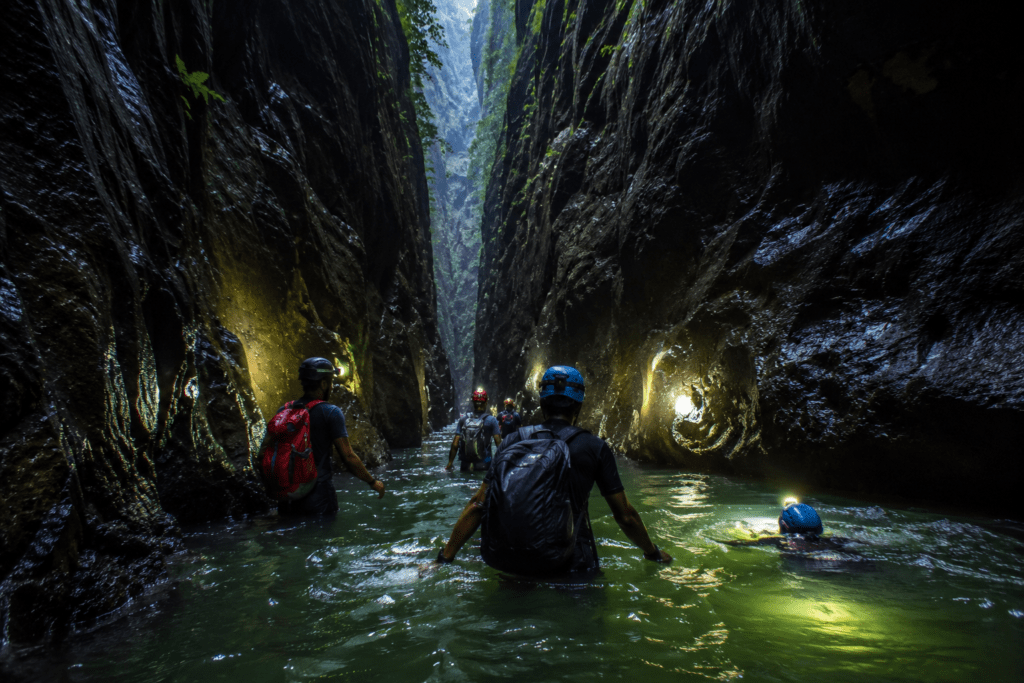
Canyoning and Gorge Walking
Where: Sandhan Valley (near Malshej Ghat region) — the most famous canyon walk in Maharashtra What it is: Walking through a narrow canyon with water flowing at ankle to waist level, some sections requiring swimming through gorge pools Difficulty: Moderate — requires swimming ability Best season: September–October (July–August water level too dangerous for the narrow gorge) Organised tour cost: ₹1,500–2,500/person through Treks and Trails or similar operators
Swimming
Where it’s safe (and when):
- Lingmala mini waterfall (October–November) — shallow, safe, family-friendly
- Devkund plunge pool (September–October) — deeper, for confident swimmers
- Bhivpuri lower pools (October) — post-monsoon when current reduces
- Randha Falls gorge viewpoint (not the main pool) — accessible viewing area
Where never to swim:
- Any waterfall during active heavy rainfall
- Near main waterfall drops (current, rock hazards)
- In July–August at any Sahyadri waterfall
Photography and Content Creation
Best waterfalls for content creators (ranked):
1. Devkund — the emerald pool and the cascade together create the most visually unique waterfall shot in Maharashtra. Drone photography (get permissions), underwater photography (waterproof housing essential), and the forest trail B-roll are all excellent.
2. Thoseghar — the multi-cascade cliff face is unmatchable for drone photography showing scale. The viewing platforms give multiple angles.
3. Malshej Ghat — the road-through-waterfalls phenomenon is extraordinary for video content. Drive slowly with a dashcam or passenger-held camera.
4. Bhivpuri rappelling — action photography at a waterfall while on rope — one of the most dynamic shots available.
5. Umbrella Falls — the perfectly circular curtain of water over the dam overflow structure is unlike any other waterfall photograph in Maharashtra.
Content creator gear recommendations:
Camera: DJI Osmo Action 6 (₹32,000–38,000) — waterproof, stabilised, excellent for waterfall video Drone: DJI Mini 4 Pro (₹65,000–75,000) — compact, good wind performance in monsoon, check local flying permissions Waterproof case: For smartphone — ₹800–2,500 on Amazon for good universal cases Tripod: Flexible mini tripod (₹500–1,500) for long-exposure waterfall shots ND filter: For smooth waterfall silk effect in photography (₹1,500–4,000 for quality filters)
Moto Vlogging Setup Guide 2026
What to Carry — Season-Specific Gear Guide
Monsoon Waterfall Trekking Kit (The Non-Negotiable List)
Footwear — Most Important Item:
- Grip is everything on wet rock and muddy trails
- Best option: Vibram-soled hiking shoes (Quechua NH520 from Decathlon, ₹2,000–4,000) or old sports shoes with aggressive tread
- Never: Sandals, slippers, smooth-soled shoes, or new shoes that haven’t been broken in
Clothing:
- Quick-dry synthetic T-shirt (not cotton — cotton holds water and causes skin abrasion)
- Trekking shorts or lightweight quick-dry pants
- Compact waterproof rain jacket OR a ₹200 disposable poncho (for budget trekkers)
- An extra dry set of clothes in a waterproof bag (ziplock or dry bag) for the return journey
Bag:
- 15–20L daypack with rain cover (or a dry bag liner inside)
- Waterproof pouch for phone, wallet, documents (these are the items that die first in a monsoon waterfall visit)
Water and Food:
- 2 litres of water (you’ll need it even in monsoon — the exertion is real)
- ORS/electrolyte sachets (4–6 sachets, especially for longer treks)
- Trail snacks: Chakli, energy bars, dry fruits, glucose biscuits
Safety Essentials:
- First aid kit: Band-aids, antiseptic cream, bandage, paracetamol, anti-fungal cream (for leech-prone areas)
- Headlamp with fresh batteries (for early starts and return in fading light)
- Trekking pole (highly recommended for descents on wet terrain)
Monsoon specific:
- Leech repellent or salt sachets
- Waterproof phone case or ziplock bag for phone
- Microfibre towel (dries fast, compact)
What to Wear at Waterfalls
For viewing/short walk waterfalls (Thoseghar, Malshej, Umbrella Falls, Lingmala): Comfortable casual clothes are fine. A light rain jacket for light drizzle. Sandals acceptable at Thoseghar and Malshej viewing platforms (paved surfaces).
For trek-to-waterfall (Devkund, Bhivpuri, Randha gorge): Full trekking setup — grip shoes, quick-dry clothes, rain jacket, bag with essentials.
For rappelling (Bhivpuri, Malshej): The operator provides harness and helmet. Wear full-length pants (not shorts — the harness chafes on bare legs), closed-toe shoes (mandatory), and a t-shirt or thin long-sleeve for comfort.
For swimming at waterfall pools (Devkund, Lingmala mini, Bhivpuri lower): Wear swimwear under your trekking clothes. Most waterfall pool areas don’t have changing rooms. A microfibre towel in your bag is essential. Rash guard or UV shirt recommended for longer pool sessions.
Safety and Mistakes to Avoid
The 10 Monsoon Waterfall Safety Rules — Every Visitor Must Read
1. Never cross a flowing stream above waist height. This is the rule that saves lives. What looks like knee-deep water can be waist-deep water with a current strong enough to knock an adult off their feet. Cross streams only at designated shallow points.
2. Do not enter waterfall pools during active rainfall or in July–August. Flash floods at waterfalls happen without visible upstream warning. The pool at Devkund can rise 2 metres in 20 minutes during heavy upstream rainfall. Exit the pool and move uphill at the first sign of sudden flow increase.
3. Never sit or stand on rocks directly under a waterfall. Falling debris — rocks loosened by water erosion — is a real hazard at any waterfall. The force of water alone at the base of a major fall is sufficient to cause serious injury. Maintain distance from the impact zone.
4. Tell someone where you’re going. Leave your waterfall destination, trail name, and expected return time with someone not on the trek. In areas with poor mobile signal — most Sahyadri waterfall locations — this is your safety backup.
5. Start treks before 8am. Weather in the Sahyadri deteriorates predictably in the afternoons during monsoon. Trails that were manageable at 8am can be flooded by 3pm. Starting early guarantees a daylight, lower-risk experience.
6. Leeches — don’t panic, do remove correctly. Leeches are harmless (they carry no pathogens in Maharashtra’s Sahyadri region) and their bite is painless. Remove by pressing the narrow end (head) with a fingernail rather than pulling — pulling causes the mouthpart to stay in the skin. Salt or flame (cigarette lighter) works too. The bite bleeds longer than expected (anticoagulant in leech saliva) — apply pressure with antiseptic.
7. Do not drink directly from waterfall streams. Even clear mountain streams in Maharashtra can carry Leptospira bacteria (leptospirosis) from animal activity upstream. Bring your own water or use purification tablets.
8. Never trek to a waterfall that’s newly reported as running after heavy overnight rain. Peak flow conditions after a heavy night of rain are the most dangerous conditions at any waterfall. Wait 24 hours after very heavy rain before attempting any waterfall trek.
9. Do not consume alcohol before or during a waterfall trek. This sounds obvious. People die every monsoon season in Maharashtra at waterfalls after consuming alcohol at the base and attempting unsafe crossings. The combination of impaired judgment and wet terrain is a documented hazard.
10. Swim only where marked safe or where experienced local knowledge confirms safety. The beautiful pool below a waterfall may have rocks, currents, or depth variations that are not visible from the surface. Devkund’s pool has been swum safely for decades — locals know it. Unknown pools at unmarked waterfalls should not be entered without local knowledge.
Common Mistakes to Avoid
Wearing cotton clothes: Cotton soaks through immediately, stays wet all day, causes skin chafing and hypothermia risk in the evening. Synthetic or moisture-wicking fabrics only.
Not carrying water: The irony of dehydrating at a waterfall is real. You cannot drink the waterfall water safely, the exertion of the trek depletes you, and the cool temperatures fool you into not feeling thirsty. Carry water.
Going on a whim without checking trail conditions: Monsoon trail conditions change daily. A trail that was perfectly manageable last weekend may have a blocked section from a landslide on Tuesday. Check MahaTrekkers groups, Thrillophilia reviews, and WhatsApp trekking community updates before going.
Taking children to dangerous waterfall areas: Some waterfalls (Devkund, Bhivpuri main pool, Randha gorge) are not appropriate for young children in monsoon. Lingmala mini waterfall, Someshwar, and Thoseghar viewing platforms are the right choices.
Not carrying a headlamp: Even on a day trip, if you’re 2km into a forest trail when the sky darkens at 4pm in monsoon, you need a headlamp. Carry one always.
Booking travel based on clear-sky photo expectations: Monsoon waterfall photographs are cloudy, misty, and dramatically atmospheric. If you’re hoping for blue-sky photographs at Maharashtra waterfalls, visit October–November. If you want the full monsoon drama, embrace the grey skies — that’s the actual experience.
Itineraries from Major Cities
From Mumbai — The 2-Day Monsoon Waterfall Weekend
Option A: Bhivpuri + Bhimashankar (Karjat Circuit)
- Saturday 5am: Train Mumbai CST → Karjat (6:30am arrival)
- Saturday 7am: Trek to Bhivpuri Waterfall
- Saturday 10am: Rappelling session (pre-booked with operator)
- Saturday 1pm: Lunch in Karjat market
- Saturday 3pm: Drive to Bhimashankar forest area overnight camp
- Sunday 6am: Bhimashankar Wildlife Sanctuary morning walk
- Sunday 12pm: Return to Mumbai
- Budget: ₹2,500–4,000 per person
Option B: Devkund Overnight (Best Mumbai Weekend)
- Friday 5pm: Depart Mumbai via car/cab
- Friday 8pm: Bhira village — dinner, sleep
- Saturday 6am: Trek to Devkund
- Saturday 9am: Devkund pool (September–October: swimming)
- Saturday 2pm: Return trek
- Saturday 5pm: Drive Mumbai
- Budget: ₹2,000–3,000 per person (including accommodation)
From Pune — The Day Trip Circuit
Pune is equidistant from Maharashtra’s best waterfalls — 8 major waterfalls within 150km.
Thoseghar + Kaas Day Trip (September):
- 5:30am: Depart Pune
- 8am: Kaas Plateau (UNESCO wildflower meadow)
- 10am: Thoseghar Waterfalls
- 1pm: Satara lunch
- 4pm: Sajjangad Fort (optional)
- 7pm: Return Pune
- Budget: ₹1,500–2,000 per person (car split between 4)
Malshej Ghat + Randha Falls:
- 5am: Depart Pune
- 9am: Randha Falls (via Bhandardara)
- 10am: Umbrella Falls (500m from Bhandardara stop)
- 12pm: Lunch Bhandardara
- 2pm: Drive to Malshej Ghat
- 4pm: Malshej waterfall walk
- 7pm: Return Pune
From Nashik — The Northern Sahyadri Waterfall Circuit
Dugarwadi + Someshwar Day (Nashik Local):
- 7am: Nashik → Dugarwadi (30km)
- 7:30am: Trek to Dugarwadi Waterfall
- 11am: Return, drive to Someshwar
- 12pm: Someshwar Waterfall + Gangapur Dam
- 2pm: Nashik lunch (Nashik Misal Pav at Vinayak Misal)
- Budget: ₹500–1,000 per person (fuel and food only)
Budget Guide — All Waterfall Types
Per Person Day Trip Budget
| Waterfall | From Mumbai | From Pune | Entry | Activity Add-on |
|---|---|---|---|---|
| Pandavkada | ₹300–500 (metro+auto) | ₹600–900 (bus) | Free | — |
| Chinchoti | ₹400–700 (train+auto) | ₹800–1,200 | Free | — |
| Bhivpuri + Rappelling | ₹1,800–2,500 | ₹2,000–2,800 | Free | Rappel ₹1,200 |
| Devkund (overnight) | ₹2,500–4,000 | ₹2,000–3,000 | Free | — |
| Thoseghar | ₹2,000–3,500 | ₹1,200–2,000 | ₹30 | — |
| Kune Falls (Lonavala) | ₹700–1,200 | ₹600–1,000 | Free | — |
| Malshej Ghat | ₹1,500–2,500 | ₹1,500–2,500 | Free | — |
| Amboli (2 days) | ₹5,000–8,000 | ₹4,500–7,000 | Free | — |
Places to Stay Near Waterfalls
Accommodation Guide by Region
Near Lonavala/Khandala (Kune Falls):
- Budget: ₹1,200–2,500 (guesthouses in Lonavala)
- Mid-range: ₹3,500–7,000 (resort properties)
- Premium: ₹10,000–25,000+ (Aamby Valley, Fern Hill)
Near Bhandardara (Umbrella + Randha):
- MTDC Resort Bhandardara: ₹2,000–4,500 (book very early for monsoon weekends)
- Local hotels: ₹800–2,000
- Camping at Bhandardara lakeside: ₹500–1,500/tent
Near Satara (Thoseghar):
- Satara budget hotels: ₹700–1,500
- MTDC Kaas (seasonal): ₹3,000–5,000
- Homestays: ₹600–1,200 including meals
Near Karjat (Bhivpuri/Devkund circuit):
- Kolad resort camps: ₹2,000–5,000/person (meals + activities included)
- Karjat budget guesthouses: ₹700–1,500
- Bhira village homestays: ₹400–800/person with meals
Near Mahabaleshwar (Lingmala):
- Mahabaleshwar budget: ₹1,200–2,500
- Mid-range: ₹3,500–8,000 (peak monsoon prices higher)
- Luxury: ₹15,000–40,000+
Tour Packages — Operators Who Run These Tours
Verified Maharashtra Waterfall Tour Operators (2026)
Treks and Trails India (treksandtrails.org) Maharashtra’s most established monsoon trek and waterfall operator. Based in Mumbai and Pune. Weekend group departures to Devkund, Malshej, Bhivpuri, Randha, and offbeat locations. Their Sandhan Valley tours are legendary.
Typical inclusions: Trek leader, first aid, transport from specified pickup, meals on trek, camping equipment (for overnight) Approximate cost: ₹1,200–3,500 per person per day Best for: First-timers who want safety + guidance, solo travelers wanting to join groups
Thrillophilia (thrillophilia.com) Online platform connecting travelers with verified local operators for Maharashtra waterfall experiences — rappelling, camping, canyoning packages.
Best for: Booking specific adventure activities (rappelling, camping) with advance confirmation Cost: Activity-specific — rappelling ₹800–1,500, camping ₹1,500–3,500
The Great Next (thegreatnext.com) Adventure combo packages — waterfall trek + river rafting + camping. Good for groups wanting multi-activity weekends. Cost: ₹2,500–5,000 per person for combos
MTDC (Maharashtra Tourism Development Corporation) — mtdcholidays.com Government operator with accommodation at Bhandardara, Mahabaleshwar, Malshej Ghat. For accommodation booking directly at MTDC properties near waterfalls.
Local Karjat Operators:
- Adventure Pulse Karjat
- Karjat Adventure (contact through Karjat adventure market — on-ground booking) Best for: Bhivpuri rappelling, Devkund camping, one-day Karjat waterfall circuits.
FAQ Section
Q: When is the best time to visit waterfalls in Maharashtra?
A: September is the best month overall — the monsoon is still active (good flow), the trails are safer than July–August, the water is clearer, and the crowds are thinner than August. July–August delivers peak flow and drama but requires more caution. October–November is safer but flow has reduced at some waterfalls. Most Maharashtra waterfalls are dry December–May.
Q: Which is the tallest waterfall in Maharashtra?
A: Vajrai Waterfall (also called Bhambavli Waterfall) near Satara claims to be the tallest at 560+ metres, though this is debated. Thoseghar Waterfalls near Satara is the most spectacular in terms of combined visual impact — multiple cascades totalling over 500 metres. Both are in the same Satara district and can be visited together.
Q: Which Maharashtra waterfall is best for swimming?
A: Devkund Waterfall (near Bhira, Raigad district) has the finest swimming hole in Maharashtra — an emerald-green plunge pool accessible in September–October when the current is manageable. Lingmala mini waterfall (Mahabaleshwar) is the safest family swimming option. Never swim at any Maharashtra waterfall during July–August peak monsoon.
Q: Which waterfall near Mumbai is best for a day trip?
A: Pandavkada Waterfall (Kharghar, 45km) is the closest significant waterfall to Mumbai — accessible by Navi Mumbai Metro without a car. Chinchoti Waterfall (60km via Vasai) is accessible by Western Railway train. For a slightly longer but much more rewarding day trip, Bhivpuri (Karjat, 85km) with rappelling is the best activity-based option.
Q: Is rappelling available at Maharashtra waterfalls?
A: Yes — Bhivpuri Waterfall in Karjat is the most organised and accessible rappelling destination. Cost is ₹800–1,500 per person with a certified operator who provides all equipment. Malshej Ghat also has seasonal rappelling setups. Only use AMAI-certified operators. Never rappel without proper equipment and instructor supervision.
Q: What should I wear for a monsoon waterfall visit in Maharashtra?
A: Quick-dry synthetic clothes (not cotton), grip shoes with aggressive soles (not sandals), and a compact waterproof rain jacket or poncho. Keep your phone and valuables in a waterproof pouch inside your bag. Bring an extra dry set of clothes for the return journey. Full trekking gear for any waterfall requiring more than a 30-minute walk.
Q: Which Maharashtra waterfall is best for content creators and photographers?
A: Devkund for the emerald pool reflection and forest trail B-roll, Thoseghar for multi-cascade wide shots, Malshej Ghat for the road-through-waterfalls video experience, Bhivpuri for action photography during rappelling, and Umbrella Falls (Bhandardara) for the unique circular curtain of water. September and early October offer the best combination of strong flow and clearing sky for photography.
Conclusion — The Rain Has a Schedule. Make Sure You Do Too.
Maharashtra gets approximately 145 rainy days annually — concentrated between June and September. For most of the year, the Sahyadri range is dry, brown, dramatic, but relatively inert.
And then the monsoon arrives.
In the space of four months, those same brown mountains fill with life — every cliff face runs with water, every valley grows a new waterfall, every village road becomes a river, and the Western Ghats become the most visually abundant landscape in peninsular India.
Devkund’s emerald pool fills and clears. Thoseghar’s cliff turns white with seventeen simultaneous cascades. The road through Malshej Ghat becomes a corridor of water. Bhivpuri’s rope drops 70 metres beside a roaring fall.
All of this is available to you, in 2026, for the price of a train ticket and a pair of grip shoes.
The monsoon doesn’t wait for you to feel ready. It arrives on June 1, it peaks in July and August, and it ends quietly sometime in September when the skies clear and the air turns clean and the waterfalls begin their slow retreat back into the rock.
Plan accordingly. Go in September if you can only go once. Go in July if you want the full, dramatic, soaking-wet, genuinely overwhelming version of what Maharashtra’s waterfalls can be.
Either way — go.
The waterfalls are already running.