

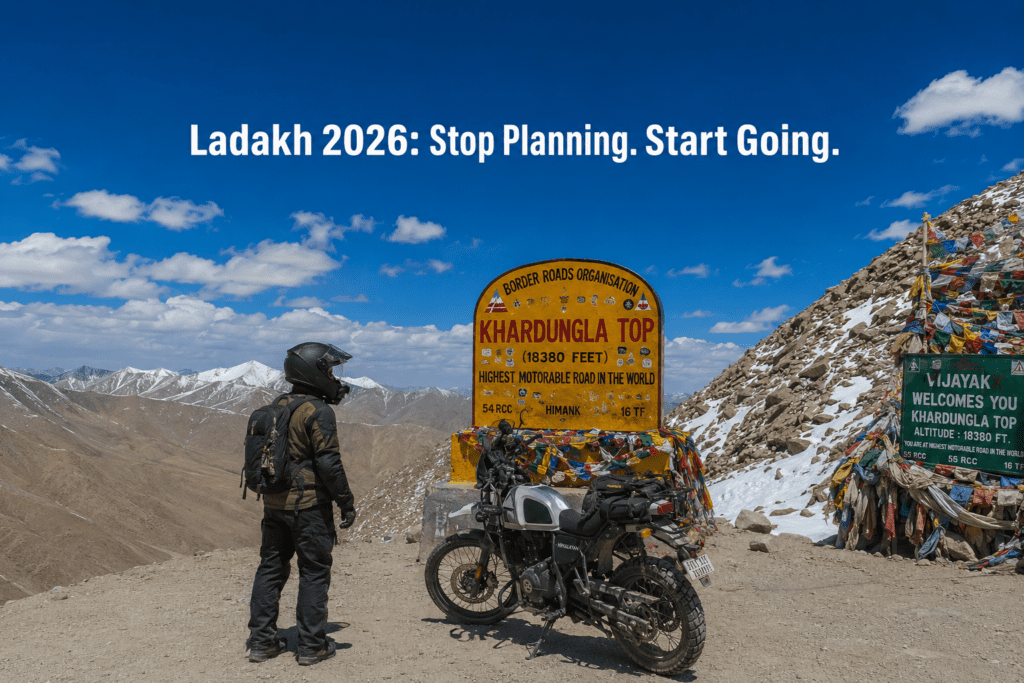
A Letter to the Friend Who Keeps Postponing This Trip
You’ve had the tab open for two years. You’ve saved the Instagram reels. You’ve said “this year for sure” approximately four times. You have a Pinterest board called “Ladakh someday” and a notes app entry with flight prices from six months ago that are now wrong.
I know, because I was you.
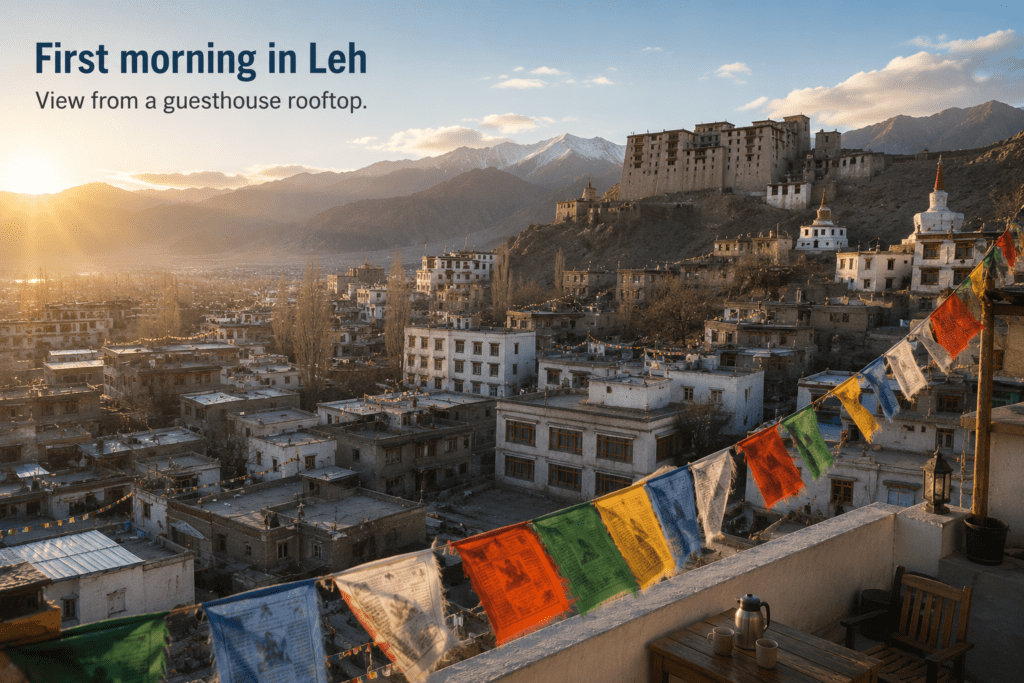
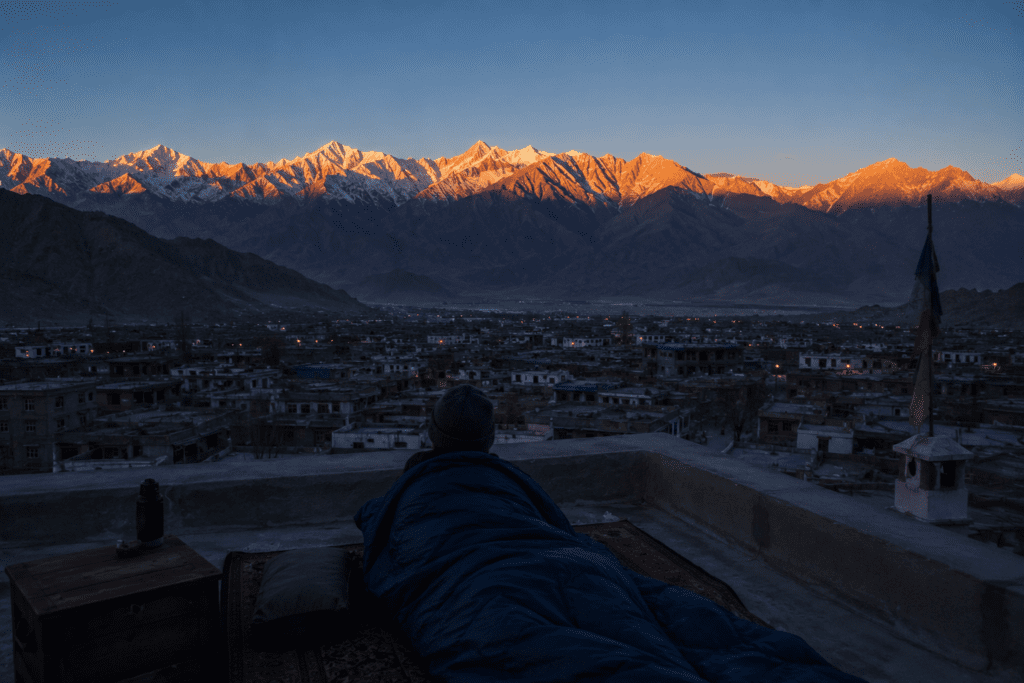
And then I went. And now I’m writing this at a café in Leh at 3,500 metres above sea level, a cup of butter tea in front of me that I didn’t think I’d like but now can’t stop drinking, watching the Stok Kangri range turn pink in the morning light, thinking — with a specific kind of quiet frustration — about all the years I spent planning instead of going.
So here’s what I want to say before we get into permits and passes and packing lists:
Go this year. Not next year. This year. 2026.
The roads are better than they’ve ever been. The infrastructure has caught up without killing the character. The motorcycle rental scene is mature and trustworthy. The permits are streamlined. And the landscape — the impossible, borderline-illegal landscape of Ladakh — is exactly as staggering as every photograph you’ve saved has been trying to tell you.
Now. Let’s plan the thing properly.
Quick Summary Table
| Category | Details |
|---|---|
| Best Time to Visit | June to September (roads open, weather stable) |
| Peak Season | July–August (most crowded, highest prices) |
| Sweet Spot | Mid-June and September (fewer crowds, lower prices) |
| Altitude of Leh | 3,524 metres (11,562 feet) |
| Acclimatisation needed | Minimum 2 full rest days on arrival |
| Duration (ideal) | 10–14 days from Leh; 14–18 days for full circuit |
| Budget (per person, 10 days) | ₹25,000–₹40,000 (budget) / ₹50,000–₹80,000 (mid) |
| By Bike (self-ride) | Manali–Leh Highway or Srinagar–Leh Highway |
| By Car (self-drive) | Same routes; also Leh–Nubra–Pangong–Manali circuit |
| By Flight | Direct flights to Leh (IXL) from Delhi, Mumbai, Srinagar |
| Permits Required | Inner Line Permit (ILP) for Nubra, Pangong, Tso Moriri |
| Starting Points | Mumbai → Delhi → Leh (fly), or Delhi → Manali → Leh (road) |
Why Ladakh in 2026 Is the Right Decision
The Honest Case for Going Now
Listen. Ladakh is not getting less popular. Every year, more people go. Every year, more guesthouses open, more roads get paved, and more of the raw, unfiltered experience that makes Ladakh extraordinary gets smoothed over by the infrastructure of mass tourism.
This is not an argument to wait. This is an argument to go now, before 2027 makes it busier still.
The things that make Ladakh irreplaceable — the silence at Pangong Tso at 5am, the vertigo of Khardung La, the monasteries carved into cliff faces in places that make you question the ambition of the people who built them, the Milky Way visible from your guesthouse roof because there is no light pollution for three hundred kilometres — these things are still here. Still intact. Still doing exactly what they’ve always done to the people who make it out there.
2026 is a good year. The Manali-Leh Highway is better maintained than ever. E-permits have simplified the Inner Line Permit process dramatically. Motorcycle rentals in Leh are professional and well-stocked. And most importantly: you already know you want to go.
The only thing standing between you and Ladakh is the planning. So let’s do it.
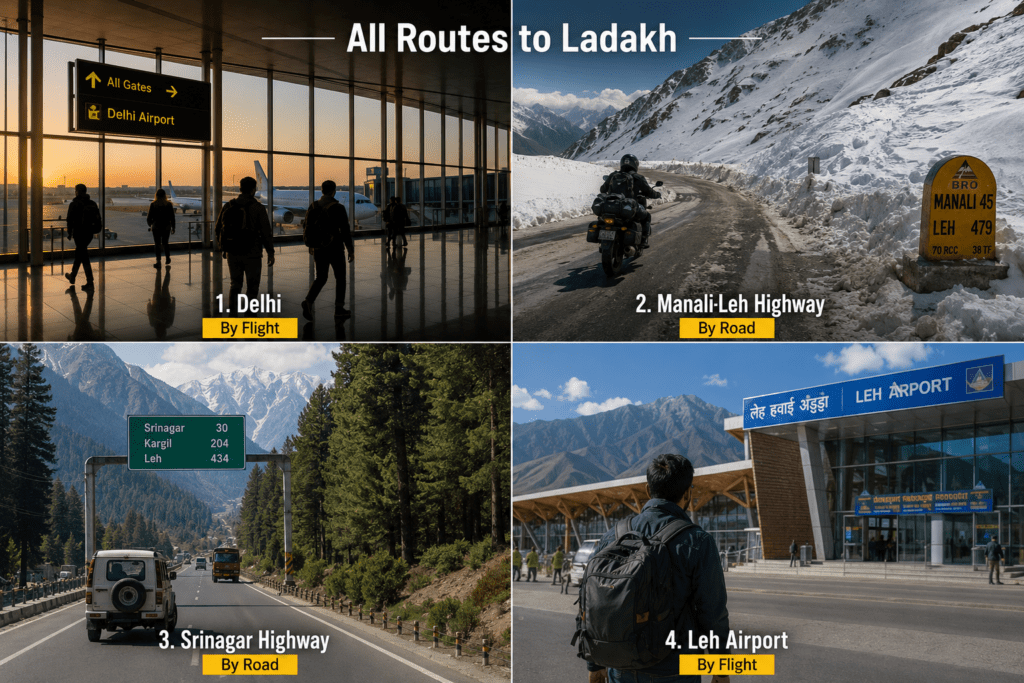
Getting to Ladakh — Every Route From Every Starting Point
From Mumbai — The Journey That Requires a Strategy
Mumbai doesn’t have a direct road to Ladakh. Obviously. But it has two reliable routes that work depending on how much time you have and how you want to travel.
Option A: Fly Mumbai → Delhi → Leh (Fastest)
Mumbai to Delhi: IndiGo, Air India, or Vistara (₹3,000–₹7,000 return, book 6–8 weeks out) Delhi to Leh: IndiGo, Air India, Go First (₹4,000–₹9,000 return, book early — these fill up fast in summer)
Total flight cost (Mumbai return via Delhi): ₹10,000–₹18,000 per person if planned well.
The Delhi–Leh flight is one of the great flight experiences in Indian aviation — you fly directly over the Himalayas, and on a clear day the landscape below is so dramatic that half the passengers stop talking and press their faces against the window. Window seat, left side if flying Delhi to Leh. Write that down.
Option B: Mumbai → Delhi by Train → Manali by Bus → Leh by Road (The Epic Way)
Mumbai to Delhi: Rajdhani Express or Mumbai Mail overnight (₹1,200–₹2,500 sleeper/AC) Delhi to Manali: Volvo bus overnight (₹800–₹1,500 from ISBT Kashmiri Gate) Manali to Leh: 2-day road journey via the Manali–Leh Highway (shared jeep ₹1,500–₹2,500 or private cab ₹8,000–₹12,000)
This route takes 3–4 days total but the Manali–Leh Highway is one of the great road journeys in the world. If you have the time, this is the journey, not just the means of getting there.
From Delhi — The Main Gateway to Ladakh
Delhi is where most Ladakh trips begin, and you have more options than you might expect.
Option A: Fly Delhi → Leh (1 hour 20 minutes)
The fastest and most practical choice for anyone with limited time. Book early — Delhi–Leh is one of the most consistently sold-out domestic routes in summer. Book 8–12 weeks in advance. Prices range from ₹4,000 (if you’re lucky and fast) to ₹12,000+ in peak July-August.
Airline tip: IndiGo and Air India both operate this route. Air India has a slight advantage in terms of schedule reliability and baggage allowance.
Option B: Delhi → Manali → Leh by Road (The Classic Biker Route)
Delhi to Manali: 570km, approximately 12–14 hours. Options:
- HRTC Volvo overnight bus (₹700–₹1,200, books out fast in summer — book 2 weeks ahead)
- Private taxi (₹6,000–₹9,000 one way, split between 4 people)
- Self-drive car or rented bike from Delhi (more on this below)
Manali to Leh: 480km via the Manali-Leh Highway, passing through Rohtang Pass, Baralacha La (4,890m), Lachulung La, Tanglang La (5,328m — one of the world’s highest motorable passes). This stretch takes 2 days with an overnight stop at Keylong, Jispa, or Sarchu.
This route is the one. If you’re biking, this is non-negotiable. The highway opens in late May or early June depending on snowfall and closes in October. Check current status with the Border Roads Organisation before you travel.
Option C: Delhi → Srinagar → Leh (The Scenic Alternative)
Delhi to Srinagar: Flight (₹3,000–₹7,000) or overnight bus via Jammu Srinagar to Leh: 434km via the Srinagar-Leh Highway (NH1), the oldest and historically most significant route into Ladakh. Passes through Sonamarg, Zoji La pass, and the Drass valley — the second coldest inhabited place on Earth. 1-day drive, stunning throughout.
This route has the advantage of lower altitude gain (easier acclimatisation) and Zoji La is one of the most dramatic road sections in India. If you’re doing the complete Ladakh circuit (fly in, road out or vice versa), the Srinagar route for one direction is highly recommended.
Starting Directly From Leh — For Fly-In Travelers
If you’re flying directly to Leh, you start with two mandatory rest days. This is not optional. Acute Mountain Sickness (AMS) is real, not dramatic, and it ends trips early if ignored.
Days 1–2 in Leh: Walk slowly. Eat light. Drink 3–4 litres of water. Don’t hike, don’t rush, don’t go to high passes. Visit Leh Market, Shanti Stupa (evening walk, gentle), Leh Palace. Sleep early. Let your blood thicken.
After two days, you’re ready to explore. Everything below assumes you’ve done this.
Getting Around Ladakh — By Bike, Car, Minibus & More
By Self-Rented Motorcycle — The Dream Version
This is the one. This is what the Pinterest board was for.
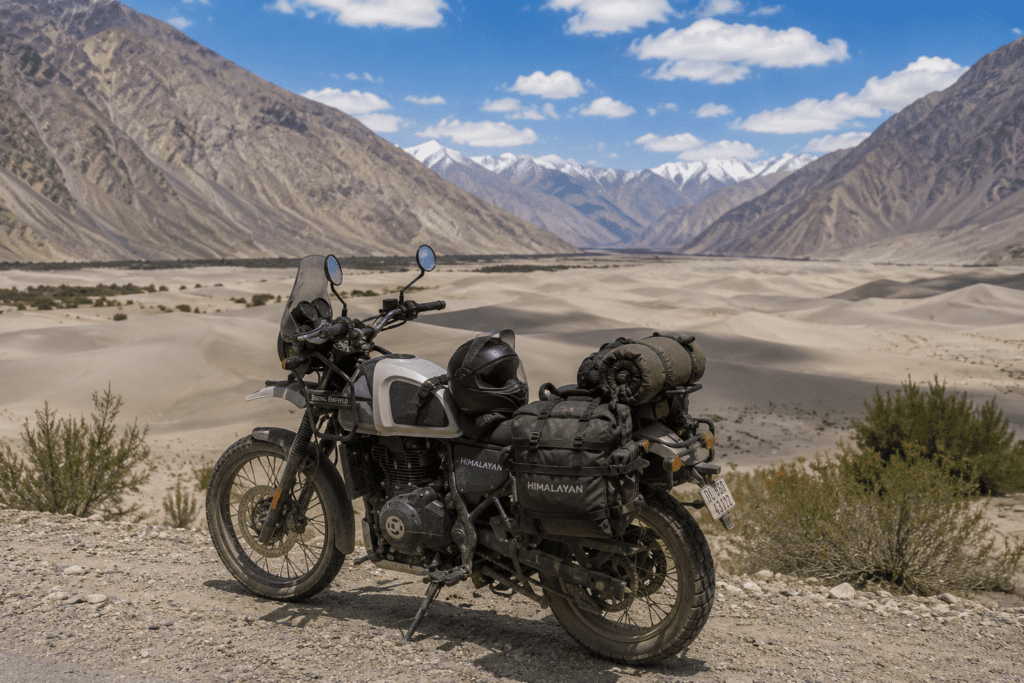
Renting a motorcycle in Leh and riding the circuit — Nubra Valley, Pangong Tso, Tso Moriri, back to Leh — is one of the great travel experiences available in India, possibly in the world. The roads are genuinely challenging, occasionally terrifying, always magnificent, and the sense of self-propelled arrival at each destination is something no shared jeep can replicate.
Best bikes for Ladakh:
Royal Enfield Himalayan (411cc): The recommended choice for Ladakh. Purpose-built for this terrain, long-travel suspension, decent power at altitude, comfortable seating position. Widely available in Leh. Rental cost: ₹1,500–₹2,500/day.
Royal Enfield Classic 350/500: Popular but less suited for off-road sections. Fine for the main highway routes. Rental: ₹1,200–₹1,800/day.
KTM Duke 390 / Adventure 390: Available at some rental shops, better performance at altitude, pricier. Rental: ₹2,500–₹3,500/day.
BMW G 310 GS: Premium option, increasingly available. Rental: ₹3,000–₹4,500/day.
Where to rent in Leh:
- Enfield Bike Rentals, Fort Road: Long-established, well-maintained fleet
- Ladakh Bike Rentals (Fort Road area): Multiple shops, compare condition before committing
- Zostel Leh: Has a bike rental desk for guests with vetted options
What to check before renting: Engine condition, brakes (front and rear), tyre tread depth, all lights, horn, chain tension, toolkit presence. Ask for a test ride around the block. A reputable shop will not refuse this.
Documents needed: Driving licence (must have motorcycle endorsement — two-wheeler entry), ID proof, security deposit (₹5,000–₹10,000 in cash or credit card hold).
By Self-Drive Car (Rented or Own)
Self-driving Ladakh in a car is increasingly popular and genuinely excellent — more comfortable than a bike, more flexible than a shared jeep, and the passes are entirely manageable in a capable vehicle.
Best cars for Ladakh:
Mahindra Thar / Scorpio-N: The recommended choice. High ground clearance, 4WD capability, reliable in rough terrain. Self-drive rentals in Leh: ₹4,500–₹7,000/day.
Toyota Fortuner / Land Cruiser: Comfortable, capable, popular for group car trips. ₹6,000–₹9,000/day self-drive.
Maruti Suzuki Vitara Brezza / Hyundai Creta: Adequate for main roads and most passes in good conditions. Not recommended for Marsimik La or off-road detours. ₹3,000–₹4,500/day.
Own car from Delhi/Manali: Entirely doable in an SUV. Swift Dzire and similar sedan cars are not recommended — ground clearance becomes an issue on unpaved sections.
Important: Fill fuel in Leh and at every opportunity. Fuel stations are sparse. Carry a 5–10 litre jerry can.
By Shared Jeep / Taxi
The most practical option for solo travelers who don’t ride, and the budget option for those who don’t want to drive.
Leh has a well-organised taxi union — the Leh Taxi Operators Cooperative — with fixed rates for all major circuits. Sharing taxis with other travelers from Leh’s guesthouses and hostels is common and easy.
Fixed taxi rates (approximate, 2026):
- Leh to Nubra Valley (Hunder): ₹4,500–₹5,500 (can split between 4–6 people)
- Leh to Pangong Tso (return): ₹7,000–₹9,000
- Leh to Tso Moriri: ₹8,000–₹10,000
- Full circuit (Nubra + Pangong + Tso Moriri + Leh): ₹18,000–₹25,000 (negotiate for 5–7 days)
By Group Minibus / Tempo Traveller
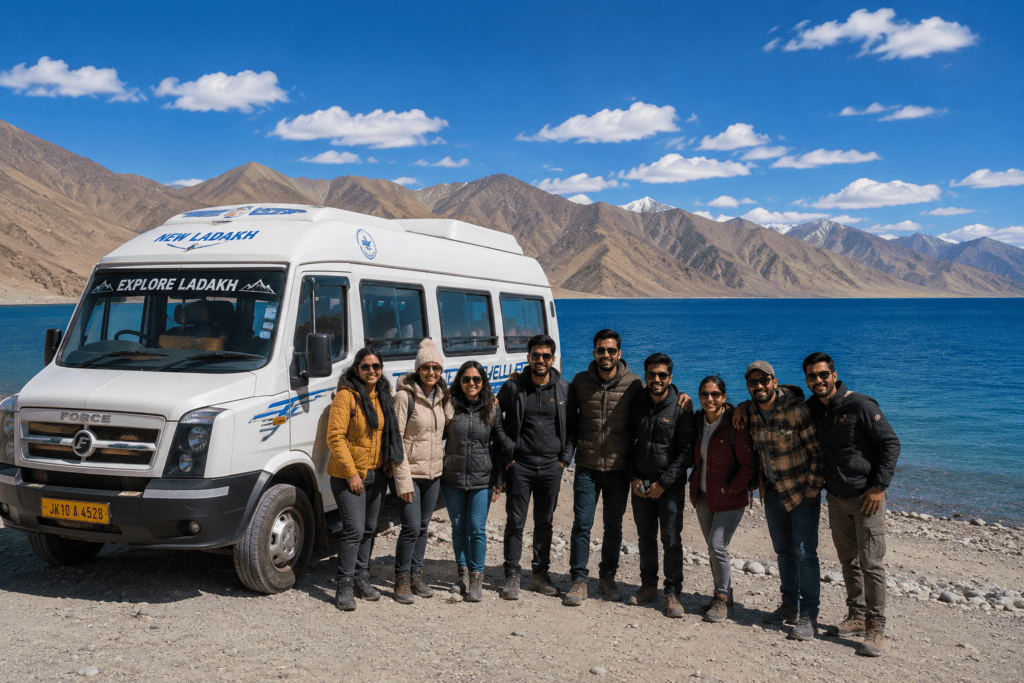
For groups of 8–12 people, a rented Tempo Traveller or minibus is the most cost-effective and comfortable group travel option.
Tempo Traveller rental (12-seater): ₹8,000–₹12,000/day including driver Split between 10 people: ₹800–₹1,200/person/day — significantly cheaper than individual taxis.
Advantages: Fixed vehicle throughout, driver handles navigation and mountain road stress, flexible stops, luggage stays in the vehicle.
Best for: Corporate group trips, college trips, family groups, organised travel groups.
How to book: Leh taxi operators offer Tempo Travellers; also available through travel agencies in Leh, Manali, and Delhi. Book in advance for summer season.
Permits — What You Need and How to Get Them
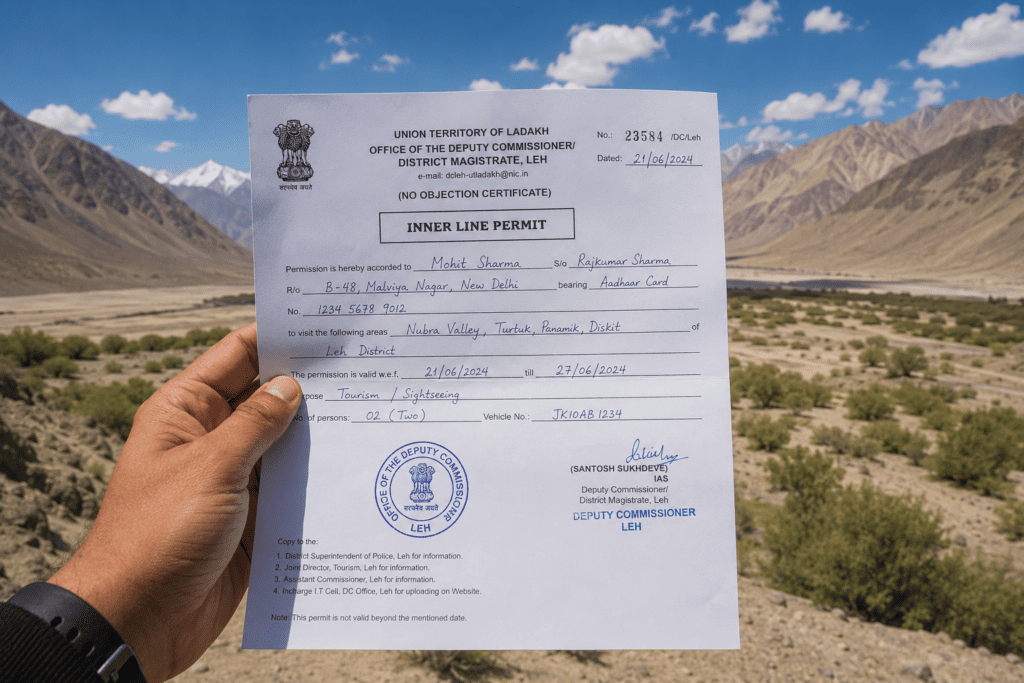
Inner Line Permit (ILP) — The Non-Negotiable
Certain areas of Ladakh — being near sensitive international borders — require an Inner Line Permit for Indian nationals. Foreign nationals require a Protected Area Permit (PAP).
Areas requiring ILP (Indian nationals):
- Nubra Valley (Diskit, Hunder, Turtuk)
- Pangong Tso
- Tso Moriri and Tso Kar
- Dah-Hanu (Aryan Valley)
- Hanle
How to get the ILP:
Online (recommended): Apply at the Ladakh Tourism e-permit portal (lahdclehtourism.com or the updated 2026 portal — verify current URL). Process takes 30 minutes to 2 hours. Print or save to phone.
In-person in Leh: DC Office, Leh (near the main market). Arrive at 9am. ₹100–₹200 per permit per area. Takes 1–2 hours.
What you need: Passport/Aadhaar, recent passport photograph, itinerary details.
ILP is free for most areas — some newer zones charge a nominal fee. Verify current requirements at the time of travel as regulations update annually.
The Ladakh Itinerary — Day by Day
10-Day Leh-Based Circuit (The Gold Standard)
Day 1–2: Leh — Arrive, Acclimatise, Don’t Rush
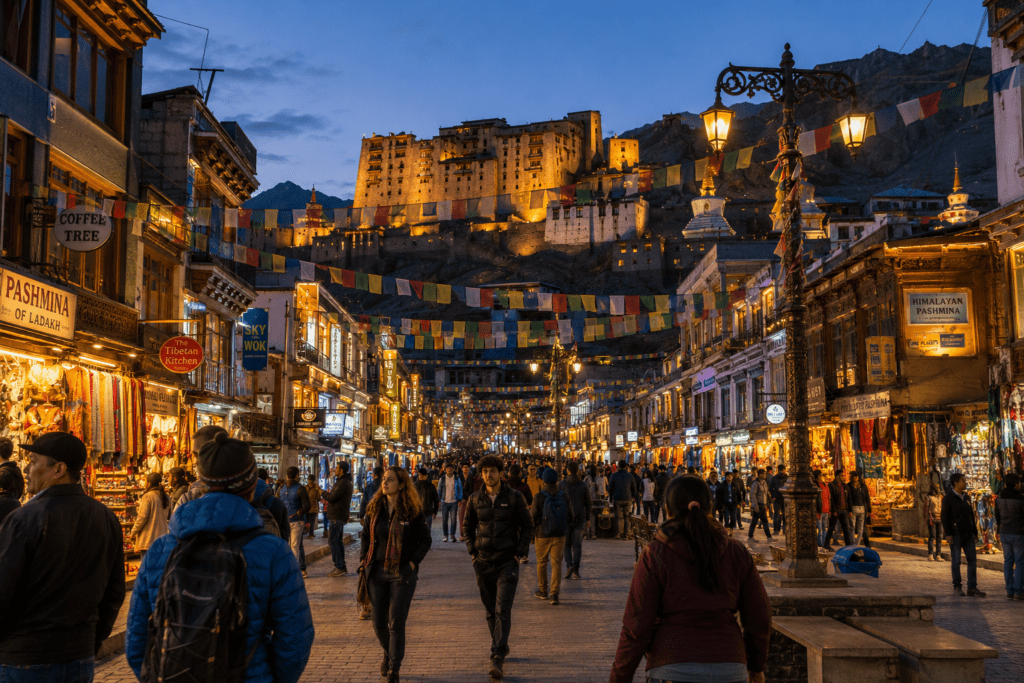
Rest. Hydrate. Walk slowly through Leh Market. Visit the Leh Palace at sunset — entry ₹50 for Indians. Have butter tea. Have more water. Sleep early. Your mountain experience depends entirely on respecting these two days.
Eat: Tibetan Kitchen on Fort Road for Thukpa and Momos (₹200–₹350). Chopsticks Restaurant for a mix of Indian, Chinese and Tibetan (₹300–₹500).
Day 3: Leh Local — Monasteries and Stupas
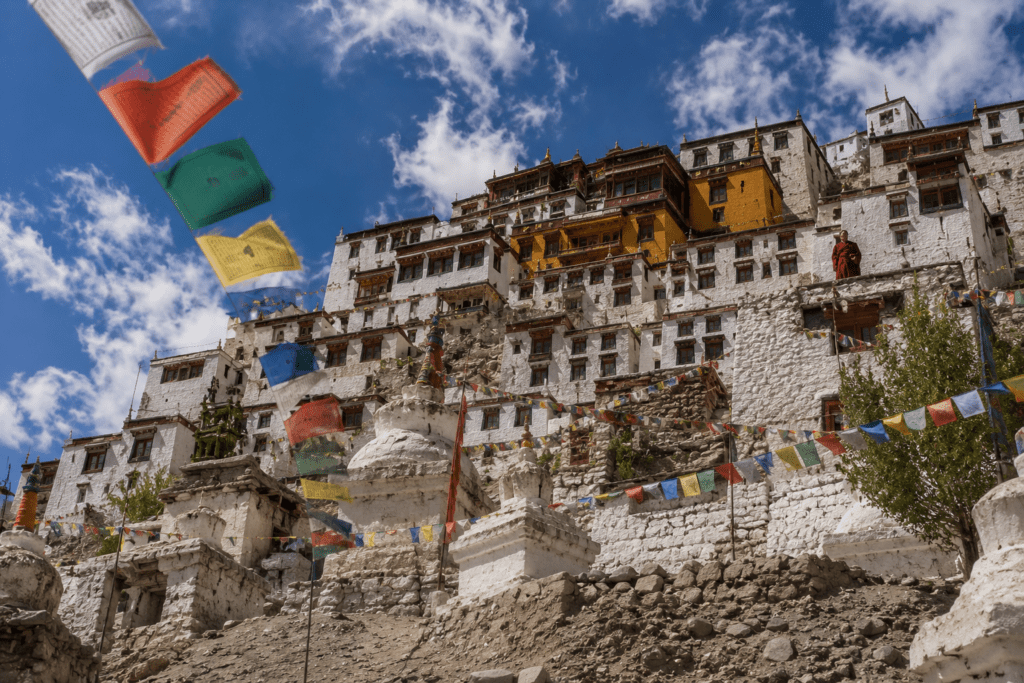
Shey Palace → Thiksey Monastery (the one that looks like a mini Potala Palace, worth the ₹50 entry fee and the climb) → Hemis Monastery (largest and richest monastery in Ladakh, ₹100 entry) → Rancho’s School (3 Idiots filming location, now a real school — a respectful drive-by, not a circus visit).
Distance: 60–70km round trip from Leh. Half day sufficient.
Day 4: North — Khardung La and Nubra Valley
The day you’ve been waiting for. Khardung La (5,359m — one of the world’s highest motorable passes) in the morning, Nubra Valley by afternoon.
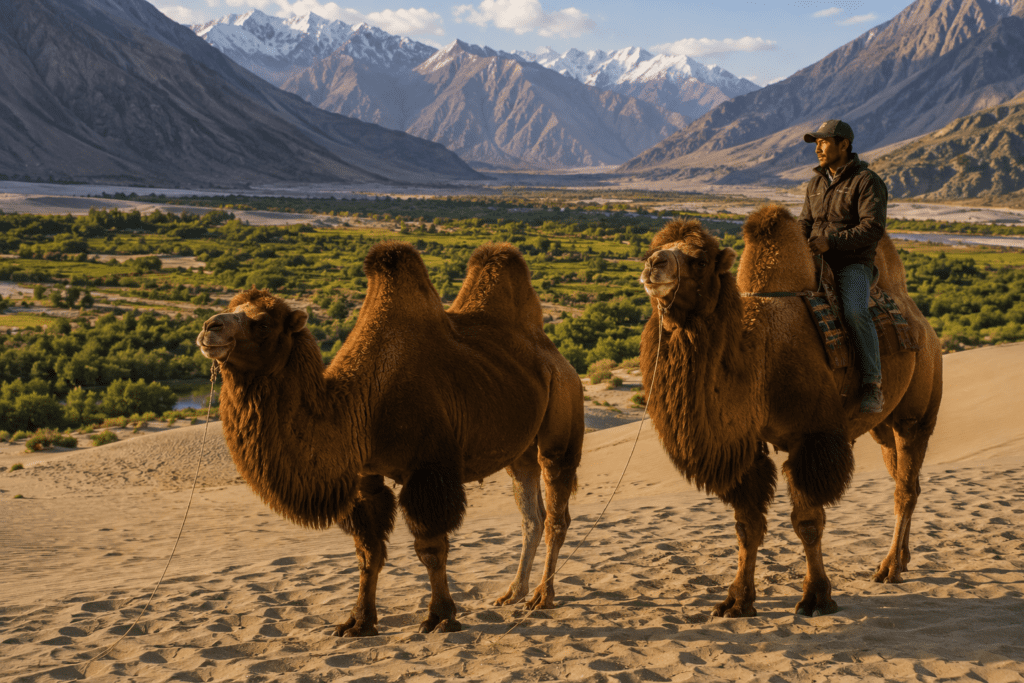
The descent into Nubra is one of the great reveals in Indian travel — you’ve been in barren brown mountains for hours, and then the valley opens up and there are green fields, an actual river (the Shyok), sand dunes, and Bactrian (double-humped) camels. It’s surreal in the best way.
Stay in Hunder or Diskit: Guesthouses ₹800–₹2,000/night. Camp options ₹1,500–₹3,000/night (tent with meals).
Day 5: Nubra — Diskit Monastery, Camel Safari, Hunder Sand Dunes
Diskit Monastery in the morning (giant Maitreya Buddha statue facing towards Pakistan — a quietly powerful image). Afternoon: Bactrian camel ride at Hunder sand dunes (₹400–₹700 for 30 minutes, genuinely fun, not a tourist gimmick). Sunset at the dunes.
Day 6: Pangong Tso — The Blue That Doesn’t Believe in Itself
Drive from Nubra to Pangong Tso via the Shyok Valley route (or back via Khardung La for those without the Shyok permit). 150km, 5–6 hours of driving that you won’t mind at all.
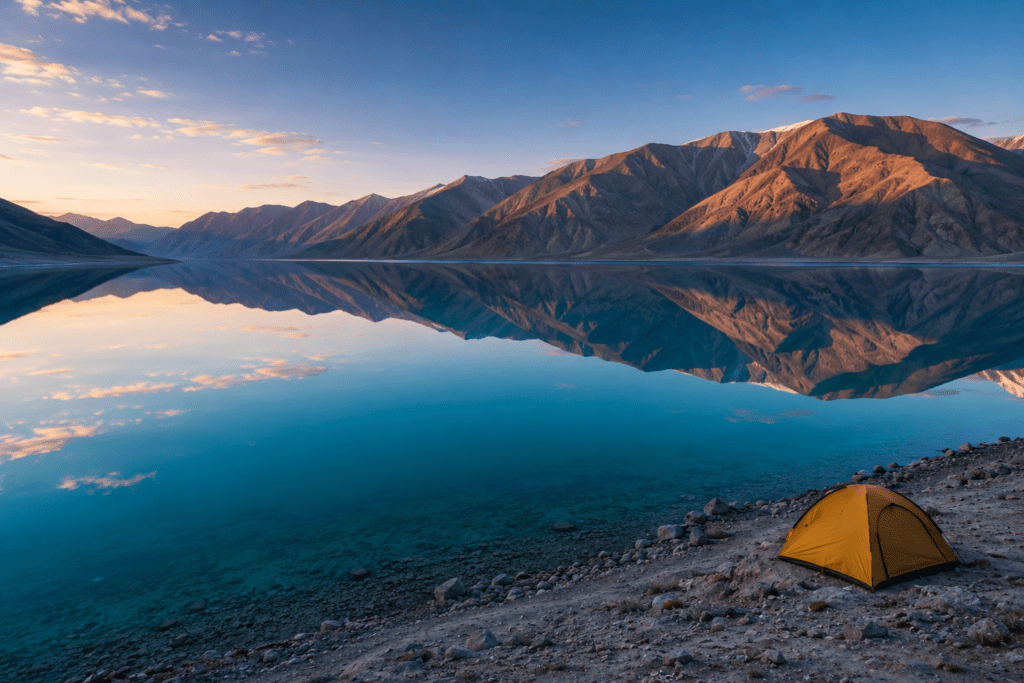
Pangong Tso is 134km long, crosses into Tibet, and is the specific shade of blue that photographers travel from other countries to try to capture and almost never fully succeed. At 4,350m, in September light, the water changes colour — cobalt, turquoise, steel — every twenty minutes.
Stay at Pangong: Camp stays (₹1,800–₹3,500/night with meals) are the atmospheric choice. Budget guesthouses at ₹800–₹1,500. Stay the night — the sunset and dawn here are non-negotiable.
Day 7: Pangong → Tso Moriri (or Back to Leh)
For those with extra days: continue to Tso Moriri (another high-altitude lake, wilder and less visited than Pangong, with the Korzok monastery on its shore). For those returning: drive back to Leh via Changla Pass (5,360m — another top-five pass).
Day 8: Leh Rest Day + Leh Market Deep Dive
Buy things. Pashmina shawls, Ladakhi jewellery, Tibetan singing bowls, locally roasted coffee from the Leh Berry café. Have a proper sit-down lunch. Visit the Ecological Centre and Leh’s central mosque (a remarkable building in a town full of monasteries).
Lamayuru and the Moonland
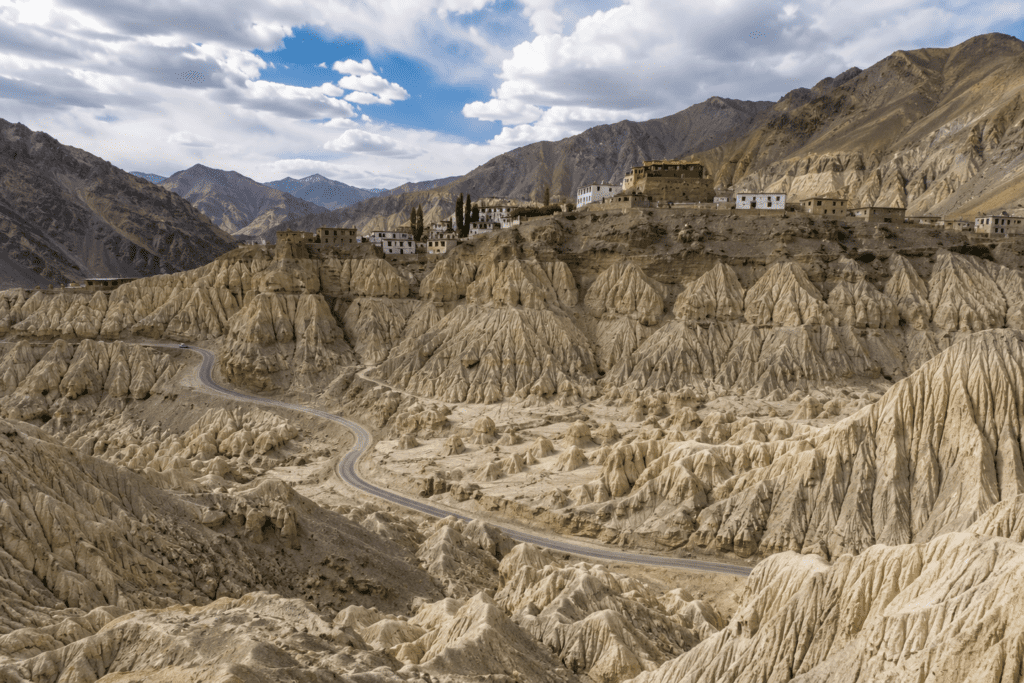
Drive west from Leh toward Kargil — not to Kargil itself (unless you’re doing the Srinagar route) but to Lamayuru, 127km from Leh. The landscape approaching Lamayuru is called the Moonland — eroded clay formations that look like nothing else on Earth. Lamayuru monastery, perched above this landscape, is the oldest in Ladakh.
Turn around and come back to Leh. Full day. Worth every kilometre.
Day 10: Magnetic Hill, Gurudwara Pathar Sahib, Confluence — Then Fly Home
The classic Leh send-off circuit, all within 40km of the city.
Gurudwara Pathar Sahib: A Sikh shrine carved into the mountain. Langar (free community meal) is served all day. Eat here.
Magnetic Hill: The famous optical illusion where the road appears to slope uphill but cars seem to roll “uphill” on their own (actually a visual trick of the landscape). Worth a 20-minute stop.
Sangam (Confluence): Where the Indus and Zanskar rivers meet — two completely different coloured rivers running beside each other before slowly merging. Remarkable and easy to see from the road.
Afternoon flight from Leh to Delhi. Window seat, right side this time.
Ladakh for Every Type of Traveler
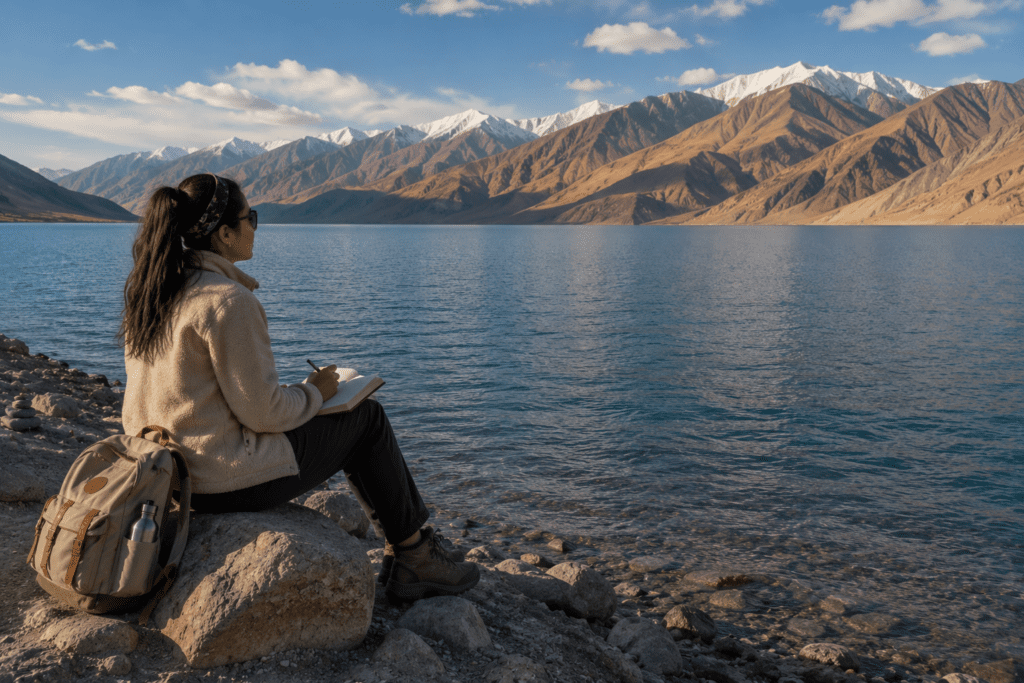
Solo Travelers — You Are Going to Be Fine
Ladakh is one of the most solo-travel-friendly destinations in India, with a specific caveat: high-altitude solo riding requires more preparation than most other solo travel.
The solo travel truth: The hostel scene in Leh — Zostel, Moustache, Backpacker’s Charade — is excellent for meeting other travelers. Within 24 hours of arriving in Leh, most solo travelers have found a group to share taxis or tents with.
For solo female travelers: Ladakh is consistently cited as one of the safer destinations in India. The Buddhist and mixed community culture of Leh is respectful and relaxed. The hostel network creates safety in numbers. Go. Trust the preparation.
Solo bike riding advisory: Riding solo in Ladakh is done every season by thousands of travelers, but take it seriously. Carry a first-aid kit. Don’t ride technical sections (Zoji La, Marsimik La) at night. Tell your guesthouse your route each morning. Have a local contact number in your phone.
Couples — Ladakh Is One of the Best Decisions You’ll Make Together
There is something about extreme landscapes and physical challenge that does interesting things to relationships. Watching the sun set over Pangong Tso together while wrapped in a sleeping bag in a tent at 4,350m is, objectively, a more memorable date than anything that has ever happened in a restaurant.
For couples on a bike: One bike, riding together, is the classic Ladakh couple experience. Be honest with each other about comfort — 6 hours on a bike pillion is not for everyone. Consider alternating between riding sections and sharing a jeep on longer days.
For couples in a car: Self-drive in a Thar or Scorpio-N gives you privacy and flexibility — stop when you want, stay where the light is beautiful, don’t answer to a driver’s schedule.
Romantic stays:
- The Grand Dragon Ladakh, Leh: ₹8,000–₹15,000/night, the most beautifully designed hotel in Leh, rooftop views
- Nimmu House, Nimmu: Heritage property on the Indus, ₹6,000–₹10,000/night
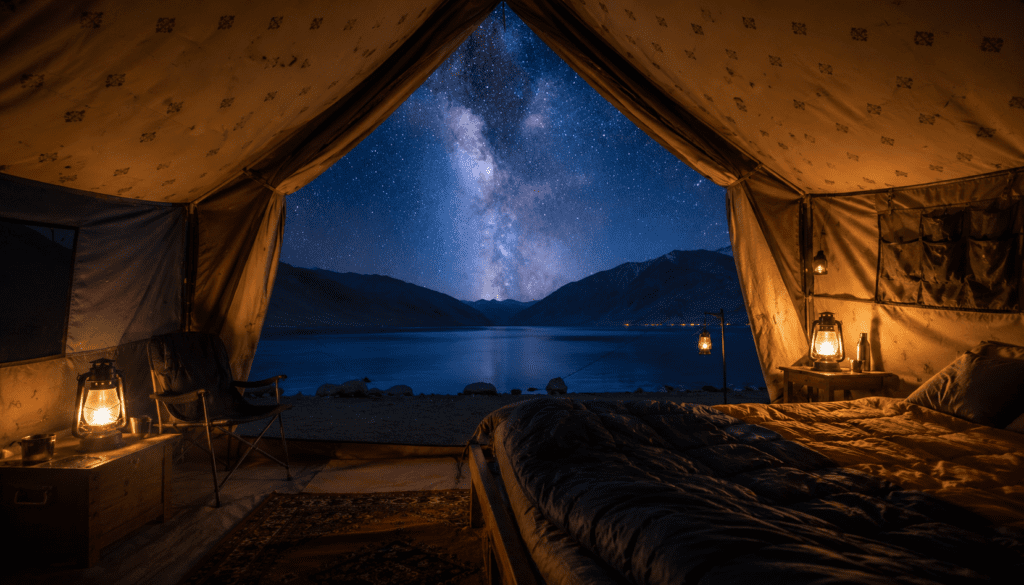
- Pangong Residency Camp: Tented camp at Pangong, breakfast and dinner included, ₹3,000–₹5,000/night
Group Travel (6–15 people) — The Logistics That Make It Work
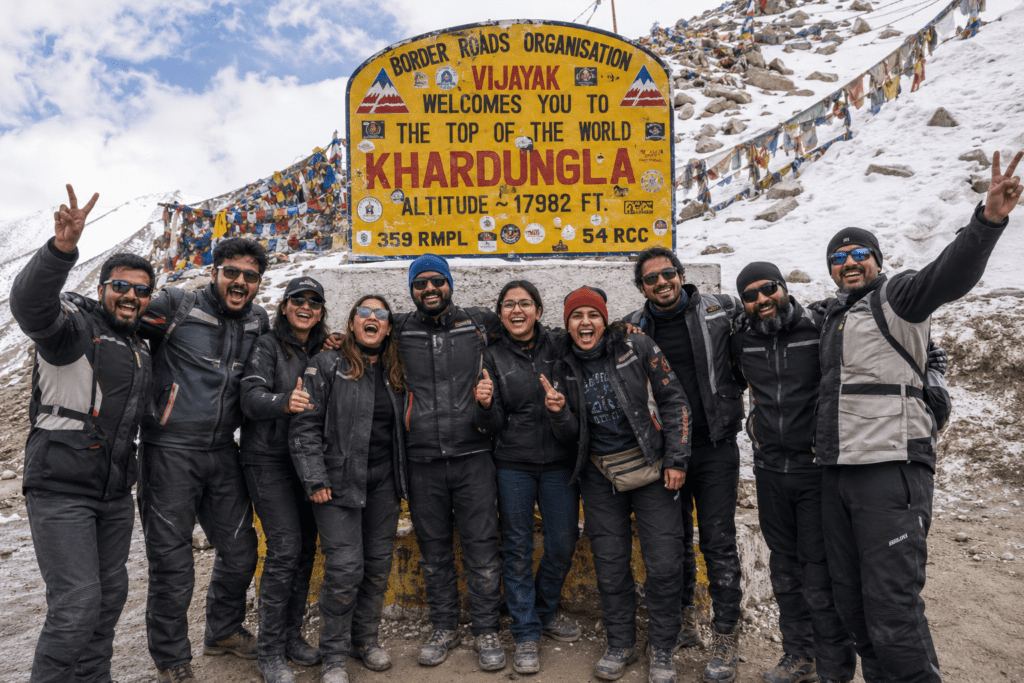
Group Ladakh trips have a particular magic — shared meals around a campfire, the collective experience of Khardung La, the group photograph at Pangong that becomes someone’s screensaver for three years.
The logistics reality:
Book a Tempo Traveller with driver (₹8,000–₹12,000/day) — split between 10 people, this is ₹800–₹1,200/person/day, more affordable than individual taxis and more social than everyone in separate vehicles.
Designate one person as the logistics lead. This person handles permit applications, guesthouse confirmations, driver communication, and daily briefings. Rotate the responsibility if the trip is long.
Group accommodation: Book guesthouses in advance for summer — properties with 6–10 rooms fill early in peak season.
Group ILP permits: All names on one application is possible and faster — carry a group list with ID numbers.
Where to Stay in Ladakh
Leh City — The Base
Budget (₹600–₹1,500/night):
- Zostel Leh: The social hub for solo and group travelers. Dorms from ₹600, privates from ₹1,200. Fort Road location is ideal.
- Moustache Leh: Well-rated hostel, good common areas, clean dorms ₹700–₹900.
- Old Ladakh Guest House: Family-run, central, breakfast included, ₹900–₹1,400.
Mid-range (₹2,000–₹6,000/night):
- Hotel Saser, Leh: Clean, comfortable, mountain views from rooms, ₹2,500–₹4,000.
- Ladakh Residency: Well-located, ₹3,000–₹5,000, good restaurant.
Premium (₹7,000–₹20,000+/night):
- The Grand Dragon Ladakh: ₹10,000–₹18,000/night. The finest hotel in Leh. Heated rooms, exceptional design, rooftop views of the palace.
- Chamba Camp Thiksey: A luxury tented camp near Thiksey monastery, ₹15,000–₹25,000/night. For those who want glamping at altitude.
Nubra Valley — Hunder and Diskit
Budget guesthouses: ₹700–₹1,500/night (local family-run, simple and authentic) Camp stays (tents with meals): ₹1,500–₹3,000/night Recommended: Organic Retreat, Hunder (~₹2,500/night, best camp setup in Nubra)
Pangong Tso
Tent camps (most popular): ₹2,000–₹4,500/night including dinner and breakfast Basic guesthouses: ₹800–₹1,500/night, no-frills but adequate Recommended camp: Felix Camp Pangong (₹3,000–₹4,500, good food, lakefront location)
Tso Moriri
Korzok village guesthouses: ₹600–₹1,200/night (extremely basic, wildly atmospheric) Camp stays: ₹2,000–₹3,500/night
Things to Do in Ladakh — Beyond the Obvious
Adventure Activities
White Water Rafting on the Zanskar/Indus: Organized rafting from Chilling on the Zanskar River — Grade III–IV rapids, half-day trips from Leh. Cost: ₹800–₹1,500/person through tour operators in Leh.
Trekking — Markha Valley Trek: The most celebrated multi-day trek in Ladakh — 5 to 8 days through remote valleys, high passes, and isolated villages. Guide + porter: ₹2,500–₹4,000/day. Best done June to September.
Stok Kangri Summit (6,153m): The most accessible 6,000m peak in India. Non-technical but physically demanding. Guided expeditions: ₹25,000–₹45,000 per person for the full expedition.
Mountain Biking: Increasingly popular, with rental shops in Leh offering MTB bikes for day routes around the Indus Valley.
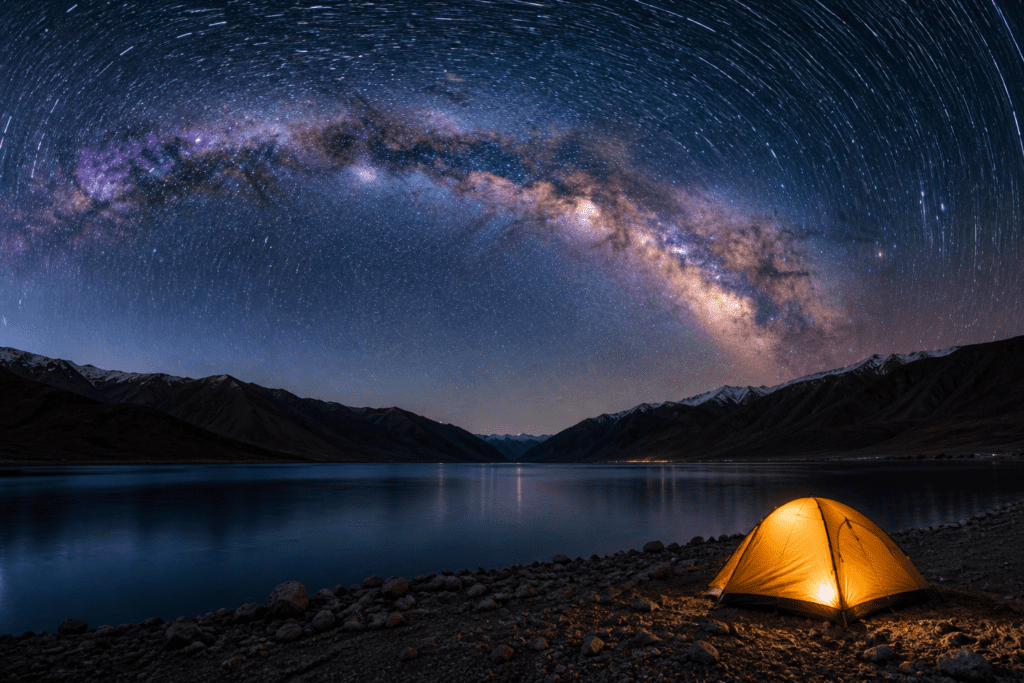
Stargazing: At Pangong Tso, Tso Moriri, and Hanle — among the best dark sky locations in Asia. No equipment needed. Just walk outside your tent at midnight and look up.
Cultural Experiences
Hemis Festival (June/July annually): The most important festival in Ladakh’s calendar — two-day masked dance (Cham) performances at Hemis Monastery. The monastery crowds with monks, locals, and visitors. Book accommodation 2–3 months in advance if your dates align.
Ladakhi Home-Cooked Meal: Ask your guesthouse host if they’ll cook a traditional Ladakhi meal for you — Skyu (pasta stew), Thukpa (noodle soup), Chang (barley beer), butter tea. Most will say yes. Tip generously.
Monastery Morning Prayers: At Thiksey or Diskit, wake up at 6am, walk into the monastery, and sit quietly at the back of the prayer hall as the monks conduct morning prayers. No ticket needed. No photography during prayers.
What to Eat in Ladakh
The Ladakhi Table
Ladakhi cuisine is Tibetan-influenced, high-altitude practical, and deeply satisfying in the cold mountain air. Don’t make the mistake of eating only “safe” Indian food from restaurant menus designed for nervous tourists.
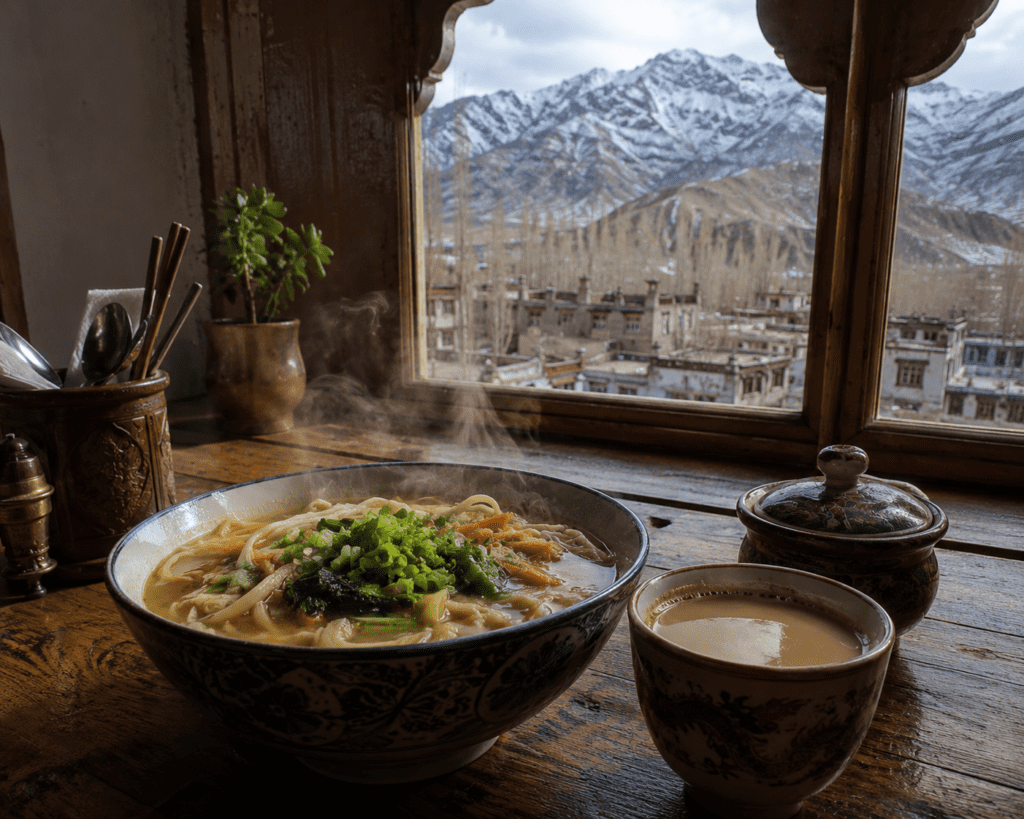
Thukpa (₹120–₹200): Tibetan noodle soup with vegetables or meat. The correct meal after a long day in the mountains. Every restaurant in Leh has it. Quality varies — find the one the locals eat at.
Momos (₹100–₹180 for 8 pieces): Steamed dumplings with vegetable or meat filling. At high altitude, a plate of momos and a cup of soup is the best possible decision.
Butter Tea (Gur Gur Chai) (₹30–₹60): Tea made with yak butter and salt. Warming, fatty, completely unlike anything you’ve had before. An acquired taste — most people need two cups to decide if they like it. Drink it anyway. This is Ladakh.
Skyu (₹150–₹250): Traditional Ladakhi wheat pasta stew — hand-pressed pasta pieces cooked with root vegetables in a hearty broth. Warming and filling. Order it in family-run guesthouses where it’s made traditionally.
Tingmo with Stew (₹150–₹200): Steamed bread — light, spiralled, slightly chewy — served with a lentil or vegetable stew. A Tibetan breakfast that outperforms everything.
Chhang (₹80–₹150): Local barley beer, slightly sour and low-alcohol, served at room temperature or slightly warm. Ask for it in local dhabas rather than tourist restaurants.
Apricot Jam (buy to take home, ₹80–₹200 per jar): Ladakh’s Nubra Valley produces exceptional apricots. The local jam is made without preservatives and is so good it becomes a post-trip obsession. Buy multiple jars at the Leh Market.
Budget Breakdown — What Ladakh Actually Costs in 2026
Budget Traveler (Per Person, 10 Days, Excluding Flights)
| Expense | Daily Cost | 10-Day Total |
|---|---|---|
| Accommodation (dorm/budget guesthouse) | ₹700–₹1,000 | ₹7,000–₹10,000 |
| Food (3 meals, local restaurants) | ₹400–₹600 | ₹4,000–₹6,000 |
| Transport (shared jeeps, local) | ₹500–₹800 | ₹5,000–₹8,000 |
| Permits, entry fees | — | ₹500–₹800 |
| Activities (basic) | ₹200–₹400 | ₹2,000–₹4,000 |
| Shopping, miscellaneous | ₹200–₹500 | ₹2,000–₹5,000 |
| Total | ₹20,500–₹33,800 |
Mid-Range Traveler (Per Person, 10 Days)
| Expense | Daily Cost | 10-Day Total |
|---|---|---|
| Accommodation (private room/mid hotel) | ₹2,000–₹4,000 | ₹20,000–₹40,000 |
| Food (mix of restaurants and guesthouses) | ₹800–₹1,500 | ₹8,000–₹15,000 |
| Transport (private taxi / bike rental) | ₹1,500–₹2,500 | ₹15,000–₹25,000 |
| Permits, entry fees | — | ₹500–₹800 |
| Activities (rafting, trekking day) | ₹1,000–₹2,000 | ₹10,000–₹20,000 |
| Shopping, miscellaneous | ₹500–₹1,500 | ₹5,000–₹15,000 |
| Total | ₹58,500–₹1,15,800 |
Flights to add:
- From Delhi: ₹8,000–₹18,000 return (book early)
- From Mumbai via Delhi: ₹14,000–₹28,000 return (book early)
My Personal Recommendations
If you only have 7 days: Fly to Leh. Two acclimatisation days. Nubra Valley (1 night). Pangong Tso (1 night). Leh local sights (1 day). Fly home. This is enough to know Ladakh will not leave you alone afterward.
If you have 12 days: Add Tso Moriri (1 night), Lamayuru (day trip), and Zanskar rafting. This is the version that ruins all future holidays by comparison.
If you’re biking: Fly to Leh, acclimatise, rent a Himalayan, do the circuit, drop the bike and fly home from Leh. Or: land in Manali, rent a bike, ride to Leh (4 days), do the Leh circuit, and fly home. This is the one the Pinterest board was for.
The thing to prioritise above everything: One sunrise at Pangong Tso. Set an alarm. Walk to the lake edge alone. Wait.
Everything that comes after will be measured against that morning.
Pro Tips — Ladakh Specific
- Diamox (Acetazolamide) for altitude: Consult your doctor before travel. 125mg twice daily starting 24 hours before arrival at altitude is the most common preventive prescription. Not mandatory but commonly used. Carry Dexamethasone as an emergency medication (prescription required).
- Carry cash. ATMs in Leh work but the queues are long in peak season and they run out. ATMs beyond Leh are unreliable. Carry ₹15,000–₹20,000 cash for any 10-day circuit.
- Mobile data: Airtel has the most reliable coverage in Leh city and on main roads. BSNL works in some border areas where private operators don’t. Jio is patchy beyond Leh. Download offline Google Maps for the entire Ladakh region before you go.
- Cold nights are real. Even in July and August, temperatures at Pangong and Nubra drop to 2–8°C at night. Carry a sleeping bag rated to -5°C minimum. Don’t trust camp-provided blankets to be enough.
- The Manali-Leh Highway can close without warning due to landslides. Build 1–2 buffer days into any road trip itinerary. This is not pessimism; it is mountain mathematics.
- Sunscreen at altitude is serious. UV radiation at 4,000-5,000m is significantly higher than at sea level. SPF 50+ minimum. Reapply every 2 hours on outdoor days. Lip balm with SPF is mandatory.
- Garbage in Ladakh is a real problem. Carry a personal bag for your waste on mountain roads. The landscape is extraordinary; the roadside litter in some areas is heartbreaking. Do not add to it.
Mistakes to Avoid
Skipping acclimatisation days. Every season, travelers cut the rest days short and end up with AMS — headaches, nausea, breathlessness — that grounds them for 2–3 days anyway. The maths never works in your favour. Rest first.
Going without permits. Checkposts at Khardung La, Pangong, and Nubra verify ILPs. No permit means you’re turned back. No exceptions.
Underestimating fuel. The Leh–Pangong route has no fuel station. Fill up in Leh before leaving. Every time.
Booking only one night at Pangong Tso. The lake at dawn is the reason people come. Arrive the evening before, stay the night, wake up for the sunrise. Anyone who drives in, takes photos, and leaves the same day has missed the actual thing.
Choosing July-August peak season without advance bookings. Accommodation in Leh, Nubra, and Pangong fills completely in July-August. Book at least 6–8 weeks in advance for peak season.
Renting a bike without a proper check. Always check brakes, tyres, and lights before leaving Leh. Mechanical failure at Khardung La is not a minor inconvenience.
FAQ Section
Q: Is Ladakh safe to visit in 2026?
A: Yes — Ladakh has been a Union Territory since 2019 and is safe for tourism. The main safety considerations are altitude sickness (preventable with proper acclimatisation), road conditions on mountain passes (manageable with careful driving), and weather unpredictability. Solo female travelers consistently rate Ladakh among the safer destinations in India.
Q: What is the best time to visit Ladakh?
A: June to September is the main window when the passes are open and the weather is stable. Mid-June and September are the sweet spots — slightly fewer crowds, lower prices, and the landscape is magnificent. July and August are peak season with maximum visitors and highest accommodation prices. Pangong Tso and Nubra Valley require the passes to be open.
Q: How many days are enough for Ladakh?
A: 10 days minimum for a proper Ladakh experience covering Leh, Nubra Valley, Pangong Tso, and the main local sights. 12–14 days adds Tso Moriri, Zanskar, and more leisure. 7 days is possible but tight — you’ll see the highlights but won’t have time to breathe.
Q: What is the total budget for a Ladakh trip from Mumbai?
A: For a budget traveler: ₹35,000–₹55,000 per person total (including flights) for 10 days. For mid-range travel: ₹70,000–₹1,10,000 per person. For premium travel: ₹1,50,000+ per person. The biggest variables are flight booking timing and accommodation category.
Q: Can I rent a bike in Leh without bringing one from Delhi?
A: Yes — Leh has a well-developed motorcycle rental market, primarily on Fort Road. Royal Enfield Himalayan, Classic 350, and some adventure bikes are available. ₹1,500–₹2,500/day for a Himalayan. Book in advance for peak season (July-August) as bikes are limited and popular.
Q: Do I need special permission to visit Ladakh as an Indian citizen?
A: You don’t need permission to visit Leh city. However, specific areas — Nubra Valley, Pangong Tso, Tso Moriri, Turtuk, and Hanle — require an Inner Line Permit (ILP). This is easy to obtain online via the Ladakh Tourism portal or in person at the DC Office in Leh. It’s free or nominally priced and takes 1–2 hours.
Q: Is Ladakh suitable for a family trip with children?
A: Yes, with planning. Children generally acclimatise well to altitude but it’s important to spend the first 2 days in Leh at rest. Avoid taking children to the very highest passes (Khardung La, Chang La) without a doctor’s clearance. Pangong Tso, Nubra Valley, and the Leh monastery circuit are all family-friendly. A car or Tempo Traveller is recommended over bikes for family travel.
Q: What is the road condition on the Manali-Leh Highway in 2026?
A: The Manali-Leh Highway has been progressively improved by BRO (Border Roads Organisation). The section from Manali to Rohtang is well-paved. Beyond, the road varies from good tarmac to dirt track. Baralacha La and Lachulung La sections can be rough. Landslides are possible during and after rain. The road is generally 4WD-friendly and manageable for well-maintained motorcycles. Check current conditions with BRO or local sources before departure.
Conclusion — The Trip You Should Stop Postponing
I want to end where I started — with you, and the tab you’ve had open for two years.
Here’s what I know with certainty, having been to Ladakh and talked to every kind of traveler who’s been there — the solo backpacker, the couple who almost broke up on the bike ride and then got engaged at Pangong, the group of college friends who’ve taken a trip together every year since for the past decade, the 58-year-old who finally went and said it was the best thing he’d ever done.
Every single one of them says the same thing: I should have come sooner.
Nobody comes back from Ladakh thinking they went too early. Nobody comes back saying it wasn’t worth it. Nobody comes back unmoved.
The passes are open from June. The permits are online now. The bike rentals are sorted. The guesthouses are bookable. The flights to Leh are real and not expensive if you plan ahead.
What are you actually waiting for?
Book the flights. Tell your boss you’ll be offline. Pack the sleeping bag. Learn three words of Ladakhi — Juley means hello, thank you, and goodbye all at once, which is efficient and charming in equal measure.
Go to Ladakh in 2026. Stand at Pangong Tso at sunrise. Drink the butter tea. Ride through Khardung La with your heart in your throat and the whole Himalaya laid out below you.
Come back changed. Come back planning the next one.
Juley.
[…] other great monsoon/adventure destinations in Indiainternational visitors discovering Maharashtra […]