

The first time I had a Vada Pav in Mumbai, I was standing outside Dadar station at 8am, slightly lost, in the middle of a crowd moving with the confident urgency of people who had somewhere to be. A man behind a cart was assembling them in four movements — pav split, chutney slapped in, vada dropped, pav pressed shut — and handing them out faster than I could track.
I paid ₹15. I ate it in three bites. I stood there for a moment trying to understand why it tasted like the city had just handed me its autobiography in bread form.
That’s Mumbai street food. It doesn’t wait for you to appreciate it. It just is — aggressively, generously, improbably delicious.
Whether you’re a first-time visitor from Delhi, a traveler flying in from Singapore, or someone born and raised in Mumbai who just wants to argue with a list on the internet — this is the guide to the ten street foods that define this city. Where to find them, what to say when you get there, what they cost, and why each one matters beyond the flavour.
Let’s eat.
Quick Summary Table
| # | Street Food | Best Area to Find It | Avg. Price (2026) | Vegetarian? |
|---|---|---|---|---|
| 1 | Vada Pav | Dadar, Andheri, Churchgate | ₹15–₹30 | ✅ Yes |
| 2 | Pav Bhaji | Juhu Beach, Chowpatty | ₹80–₹160 | ✅ Yes |
| 3 | Bhel Puri | Chowpatty Beach, Marine Drive | ₹50–₹100 | ✅ Yes |
| 4 | Sev Puri | Everywhere | ₹50–₹80 | ✅ Yes |
| 5 | Keema Pav | Mohammed Ali Road, Byculla | ₹120–₹200 | ❌ No |
| 6 | Frankies (Tibb’s) | Churchgate, Bandra | ₹80–₹150 | Both options |
| 7 | Misal Pav | Thane, Dadar, Matunga | ₹80–₹140 | ✅ Yes |
| 8 | Dahi Puri | Juhu, Chowpatty | ₹70–₹120 | ✅ Yes |
| 9 | Chicken Seekh Kebab Roll | Mohammed Ali Road, Crawford Market | ₹100–₹180 | ❌ No |
| 10 | Kulfi Falooda | Mohammed Ali Road, Bandra | ₹80–₹150 | ✅ Yes |
1. Vada Pav — The One That Started It All
Mumbai’s Soul in a ₹20 Bun
If Mumbai had an official dish, it wouldn’t be debated. It would just be Vada Pav. And anyone who disagreed would be handed one and told to think about their choices.
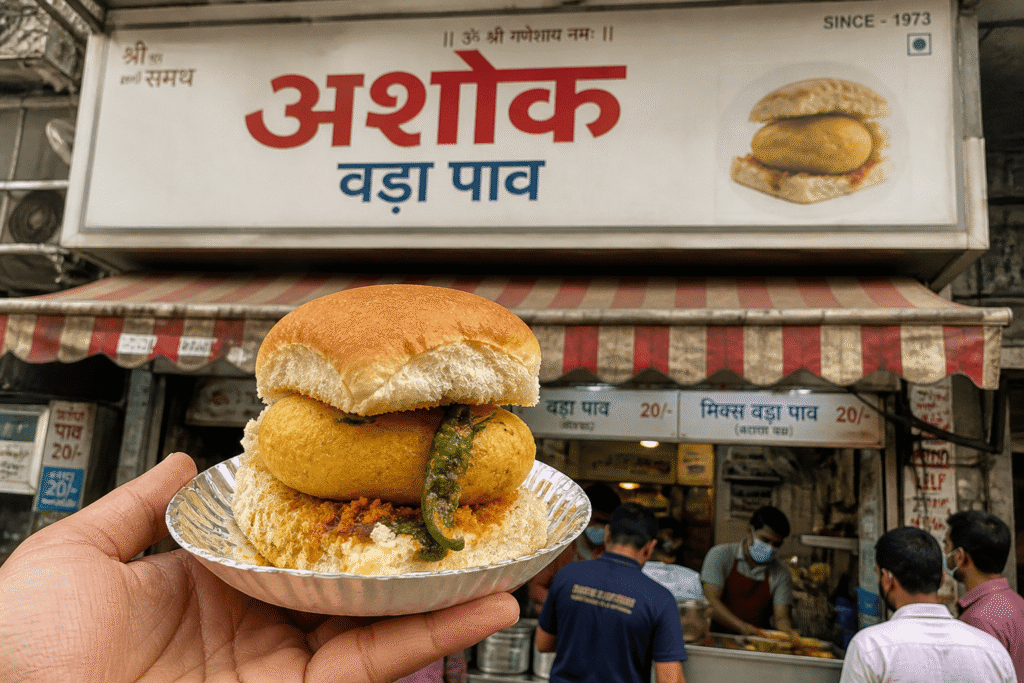
The story goes that Ashok Vaidya invented the Vada Pav in 1966 outside Dadar station, creating a cheap, filling, portable meal for the textile mill workers pouring through the city every morning. Whether that origin is perfectly accurate or slightly embellished over decades of retelling, it doesn’t matter — the myth fits the food. It’s democratic, efficient, and absurdly satisfying.
What you’re getting: a deep-fried spiced potato dumpling (vada) — garlic, mustard seeds, turmeric, green chilli — inside a soft white pav bun, layered with two chutneys. The dry garlic chutney is the key. It shouldn’t be optional. If someone doesn’t add it, politely insist.
Where to go:
- Ashok Vada Pav, Dadar Station (West): The original lineage. Queue expected. Worth it.
- Anand Stall, Vile Parle: Beloved by locals for decades, perfectly calibrated spice.
- Any station cart in the morning rush: Honestly, the quality floor for Vada Pav in Mumbai is high. You rarely have a bad one.
Price: ₹15–₹30 Best time: 7:30am–10am during morning rush, or 6pm–9pm evening crowd
2. Pav Bhaji — The Dinner That Became a Movement
A Dish Invented From Leftovers That Became Irreplaceable
Here’s a piece of Mumbai food history that most menus don’t tell you: Pav Bhaji was invented in the 1850s as a quick meal for textile mill workers — a mashed-up mishmash of leftover vegetables, spiced heavily, cooked on a flat iron tawa, and served with buttered pav. It was practical, cheap, and filling.
Somewhere between then and now, it became an institution.
The bhaji itself is a kind of organised chaos — potatoes, peas, capsicum, tomatoes, onion, all mashed together on a screaming-hot tawa with a pav bhaji masala that varies by vendor and is never fully disclosed. The butter is non-negotiable. Watch any good Pav Bhaji vendor work the tawa — they add the butter in volumes that would make a cardiologist wince and a food writer weep with gratitude.
You eat it with pav that’s been toasted on the same butter-slicked tawa until the bottom is golden and slightly crisp. Then you squeeze lemon over the top. Then you forget about everything you had planned for the next twenty minutes.
Where to go:
- Juhu Beach stalls: The classic setting. Evening. Sea breeze. Pav Bhaji. This is the formula.
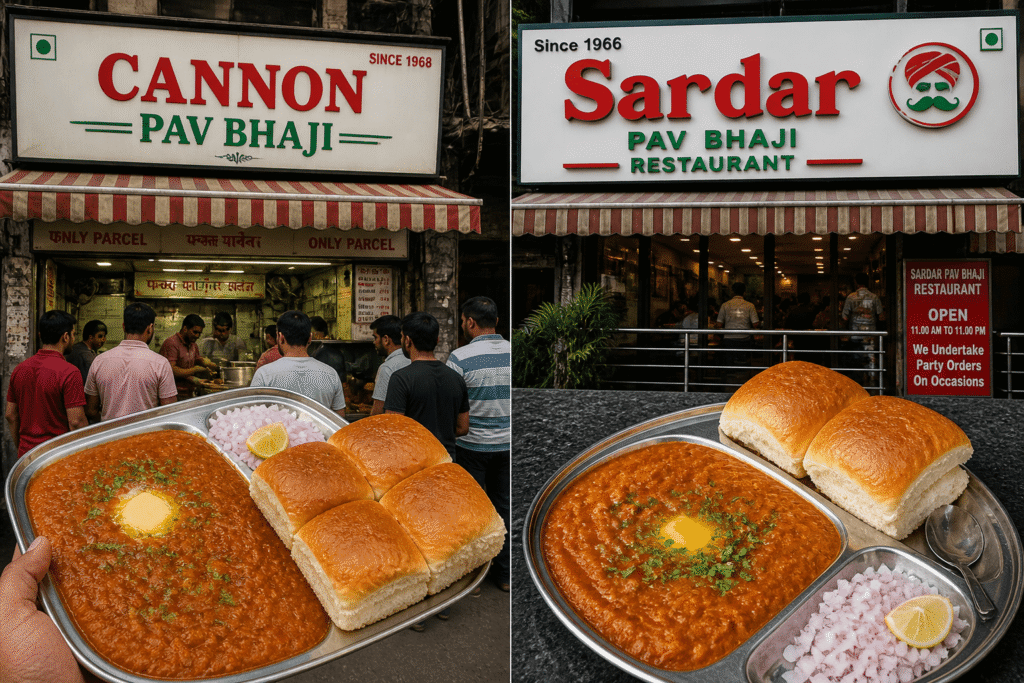
- Sardar Pav Bhaji, Tardeo: Considered by many Mumbaikars to be the gold standard. The tawa is ancient. That matters.
- Cannon Pav Bhaji, Fort: Long lines, legendary reputation, lunch-only hours.
Price: ₹80–₹160 Best time: Evening, 6pm–10pm (Juhu Beach version especially)
3. Bhel Puri — The Architecture of a Perfect Snack
Where Texture Does All the Work
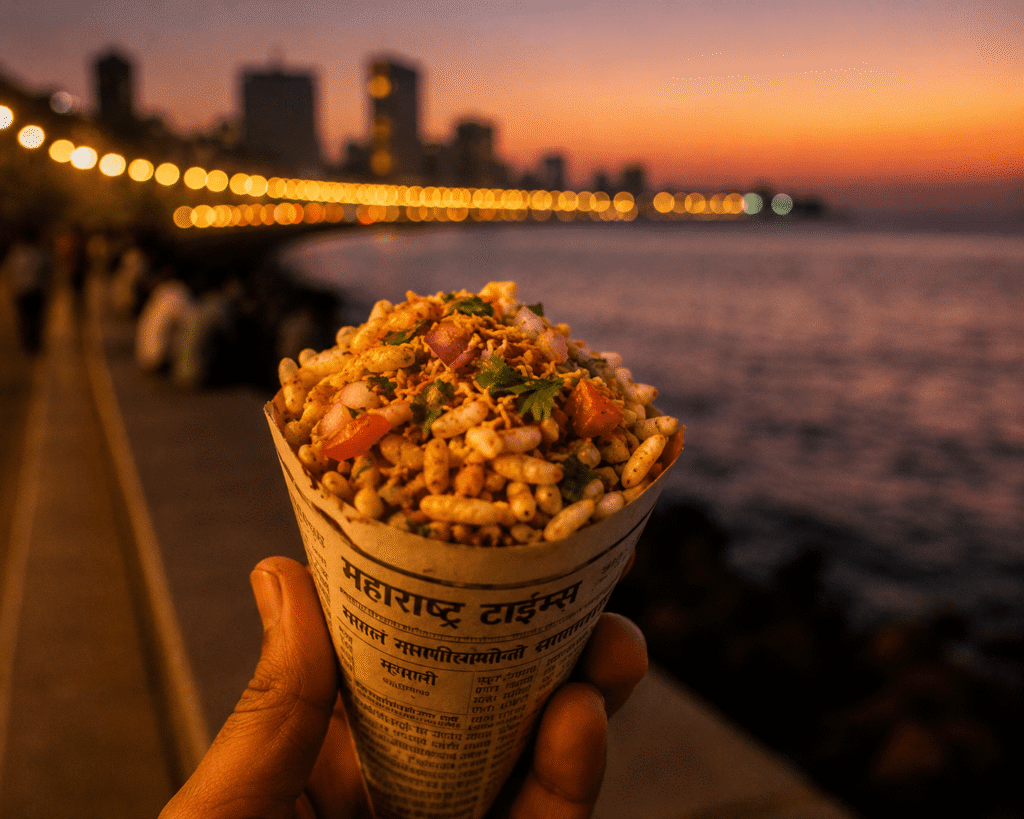
There is genuine craft in a good Bhel Puri, and the best bhel wallahs know it. They work fast — puffed rice, sev (crispy chickpea noodles), chopped onion, boiled potato, raw mango, tamarind chutney, green chutney, and coriander — tossed together in a metal bowl, assembled in thirty seconds, and handed to you in a cone of newspaper or a small bowl with a flat puri used as a scoop.
You have approximately four minutes before it goes soggy. Eat immediately. This is not a suggestion.
The tamarind chutney (imli ki chutney) is the soul of Bhel Puri — its dark, sticky sweetness anchors the sharpness of the raw mango and the heat of the green chutney. Getting the ratio right is the vendor’s art. A good bhel puri is a study in balance: sweet, sour, spicy, crunchy, soft, all at once.
Standing on Marine Drive at sunset eating a cone of Bhel Puri while the sea turns gold behind the Queen’s Necklace — that specific experience should be on some international register of things to protect.
Where to go:
- Chowpatty Beach: The home turf. Dozens of stalls, generations of practice. Go at sunset.
- Marine Drive vendors: Casual, breezy, perfect with the view.
- Elco Market, Bandra: Slightly more upscale surroundings, same great bhel.
Price: ₹50–₹100
4. Sev Puri- The Bite That’s Gone Before You Remember It
Six Bites. Always Six. You’ll Count.
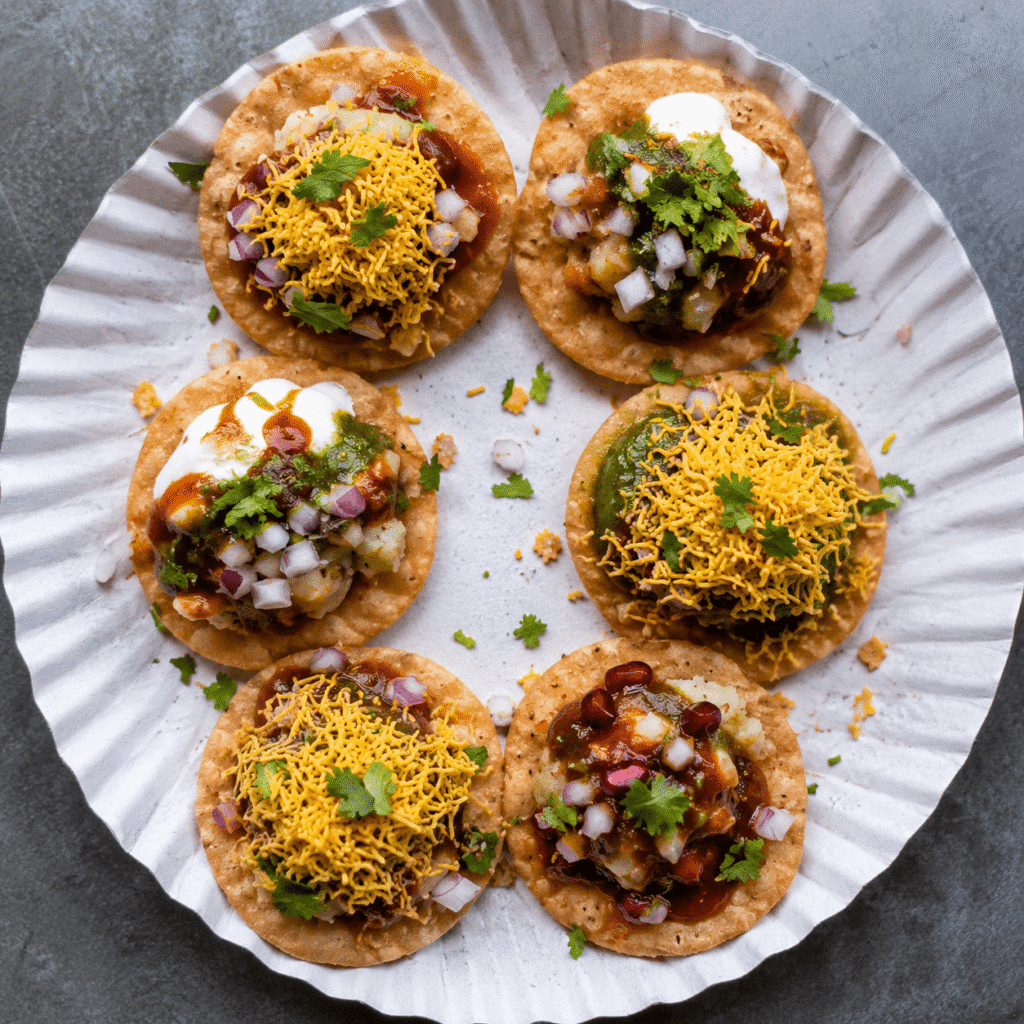
Sev Puri is Bhel Puri’s more composed, self-contained cousin. Instead of a tossed mix, you get individual flat puris — each one topped with potato, onion, tomato, both chutneys, and then buried under a generous blizzard of sev. You eat them one at a time. They disappear fast.
The charm of Sev Puri is its precision. Each puri is its own complete unit of flavour — crisp base, soft potato, sharp onion, sweet-sour chutney, and the delicate crunch of sev that melts almost immediately. It’s snacking as architecture.
This is the one you order when you’re not quite hungry enough for Pav Bhaji but too hungry for nothing. Mumbai understands this interval of appetite better than any city in India.
Where to go:
- Kirti College area, Dadar: Local haunt, no tourist markup, excellent quality.
- Juhu chaat stalls: Part of the same strip as Pav Bhaji vendors, good for a multi-snack tour.
- Crawford Market area carts: Reliable, busy, fast.
Price: ₹50–₹80
5. Keema Pav — The Night Dish
Only Certain Streets. Only After Dark.
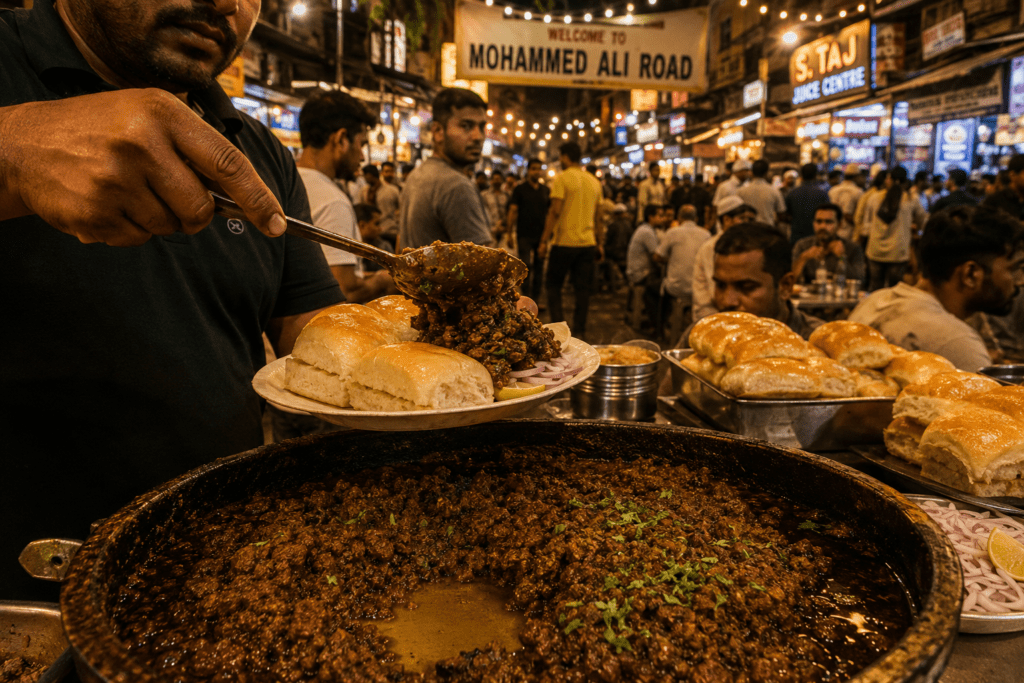
Mohammed Ali Road at night during Ramzan is one of Mumbai’s great sensory experiences — the lights, the smoke from grills, the shoulder-to-shoulder crowds moving past stalls with a familiarity that tells you this has been happening for generations. And sitting at the centre of it all, on every second table and every third stall, is Keema Pav.
Minced meat — usually mutton, sometimes beef at specific stalls — cooked with onion, tomato, ginger, garlic, and a deeply personal spice blend that no vendor will fully explain. Finished with coriander and a knob of butter. Served with soft white pav for scooping.
It’s rich, intensely spiced, and slightly dangerous in the best way. You’ll want water. You’ll also want another serving.
Where to go:
- Mohammed Ali Road stalls, Ramzan evenings: The specific, irreplaceable experience.
- Suleiman Usman Mithaiwala, Mohammed Ali Road: Also famous for sweets, but the savouries are exceptional.
- Byculla area: Year-round options that maintain quality outside of Ramzan season.
Price: ₹120–₹200 Note for visitors: Mohammed Ali Road during Ramzan evenings (dates vary annually) is peak experience. Outside Ramzan, the area still has good options but the atmosphere is different.
6. Frankie — Mumbai’s Original Wrap. The Real One.
Before Every Fast-Food Chain Discovered Wraps, Mumbai Had This
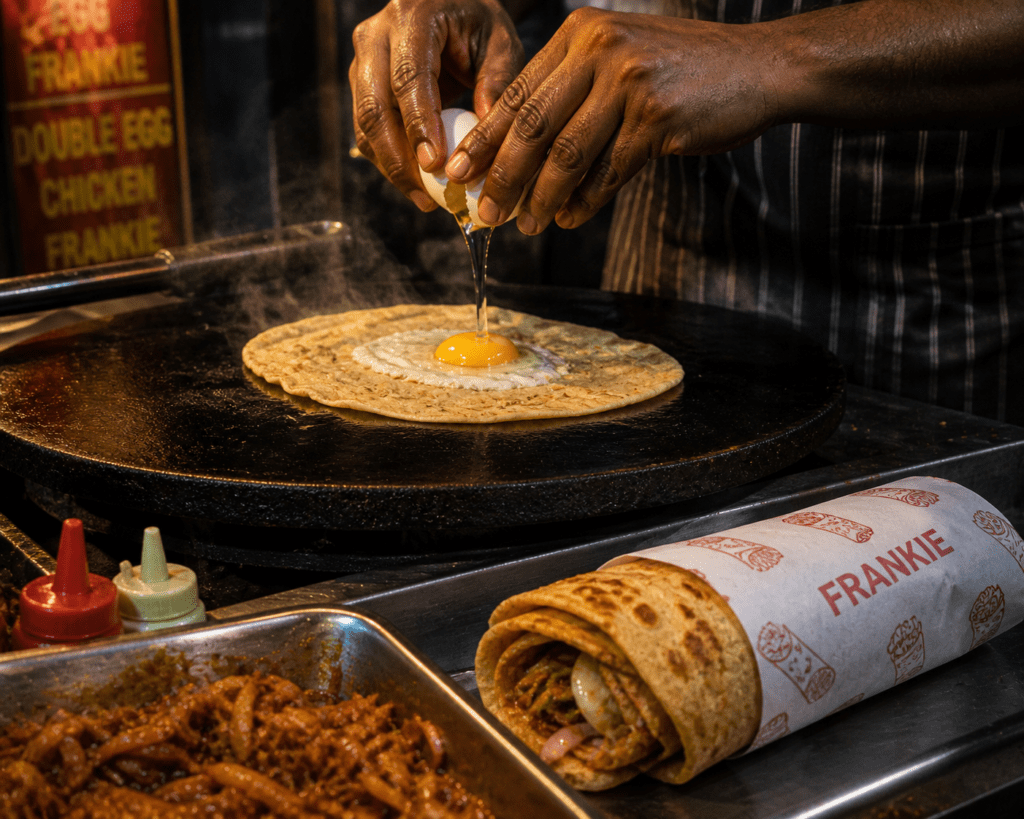
The Frankie was invented by Amarjit Singh Tibb in 1969 at his Churchgate stall — a thin, egg-coated wheat roti wrapped around a spiced filling with chutneys and raw onion inside. It was Mumbai’s answer to the question nobody else had thought to ask: what if a roti could be portable?
Tibb’s Frankies are still the benchmark — the specific combination of the egg-washed roti (softened and slightly chewy), the spiced filling (mutton, chicken, paneer, or potato), and the Frankie masala sprinkled inside before rolling is a formula that’s been copied hundreds of times and matched approximately never.
Where to go:
- Tibb’s Frankie, Churchgate: The original. Small stall. Often a queue. Do not skip.
- Tibb’s Frankie, Bandra: The more accessible outpost for the western suburbs crowd.
- K. Rustom, Churchgate: Not Frankies but right nearby — the ice cream sandwiches here are the correct post-Frankie move.
Price: ₹80–₹150
7. Misal Pav — The Breakfast That Demands Your Full Attention
This Is Not Gentle Morning Food
Misal Pav is the sleeper hit of Mumbai street food — less photographed than Pav Bhaji, less universally known than Vada Pav, but regarded with intense, almost territorial loyalty by the Mumbaikars who swear by it.
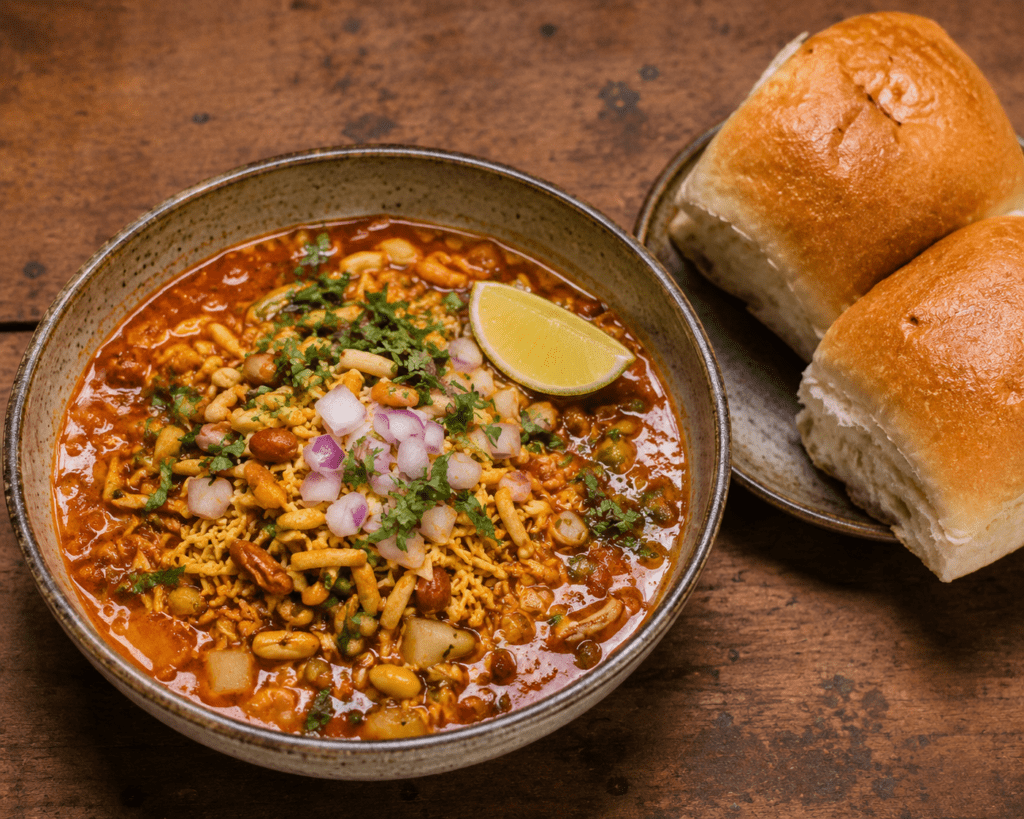
The base is a sprouted lentil curry — moth beans or matki — cooked with onion, tomato, and a masala that varies dramatically by region and vendor. Maharashtrian Misal tends to be fiery. Some Thane-style versions are quietly lethal. You eat it topped with farsan (the crispy fried mix), chopped onion, coriander, a squeeze of lemon, and extra chilli if you’ve made a conscious decision about your morning.
The pav arrives on the side for dipping. You tear off a piece, dunk it into the spiced curry, and immediately reconsider everything you thought you knew about breakfast.
Where to go:
- Aaswad, Dadar: Mumbai’s most celebrated Misal. Open from early morning. Queue before 9am.
- Prakash Shakahari Upahaar Kendra, Dadar: The older rival to Aaswad, equally loyal fanbase.
- Mamledar Misal, Thane: If you venture to Thane, this is a pilgrimage stop for serious Misal fans.
Price: ₹80–₹140 Best time: 7am–11am (it’s breakfast food, and the early servings are always freshest)
8. Dahi Puri — When Street Food Gets Delicate
The One That Surprises Everyone Who Expects Heat
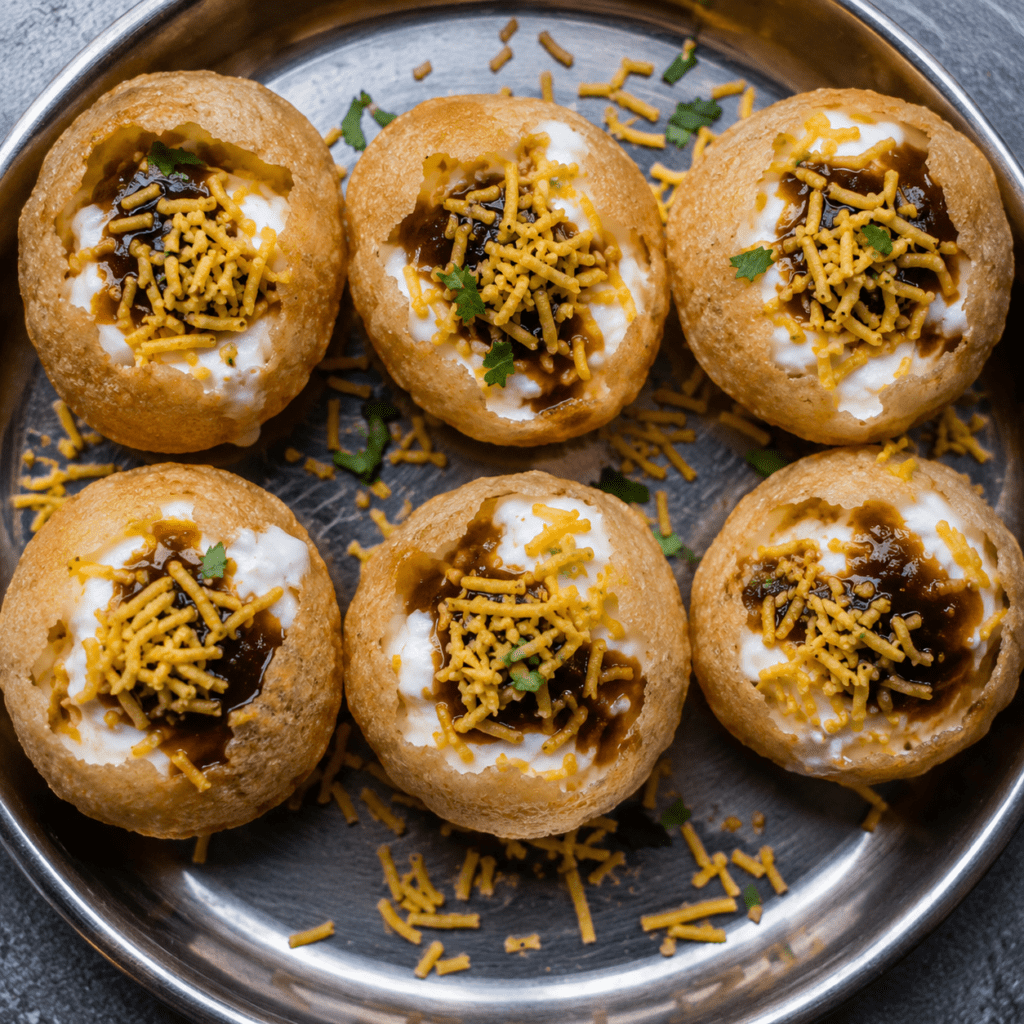
After all the fire and intensity of Mumbai’s spice-forward street food, Dahi Puri arrives like a cool editorial rebuttal. It’s the most balanced, refined thing on this list — and somehow it still tastes unmistakably like Mumbai.
Six small, hollow puris. Each one punctured at the top by the vendor’s thumb. Each one filled with boiled potato, soaked boondi, a spoon of sweet yoghurt (dahi), tamarind chutney, green chutney, sev, and a dusting of chaat masala. You’re supposed to eat each one whole — the entire puri in one bite. The cold yoghurt hits first, then the chutneys layer in, then the crunch of the puri shell arrives at the end.
Done correctly, it’s six consecutive moments of something close to perfect.
Where to go:
- Juhu Beach stalls: The most atmospheric setting — ocean on one side, chaat wallahs on the other.
- Chowpatty Beach: Equally good stalls, slightly less chaotic on weekdays.
- Elco Market, Bandra: Particularly popular with Mumbai’s Bandra crowd, reliably excellent.
Price: ₹70–₹120
9. Chicken Seekh Kebab Roll — Smoke, Char, and a Paper Wrapper
The One You Eat Standing Up, Without Ceremony
If Vada Pav is Mumbai’s democratic staple and Pav Bhaji is its celebratory indulgence, the Chicken Seekh Kebab Roll is its late-night best friend — the thing you eat after something, before something else, with no particular agenda except hunger and the smell of a charcoal grill.
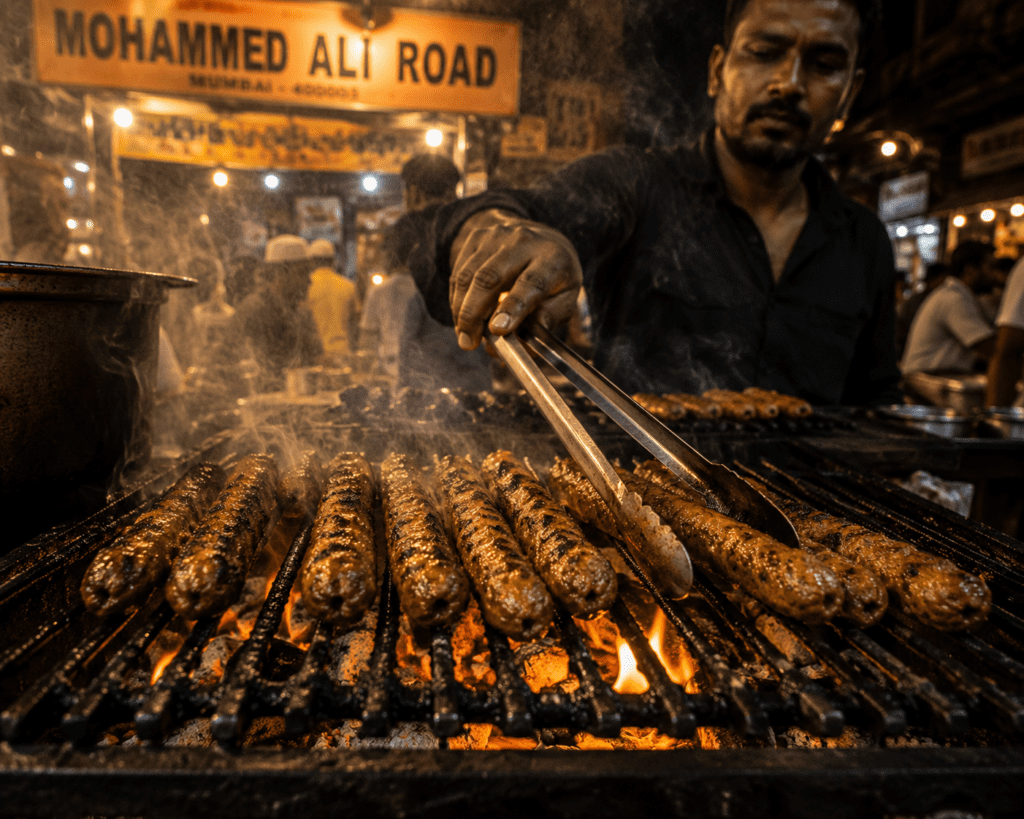
Long, thin seekh kebabs — minced chicken mixed with onion, green chilli, ginger, garlic, coriander, and whatever the cook decided that afternoon — grilled over live charcoal until slightly charred on the outside and just cooked through inside. Wrapped in a roti or flaky paratha with sliced onion, green chutney, and a squeeze of lime, then rolled in paper and handed over warm.
The charcoal flavour is the thing that no oven can replicate and no food court version ever captures. It’s the reason this belongs on a charcoal grill outside, not under a ventilation hood somewhere.
Where to go:
- Mohammed Ali Road grill stalls: The undisputed capital for kebab rolls in Mumbai.
- Crawford Market area: Daytime options that are excellent and less crowded than the Ramzan rush.
- Bade Miya, Colaba: An institution — open late, famous for decades, the post-dinner roll is a Colaba tradition.
Price: ₹100–₹180 Best time: Evenings from 7pm; Mohammed Ali Road stalls peak between 9pm–midnight
10. Kulfi Falooda — The Grand Finale
End Every Mumbai Food Night Exactly Like This
There is an unwritten law in Mumbai that a night of street food must end with Kulfi Falooda. Nobody enforces it. Everyone follows it.
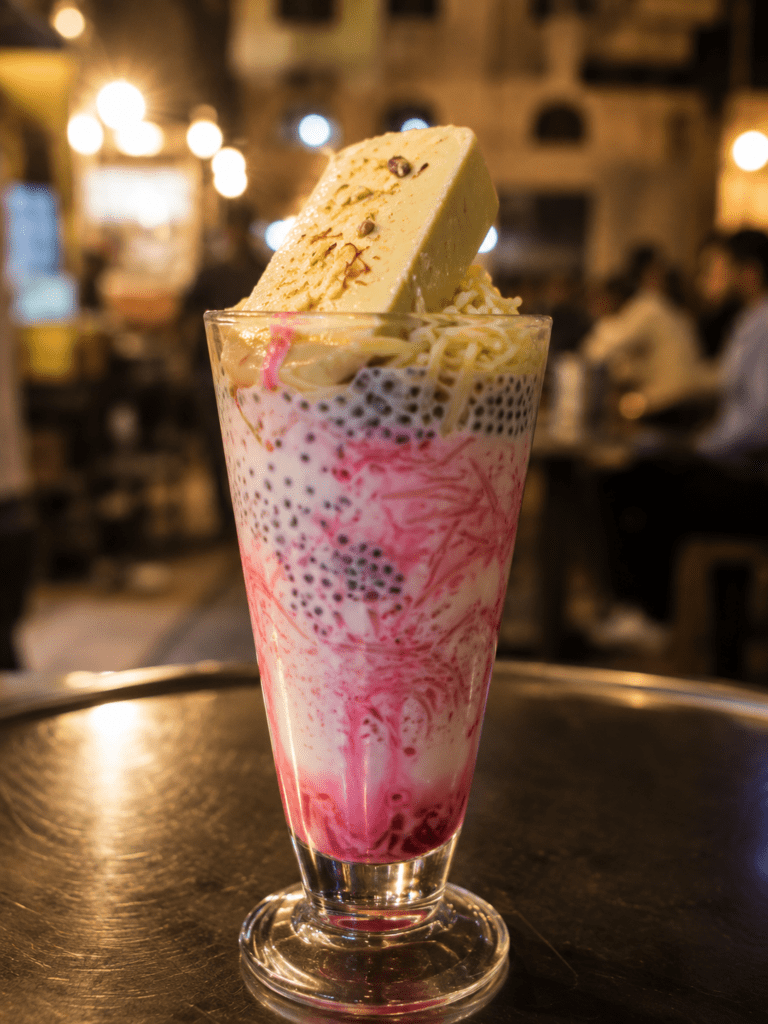
The Kulfi — dense, slow-frozen, intensely flavoured Indian ice cream in mango, malai, kesar-pista, or rose — is sliced and placed in a tall glass or bowl. Over it goes falooda (thin vermicelli noodles soaked in rosewater), basil seeds (sabja) that swell into tiny tapioca-like pearls in liquid, cold milk, rose syrup, and sometimes a scoop of ice cream for good measure.
It’s cold. It’s sweet. It’s floral and milky and slightly textural in the most pleasant way. After an evening of spice and heat, it lands exactly as intended — a long, slow exhale of a dessert.
On Mohammed Ali Road during Ramzan, the Kulfi stalls operate with theatrical efficiency — the vendors shaving falooda, pouring rose syrup in long arcs, building each glass like it’s a small performance. Even watching the assembly is satisfying.
Where to go:
- Mohammed Ali Road Kulfi stalls: The iconic setting. Post-kebab is the correct sequence.
- Bachelorr’s, Chowpatty: Mumbai’s most famous juice and Kulfi spot — the malai kulfi here is legendary.
- Suleiman Usman Mithaiwala, Mohammed Ali Road: Famous for sweets and Kulfi, worth the detour.
Price: ₹80–₹150
My Personal Mumbai Street Food Recommendations
Let me be specific about sequencing, because order matters more than people admit.
- The perfect Mumbai street food day, as I’d do it:
Morning (7:30–9am): Start at Aaswad in Dadar for Misal Pav. Get there before 9am. The queue is worth it and moves fast.
Late morning (10:30am): Vada Pav outside Dadar Station — you’re already there. Two pieces. One with extra garlic chutney.
Lunch (1pm): Sardar Pav Bhaji in Tardeo. Sit down. Take your time. This is not a standing meal.
Afternoon (4pm): Walk Marine Drive, have Bhel Puri from a beach cart. Watch the sea.
Evening (6pm): Juhu Beach for Dahi Puri and Sev Puri back to back. Then stand near the water and reconsider your life choices.
Night (9pm): Mohammed Ali Road for Keema Pav, Chicken Seekh Kebab Roll, and then — non-negotiably — Kulfi Falooda to close.
That is not a light day. That is the correct day.
What to skip if you're short on time: Frankie is extraordinary but if you're not going near Churchgate anyway, don't go just for it on a short trip — the Misal/Vada Pav/Pav Bhaji trinity covers you for the essential Mumbai experience.
Pro Tips for Eating Mumbai Street Food
- Go where the queues are. Mumbaikars are discerning and time-poor. A queue at a street stall is the most reliable endorsement in the city. An empty stall at lunchtime is a warning.
- Carry ₹10–₹50 notes. Most street food vendors don’t want to break ₹500. Small change is manners. Some vendors now accept UPI (look for QR code stickers on the cart) but never assume.
- Eat Dahi Puri whole. Every time. This is not negotiable. The people who bite halfway through and drip yoghurt on themselves have only themselves to blame.
- Visit Mohammed Ali Road on a weekday evening if possible. Weekend crowds can make it overwhelming and the wait times at stalls double.
- Ask for “thoda kam tikha” (a little less spicy) if you’re not accustomed to Mumbai street food heat. Especially for Misal Pav and Keema Pav. There is no shame in this. There is only wisdom.
- Don’t refrigerate your Vada Pav. If you somehow have leftovers (unlikely), eat them. A cold Vada Pav is a philosophical loss.
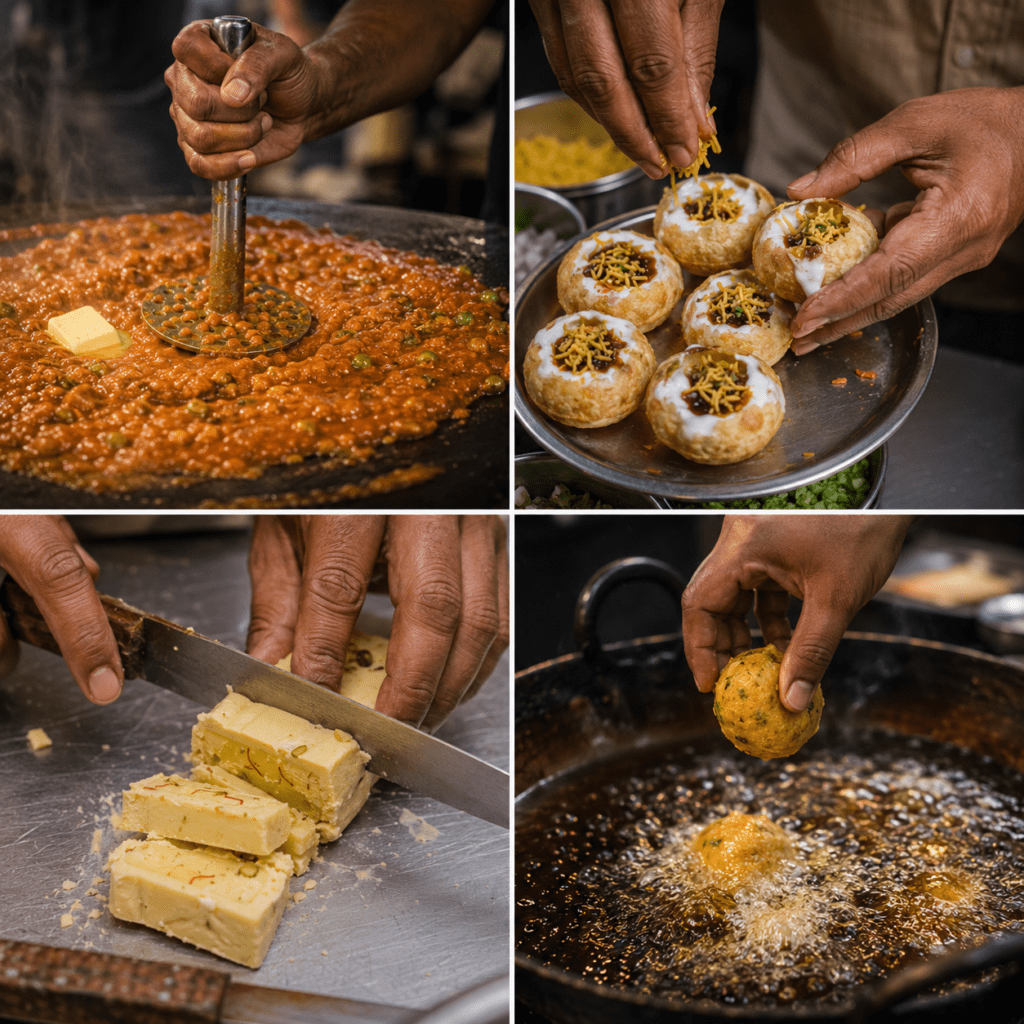
- The best food is often the most photogenic process, not the final dish. Ask vendors if you can photograph them working. Most say yes. The Pav Bhaji tawa, the Kulfi Falooda assembly, the seekh kebab grill — these are the shots worth taking.
Mistakes to Avoid
Eating only in restaurants: Mumbai’s street food scene and its restaurant scene coexist, but they are not the same. Some dishes — Vada Pav, Bhel Puri, Dahi Puri — exist in restaurants but are demonstrably worse. The street version has context, freshness, and a vendor who has been making that one thing for decades.
Going to Chowpatty or Juhu Beach at midday in summer: The beach snack experience belongs to evening. Midday in May is 38°C and humidity you can feel with your eyes. Everything is better after 5pm.
Ordering everything at once: Pace yourself. Mumbai’s street food circuit rewards grazing, not gorging. Have one thing, walk, have another. The experience compounds when you’re not too full to enjoy it.
Trusting apps for “best Vada Pav” lists: The best Vada Pav is the one the guy next to you on the platform is eating. Ask Mumbaikars. Ask your taxi driver. Ask the person at your hotel desk. They all have a specific favourite and a strong opinion about it.
Skipping the unfamiliar: Misal Pav is the one most non-Maharashtrian visitors skip because it looks complicated. It’s one of the best decisions you’ll make if you don’t.
Budget Tips for Mumbai Street Food
- Full street food day budget: ₹600–₹900 covers a generous, ten-item circuit with beverages — chai at each stop, a sugarcane juice somewhere, water.
- Mohammed Ali Road budget: ₹400–₹600 gets you Keema Pav, two kebab rolls, and Kulfi Falooda with money to spare.
- Juhu Beach circuit: ₹300–₹500 covers Pav Bhaji, Bhel Puri, Dahi Puri, and a coconut water.
- UPI is increasingly accepted at mid-range street stalls in areas like Bandra and Juhu. In older areas like Mohammed Ali Road and Dadar, cash is still king.
- Avoid “street food restaurants” that charge ₹200–₹300 for a Vada Pav. The original costs ₹20 and tastes better. You know why.
- Street food is always cheaper in non-tourist areas. The same Bhel Puri that costs ₹100 at a Bandra café stall costs ₹50 at a Dadar cart. Same recipe, different postcode.
FAQ Section
Q: What is the most famous street food in Mumbai?
A: Vada Pav is Mumbai’s most iconic street food — a spiced potato fritter inside a soft bun, sold at virtually every street corner and train station in the city. It’s often called “Mumbai’s burger” and is the quickest way to understand what the city eats.
Q: Is Mumbai street food safe to eat?
A: Generally yes, especially at established, high-turnover stalls. High volume means fresh ingredients and fast cooking. Practical tips: stick to freshly cooked items rather than pre-assembled ones sitting out, avoid cut fruit from carts in peak summer, and choose stalls where you can see the food being made. Most visitors eat Mumbai street food without any issues.
Q: Where is the best place to eat street food in Mumbai?
A: The top areas are Chowpatty Beach and Juhu Beach (for Pav Bhaji, Bhel Puri, Dahi Puri), Mohammed Ali Road (for Keema Pav, Kebab Rolls, Kulfi Falooda), Dadar and Matunga (for Misal Pav and Vada Pav), and Churchgate (for Tibb’s Frankie). Each area has a specialty worth planning around.
Q: Is Mumbai street food vegetarian-friendly?
A: Very much so. Seven of the ten foods on this list are fully vegetarian — Vada Pav, Pav Bhaji, Bhel Puri, Sev Puri, Dahi Puri, Kulfi Falooda, and Misal Pav are all plant-based. Mumbai’s street food scene has a strong vegetarian tradition, making it one of the most vegetarian-friendly street food cities in Asia.
Q: What is the cheapest street food in Mumbai?
A: Vada Pav is the most affordable iconic street food — ₹15–₹30 at most station carts. Bhel Puri and Sev Puri come close at ₹50–₹80. A full day of Mumbai street food eating costs under ₹800 if you stick to street stalls and local areas.
Q: Can I do a self-guided Mumbai street food tour?
A: Absolutely. The best approach is to pick one neighbourhood per session — Dadar for Maharashtrian street food, Juhu for beach snacks, Mohammed Ali Road for Muslim food traditions, Colaba for late-night options. Each has a dense cluster of food within walking distance. Alternatively, guided tours via Klook, Airbnb Experiences, or local operators cover multiple spots with context.
Q: When is the best time to visit Mohammed Ali Road for street food?
A: Year-round in the evenings from 7pm onwards. The most atmospheric and celebrated time is during Ramzan (Ramadan) — the exact dates vary each year — when the entire road transforms into a nightly food festival with extended hours, special items, and an electric atmosphere that’s unique in India.
Conclusion
Mumbai doesn’t ask permission to be itself.
It’s loud, layered, contradictory, and permanent in the best way. And nowhere is that more true than on its streets at mealtimes — when a ₹20 Vada Pav outsells anything in a four-star restaurant, when a Pav Bhaji tawa that’s been seasoned by thirty years of butter accumulation produces something no test kitchen can replicate, when a Kulfi Falooda built in forty seconds by a vendor who’s never taken a culinary course tastes better than desserts that took hours to plate.
This is not accidental food. It’s the result of communities and traditions and economics and geography producing a cuisine that is inseparable from the city that made it.
Eat the Vada Pav standing up. Order the Misal spicy and deal with it. Eat the Dahi Puri whole in one go. And end the night on Mohammed Ali Road with Kulfi Falooda and the specific kind of contentment that only comes from a city that fed you well.
Mumbai will ask nothing else of you. Just eat.