


A QUICK NOTE: Every product in this guide has been researched from verified 2026 sources — hands-on reviews, user feedback aggregated from Amazon, Reddit, and tech publications, and real pricing data from May 2026. No sponsored fluff. No PR copy-paste. Just what people actually say after living with these things.
Here’s the thing nobody tells you about buying gadgets in 2026.
The marketing is extraordinary. The actual products are… a mixed bag. Some of them deliver exactly the “living in the future” feeling the commercials promise. Others sit in a drawer by March, having failed to integrate into any real daily routine, having done exactly one impressive party trick for visiting relatives.
The difference between the two categories is rarely price. A ₹500 smart mug that keeps your coffee at the right temperature will get used every single day. A ₹25,000 AI pin that requires a ₹2,000/month subscription to do anything interesting will not.
In 2026, we’ve officially moved past the “asking Siri for the weather” phase. The best AI gadgets now have agency — they don’t just wait for us to talk; they observe, learn, and act. The question is which ones actually deliver that promise and which ones are just very well-shot YouTube videos of someone talking to their kitchen appliance.
This guide tells you which is which. Verified 2026 data. Real user sentiment. Budget alternatives where they exist. And the honest answer to the question you actually want answered: Is this worth buying?
Let’s go.
Quick Reference: All 15 Gadgets at a Glance
| Gadget | Price Range | Worth It? | Best For |
|---|---|---|---|
| Ray-Ban Meta AI Glasses Gen 2 | $299–$379 (₹25,000–32,000) | ✅ Yes | Daily wear, content creators |
| Amazon Echo Show 21 | $379 (₹32,000) | ✅ Yes | Smart home hub users |
| Amazon Echo Pop / Echo (5th Gen) | $39–$99 (₹3,300–8,300) | ✅ Yes | Budget smart speaker |
| Apple AirTag (2nd Gen 2025) | $29 each (₹2,400) | ✅ Yes | iPhone users |
| Ember Mug 2 | $149–$179 (₹12,500–15,000) | ✅ If you drink hot beverages daily | WFH, office workers |
| Samsung Galaxy Watch 8 | $299–$499 (₹25,000–42,000) | ✅ Yes | Android fitness tracking |
| Apple Watch Ultra 3 | $799 (₹67,000) | ✅ For athletes | Adventure, health obsessives |
| RingConn Gen 2 Air (Smart Ring) | $199 (₹16,700) | ✅ Yes | 24/7 health tracking without charger |
| Plaud NotePin (AI Recorder) | $159 (₹13,300) | ✅ For meetings heavy users | Professionals, students |
| Anker SOLIX C300 DC Power Bank | $99 (₹8,300) | ✅ Yes | Travellers, outdoors |
| Nebula Capsule 3 (Smart Projector) | $549 (₹46,000) | ✅ For frequent use | Portable cinema lovers |
| JBL Xtreme 5 | $349 (₹29,000) | ✅ Yes | Outdoor audio |
| Nomad Tracking Card Air | $39 (₹3,300) | ✅ Yes | Wallet tracking, Android users |
| Google Fitbit Air | $99 (₹8,300) | ✅ Budget fitness | Beginners, casual tracking |
| Even Realities G1 Smart Ring + G2 Glasses | $289 combo (₹24,200) | 🔶 Niche | Power users, wearable ecosystem |
AI-Powered Smart Glasses — The Category That Finally Grew Up
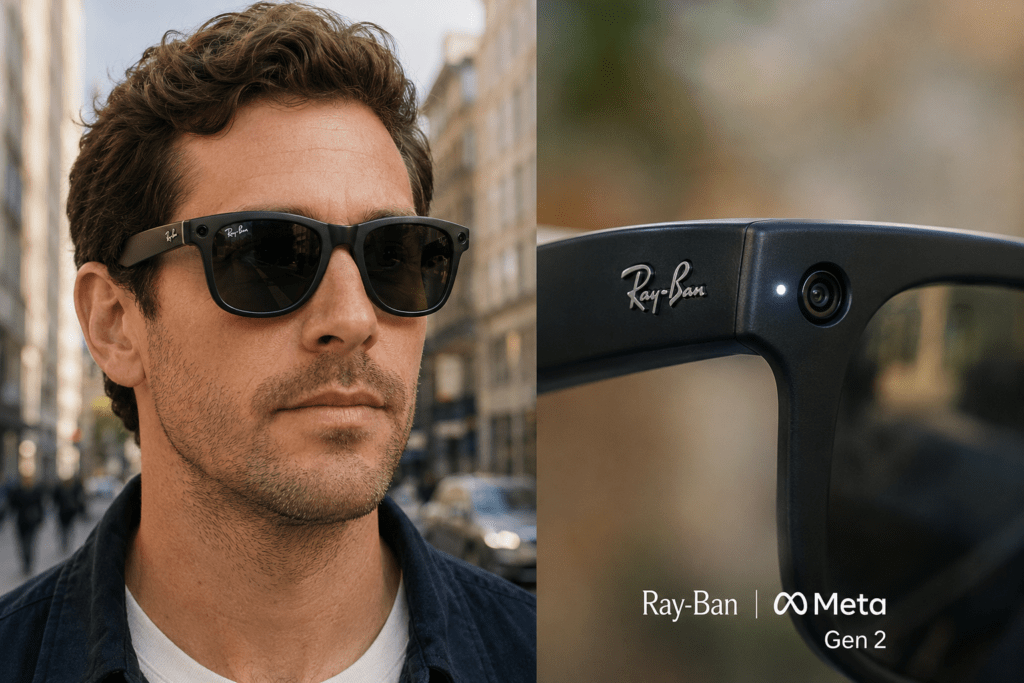
Ray-Ban Meta AI Glasses Gen 2 — The One Everyone Is Talking About
Price: $299–$379 (₹25,000–32,000) depending on frame and lens options Available at: Meta.com, Amazon, Ray-Ban.com, Best Buy Best Indian price: Amazon India (~₹27,000–30,000 with Prime)
The collaboration between Ray-Ban and Meta delivers smart glasses that don’t scream “tech gadget.” These look and feel like premium eyewear while packing impressive AI capabilities that integrate seamlessly into daily life.
Features include a built-in 12MP ultra-wide camera, open-ear speakers for immersive audio, hands-free video calling, Meta AI integration for real-time information, live streaming directly to social platforms, and customizable frames with prescription lens options.
What real users are saying (aggregated from Amazon and Reddit, May 2026):
The positive camp talks about wearing them daily without feeling self-conscious — the Ray-Ban design means nobody knows they’re smart glasses unless they ask. The first-person video quality has surprised people who expected GoPro-style fisheye footage. The open-ear audio is “surprisingly good for casual listening — not noise isolating, but that’s the point.”
The critical camp has two consistent complaints: the battery runs out in about 4 hours of active use (recording + speakers), and Meta’s AI integration requires the Meta app which is data-hungry and raises privacy questions for some users. A minority of users report the camera shutter sound (required by some regional law) being awkward in quiet environments.
Detailed Pros:
- Looks exactly like regular Ray-Ban sunglasses — complete daily wearability
- Best first-person camera on any smart glasses available in 2026
- Open-ear audio allows ambient awareness (unlike earphones)
- Meta AI can answer questions in real-time through the glasses
- Live streaming to Instagram/Facebook works reliably
- Prescription lens compatibility is a significant differentiator
Detailed Cons:
- 4-hour battery in active use (approx. 8 hours standby) — you need to plan charging
- Requires Meta account and Meta app — privacy concern for some
- No display or AR overlay — purely audio/camera, no visual augmentation
- Some regional compliance requirements around camera indicator sounds
- Limited to Meta’s ecosystem — doesn’t work as an Android/iOS universal device
Is the premium worth it? Yes — if you want to wear them every day and you create content. If you just want to try AI glasses, there are cheaper alternatives.
Budget alternative: ANRRI Smart Glasses (~$89 / ₹7,500 on Amazon) — basic Bluetooth audio and microphone, no camera, no AI. Does audio-only. Fine for calls and music if that’s all you need.
Even Realities G2 + R1 Ring — The Ecosystem That’s Moving Fast
Price: G2 Glasses $249 (₹20,900) | R1 Ring $59 (₹4,900) | Combo $289 (₹24,200) Available at: EvenRealities.com, select Amazon stores
The R1 is a smart ring that does something no other ring on the market attempts — it directly controls the Even Realities G2 smart glasses through a hardware link, turning a ring into a navigation device for a heads-up display. No phone required for the basic interaction loop.
That pairing creates something nobody else offers: a wearable ecosystem where the ring handles health sensing and input while the glasses handle visual output.
Pros: Genuinely innovative two-device ecosystem, the only phone-free wearable interaction loop available, prescription lens support for G2
Cons: Small display field of view, limited app ecosystem, niche product that requires buying into a specific hardware combination
Who it’s for: Power users who want a wearable ecosystem that works without a phone for basic tasks. Not for casual buyers.

Smart Speakers with AI — The Home That Listens Better Now
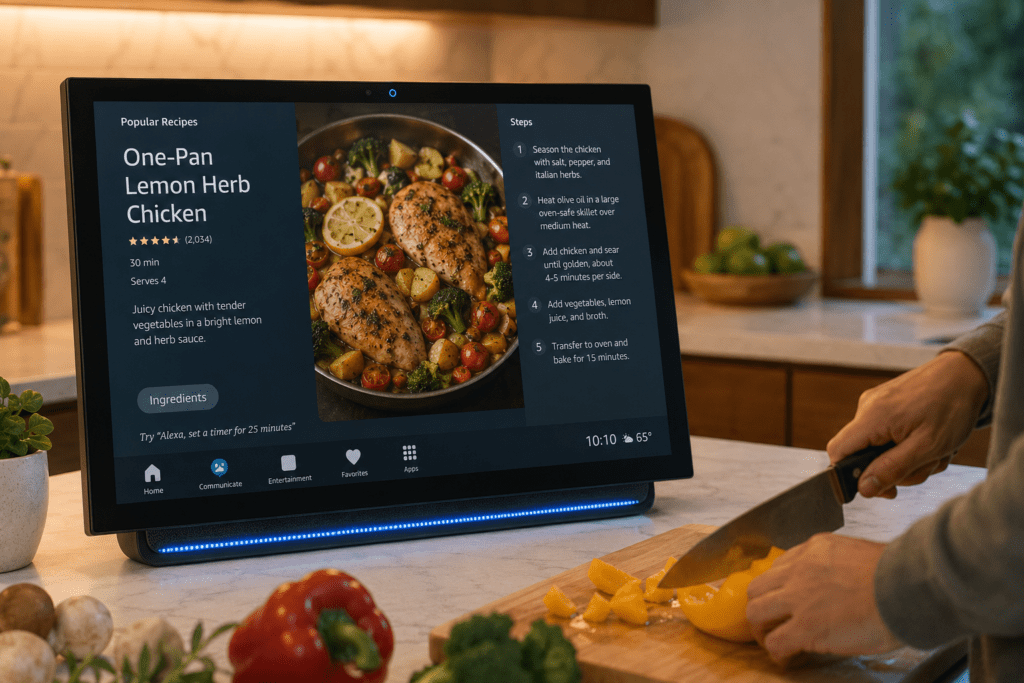
Amazon Echo Show 21 — The Smart Home Command Centre
Price: $379 (₹32,000) Available at: Amazon.com, Amazon India Screen: 21-inch (largest Echo display ever made)
If you still think Alexa is just for setting timers, the Echo Show 21 will blow your mind. It’s more like a “digital command center” than a gadget. The 2026 version features Alexa+ integration — no longer a series of “If/Then” commands. You can say “Alexa, my parents are coming over for dinner, find a recipe based on what’s in the fridge and set a reminder to start cooking at 5 PM,” and it actually handles the logic.
Key features:
- 21-inch HD display (the largest smart display available in 2026)
- Alexa+ AI: contextual, multi-step reasoning, not just single commands
- 13MP camera for video calls at a TV-screen scale
- Smart home hub integration (Zigbee, Z-Wave, Thread, Matter)
- Ambient mode turns it into a digital photo frame / information display
What real users are saying:
People who have smart home setups love this as the control panel. The 21-inch screen makes video calls feel genuinely like the other person is in the room. The Alexa+ integration is described by long-term Echo users as “the update that finally made Alexa feel intelligent rather than just responsive.”
The critical feedback centres on the price — ₹32,000 for a smart display feels steep when the $99 Echo (5th Gen) does 80% of the same things through audio. The show-stopper for some is that Alexa+ (the enhanced AI features) requires a subscription on top of the hardware price.
Pros:
- Largest smart display available — genuinely useful for a kitchen or home office hub
- Alexa+ multi-step reasoning is a real leap forward from previous generations
- Video calls at scale feel natural and social
- Comprehensive smart home hub (Matter, Thread — future-proofed)
- Ambient display mode makes it useful even when not actively used
Cons:
- Expensive for a smart speaker/display
- Alexa+ features require additional subscription
- Large footprint — needs a permanent, dedicated space
- Privacy concern: always-on 13MP camera in your home
Budget alternative: Amazon Echo (5th Gen) — $99 (₹8,300). Same Alexa AI, no screen. Does everything an Echo can do through voice. The right choice for anyone who doesn’t specifically need the visual display.
Amazon Echo Pop / Echo (5th Gen) — The Smart Starter
Echo Pop Price: $39 (₹3,300) Echo 5th Gen Price: $99 (₹8,300) Available at: Amazon globally, widely
The Echo Pop is the entry point to the Alexa ecosystem — half-sphere design, single speaker, basic Alexa integration. Amazon teases Prime Day deals with early device deals — Echo from $14.99 during sale events. Watch for these before buying at full price.
Echo Pop vs Echo 5th Gen:
| Feature | Echo Pop | Echo 5th Gen |
|---|---|---|
| Price | $39 / ₹3,300 | $99 / ₹8,300 |
| Sound | Single speaker, basic | Improved audio, better bass |
| Alexa version | Full Alexa | Full Alexa + Alexa+ |
| Smart home hub | No | Yes (Zigbee) |
| Design | Half-sphere | Cylinder |
| Best for | Kids’ room, bedroom | Living room, home hub |
What users say about Echo Pop: “Does exactly what I bought it for — timers, music in the bedroom, quick questions. Don’t spend more unless you need more.”
What users say about Echo 5th Gen: “The sound improvement over the Pop is noticeable. The Zigbee hub means I could connect my smart bulbs directly without a separate hub. The extra money made sense.”
Smart Tracking — Never Lose Anything Again
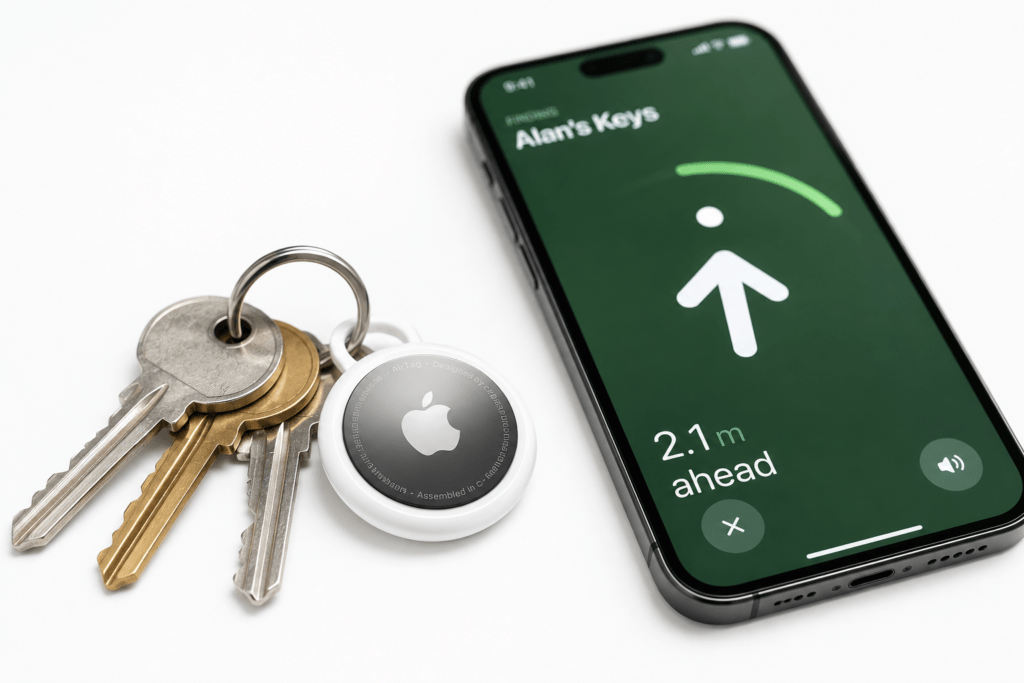
Apple AirTag (2nd Gen) — Still the Gold Standard
Price: $29 each / ₹2,400 | 4-pack $99 / ₹8,300 Available at: Amazon, Apple Store, Flipkart (India), Croma Compatible with: iPhone only (Find My network)
The AirTag 2nd Gen (released late 2025) improved the replaceable battery life to 18 months (from 12) and refined the Precision Finding feature — your iPhone directionally guides you to within centimetres of the tag using Ultra Wideband.
What real users are saying:
The consensus is unanimous: once you’ve used an AirTag, you cannot understand how you functioned without one. “Attached to my keys, wallet, and suitcase. Has saved me twice — once at an airport, once at a hotel. Worth 10x the price.” The consistent criticism is Apple ecosystem lock-in — these are useless if you have an Android phone.
Pros:
- Precision Finding with directional arrows is genuinely extraordinary
- Apple’s Find My network = 2 billion iPhones passively detecting your tags
- 18-month battery (CR2032, replaceable yourself)
- Compact, water-resistant (IP67)
- No subscription, no monthly fees
Cons:
- iPhone-only — zero value for Android users
- Stalkerware concern: Apple has added anti-stalking alerts but the concern persists
- Not ideal for real-time live tracking (logs location when passing Find My devices)
Android alternative: Nomad launched the Tracking Card Air in a version for Android users — it works with Google’s Find Hub network, looks exactly like a credit card, and fits in your wallet. Price: $39 (₹3,300). For Android users, this is your AirTag equivalent.
Budget alternative: Tile Mate — $24.99 (₹2,100). Works with both Android and iPhone. Smaller network than Apple’s but functional and cross-platform.
Smart Mugs — The Gadget Nobody Expected to Love This Much
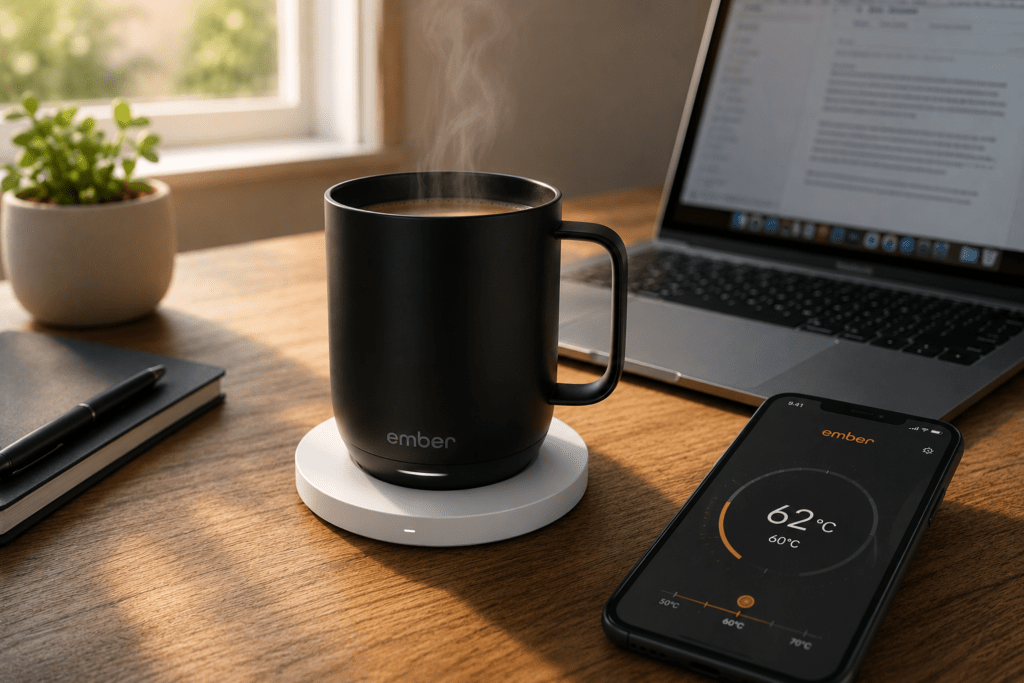
Ember Mug 2 — The Most Surprisingly Useful Gadget on This List
Price: $149 (12oz) / $179 (14oz) — ₹12,500–15,000 Available at: Amazon, Ember.com, Best Buy, Croma India App: Ember app (iOS and Android), Siri/Alexa integration
The Ember Mug 2 maintains your beverage at a precise temperature — you set it in the app (anywhere from 50°C to 62.5°C / 120°F to 145°F), and the mug’s heating element keeps your coffee or tea at exactly that temperature for 80 minutes on battery, or indefinitely on the charging coaster.
What real users are saying:
This is the product that divides opinions before purchase and unites them after. “I thought it was ridiculous. My wife bought one. I’ve used it every single morning for a year. I would buy a replacement immediately if it broke.” The WFH crowd are the primary evangelists — when you’re in a video call and your coffee goes cold, the Ember is the solution.
Critical feedback centres on the price (₹12,500 for a mug requires justification), the 80-minute battery without the coaster (useable but you need to remember the coaster), and that it’s not microwave-safe.
Pros:
- Precise temperature control — set it to your exact preference
- 80-minute battery (or indefinite on coaster)
- Auto sleep when empty (extends battery)
- Siri and Alexa compatible — “Hey Siri, set Ember to 62°”
- Beautiful design — looks premium, feels premium
- Great gift item
Cons:
- ₹12,500 for a mug is a hard sell without trying one first
- Not microwave-safe
- Must be hand-washed
- 80-minute battery means you need the coaster for desk use
- App required for initial setup and temperature preferences
Budget alternative: Cauldryn Coffee Mug (~$79 / ₹6,600) — similar concept, slightly less elegant design, works without a smartphone app for basic temperature maintenance.
Who should buy this: Anyone who regularly makes hot beverages and regularly forgets to drink them while they’re hot. WFH workers, office workers, parents. The ROI comes from the first week of use.
Smart Fitness & Health Devices
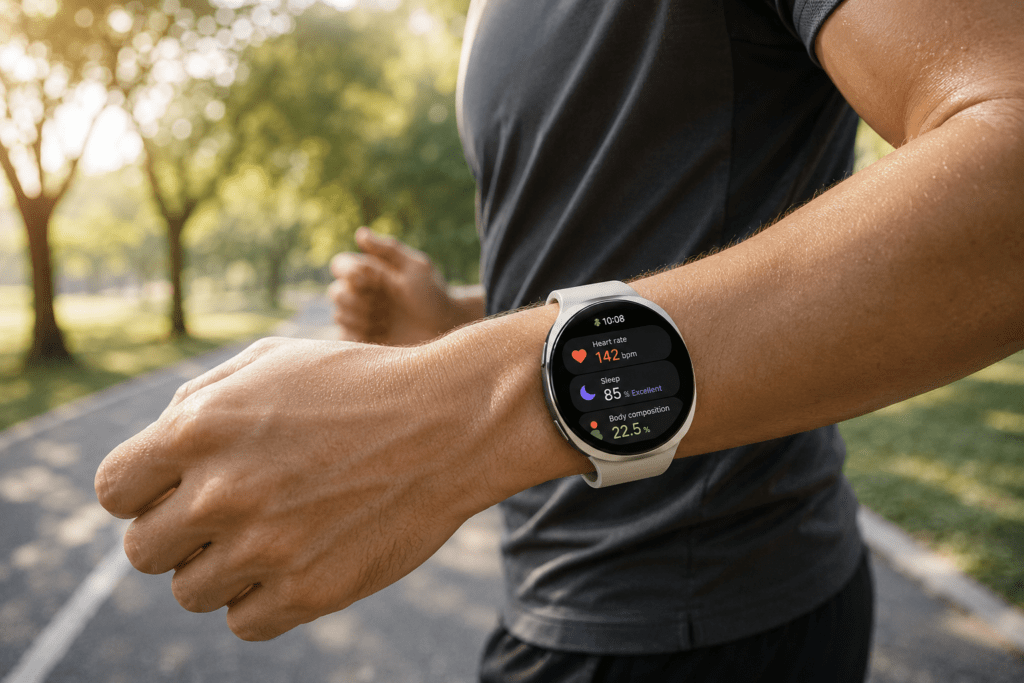
Samsung Galaxy Watch 8 — Best Android Smartwatch 2026
Price: $299–$499 (₹25,000–42,000) depending on size and cellular Available at: Amazon, Samsung.com, Croma, Reliance Digital Compatible with: Android (optimised for Samsung); limited iPhone compatibility
Key features 2026:
- Advanced sleep tracking with sleep apnoea detection (FDA-cleared)
- Continuous blood glucose monitoring (Galaxy Watch 8 Ultra variant)
- ECG and irregular heart rhythm detection
- Body Composition measurement (body fat %, muscle mass)
- Galaxy AI health coaching — personalised insights, not just data dumps
- 40–47 hours battery life (standard), 60 hours (Ultra)
What real users are saying:
The sleep tracking and health coaching are the standout features in user reviews. “It told me my sleep quality was poor due to late caffeine. I moved my last coffee to 2pm. My sleep score improved by 23 points in two weeks. That’s not a gadget — that’s a coach.” The blood glucose monitoring on the Ultra variant is described as genuinely life-changing for diabetic users and highly curious for health enthusiasts.
Critical feedback: the watch is optimised heavily for Samsung Galaxy phones — some features are unavailable on other Android phones. Battery life is adequate but not exceptional for the price.
Pros:
- Most comprehensive health tracking on the Android side in 2026
- Galaxy AI coaching provides actionable insights
- ECG and sleep apnoea detection are medically significant features
- Blood glucose monitoring (Ultra) — rare in this price range
- Design is elegant, not sporty-awkward
Cons:
- Best features require Samsung Galaxy phone
- Battery life behind Garmin and Apple Watch Ultra
- Premium price for the full feature set
- Blood glucose monitoring requires Ultra variant at higher price
Apple Watch Ultra 3 — For Athletes and Serious Health Trackers
Price: $799 (₹67,000) Available at: Apple Store, Amazon, Croma, iStore India Compatible with: iPhone only
Key 2026 features:
- Titanium case — 49mm, 2000 nit display (readable in direct sunlight)
- Crash detection, fall detection, emergency SOS via satellite
- Advanced training metrics (training load, recovery, VO2 max)
- Precision dual-frequency GPS
- 36-hour battery (72 hours in Low Power Mode)
- Depth gauge and water temperature sensor (for divers)
- watchOS 12 with AI health coaching
What real users are saying:
The Ultra 3 has a fiercely loyal user base. “I use it for marathon training. The training load feature has prevented three overtraining injuries. I can’t put a price on that.” The satellite SOS has been used in real emergencies — several verified accounts of people rescued after falls in remote areas with signal.
Critical feedback is mostly about price — ₹67,000 is a significant investment — and the iPhone-only limitation. Android users cannot use this regardless of how much they want to.
Pros:
- The most durable smartwatch available — built for extreme conditions
- 36-72 hour battery — the best Apple Watch battery ever
- Satellite SOS — a genuine life-saving feature for outdoor adventurers
- Best GPS accuracy of any smartwatch
- Water-resistant to 100m
Cons:
- ₹67,000 — premium pricing that requires commitment
- iPhone-only
- Large 49mm case — not suitable for smaller wrists
- More watch than most people need
Budget alternative: Apple Watch SE (2nd Gen) — $249 (₹20,900). The same core health features (heart rate, crash detection, fall detection, Siri) without the extreme sports hardware. The right choice for 80% of people who want an Apple Watch.

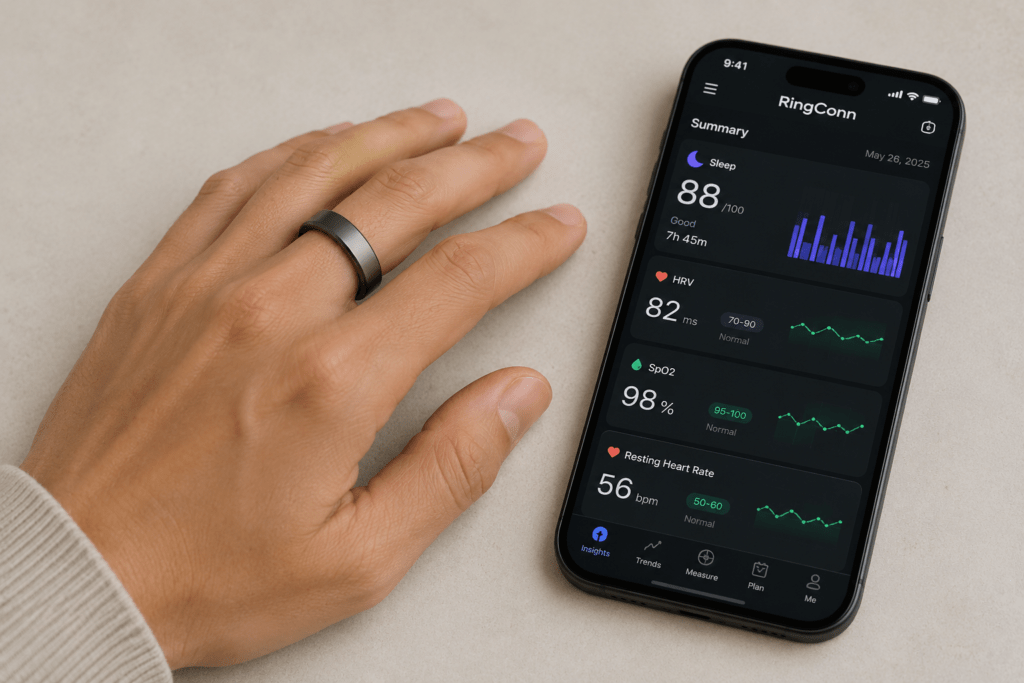
RingConn Gen 2 Air — The Smart Ring That Won 2026
Price: $199 (₹16,700) Available at: RingConn.com, Amazon No subscription: All features free, no monthly fee
The RingConn Gen 2 Air offers 10–12 days battery life, eliminating charging anxiety — match this to your pattern — frequent travelers need week-long power, desk workers can manage daily charging.
Why smart rings matter in 2026: The smart ring category has crossed a threshold — smart rings combine health and biometric tracking with contactless payments in 2026, making them genuinely multifunctional wearables rather than single-use trackers.
Key features:
- Heart rate, SpO2, skin temperature monitoring 24/7
- Sleep tracking with sleep stage analysis
- Stress monitoring via HRV (Heart Rate Variability)
- Activity tracking (steps, calories, active minutes)
- 10–12 day battery — the longest in the smart ring category
- IP68 waterproof — wear in shower, pool
- No subscription required (unlike Oura Ring which charges monthly)
RingConn Gen 2 Air vs Oura Ring Gen 4 Comparison:
| Feature | RingConn Gen 2 Air | Oura Ring Gen 4 |
|---|---|---|
| Price | $199 / ₹16,700 | $349 / ₹29,300 |
| Subscription | None (free) | $5.99/month / ₹500/month |
| Battery | 10–12 days | 8 days |
| Health features | Good | Excellent |
| Sleep tracking | Good | Best in category |
| App quality | Improving | Best in category |
| Total year cost | $199 / ₹16,700 | $349 + $72 = $421 / ₹35,300 |
What real users are saying:
RingConn users consistently cite the no-subscription model as the deciding factor. “I was going to buy an Oura Ring but the monthly fee made no sense to me. The RingConn tracks everything I care about. The data is good enough. And I don’t feel like I’m renting my health data.”
Oura Ring loyalists counter that the sleep tracking depth and the app experience justify the premium — “The Oura app actually tells me what to do with my data. RingConn gives me numbers.”
Pros (RingConn):
- No subscription — genuinely unusual in the smart ring market
- 10–12 day battery is the category leader
- Good sleep and health tracking for the price
- Works with both Android and iPhone
Cons (RingConn):
- App quality and AI insights behind Oura Ring
- No contactless payments (unlike Samsung Galaxy Ring)
- Limited third-party integrations
Google Fitbit Air — Best Budget Fitness Tracker 2026
Price: $99 (₹8,300) Available at: Google Store, Amazon, Flipkart India
Google Fitbit Air preorders — where to buy the latest budget fitness tracker for free with a trade-in.
The Fitbit Air represents Google’s 2026 strategy: bring AI-powered health coaching to a mainstream price point. The device integrates Google Gemini for health insights — rather than just showing you your step count, it contextualises your data: “You walked 22% less this week than your average. On the three days you walked less, your sleep score was also lower. Want to set a 15-minute walk reminder after lunch?”
Pros:
- Best price-to-features ratio in the fitness tracker category
- Google Gemini AI coaching at a budget price
- 7-day battery life
- Works with both Android and iPhone (though Google account required)
- Stress tracking, sleep tracking, heart rate — full feature set
Cons:
- Requires Google account for full AI features
- No ECG (available on more expensive Fitbit models)
- Plastic build — doesn’t feel premium
- Google’s track record of discontinuing Fitbit products is a concern for long-term buyers
Budget alternative for absolute beginners: Xiaomi Smart Band 9 — $29 (₹2,400). Basic step, heart rate, sleep tracking. No AI. Works. That’s it.
AI Productivity Gadgets
Plaud NotePin — The AI Meeting Recorder That Actually Works
Price: $159 (₹13,300) | Pro subscription $8/month (₹670/month) Available at: Plaud.ai, Amazon
A sleek wearable AI pin designed for professionals and students that uses advanced AI to record, transcribe, and summarize meetings or lectures in real-time. Highly accurate at separating different speakers in a room. Privacy focused with GDPR and HIPAA compliant encryption.
The best use case: if your day is a blur of meetings, interviews, or lectures, this is like having a second brain that never forgets a detail.
The Plaud NotePin delivers 30 hours of actual recording.
What real users are saying:
The reception from professionals is very positive: “I stopped taking notes entirely. I wear the pin, let it record, and the summary is in my email 10 minutes after the meeting ends with action items already formatted.” Students describe it as transformative for lectures — attending fully without writing anything, then having a structured summary afterward.
The criticism is consistent: the subscription model makes the best features dependent on monthly payment. The hardware is good; the AI features that justify buying it are paywalled.
Pros:
- 30-hour recording battery — genuinely exceptional
- Speaker identification (knows who said what)
- HIPAA-compliant for medical professionals
- Summaries and action items generated automatically
- Clips physically to clothing — unobtrusive
Cons:
- Full AI features require Pro subscription ($8/month)
- In-person only — doesn’t record calls directly (some workarounds available)
- ₹13,300 hardware + ₹670/month adds up for casual users
Budget alternative: PLAUD NOTE (the card version, attaches to phone) — $79 (₹6,600). Records phone calls directly when attached to iPhone. Good for solo podcast recording and call documentation.

Smart Projectors
Nebula Capsule 3 — Portable Cinema in Your Pocket
Price: $549 (₹46,000) Available at: Amazon, Anker.com, Croma India
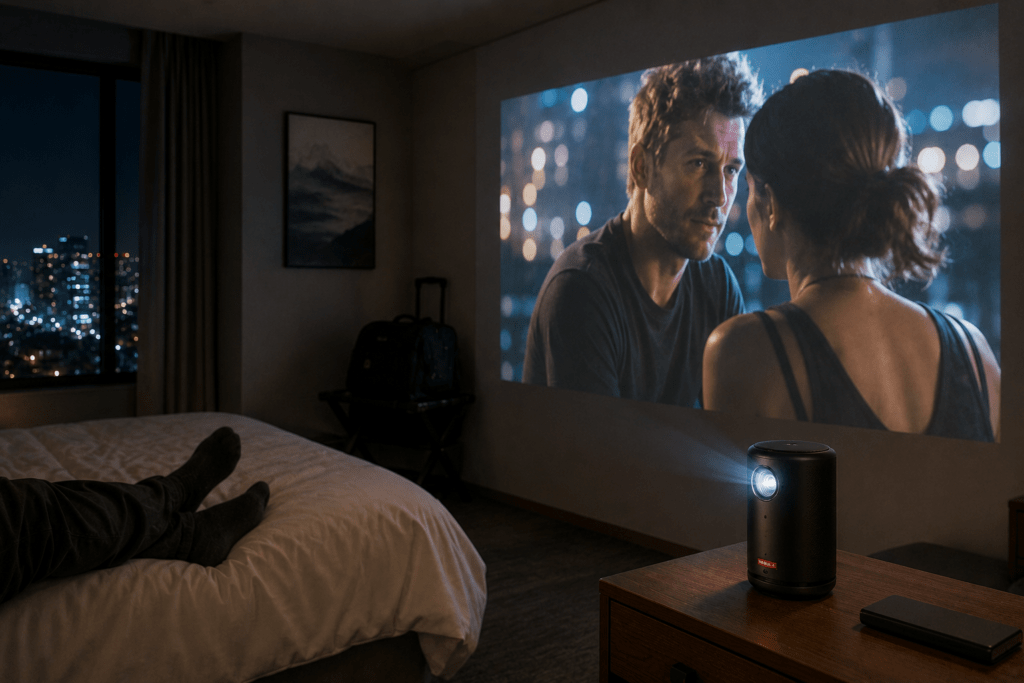
The Nebula Capsule 3 is a can-sized portable projector — 200-inch projection capability, Android TV built-in, 3-hour battery, and auto-focus that adjusts in 0.5 seconds when you move it.
Key 2026 features:
- 300 ANSI lumens (useable in dim rooms)
- 1080p Full HD projection
- Android TV 11 — Netflix, Amazon Prime, YouTube built-in
- 8W speaker (surprisingly good for the size)
- 3-hour battery (or plug-in for unlimited)
- Auto keystone correction and autofocus
- Weighs 960g — carries in a large jacket pocket
What real users are saying:
Travel use cases dominate the positive reviews. “Hotel room, connect to Wi-Fi, Netflix on the wall in 30 seconds. This is the most-used gadget I own when travelling.” The camping and outdoor user group is equally enthusiastic.
The most consistent criticism: 300 lumens is not enough for a normally lit room. “This is a dark-room product. In any ambient light, the image washes out.” If you need a daytime-useable projector, this isn’t it.
Pros:
- Genuinely portable — the size of a large thermos
- Android TV means no dongle needed, apps built-in
- Auto-focus and auto-keystone are genuinely convenient
- Good battery for movies
- 200-inch max projection is impressive for the size
Cons:
- 300 lumens requires a dark room
- 3-hour battery means long movies need a power source
- ₹46,000 is premium — value depends on frequency of use
Budget alternative: Anker NEBULA Capsule Max — $250 (₹21,000). Previous generation, fewer smart features, but still excellent for casual portable projection.
Portable Power & Audio — The Practical Essentials
Anker SOLIX C300 DC Power Bank — The Traveller’s Best Friend
Price: $99 (₹8,300) Available at: Amazon, Anker.com
The SOLIX C300 DC is not a regular power bank — it supports DC output for CPAP machines, camera rigs, and professional equipment, alongside USB-A, USB-C, and AC outlet power. For regular travellers: it’s 288Wh capacity with 300W output — enough to charge a laptop to full 3 times, or keep a phone alive for weeks.
What users say: “Travelling with this is like having access to a wall outlet everywhere. CPAP users specifically are calling this life-changing — hotel power cuts no longer mean a disrupted night.”
Pros: High capacity for size, AC outlet output, broad device compatibility, pass-through charging Cons: Heavier than standard power banks (relevant for carry-on weight limits), premium price
Budget alternative: Anker 737 Power Bank — $100 (₹8,400). Laptop-capable, 26,800mAh, no AC outlet but good for most travellers.
JBL Xtreme 5 — The Best Portable Speaker 2026
Price: $349 (₹29,000) Available at: Amazon, Flipkart, JBL India official
JBL Xtreme 5 is the fifth-generation model with a new acoustic design featuring dual tweeters, a subwoofer, and enhanced power. It supports a new AI-powered SmartEQ mode that automatically adjusts the EQ based on what you’re listening to.
What users say: “The sound at this size is absurd. I’ve stopped bringing a Bluetooth speaker to parties and started bringing this. It replaces a system.” The critical feedback is on size — “portable is a stretch at this weight — it’s a bag item, not a pocket item.”
Pros: Outstanding outdoor audio, IP67 waterproof, 24-hour battery, AI SmartEQ, powerbank function to charge phones Cons: Heavy, expensive, overkill for casual listening
Budget alternative: JBL Charge 6 — $179 (₹15,000). Same waterproofing, smaller size, less volume. The right choice for most people.
The New Additions — Gadgets Worth Adding to the Trend List
5 More Trending Gadgets in 2026 That Weren’t on Your Radar
1. AI Bone Conduction Headphones — Shokz OpenRun Pro 2 Price: $179 (₹15,000)
The bone conduction headset is the most practically valuable audio gadget for active daily life in 2026 for a specific reason — it is the audio solution that keeps your ears open while delivering audio through the cheekbones and jaw.
Who it’s for: runners, cyclists, commuters who need to hear traffic, construction site workers, outdoor enthusiasts. The audio quality isn’t audiophile-grade but the safety case — hearing the world while hearing your audio — is genuinely valuable.
Pros: Ears remain open, stable for sport, IP55 sweat-resistant Cons: Audio quality below traditional earphones at same price, bass limited Budget alternative: Shokz OpenMove — $79 (₹6,600)
AI Real-Time Translation Device — Timekettle WT2 Edge Price: $249 (₹20,900)
The dedicated AI translation device category is establishing itself in 2026 — a pocket-sized device providing real-time translation in conversation contexts for business professionals who travel internationally or conduct regular multilingual meetings.
Earbuds that translate spoken language in real-time — one earbud for you, one for the person you’re talking to. 40 languages. 93 dialects. Simultaneous translation mode for rapid conversation.
Who needs this: International business travellers, medical professionals with multilingual patients, educators, tour guides. Pros: Genuinely useful for international business, accurate with major languages, two earbuds enable natural conversation Cons: Subscription for full language support, internet required for best performance, feels awkward initially
3. Smart Home Air Quality Monitor — Airthings Wave Plus Price: $229 (₹19,200)
Monitors radon, CO2, VOC, humidity, temperature, and air pressure — and provides AI-driven ventilation recommendations. The best AI gadgets in 2026 have three things in common: NPU-driven local processing (for speed and privacy), multimodal sensing (they see, hear, and feel), and seamless ecosystem integration. The Airthings Wave Plus demonstrates this — multimodal sensing of your indoor air, local processing, integration with smart home systems.
What users say: “I had no idea my home office CO2 levels spiked to 1800ppm every afternoon. I opened a window at 2pm. My afternoon focus improved dramatically. This is the health gadget nobody talks about.”
Pros: Radon detection (a genuine health risk in many homes), CO2 impact on focus is well-documented, integrates with Google Home/Alexa Cons: Expensive for a sensor device, app has steep learning curve Budget alternative: Inkbird IAM-T1 air quality monitor — $49 (₹4,100)
4. Portable EV/Laptop Solar Panel — EcoFlow 220W Bifacial Panel Price: $299 (₹25,100)
Foldable bifacial solar panel — captures sunlight from both sides, compatible with EcoFlow DELTA power stations. Trending fast in 2026 among the WFH/digital nomad crowd and as emergency backup power.
Who it’s for: Van lifers, campers, anyone building a solar-backup home power setup, sustainability-conscious consumers Pros: Bifacial design captures 25% more energy than single-side panels, foldable and portable, integrates with EcoFlow ecosystem Cons: Requires compatible power station for storage, weather-dependent
5. Robot Vacuum with AI Object Recognition — Ecovacs DEEBOT X9 Pro Omni Price: $1,499 (₹1,26,000)
The Ecovacs DEEBOT X9 PRO OMNI robot mop/vac — the best gets incrementally better.
The X9 Pro Omni uses AI camera-based object recognition — it can identify and avoid shoes, cables, pet toys, and small furniture without getting stuck. It also mops and vacuums simultaneously, with a self-cleaning mop pad station at the dock.
What users say: “I tested every robot vacuum at this price. The object recognition is genuinely better than anything else. It hasn’t got stuck in three months of daily use. My previous robot got stuck weekly.”
Budget alternative: Xiaomi Mi Robot Vacuum Mop 4 — $249 (₹20,900). No AI object recognition, LiDAR navigation, good for uncluttered homes.
Where to Buy Everything at the Best Price — Comparison Guide
Best Websites for Discounted Gadgets 2026
Amazon (amazon.com / amazon.in): The default recommendation for most gadgets. Competitive pricing, fast delivery, reliable returns, real customer reviews. Prime membership unlocks price alerts and early sale access. Watch for Lightning Deals on gadgets — these are often 20–40% off for 4–8 hours.
Amazon Sale Events to Target:
- Prime Day (June 2026): Biggest annual sale for Amazon devices + third-party electronics. Echo devices typically 30–50% off.
- Great Indian Festival (October): Best prices of the year for Indian buyers — Amazon India’s flagship annual sale.
- Black Friday / Cyber Monday (November): US prices that reflect in Amazon India within days for major brands.
Flipkart (India): Strong competitor to Amazon India for gadgets — Big Billion Days in October rivals Amazon’s Great Indian Festival. Particularly competitive on Samsung, Xiaomi, and Indian-market-specific deals.
Croma (India): Good for in-person purchase with staff demos. Carries international gadgets with Indian warranty. Often matches online prices if you ask. EMI options widely available.
Best Buy (US, for US readers): Excellent for open-box deals — returned items tested and certified, sold at 15–30% discount. The open-box section at Best Buy is consistently underutilised by bargain hunters.
Rakuten / Honey / CashKaro (Cashback): Stack these with Amazon purchases for additional 2–10% cashback. Free to use. Install the browser extensions before you shop.
Refurbished / Certified Pre-Owned:
- Amazon Renewed: Amazon’s certified refurbished section — 90-day guarantee, inspected and tested
- Back Market: The most trusted global platform for certified refurbished electronics — savings of 20–50% vs new
- Apple Certified Refurbished (apple.com/shop/refurbished): Apple’s own refurbished store — same warranty as new, cosmetically like new
Price Tracking Tools:
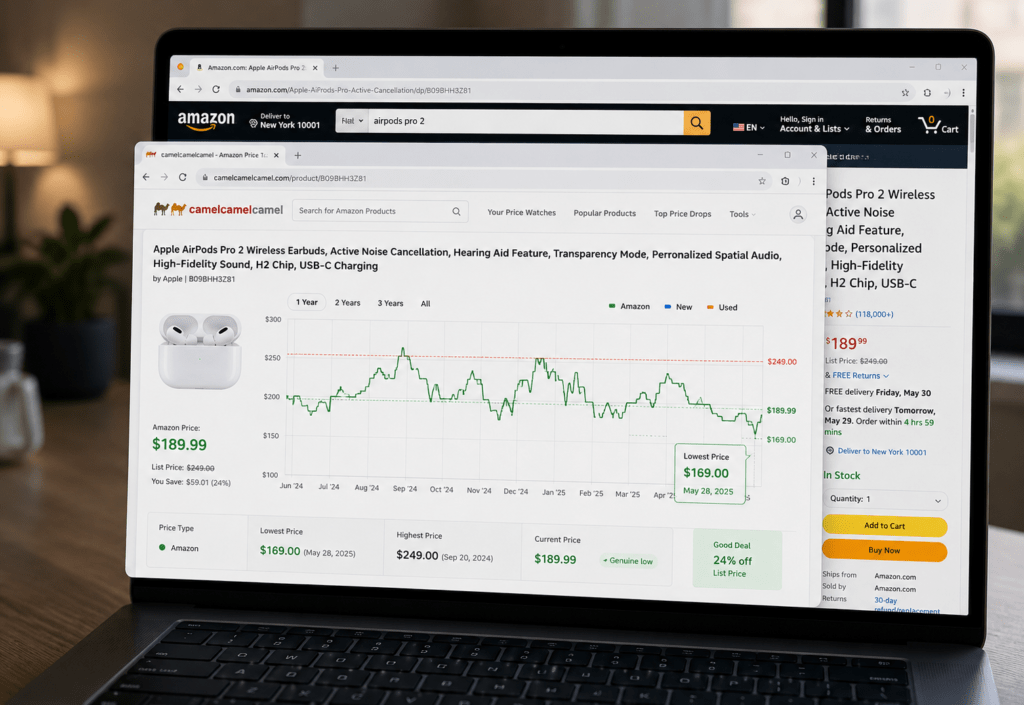
- CamelCamelCamel.com: Tracks Amazon price history — shows you if today’s “deal” is actually the lowest price ever or just the regular price
- Keepa.com: More detailed Amazon price history charts
- PriceSpy (India): Multi-retailer price comparison for India
Budget vs Premium — The Honest Verdict
Which Premium Gadgets Are Worth the Price?
This is the question that actually matters. Here’s the verdict based on user data and value analysis:
Worth the Premium Price:
- Apple AirTag — $29 is not a premium price for what it does. The value-to-cost ratio is exceptional. Buy the 4-pack.
- Ember Mug 2 — Sounds expensive. Delivers daily value. Worth it if you drink hot beverages.
- RingConn Gen 2 Air — $199 with NO subscription is genuinely the smart choice over Oura Ring’s ongoing cost.
- Shokz OpenRun Pro 2 — If your use case fits (outdoor sport, commute, need open ears), nothing else does this.
Premium Worth It Conditionally:
- Ray-Ban Meta AI Glasses — Worth it for daily wearers and content creators. Not worth it for novelty alone.
- Apple Watch Ultra 3 — Worth it for serious athletes and outdoor adventurers. Overkill for casual fitness tracking.
- Nebula Capsule 3 — Worth it if you travel frequently. Not worth it for occasional home cinema.
Premium You Can Skip:
- Echo Show 21 — The $99 Echo does 80% of the same things. Unless you specifically need the 21-inch display, the premium isn’t justified.
- Oura Ring Gen 4 — The hardware is excellent but the subscription model over 2 years costs more than buying the RingConn twice. Unless you specifically value Oura’s app insights.
Future Trends — What’s Coming After 2026
The Gadgets Worth Watching
The VR headset category has crossed the threshold from impressive demonstration device to genuinely practical daily-use tool — 2026 is the year where the case for individual VR headset ownership is compelling enough to recommend to a significantly broader audience, particularly for professionals who work from home in physically constrained environments.
Near-term (2026–2027):
- AI wearables with display integration (smart glasses with true AR overlay) — the Even Realities G2 is the early version; the full version is 18 months away
- Smart rings with contactless payments becoming mainstream (Samsung Galaxy Ring already has it; others will follow)
- AI health devices with early disease detection — wearables that identify health changes weeks before symptoms
Medium-term (2027–2028):
- Earphones that double as health monitors — real-time blood pressure and blood glucose via in-ear sensors
- AI home energy management that optimises your electricity bill automatically
- Smart textiles — from shirts that measure breathing rate to yoga pants that monitor posture, wearable textiles with embedded nanosensors are coming in 2026-2027.
FAQ Section
Q: What is the best AI gadget to buy in 2026?
A: For most people, the Ray-Ban Meta AI Smart Glasses Gen 2 is the most genuinely useful AI gadget in 2026 — it integrates into daily life without changing your routine, looks like regular glasses, and provides hands-free AI assistance, audio, and first-person photography. For productivity specifically, the Plaud NotePin is transformative for anyone who attends regular meetings or lectures.
Q: Are smart rings better than smartwatches?
A: They serve different purposes. Smart rings (RingConn Gen 2 Air, Oura Ring Gen 4) are better for 24/7 passive health monitoring — they’re comfortable to sleep in, have excellent battery life, and track health data continuously without being noticed. Smartwatches (Apple Watch Ultra 3, Samsung Galaxy Watch 8) are better for active notifications, GPS tracking, payments, and direct phone interaction. Many serious health enthusiasts use both.
Q: What is the best budget fitness tracker in 2026?
A: The Google Fitbit Air at $99 (₹8,300) is the best budget fitness tracker in 2026 — it includes AI-powered health coaching via Google Gemini, sleep tracking, heart rate monitoring, and 7-day battery. For the most basic tracking at the lowest price, the Xiaomi Smart Band 9 at $29 (₹2,400) is excellent value.
Q: Is the Ember Mug 2 worth the price?
A: Yes — for anyone who regularly drinks hot beverages and regularly finds their coffee or tea has gone cold. The ₹12,500 price sounds steep for a mug but the daily utility, particularly for WFH workers and office workers, makes it one of the most consistently used gadgets on this list. The best way to judge: if you find yourself microwaving drinks more than twice a day, the Ember pays for itself in convenience within weeks.
Q: Where can I buy gadgets at the lowest price in India in 2026?
A: Amazon India during the Great Indian Festival (October) consistently offers the best annual prices on major electronics. For tracking prices year-round, use CamelCamelCamel.com to see Amazon price history before buying. Flipkart’s Big Billion Days (also October) is the main competitor. For refurbished options, Back Market offers 20–50% savings on certified pre-owned devices.
Q: Do Ray-Ban Meta AI Glasses work with Android phones?
A: Yes — Ray-Ban Meta AI Glasses Gen 2 work with both Android and iPhone. You need the Meta View app (available on both platforms). Full functionality is available on both operating systems, though some features integrate more seamlessly with Meta’s own services. You do not need a Facebook account to use the glasses for basic features, but a Meta account is required for AI assistant functionality.
Q: What smart gadgets are best for a smart home beginner?
A: Start with the Amazon Echo (5th Gen) at $99 / ₹8,300 — it acts as the hub for your smart home and can control compatible bulbs, plugs, and other devices immediately. Add Apple AirTags (4-pack at $99 / ₹8,300) for key and wallet tracking. These two purchases cost under ₹17,000 combined and provide the highest immediate daily value of any smart home starter kit.
Conclusion — Stop Scrolling. Start Buying the Right Thing.
The gadget market in 2026 has a problem: everything looks impressive in a 60-second video. The AI glasses shoot cinematic footage, the smart ring shows your health metrics, the AI speaker handles complex multi-step requests. All of it is real. Some of it is also genuinely useful for your specific life.
The one question worth asking before any gadget purchase: does this solve a problem I actually have, or does it solve a problem the marketing convinced me I have?
The Ember Mug 2 solves the problem of cold coffee. It is ₹12,500. It will get used every day.
The AI Pin category (Humane AI Pin, etc.) solves the problem of not having a phone — but you have a phone. This is why Humane failed.
The AirTag solves the problem of lost keys and bags. It costs ₹2,400. It will get used indefinitely.
This is the framework. Apply it to everything on this list. Pick the gadgets that solve problems you have. Skip the ones that solve problems you don’t.
The future is already here. It’s just distributed in the things that are quietly useful, not the things with the best demo videos.
Buy smarter. Not more.
[…] Trending Electronic Gadgets 2026 […]