

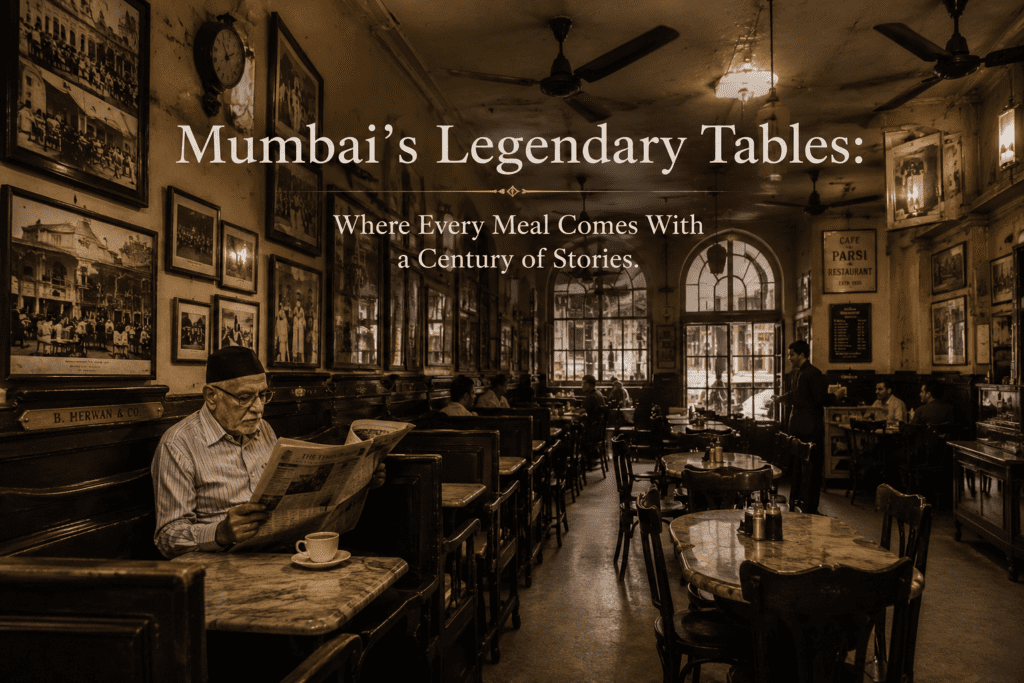
There is a restaurant in South Mumbai where the furniture hasn’t changed since 1871.
The menu hasn’t changed much either. The waiters — dressed in the same white uniforms their predecessors wore — move through the dining room with the unhurried authority of people who understand that the guests will wait, because nothing worth having is rushed, and because what arrives at your table has been arriving at tables in this room for over a hundred and fifty years.
Britannia & Co. doesn’t have a social media presence. It doesn’t need one. The queue outside does its marketing.
Mumbai is full of places like this — restaurants that exist not because they’ve kept up with the times but because they’ve quietly, stubbornly outlasted them. Places where the recipe hasn’t changed, the seating is worn from decades of elbows, and the food arrives with the specific confidence of something that has never needed to justify itself.
This guide is about those places. Not the trendy, not the new, not the Instagrammed. The legendary. The ones Mumbaikars have been bringing their families to for generations, and the ones visitors remember long after they’ve forgotten the name of every hotel they stayed in.
Pull up a chair. The waiter will be with you shortly. He has been here longer than most cities.
Quick Summary Table
| Restaurant | Est. | Area | Cuisine | Avg. Meal for 2 | Must-Order |
|---|---|---|---|---|---|
| Britannia & Co. | 1923 | Ballard Estate | Parsi | ₹800–₹1,400 | Berry Pulao, Dhansak |
| Leopold Cafe | 1871 | Colaba | Continental / Indian | ₹1,200–₹2,000 | Cold Coffee, Club Sandwich |
| Café Mondegar | 1932 | Colaba | Continental / Goan | ₹1,000–₹1,800 | Chicken Steak, Cold Beer |
| Kyani & Co. | 1904 | Marine Lines | Irani / Bakery | ₹200–₹500 | Brun Maska, Kheema Pav |
| Mahesh Lunch Home | 1956 | Fort / Juhu | Coastal Seafood | ₹1,500–₹3,000 | Butter Garlic Crab, Prawn Curry |
| Sardar Refreshments | 1945 | Tardeo | Maharashtrian | ₹300–₹600 | Pav Bhaji, Mango Milkshake |
| Badshah Cold Drinks | 1905 | Crawford Market | Juice / Falooda | ₹150–₹350 | Falooda, Fresh Juices |
| Gaylord Restaurant | 1956 | Churchgate | North Indian | ₹2,000–₹3,500 | Dal Makhani, Butter Chicken |
| Bade Miya | 1946 | Colaba | Mughlai Kebabs | ₹500–₹1,200 | Seekh Kebab, Chicken Tikka |
| Café Military | 1933 | Fort | Irani / Parsi | ₹400–₹900 | Mutton Berry Pulao, Caramel Custard |
1. Britannia & Co. — The Restaurant That Refused to Change
- Est. 1923 | Ballard Estate, Fort | Parsi Cuisine
The story of Britannia & Co. is inseparable from the story of its owner — Boman Kohinoor, who ran the restaurant until his passing in 2021 at the age of 97, wearing a bow tie to work until the very end. He used to tell customers that his restaurant was older than independent India, and that it intended to outlast whatever came next.
He wasn’t being arrogant. He was just being accurate.
Britannia opened in 1923 in a colonial-era building in Ballard Estate — the old business district of Bombay, a neighbourhood of wide streets and art deco architecture that feels like it arrived from another century, because it did. The restaurant has been in the same building ever since. The photographs on the walls — of the British royal family, of old Bombay, of Boman himself in various decades — have been there so long they’ve become part of the architecture.
The food is Parsi, which means it sits at the intersection of Persian ancestry and a century of Indian influence — a cuisine of exceptional complexity and heartbreaking underrepresentation on most restaurant menus in the world. At Britannia, it is served without apology and without explanation.
The Must-Orders:
Berry Pulao (₹420–₹480): The centrepiece dish. Fragrant basmati rice cooked with saffron and meat (chicken or mutton), topped with barberries — tart, jewel-like red berries imported from Iran. The combination of the sweet-savoury rice and the sharp berries is unlike anything else in Mumbai. Boman used to import the berries himself; the tradition continues.
Dhansak (₹380–₹420): Parsi Dhansak is a one-pot marvel — lamb (or chicken) slow-cooked with multiple lentils and an earthy spice blend that includes cumin, coriander, cinnamon, and a background warmth that builds slowly. Served with brown rice and caramelised onions.
Sali Boti (₹350–₹380): A Parsi lamb curry topped with crispy fried potato straws (sali). Rich, slightly tangy, and texturally brilliant.
Caramel Custard (₹120): The dessert. Silky, cold, simple. After the richness of the main course, it’s exactly right.
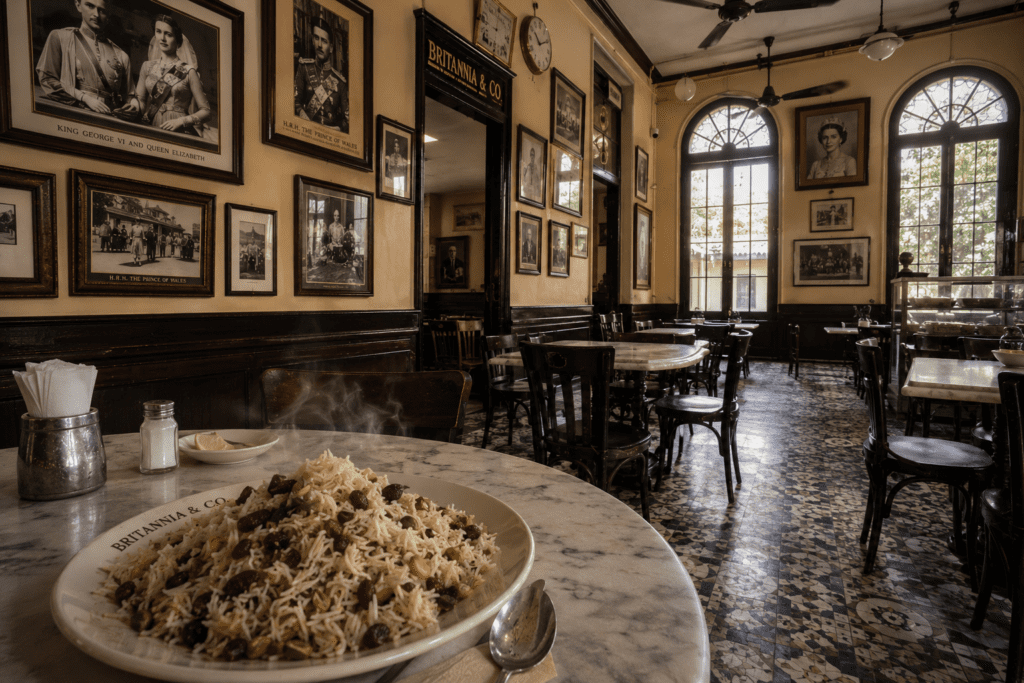
Timings: Monday–Saturday, 11:30am–4pm only (lunch service exclusively) Reservations: Walk-in only. Arrive by 11:45am on weekends to avoid a long wait. Price for 2: ₹800–₹1,400 Note: Cash preferred. The atmosphere is part of the meal. Don’t rush.
2. Leopold Cafe — Where Bombay Becomes a Novel
- Est. 1871 | Colaba | Continental, Indian, Goan
Leopold Cafe is Mumbai’s most famous restaurant that nobody quite admits is their favourite. It’s too tourist-facing, too loud, too associated with backpackers and Lonely Planet — and yet, almost every Mumbaikar has a story that begins with “we ended up at Leopold’s…”
It opened in 1871, making it one of the oldest licensed restaurants in India. It survived two world wars, Partition, and on the night of 26th November 2008, it survived a terrorist attack that left bullet holes in its walls. Those bullet holes are still there — filled but visible, left as a deliberate memorial. Sitting at a table near them gives the room a weight that no interior designer could manufacture.
The food at Leopold is honest rather than exceptional. It’s the Continental-Indian hybrid of a restaurant that has been feeding travellers for 155 years — club sandwiches, cold coffee, sizzlers, beer-friendly snacks, and a decent Goan fish curry that reminds you this isn’t just a tourist café but a working Bombay institution.
The Must-Orders:
Cold Coffee (₹220–₹280): Leopold’s cold coffee is thick, strong, and correctly sweet. It has been ordered here by everyone from budget backpackers to film directors. It arrives in a tall glass with a straw and disappears faster than expected.
Club Sandwich (₹380–₹450): Triple-decker, toasted, with fries. A simple lunch done reliably.
Goan Fish Curry Rice (₹480–₹580): The sleeper hit. Red, coconut-based, tangy. Better than the menu’s presentation suggests.
Leopold’s Special Sizzler (₹650–₹750): Arrives smoking and sputtering on a cast-iron plate. Theatrical and satisfying.
Cold Beer (₹280–₹350 for 650ml): Kingfisher, Heineken, or Corona. Essential on a hot afternoon.
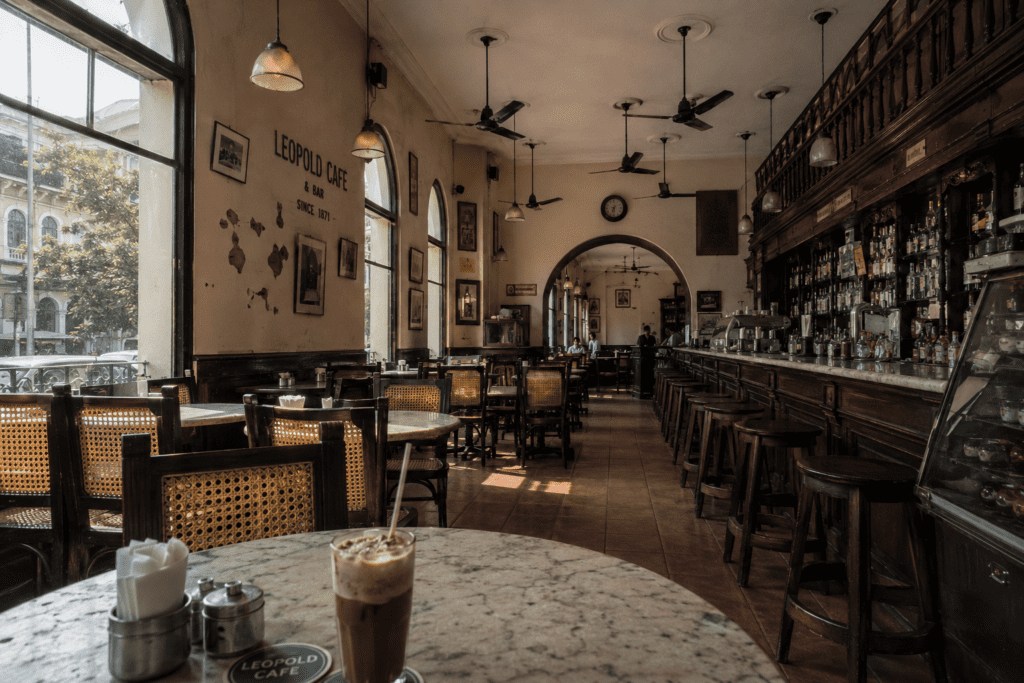
Timings: 7:30am–12:30am (daily, one of the few Mumbai legends open from breakfast to late night) Reservations: Not required. Walk-in always available. Price for 2: ₹1,200–₹2,000 (with beer)
3. Café Mondegar — The Jukebox, The Murals, The Steak
- Est. 1932 | Colaba | Continental, Goan, Snacks
Sixty metres from Leopold, at the other end of the same mood — Café Mondegar. Smaller, louder when the jukebox is running, and decorated with murals by the celebrated Indian cartoonist Mario Miranda whose characters — rotund Goan aunties, wide-eyed tourists, flustered waiters — cover the walls from floor to ceiling.
The Mondegar clientele is eclectic in the way only Colaba can manage: three tables of college students, one table of retired men who have been coming since 1975, a pair of obvious foreigners studying the menu with squinting concentration, and a solitary drinker reading a novel at the bar. Everyone is comfortable. Nobody is performing.
The Must-Orders:
Chicken Steak (₹520–₹620): The restaurant’s flagship — a flame-grilled chicken breast, simply seasoned, served with mashed potato and a thick pepper or mushroom sauce. Consistent and honest.
Beef Goulash (₹580–₹680): For those who eat beef — a slow-cooked, paprika-rich stew that arrived via Goa’s Portuguese history and somehow stayed perfectly calibrated for a century.
Prawn Butter Garlic (₹680–₹780): A Mondegar speciality — large prawns in a sauce that exists primarily as a vehicle for butter and crushed garlic and is magnificent for it.
Cold Beer (₹280–₹350): The jukebox and cold beer are a Mondegar pairing as established as any item on the menu.
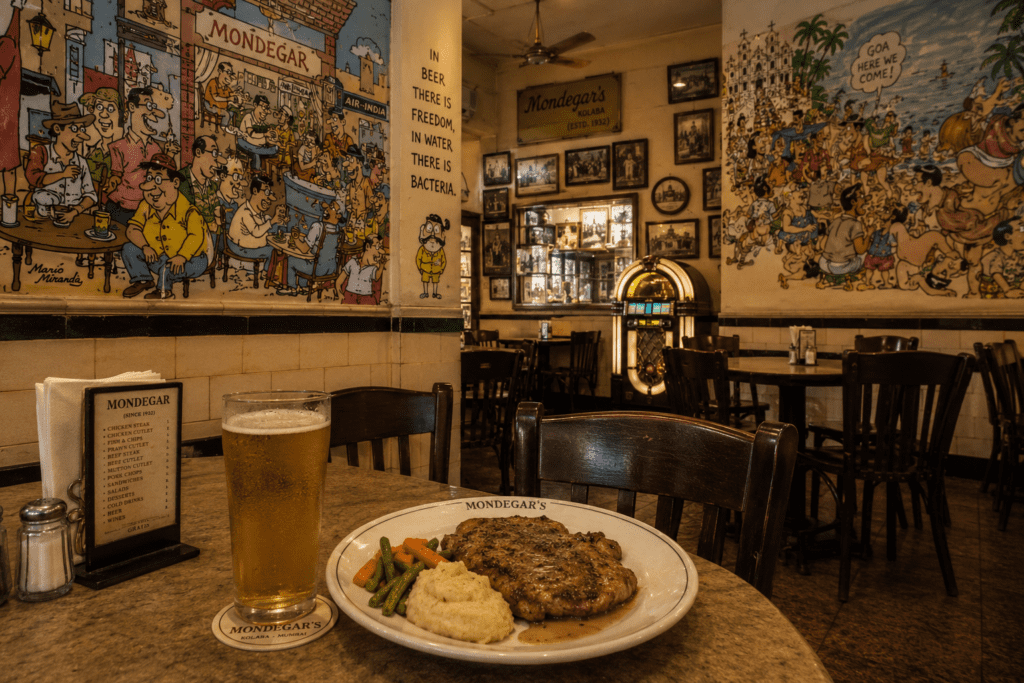
Timings: 7:30am–11:30pm (daily) Reservations: Walk-in. Can get busy on Friday and Saturday evenings — arrive before 7:30pm. Price for 2: ₹1,000–₹1,800
4. Kyani & Co. — The Irani Café That Wears Its Age Like a Medal
- Est. 1904 | Marine Lines | Irani Bakery, Breakfast, Snacks
If you want to understand what Bombay was before it became Mumbai — before the high-rises and the traffic and the aggressive modernity — sit down at Kyani & Co. for a Brun Maska and chai.
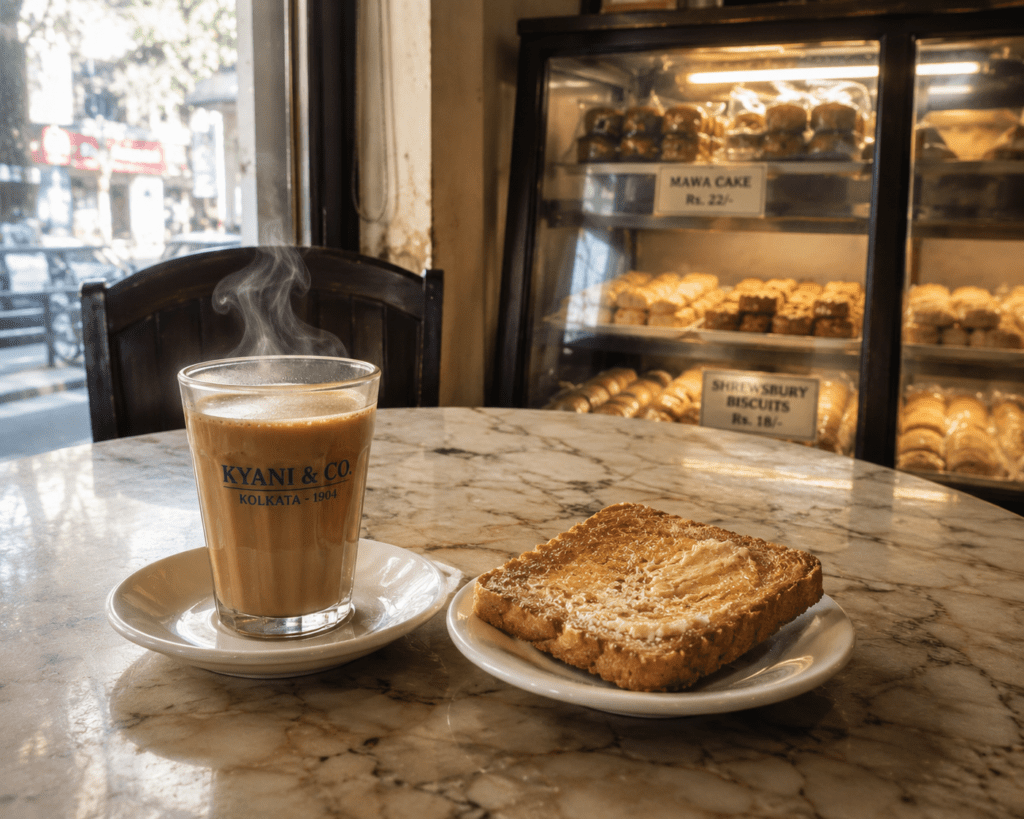
The Irani cafés of Mumbai were established by Zoroastrian immigrants from Iran in the late 19th and early 20th centuries. At their peak, there were over 350 of them across the city. Today, fewer than 30 survive. Kyani, opened in 1904, is one of the most intact — the old wooden furniture, the glass display cases full of biscuits and mawa cakes, the marble-top tables, the unhurried pace, the conversations happening in three languages at once.
It opens at 5am. The chai is ready before the sun is up. The bakery smell — fresh bread, butter, something caramelising — hits you from the street.
The Must-Orders:
Brun Maska with Chai (₹60–₹80): The foundational Irani café order. Brun bread — dense, slightly crusty, yeasted — sliced and spread with a generous amount of salted butter (maska). Dipped into milky, slightly sweet Irani chai. This is the breakfast that built Bombay’s working morning for over a century.
Kheema Pav (₹140–₹180): Spiced minced meat on the bone, served with soft white pav. Kyani’s version is subtly spiced — ginger-forward, not overwhelmingly fiery.
Mawa Cake (₹60–₹80 per piece): A Parsi-Irani specialty — dense, sweet cake made with khoya (reduced milk), slightly grainy in texture, richly flavoured. Unlike anything else. Order two.
Shrewsbury Biscuits (₹40–₹60 for a pack): Buttery, crumbly shortbread-style biscuits that Kyani has been baking since before most countries finished their wars. Buy a pack to take back.
Timings: 5am–9:30pm (Monday–Saturday); 5am–1pm (Sunday) Price for 2: ₹200–₹500 (among the most affordable legends on this list) Note: Cash only. Do not expect Wi-Fi. This is appropriate.
5. Mahesh Lunch Home — Coastal Karnataka on a Plate
- Est. 1956 | Fort & Juhu | Coastal Seafood (Mangalorean / Konkani)
There is a school of thought in Mumbai that says the best seafood in the city is not found at five-star hotels or at trend-forward restaurants in Bandra but at Mahesh Lunch Home — a restaurant that has been cooking Mangalorean and Konkani coastal food since 1956 with the specific confidence of an institution that knows it doesn’t need to impress anyone.
The original Fort branch is the one with the history. The Juhu branch handles the west-side crowd. Both serve the same menu, the same recipes, the same seafood that has made Mahesh one of the most respected names in Mumbai’s food culture for nearly seven decades.
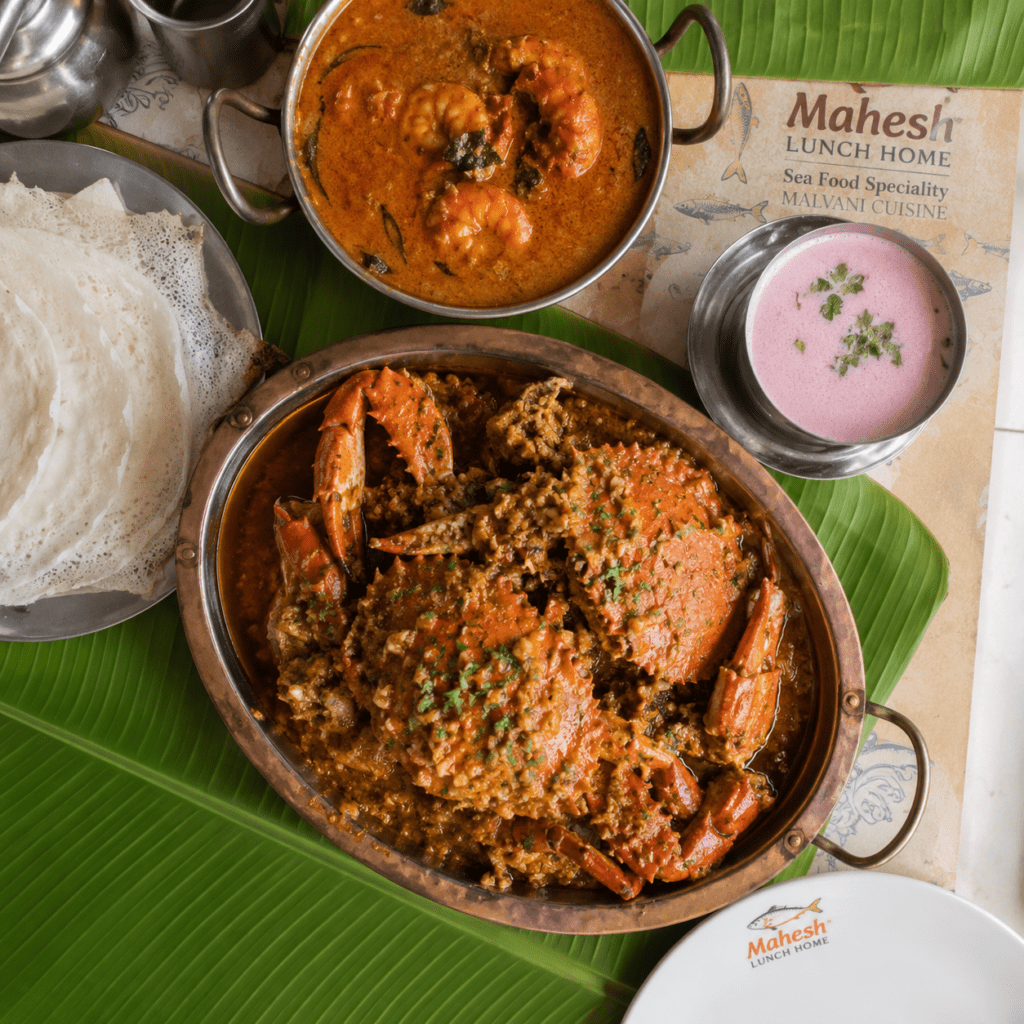
The crabs arrive whole and terrifyingly fresh. The prawn curries are coconut-milk-rich and gently sour with kokum. The fish fry is crisp-skinned and perfectly salted. This is cooking that respects its ingredients by leaving them mostly alone.
The Must-Orders:
Butter Garlic Crab (₹900–₹1,400 depending on size/market rate): The signature dish. A whole crab — usually Mud Crab or Flower Crab — cooked in a buttery, garlicky, mildly spiced sauce that pools at the bottom of the serving dish and must be mopped up with bread. Messy, magnificent, mandatory.
Prawn Gassi (₹580–₹720): A Mangalorean coconut-based prawn curry, dark and aromatic with roasted coconut masala, slightly sour from the kokum. Served with neer dosa or rice.
Pomfret Rechad (₹680–₹850): A Goan preparation — pomfret fish smeared inside and out with a deep red rechad masala (dried chilli, vinegar, garlic) and pan-fried until the skin crisps. Sharp and extraordinary.
Tisrya (Clams) Masala (₹380–₹480): Small Konkani clams in a spiced coconut masala. A side dish that ends up being the dish everyone fights over.
Sol Kadhi (₹80–₹120): The digestive drink — pink, made from kokum and coconut milk, cold, slightly tart. Drink this. Your stomach will thank you.
Timings: 11:30am–4pm and 6:30pm–11:30pm (daily) Reservations: Strongly recommended for dinner, especially weekends. Call ahead. Price for 2: ₹1,500–₹3,000 (seafood prices fluctuate with market rates — always ask before ordering crab)
6. Sardar Refreshments — Pav Bhaji’s Permanent Address
- Est. 1945 | Tardeo | Maharashtrian Street Food (Sit-Down)
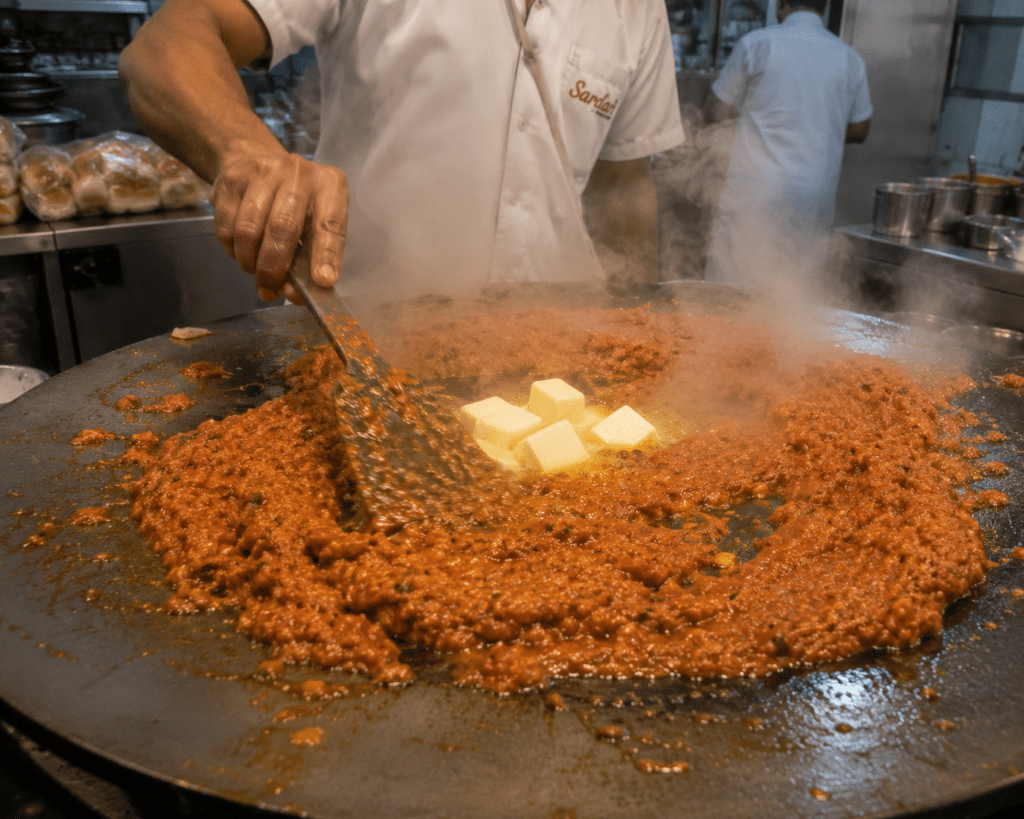
Sardar is not a restaurant in the formal sense. There are no printed menus, no reservations, no wine list, and the decor could generously be described as functional. What Sardar has is a tawa — one legendary tawa — and a recipe for Pav Bhaji that has been running continuously since 1945 without revision.
Mumbaikars who debate the city’s best Pav Bhaji will usually end up, after all the arguing, at Sardar. Not because it’s a comfortable conversation to have. Because it’s the correct answer.
The bhaji is cooked on a flat iron tawa in quantities that would alarm a lesser cook — vast quantities of potato, tomato, peas, and capsicum mashed together with a Pav Bhaji masala that Sardar’s family has never disclosed and a volume of Amul butter that should be studied in the context of public health. The pav are toasted on the same butter-slicked surface until golden-bottomed and slightly crisp at the edges.
The Must-Orders:
Pav Bhaji (₹160–₹220): The single necessary order. The bhaji arrives in a steel bowl, dark orange-red, swimming in butter, with two pav on the side. Squeeze the lemon over everything. Start.
Special Pav Bhaji with Extra Butter (₹220–₹280): For those committed to the full experience.
Mango Milkshake (₹120–₹160, seasonal — May to July): Alphonso mango season in Mumbai coincides with Sardar’s milkshake being at its peak. Thick, real, no ice cream supplement. Pure Alphonso.
Usal Pav (₹120–₹160): A sprouted lentil curry in a thinner, spicier gravy than Misal — served with pav. The underrated Sardar order.
Timings: 9am–1am (daily, one of the rare legends with late-night hours) Price for 2: ₹300–₹600 Note: Expect a queue on evenings and weekends. It moves. Worth it.
7. Badshah Cold Drinks — 120 Years of Falooda
- Est. 1905 | Crawford Market | Juices, Falooda, Sherbets
Badshah is not where you go for a meal. Badshah is where you go when a meal is over and you want something cold, sweet, and slightly excessive.
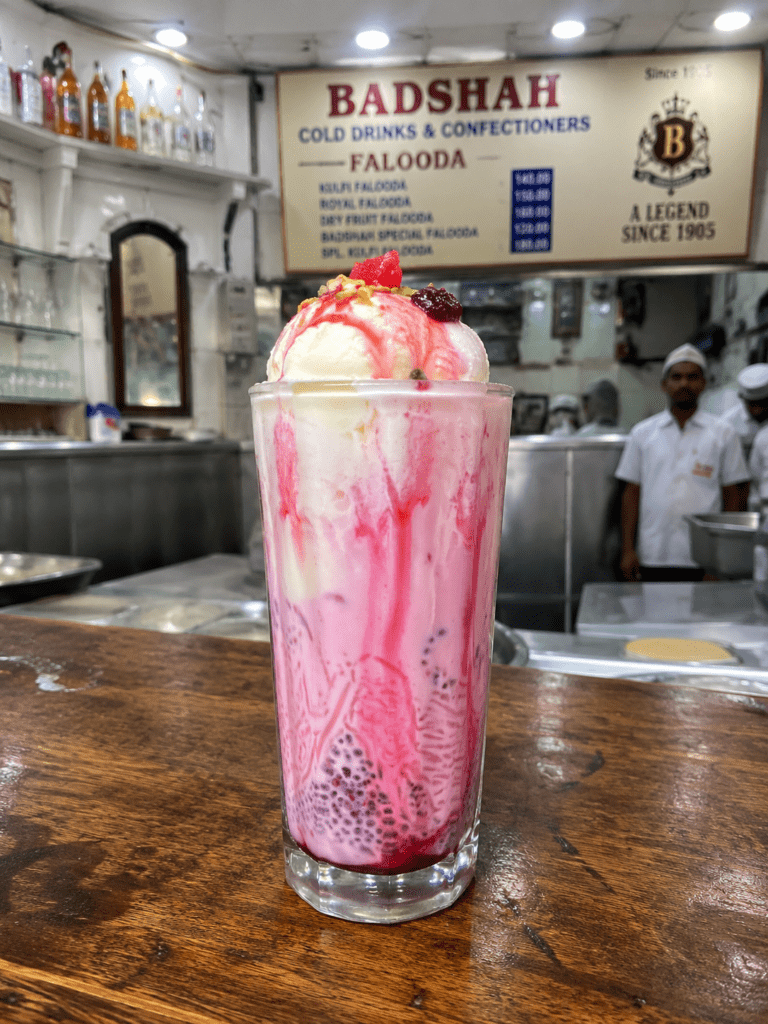
Opened in 1905 near Crawford Market — itself a Victorian-era covered market that’s a heritage landmark — Badshah has been serving fresh juices, sherbets, faloodas, and seasonal drinks to the neighbourhood since before the city had its current name. The building is small. The menu is large. The crowds are constant.
On a summer afternoon, standing outside with a tall glass of Falooda in one hand while the Crawford Market crowd moves around you, you understand something about Mumbai’s relationship with pleasure — which is that it is taken seriously, pursued deliberately, and usually served cold.
The Must-Orders:
Falooda (₹120–₹180): The signature. Rose milk base, falooda (thin vermicelli), sabja seeds, a scoop of vanilla ice cream, and rose syrup drizzled over. Cold and complex and deeply satisfying.
Kesar Badam Milk (₹120–₹180): Hot or cold — saffron and almond milk, richly flavoured, almost thick. The cold version on a summer afternoon is exceptional.
Fresh Lime Soda (Sweet, Salty, or Both) (₹80–₹100): The most refreshing thing in Mumbai’s heat. Order “both” if you’ve never tried the combination — it works better than it sounds.
Seasonal Juice — Alphonso Mango (₹150–₹220, May–July): During mango season, Badshah’s fresh Alphonso juice is as close to a religious experience as a beverage can get in this city.
Custard Apple Milkshake (₹140–₹180, October–December): The winter seasonal option — thick, white, custard-sweet.
Timings: 7am–11pm (daily) Price for 2: ₹150–₹350 Note: Standing only, or small seating area outside. Cash preferred.
8. Gaylord Restaurant — When Mumbai Dressed For Dinner
- Est. 1956 | Churchgate | North Indian, Continental
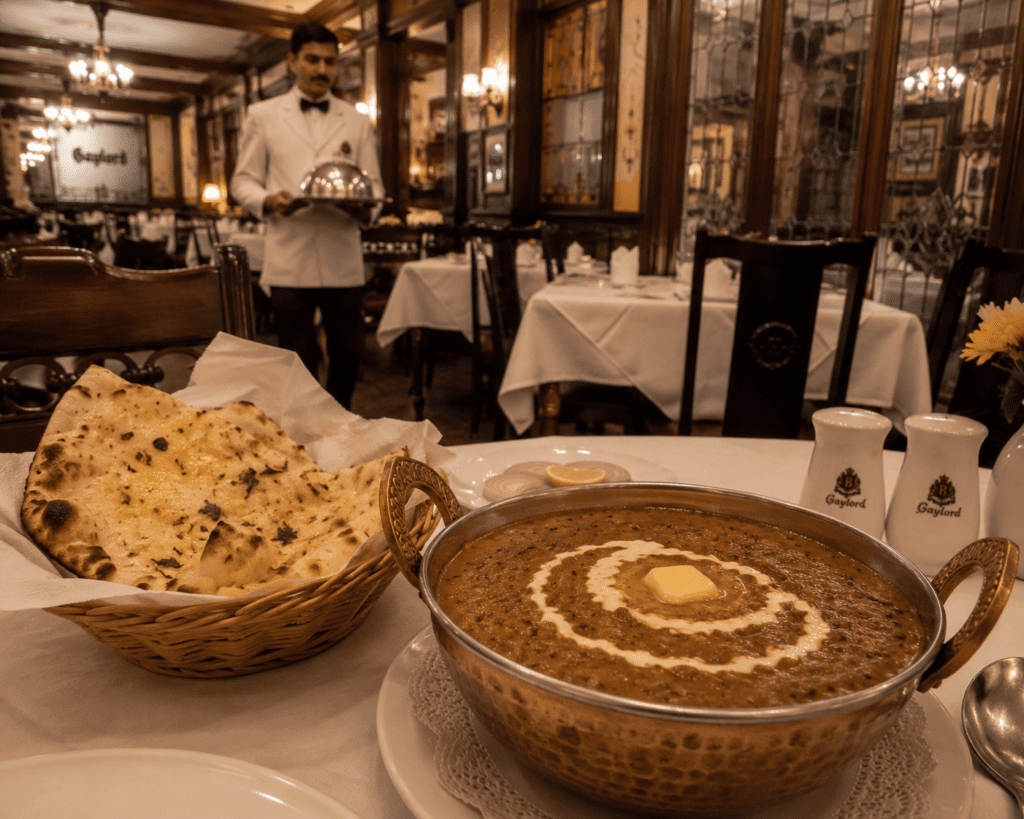
Gaylord arrived in Mumbai in 1956 as part of a chain that represented a certain aspirational India — an India that dressed for dinner, ordered in English, and considered a good dal makhani a social occasion. The Churchgate branch is the original, and it has survived the decades with its sense of occasion largely intact.
The room is not modern. The tablecloths are white and properly pressed. The waiters are in uniform. When you sit down, you feel — in a way that fewer and fewer restaurants allow — that you are a guest somewhere that means it.
Bollywood legends ate here. Politicians closed deals over these tables. On certain afternoons, the dining room carries the faint but unmistakeable atmosphere of decades of conversation — important, trivial, romantic, transactional — that have been had over this food.
The Must-Orders:
Dal Makhani (₹420–₹520): The benchmark. Slow-cooked black lentils in a butter and cream sauce that requires hours to develop its depth. Gaylord’s version has been made to the same recipe since 1956. It shows.
Butter Chicken (₹580–₹680): The version that predates most of India’s memory of Butter Chicken. Rich, mildly spiced, the tomato gravy balanced perfectly between sweet and tangy.
Seekh Kebab (₹520–₹620): Minced lamb on skewers, cooked in the tandoor, slightly charred at the edges. Served with mint chutney and thinly sliced onion rings.
Tandoori Roti / Naan (₹80–₹120): Fresh from the tandoor. The bread here is not an afterthought.
Caramel Custard (₹180–₹220): The dessert, then as now. Cold, silky, simply perfect.
Timings: 12pm–3:30pm and 7pm–11pm (daily) Reservations: Recommended for dinner. Call ahead. Price for 2: ₹2,000–₹3,500
9. Bade Miya — Colaba After Midnight
- Est. 1946 | Colaba | Mughlai Kebabs, Rolls, Grills
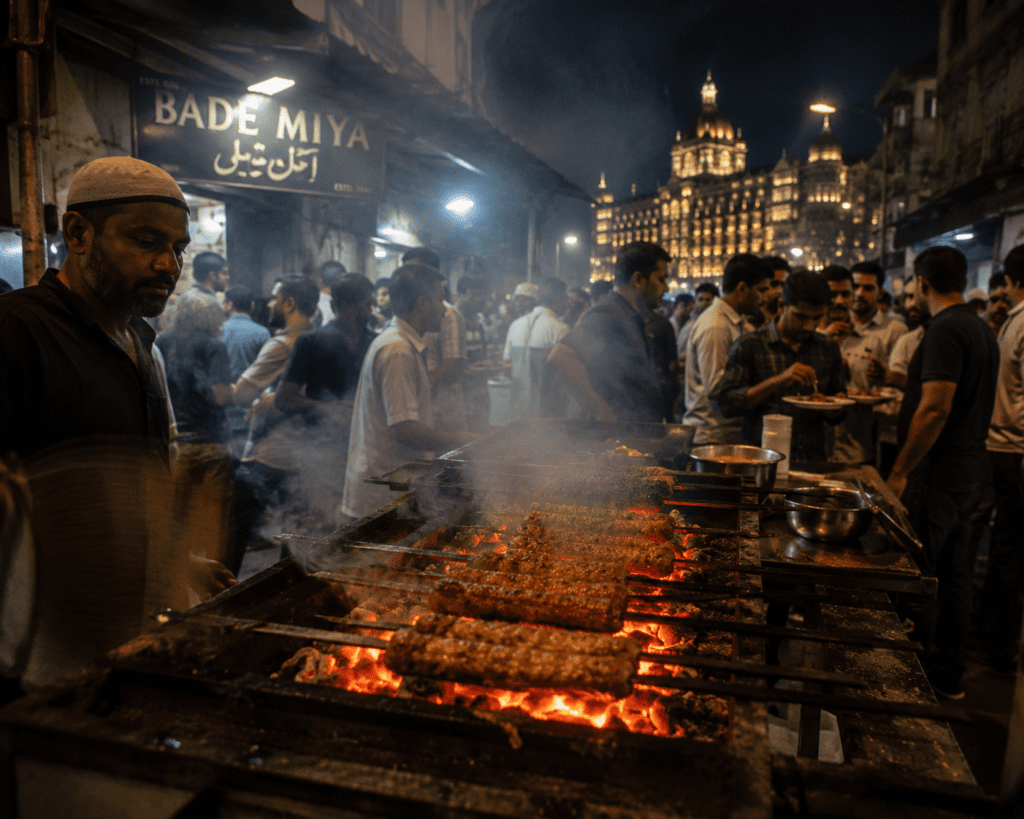
Bade Miya doesn’t have a dining room. It has a lane. Specifically, a narrow lane behind the Taj Mahal Palace Hotel in Colaba where, every evening from around 7pm until the small hours of the morning, a succession of coal grills, long skewers, and hand-rolled rotis produce some of the most celebrated kebabs in Mumbai.
The restaurant — if that’s the right word for a setup that operates primarily on the street — has been there since 1946. The original Bade Miya (the “Big Sir,” as the name translates) started the operation. His descendants continue it. The coal grills are the same concept. The seekh kebabs are the same recipe. The crowd — which includes CEOs from the Taj next door, college students, late-night shift workers, and tourists who found the queue and followed it — is proof that great food transcends category.
The Must-Orders:
Seekh Kebab (₹180–₹240 for 2 pieces): Long, thin, minced lamb kebabs on skewers, cooked over live charcoal, slightly charred, served with green chutney and thinly sliced onion. The charcoal flavour is everything.
Chicken Tikka (₹220–₹280 for 4 pieces): Marinated overnight in yoghurt and spices, cooked in the tandoor. Juicy, smoky, properly spiced.
Bade Miya Roll (₹180–₹250): A kebab rolled in a fresh roti — seekh kebab or chicken tikka — with sliced onion, green chutney, and a squeeze of lime. Wrapped in paper and eaten standing up. This is the correct way.
Roomali Roti (₹80–₹100): Paper-thin, soft, slightly smoky. Order this alongside anything on the grill.
Brain Masala (₹280–₹340): For the adventurous — goat brain cooked in a spiced masala. Rich, creamy, not for the faint of heart, deeply delicious for those willing.
Timings: 7pm–3am (daily; yes, 3am is correct) Price for 2: ₹500–₹1,200 Note: Cash only. Stand-up eating or nearby bollards. This is part of the experience, not a shortcoming.
10. Café Military — The One That Whispers
- Est. 1933 | Fort | Irani Café, Parsi Dishes
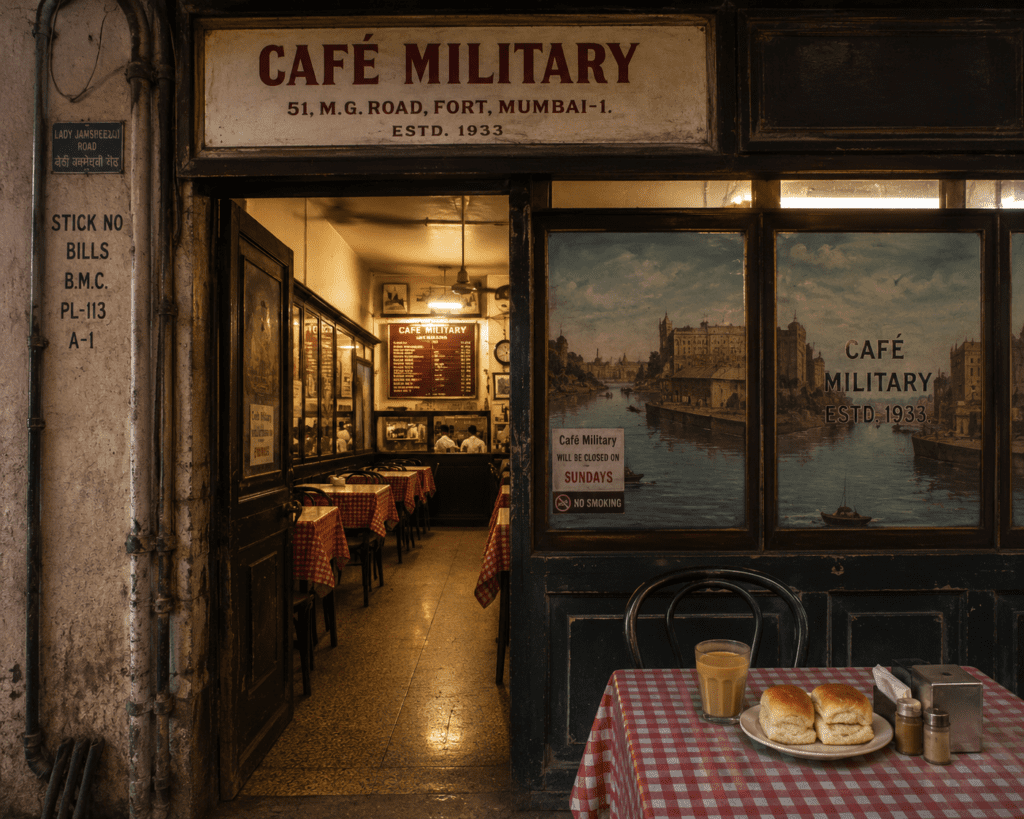
If Kyani is the Irani café you find first, Café Military is the one you find when you’re looking harder. Tucked into a lane in Fort — Mumbai’s old commercial district — it operates without signage ostentatious enough to catch a passing glance, in a building that looks like it has been there longer than the road outside.
It has. Café Military opened in 1933 and has been serving its small, faithful crowd ever since. The clientele is largely local — office workers from the Fort area, regulars who have been coming for decades, the occasional knowing food traveller who found it in a recommendation that was not in a guidebook.
The food is Irani-Parsi crossover — the bun maska and chai that define the genre, alongside a short menu of proper hot dishes that punch well above the café’s modest appearance.
The Must-Orders:
Mutton Berry Pulao (₹420–₹480): A smaller, more informal version of Britannia’s flagship. The barberries and saffron rice are the same tradition, the setting more casual.
Bun Maska and Irani Chai (₹70–₹90): The foundation order. At Military, the bun is particularly good — slightly sweeter than Kyani’s, the butter generously applied.
Caramel Custard (₹120–₹150): Every old Irani and Parsi restaurant in Mumbai has this on the menu. Military’s is cold, silky, and worth ordering even if you’re not hungry.
Mutton Cutlet (₹180–₹220): Minced mutton shaped into a patty, coated in breadcrumbs, shallow-fried until the crust is golden. Simple, perfectly executed, the kind of dish that makes you wonder why anyone bothers with complexity.
Mawa Cake (₹60–₹80): Same Parsi tradition as Kyani’s — dense, khoya-rich, slightly grainy, deeply satisfying.
Timings: 7am–9pm (Monday–Saturday); closed Sunday Price for 2: ₹400–₹900
The Neighbourhood-by-Neighbourhood Guide
South Mumbai (Colaba, Fort, Churchgate)
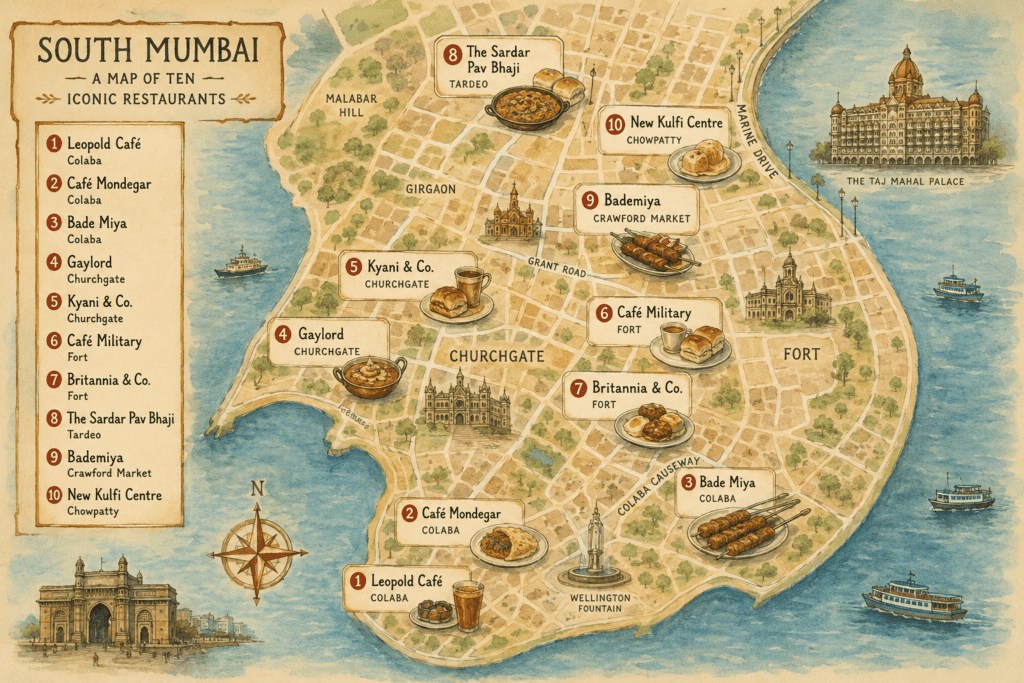
The highest concentration of legendary restaurants per square kilometre anywhere in the city. Leopold, Mondegar, Bade Miya, Café Military, Gaylord, and a short cab ride to Britannia all live here. Spend a full day in South Bombay and eat your way through it on foot.
Suggested South Bombay food trail: Morning chai at Café Military → late breakfast at Leopold → lunch at Britannia → evening Gaylord → late-night Bade Miya. This is a correct day.
Central Mumbai (Tardeo, Dadar, Marine Lines)
Sardar Refreshments in Tardeo, Kyani & Co. in Marine Lines. The everyday Mumbai institutions that feed the working city.
Crawford Market Area
Badshah Cold Drinks. The natural end to a morning spent in the Crawford Market neighbourhood.
Juhu / Andheri (West)
Mahesh Lunch Home’s Juhu branch serves the western suburbs crowd. Less atmospheric than Fort but identically excellent food.
My Personal Recommendations
I’ll tell you what I’d do if I had four days in Mumbai and eating was the primary objective — which, honestly, is the only reasonable objective.
Day 1 (South Bombay immersion): Start at Café Military at 8am for bun maska and chai. Walk to Britannia for lunch — arrive by noon. Evening drink at Leopold. Dinner at Gaylord. End at Bade Miya at 10:30pm for a seekh kebab roll.
Day 2 (Irani café trail): Morning at Kyani & Co. for mawa cake and kheema pav. Late morning walk through Crawford Market, end at Badshah for falooda. Afternoon rest. Dinner at Café Mondegar.
Day 3 (Seafood day): Lunch at Mahesh Lunch Home — order the butter garlic crab and pomfret rechad. Nothing else for the rest of the afternoon. This is appropriate.
Day 4 (Maharashtrian classics): Evening at Sardar for Pav Bhaji. Then end with Badshah falooda as the closing ritual.
The one I’d never skip: Britannia & Co. above everything. The Berry Pulao alone justifies a trip to Mumbai if you’ve never had it.
The surprise recommendation: Café Military over Kyani for the less-visited, more intimate Irani café experience. Both are extraordinary; Military feels like a discovery.
Pro Tips for Visiting Mumbai’s Legendary Restaurants
- Britannia is lunch-only and doesn’t take reservations. Arrive by 11:45am on weekdays. Weekend lunches can have 30-40 minute waits. The wait is worth it; bring something to talk about.
- Mahesh Lunch Home seafood prices fluctuate with daily market rates — always ask the server for current crab and lobster pricing before ordering. The fish and prawn dishes are on the fixed menu and won’t surprise you.
- Bade Miya is cash only and operates on the street. Bring ₹500–₹1,000 in small notes. There are no tables. This is intentional.
- Most South Bombay legends are closed on specific days — Kyani is closed Sunday afternoons, Café Military closes all Sunday. Always verify before making a special trip.
- The Irani cafés (Kyani, Military) don’t expect you to linger. You’re welcome to, but the culture is different from a European café — tables turn over, and that’s part of how these places have stayed alive for a century.
- EazyDiner and Dineout offer table booking with cashback at some Mumbai restaurants including Mahesh Lunch Home and Gaylord. Check before you visit — a 20% cashback on a seafood dinner adds up.
- Go at off-peak hours where possible — 12:30–1:30pm and 8–9pm are peak at most sit-down restaurants. 11:45am for lunch and 7pm for dinner give you better service and easier seating.
Mistakes to Avoid
Going to Britannia expecting a quick meal. Britannia is not a quick meal. Clear your afternoon. Order everything. Eat slowly. This is not a place that rewards rushing.
Ordering only “safe” dishes. The Mughlai, Parsi, and coastal Mangalorean cuisines at these restaurants are not what most visitors expect. The greatest mistake is ordering butter chicken at a restaurant famous for Berry Pulao.
Ignoring the Irani cafés because they look simple. Kyani and Military look like nothing special from the outside. Inside they are irreplaceable and genuinely endangered — with fewer than 30 remaining in a city that once had 350. Eat at them. Tell people about them.
Booking on Zomato for restaurants that don’t use it. Britannia, Café Military, and Bade Miya operate outside digital booking systems. Walk in. Call ahead if it’s a group.
Visiting Bade Miya at 7pm on a Saturday. The queue is significant. Go on a weekday, or go late — after 10:30pm the crowds thin slightly and the grill is still in full operation.
Budget Guide: What Every Legendary Restaurant Costs
| Restaurant | Budget for 1 | Budget for 2 | Splurge for 2 |
|---|---|---|---|
| Britannia & Co. | ₹500–₹700 | ₹800–₹1,400 | ₹1,400+ (extra dishes) |
| Leopold Cafe | ₹500–₹900 | ₹1,200–₹2,000 | ₹2,500+ (with cocktails) |
| Café Mondegar | ₹400–₹800 | ₹1,000–₹1,800 | ₹2,000+ |
| Kyani & Co. | ₹100–₹250 | ₹200–₹500 | ₹600 (go wild, order everything) |
| Mahesh Lunch Home | ₹700–₹1,400 | ₹1,500–₹3,000 | ₹4,000+ (full seafood spread) |
| Sardar Refreshments | ₹150–₹300 | ₹300–₹600 | ₹700 |
| Badshah Cold Drinks | ₹80–₹180 | ₹150–₹350 | ₹400 |
| Gaylord Restaurant | ₹900–₹1,500 | ₹2,000–₹3,500 | ₹4,500+ |
| Bade Miya | ₹250–₹600 | ₹500–₹1,200 | ₹1,500+ |
| Café Military | ₹200–₹450 | ₹400–₹900 | ₹1,000 |
Total for a complete legendary restaurant circuit (2 people, across 4 days): ₹10,000–₹18,000 covering all ten restaurants with signature dishes.
FAQ Section
Q: What is the oldest restaurant in Mumbai?
A: Leopold Cafe, established in 1871, is generally considered the oldest surviving restaurant in Mumbai. Badshah Cold Drinks (1905) and Kyani & Co. (1904) are close behind. Britannia & Co. (1923) is the most celebrated of the city’s legendary dining institutions.
Q: Which Mumbai restaurant is most famous for Parsi food?
A: Britannia & Co. in Ballard Estate is the definitive address for Parsi food in Mumbai. The Berry Pulao and Dhansak are the must-order dishes, and the restaurant operates lunch service only, Monday through Saturday.
Q: Is Britannia & Co. still open?
A: Yes, Britannia & Co. is still operating and remains one of Mumbai’s most beloved dining institutions. The restaurant is open for lunch service only (approximately 11:30am–4pm), Monday through Saturday, and does not take reservations. Boman Kohinoor, who ran the restaurant for decades, passed away in 2021, but his family continues the tradition.
Q: Where can I eat the best seafood in Mumbai?
A: Mahesh Lunch Home (Fort and Juhu branches) is widely regarded as the best address for Mangalorean and Konkani coastal seafood in Mumbai. The Butter Garlic Crab and Pomfret Rechad are the signature dishes. Reservations are strongly recommended for dinner.
Q: What should I order at Bade Miya in Mumbai?
A: The Seekh Kebab and Bade Miya Roll are the essential orders — minced lamb seekh kebabs on coal grills, wrapped in roti with chutney and sliced onion. Chicken Tikka is excellent. The experience of eating standing up in the lane behind the Taj Hotel is part of what makes Bade Miya legendary.
Q: Are Mumbai’s legendary restaurants expensive?
A: It depends entirely on the restaurant. Kyani & Co. and Badshah Cold Drinks offer full experiences for under ₹300 for two. Britannia and Sardar fall in the ₹800–₹1,400 range for two. Mahesh Lunch Home and Gaylord are mid-to-high spend at ₹1,500–₹3,500 for two. The full circuit, across all ten restaurants, is achievable for ₹10,000–₹18,000 over several days.
Q: Can I visit all ten legendary Mumbai restaurants in one trip?
A: Yes, if you’re spending 3–4 days in Mumbai with food as a priority. Most of the legendary restaurants cluster in South Mumbai — Colaba, Fort, and Churchgate — making them walkable from each other. Use the neighbourhood guide in this article to plan your sequence.
Conclusion
A city’s legendary restaurants are not just about food. They are about time — the accumulated weight of every meal that was ever eaten there, every conversation that was had, every occasion that was celebrated or mourned over those tables.
When you sit down at Britannia and order Berry Pulao, you are not just ordering rice. You are sitting in a room where Bombay was still Bombay, where the furniture has outlasted the certainties of three generations, where the recipe hasn’t changed because it was right to begin with and right still.
When you stand in the lane at Bade Miya at midnight, kebab in hand, the Taj Hotel lit up behind you and the city humming around you — you understand something about Mumbai that no monument or museum could explain. That this city feeds its people with absolute seriousness and extraordinary generosity, at every hour, at every price point, without ceremony and without apology.
Eat at these places while they still exist. Some of the Irani cafés have already gone. More will follow. The legendary restaurants of Mumbai are not guaranteed — they are maintained by the people who keep showing up, keep ordering the Berry Pulao, keep sitting in the wooden chairs that have held ten thousand people before them.
Be one of those people. Come hungry. Come often. Come before it’s too late.