

A QUICK NOTE ON 2026 REGULATIONS: As of April 2023, Nepal mandates licensed guides for all foreign trekkers in national parks and most trekking regions. Solo foreign trekking in these areas is no longer permitted. Nepal has also fully transitioned to digital QR-code permit tracking at all checkpoints. This guide reflects the current 2026 regulations throughout.
I want to tell you something that every person who has been to Nepal will recognise immediately and every person who hasn’t yet will think is hyperbole until it happens to them.
You’re going to land in Kathmandu. The airport is chaotic and slightly overwhelming and the taxi driver is going to try to charge you three times the fair price. The streets are loud and smoky and nothing looks like what you imagined from the photographs of mountains.
And then, on your second or third day, something shifts.
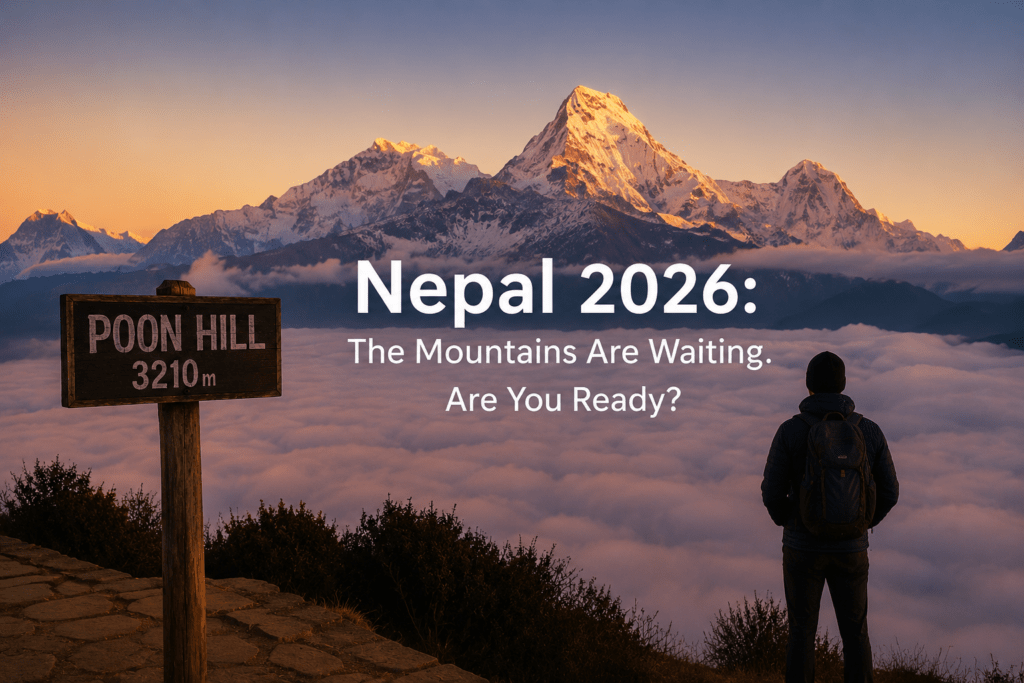
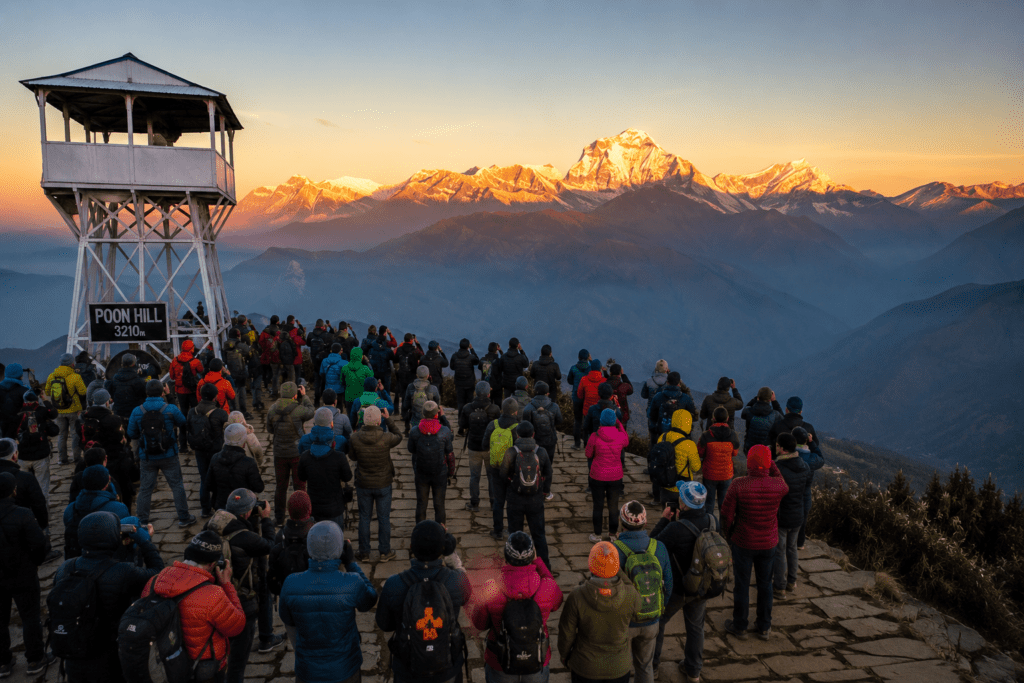
Maybe it’s the moment Pashupatinath Temple reveals itself around a corner and you realise you’re standing at the edge of a cremation ceremony that has been happening on these riverbanks for two thousand years. Maybe it’s when your flight to Pokhara curves and suddenly the Annapurna range materialises out of nowhere — white and enormous and impossible — filling the entire left side of the plane. Maybe it’s the morning you reach Poon Hill at 5am in the dark and cold, and the sun comes up and turns every mountain on the horizon to gold, and forty people from twelve countries all go silent simultaneously because there is nothing, genuinely nothing, to say.
Nepal does this to people. All kinds of people. It has been doing it for decades. The mountains are indifferent to your awe — they’ve been there for sixty-five million years and they’ll be there for sixty-five million more. But standing in front of them, you feel, briefly and completely, like the luckiest person alive.
This guide will get you there properly prepared. Let’s begin.
Quick Reference: Nepal 2026 At a Glance
| Category | Details |
|---|---|
| Currency | Nepali Rupee (NPR / रू) |
| Exchange rate (May 2026) | 1 USD ≈ NPR 134–136 | 1 INR ≈ NPR 1.6 |
| Visa on arrival | Available for most nationalities at Kathmandu airport and major land borders |
| Visa fees | 15 days: $30 | 30 days: $50 | 90 days: $125 |
| Pre-arrival ETA | Recommended — reduces wait to minutes (NepaliPort system) |
| Indian nationals | Visa-free entry |
| Mandatory licensed guide | Required for all foreign trekkers in national parks and most trekking regions (since April 2023) |
| TIMS Card | Required for most trekking routes |
| Best season | October–November (autumn) and March–April (spring) |
| Shoulder season | February, May, early September |
| Avoid | July–August (heavy monsoon, landslide risk) |
| Capital | Kathmandu |
| Main tourism cities | Kathmandu, Pokhara, Chitwan, Lumbini |
| Emergency | 100 (Police) | 101 (Fire) | 102 (Ambulance) |
| Tourist Police | +977-1-4247041 |
| Official Nepal Tourism Board | welcomenepal.com |
When to Go — Seasons Explained Honestly
The Simple Answer Nobody Gives You
Most travel guides say “October to November” and leave it there. Here’s the full picture, because the right time for you depends on what you’re coming to do.
Peak Season: October–November (Autumn) ⭐⭐⭐⭐⭐
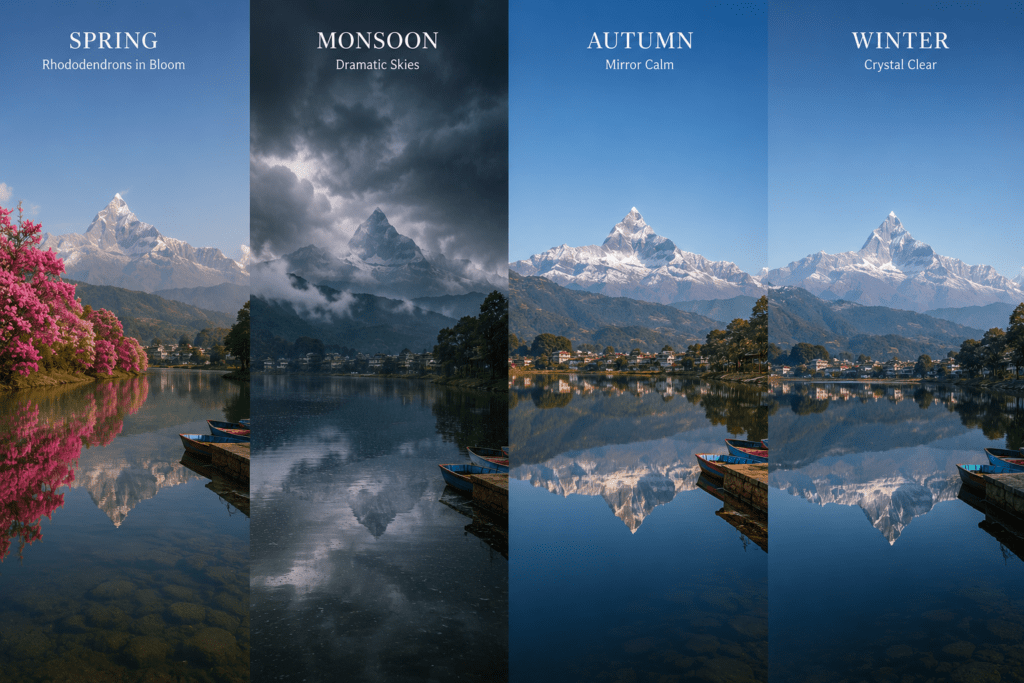
Autumn offers the best conditions with clear skies, stable weather, and comfortable temperatures. This period follows monsoon season, providing excellent visibility of Himalayan peaks.
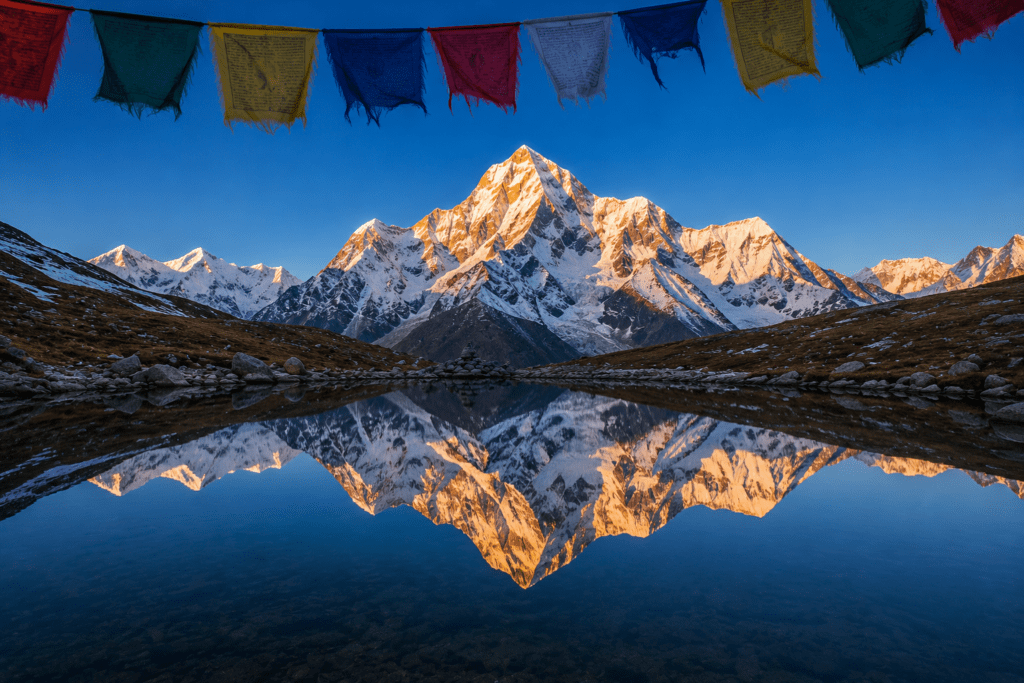
This is Nepal’s golden window. The monsoon has washed the air clean. The sky is the specific shade of blue that makes mountain photographs look altered — it isn’t. The trails are firm. The rhododendrons in the Annapurna region carry the last of their summer growth. Dashain and Tihar — Nepal’s most important festivals — fall in October/November and add a layer of cultural richness that’s worth planning around.
The honest downside: This is also the most crowded season. The Everest Base Camp trail sees heavy traffic. Annapurna Circuit accommodation books out weeks in advance. Prices are at their annual peak.
Verdict: If this is your first Nepal trip and you have no date flexibility, October and November are the correct choice.
Peak Season: March–April (Spring) ⭐⭐⭐⭐⭐
Spring is the second peak season — spring provides blooming rhododendrons and warming weather, making it visually extraordinary in the lower elevation trekking zones. The Annapurna region turns red and pink with rhododendron bloom from 2,000m to 3,500m — it’s one of the most beautiful trail environments in the Himalayas.
March–April is also the primary Everest climbing season — the world’s best mountaineers are on the mountain, the Khumbu Icefall is at its most navigable, and the energy at Namche Bazaar is electric.
The honest downside: Haze from pre-monsoon dust and agricultural burning can reduce visibility compared to autumn. Some trekkers find October’s skies cleaner.
Shoulder Season: February ⭐⭐⭐⭐
February is an underrated month for Nepal. Crowds are thinner, prices are lower, and the mountain views from Poon Hill and Annapurna Base Camp are outstanding. The lower elevations are pleasant. Higher altitude treks (EBC, Langtang) are cold but manageable with proper gear.
Best for: Budget travellers, those who prefer fewer other trekkers on the trail, people who specifically want the Annapurna region without peak season pricing.
Shoulder Season: May & Early September ⭐⭐⭐
May becomes increasingly warm and humid, and the pre-monsoon haze settles in — but it’s still trekable and the prices are competitive. Early September sees the monsoon beginning to retreat — the countryside is brilliantly green, waterfalls are at maximum power, and prices are the lowest of the year for non-monsoon travel.
Best for: Adventure photographers who want dramatic skies and cloud-mountain interaction, budget travellers, those visiting rain-shadow areas like Upper Mustang.
Monsoon: June–August ⭐⭐
Monsoon season offers lowest prices and empty trails, though heavy rainfall affects most regions. Only rain-shadow areas like Upper Mustang remain dry.
The honest truth: most of Nepal’s trekking network is significantly affected by monsoon. Landslides close sections of roads and trails. Leeches appear on lower elevation paths. Flight delays and cancellations from domestic airports are common. The Annapurna Circuit road washes out in sections annually.
The exception: Upper Mustang and Dolpo sit behind the Himalayas in a rain shadow and receive minimal monsoon rainfall. The restricted area permits for Upper Mustang are well worth getting in June–August when the landscape is uniquely lush and other trekkers are absent.
Winter: December–January ⭐⭐⭐
Winter provides moderate pricing with clear mountain visibility but cold temperatures, especially at higher altitudes.
Kathmandu, Pokhara, and Chitwan are perfectly pleasant in December and January. The mountain views from Pokhara’s Fewa Lake are exceptional in winter’s clear air. High-altitude treks (Everest, Annapurna Circuit, Langtang) are very cold and some high passes may be blocked by snow.
Best for: Cultural tourism in Kathmandu and Pokhara, Chitwan wildlife safaris, Poon Hill trek (manageable in cold weather with good gear), budget travellers who want clear skies without peak season crowds.
Visas, Documents & Permits — The 2026 Complete Guide
Visa on Arrival (Most Nationalities)
Most travelers can obtain a visa on arrival at Kathmandu or land borders by providing a valid passport, photo, and cash payment in USD.
Available at:
- Tribhuvan International Airport, Kathmandu
- Designated land borders: Kakarvitta, Birgunj, Belahiya/Sunauli, Nepalgunj, Gaddachauki, Dhangadhi
Visa fees 2026:
- 15-day Tourist Visa: $30 USD
- 30-day Tourist Visa: $50 USD
- 90-day Tourist Visa: $125 USD
Documents needed:
- Passport valid for at least six months beyond your intended date of departure from Nepal, with at least two blank visa pages
- Two recent passport-sized photographs (white background)
- Cash in USD (exact change strongly recommended at land borders — land borders require pristine US cash only)
- Completed visa form (available at arrival counters or online)
Pro tip — ETA pre-approval: Complete the online registration process via the NepaliPort system before arrival. Print or save the barcode confirmation. This dramatically reduces queue time, especially during peak season when visa counters can be extremely busy.
Stay limits: A foreign national on a Tourist Visa may stay a maximum of 150 days in total within a single calendar year. Leaving Nepal and re-entering in the same year does not reset the count.
Indian nationals: No visa required. Carry your Aadhaar or Indian passport.
Countries requiring advance visa: Nigeria, Ghana, Zimbabwe, Eswatini, Cameroon, Somalia, Liberia, Ethiopia, Iraq, Palestine, Afghanistan, Syria must obtain a visa in advance from a Nepali embassy/consulate.
Overstaying: Take this seriously. Fine of USD 5 per day plus the normal extension fee. Re-entry bans can stretch from one to several years for serious overstays.
Trekking Permits — The 2026 Structure
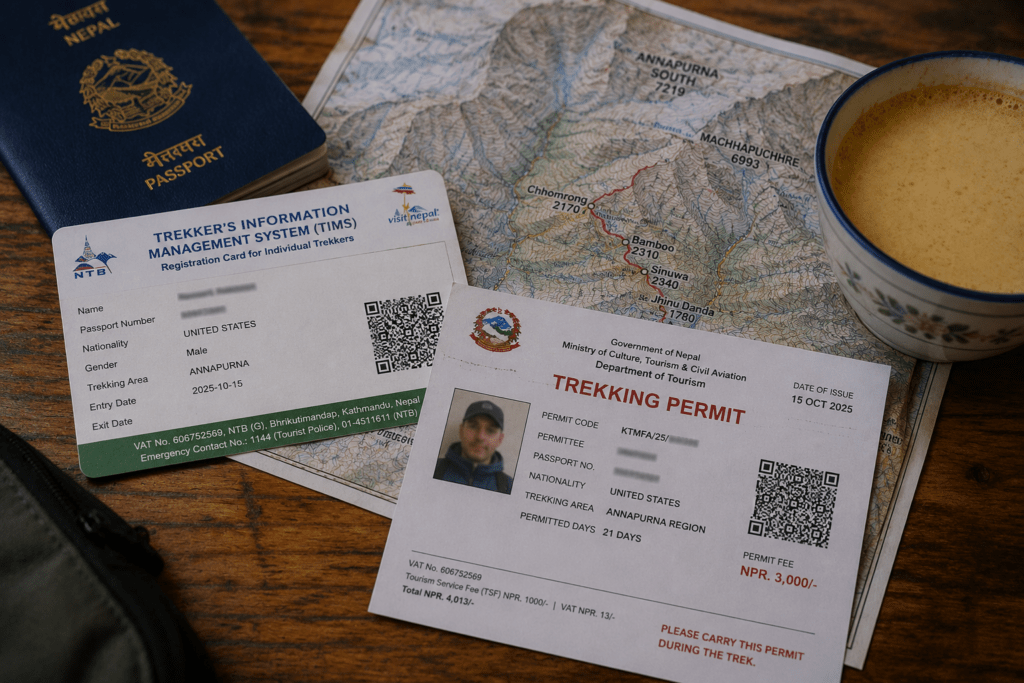
Nepal’s trekking permit system has been fully digitised — checkpoints now utilise QR code scanners to monitor trekker movements and ensure environmental compliance.
Mandatory guide rule (2026): As of the current 2026 season, the Nepal Tourism Board strictly enforces a “No Solo Trekking” rule for foreign nationals. This policy applies to almost all national parks and every restricted area. You must hire a licensed guide through a registered trekking agency.
TIMS Card (Trekkers’ Information Management System): Required for most trekking routes. Foreign visitors on hiking trips in Nepal, including those not with organised hiking groups, are required to have a valid TIMS card through authorised trekking agencies registered with the Government of Nepal.
- TIMS Card fee: NPR 2,000 (~$15 USD) per person
Everest Region Permits: The Everest region operates independently of the TIMS card system. It uses a local municipality permit instead. Khumbu Pasang Lhamu Rural Municipality Permit: NPR 3,000 (approximately $23 USD) for the first four weeks. Sagarmatha National Park Entry Permit: NPR 3,000 + 13% VAT (approximately $28 USD). You can obtain the national park permit in Kathmandu or Monjo.
Annapurna Region Permits:
- ACAP (Annapurna Conservation Area Permit): NPR 3,000 (~$22 USD)
- TIMS Card: NPR 2,000 (~$15 USD)
Langtang Region:
- Langtang National Park Entry: NPR 3,000 (~$22 USD)
- TIMS Card required
Restricted Area Permits: Upper Mustang: $500 for the first 10 days plus $50 per extra day. The guide-and-agency system is strictly enforced.
- Manaslu Circuit: $100/week (Sept–Nov) / $75/week (other seasons)
- Dolpo: $500 for the first 10 days / $50 per extra day
Documents required for permit application: Nepal Visa copy, two to four recent passport-sized digital photos, travel insurance proof covering high-altitude trekking and emergency helicopter evacuation, and a day-by-day itinerary (must be strictly followed in restricted areas).
By Road — India to Nepal Land Borders
The most common land crossing for Indian travellers and budget overland travellers:
Sunauli/Belahiya (UP, India → Bhairahawa, Nepal): The most popular crossing from India. 3 hours from Varanasi. Regular buses and jeeps on both sides. Closest border to Lumbini (30km) and Pokhara (6 hours).
Raxaul/Birgunj (Bihar, India → Birgunj, Nepal): Best for travellers coming from Patna or Kolkata. 6 hours from Patna. Direct buses to Kathmandu from Birgunj (7–8 hours).
Kakarbhitta/Kakarvitta (West Bengal → East Nepal): For travellers from Kolkata, Siliguri, or Darjeeling. 3 hours from Siliguri. Good access to eastern Nepal and Ilam tea country.
Border crossing essentials:
- Indian nationals: Aadhaar or passport only, no visa needed
- Other nationals: Tourist visa on arrival at designated land borders, USD cash required
- No unofficial “road tax” fees are valid — any unofficial “mandatory fee” requested by touts is a scam
Bus from Kathmandu to border towns: Greenline Tours and local tourist bus services run Kathmandu–Pokhara–Sunauli corridors daily. Tourist bus Kathmandu to Pokhara: NPR 600–1,200 (~$4.50–9).
By Air — Flying to Nepal
Tribhuvan International Airport (KTM): The only international airport for scheduled flights. Major airlines serving Kathmandu include Qatar Airways, Air Arabia, SpiceJet, IndiGo (from Indian cities), Thai Airways, Singapore Airlines, and Air India.
Flights from India to Kathmandu:
- Delhi to Kathmandu: 1 hour 30 minutes | IndiGo, Air India, SpiceJet | ₹4,000–9,000 one way
- Mumbai to Kathmandu: 2 hours 20 minutes | ₹5,000–12,000 one way
- Kolkata to Kathmandu: 1 hour | ₹3,000–7,000 one way
International to Kathmandu: Book on Skyscanner for best prices. Emirates and Qatar often have competitive fares via Dubai/Doha hub.
Places to Visit in Nepal
Kathmandu — The City That Never Settled Down
Kathmandu is everything at once: sacred and chaotic, ancient and modern, overwhelming and immediately, inexplicably home. The Kathmandu Valley holds three cities (Kathmandu, Patan, Bhaktapur) and seven UNESCO World Heritage Sites within a 30km radius.
The non-negotiable Kathmandu experiences:
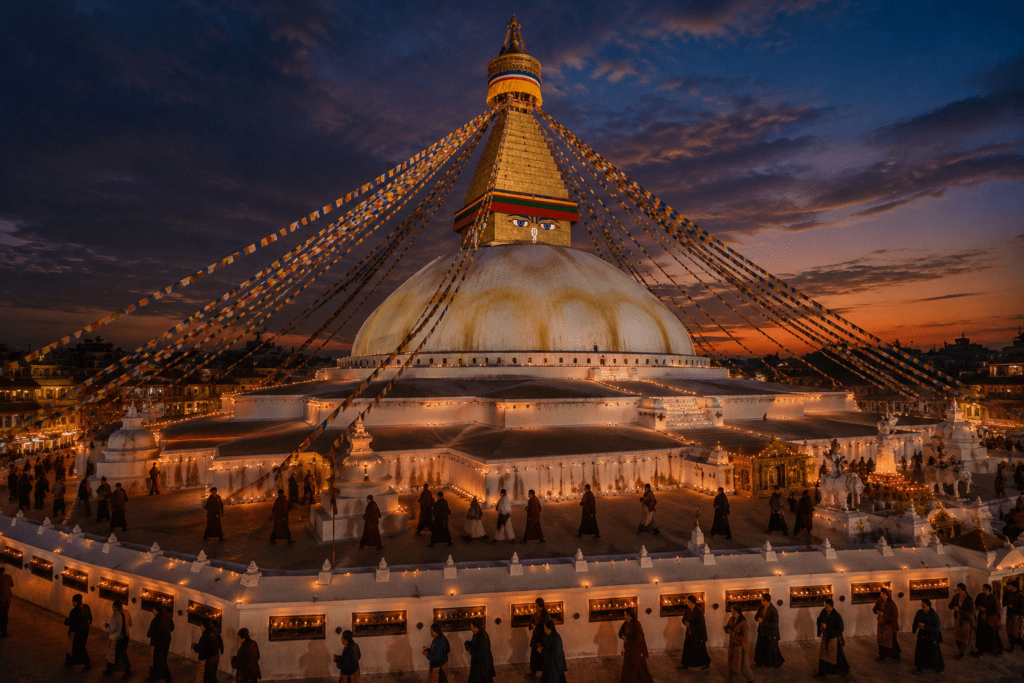
Boudhanath Stupa: The largest stupa in South Asia — a mandala of concentric circles with the Buddha’s all-seeing eyes painted on the central spire. The devotional circuit walk (kora) around the stupa, taken clockwise by thousands of Tibetan pilgrims every evening from 5–7pm, is one of the most moving experiences in Nepal. Entry: NPR 400 (~$3) for foreigners.
Pashupatinath Temple: The holiest Hindu temple in Nepal and one of the most important Shiva shrines in the world. The cremation ghats on the Bagmati River are open to respectful non-Hindu visitors (the inner sanctum is Hindu-only). The sadhus at the temple entrance are genuinely resident ascetics, not performers. Approach respectfully. Entry: NPR 1,000 (~$7.50) for foreigners.
Swayambhunath (Monkey Temple): The hilltop stupa above the valley — 365 steps up (one for each day of the year, legend says), and at the top a 360° view over the entire Kathmandu Valley. The resident monkey population is enormous and entirely without respect for your personal space or snacks.
Durbar Squares: Three separate Durbar Squares — Kathmandu, Patan, and Bhaktapur — each with medieval palace complexes, temples, and living history. Bhaktapur is the most intact and most beautiful of the three. Combined entry for foreigners: NPR 1,500–2,000 per square (~$11–15).
Thamel: The traveller district — guesthouses, gear shops, restaurants, rooftop bars. Exhausting and essential. Buy your trekking gear here (at much lower prices than at home), eat well, sort your permits.
Pokhara — The City That Has Everything and Knows It
Pokhara is where you breathe out. After Kathmandu’s intensity, Pokhara hits differently — the lake is mirror-calm, the mountains are visible from the main street, the restaurants have good Wi-Fi, the people are relaxed, and nobody is trying to sell you anything particularly aggressively.
Phewa Lake: The most beautiful lake in Nepal — a 4.4km body of water with the Annapurna massif reflected in it on clear mornings. Hire a rowboat (NPR 300–600/hour) and row to the Tal Barahi Temple on the small island. The lakeside boulevard has the best cafe and restaurant strip in Nepal.
Davis Falls (Devi’s Fall): A waterfall that disappears into a sinkhole underground — eerie and beautiful. Entry: NPR 30. Best after monsoon when the flow is at maximum.
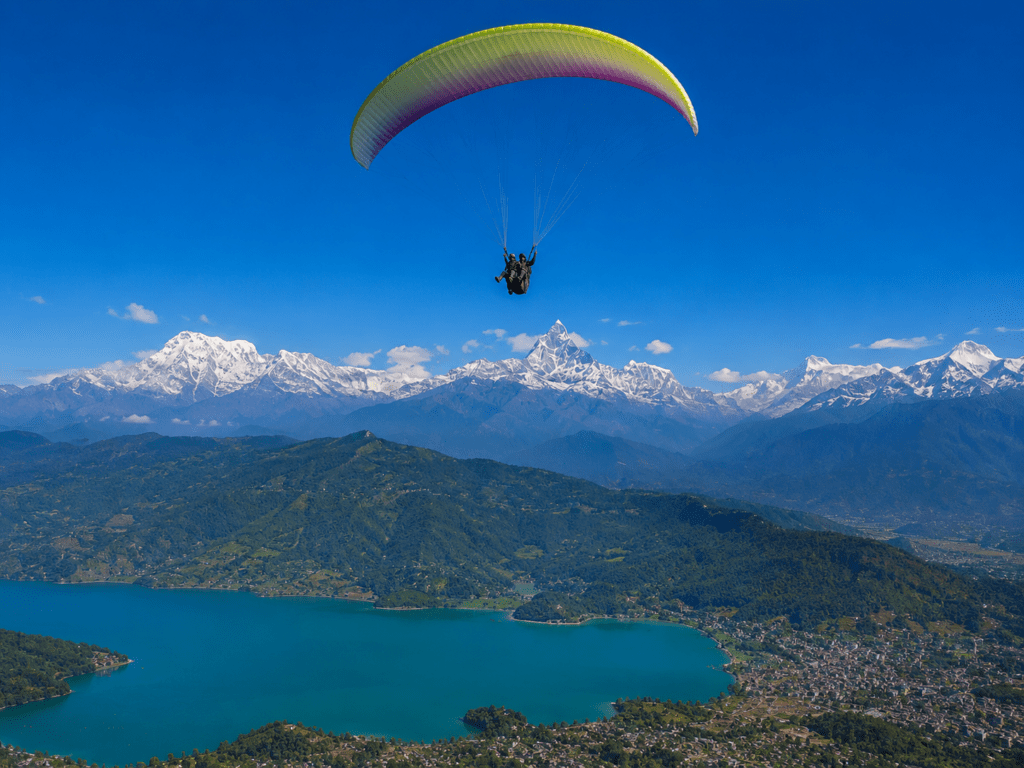
Sarangkot Hill: The viewpoint above Pokhara for Annapurna sunrise. Hire a taxi or walk up (45 minutes from town) for 5:30am. The Annapurna range, Machapuchare (the fish-tail peak), and Dhaulagiri all visible on a clear morning from here.
Paragliding from Sarangkot: The most popular adventure activity in Pokhara — tandem paragliding from Sarangkot with the Annapurna range as backdrop. 30–45 minutes of flight. Cost: NPR 6,000–9,000 (~$45–67) with all reputable operators. Book through your hotel or directly with Blue Sky Paragliding or Sunrise Paragliding (the two most established operators).
Chitwan National Park — Where the Jungle Roars
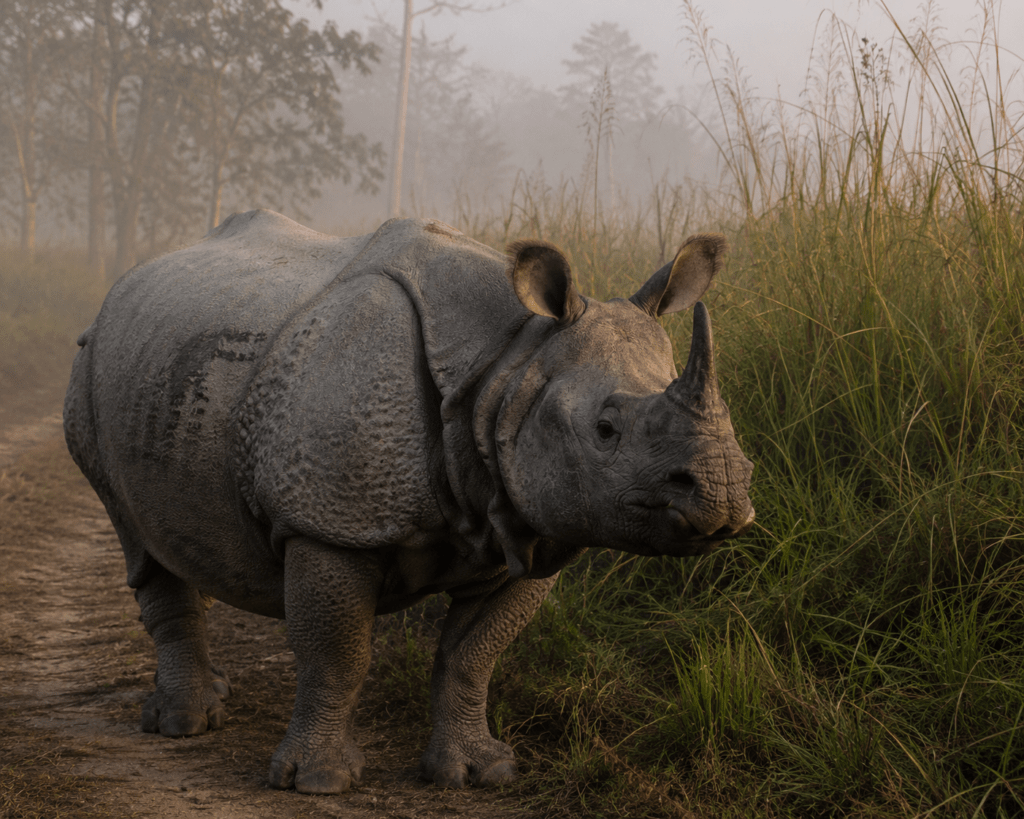
Chitwan is Nepal’s most celebrated wildlife destination — a UNESCO World Heritage Site in the southern Terai (lowland) region. One-horned rhinoceroses, Bengal tigers, sloth bears, gharial crocodiles, and 544 species of bird all inhabit this protected forest.
Safari options:
- Jeep safari: NPR 3,000–5,000/person (~$22–37) for 3-4 hour morning or afternoon drive
- Elephant-back safari: No longer offered at most responsible operators (welfare concerns) — skip if offered and choose the jeep instead
- Canoe safari on the Rapti River: NPR 1,000–1,500/person — crocodile sightings almost guaranteed
- Walking safari with guide: NPR 2,000–3,500/person — most intimate wildlife encounter
Entry fee (Chitwan National Park): NPR 1,000 for SAARC nationals / NPR 2,000 for other foreigners (~$15) per entry.
Best stay: The lodges immediately bordering the park — Jungle Villa Resort (mid-range), Tiger Tops Tharu Lodge (premium) — offer the most immersive experience.
Best time for Chitwan: October–March. Summer is very hot (40°C+) and the monsoon period reduces wildlife visibility.
Lumbini — The Birthplace of Buddha
Lumbini is one of the most significant pilgrimage sites in the world — the birthplace of Siddhartha Gautama (the Buddha), recognised by the United Nations and visited by Buddhist pilgrims from across Asia.
The sacred garden, the Maya Devi Temple (marking the exact birthplace), the Ashoka Pillar (erected by Emperor Ashoka in 249 BCE), and the extensive monastic zone (over 40 monasteries from different Buddhist traditions — Japanese, Korean, Thai, Sri Lankan, Tibetan) are all within the Lumbini Development Trust area.
Entry: Free for the sacred garden. Individual monastery entries are free.
Getting there: Fly Kathmandu to Bhairahawa (30 minutes, Buddha Air/Yeti Airlines, NPR 5,000–8,000) then 20km cab to Lumbini. Or bus from Pokhara (3-4 hours) for budget travellers.
Best time: Morning and early evening — the garden is most atmospheric before the day-tourist crowds arrive.
Nagarkot — The Himalayan Sunrise Viewpoint
An hour’s drive from Kathmandu, Nagarkot sits at 2,195m and offers arguably the most accessible panoramic Himalayan view in Nepal. On a clear day, eight of the world’s 14 highest mountains are visible from the viewpoint — including Everest.
Hundreds of people book hotels here specifically to wake at 4:30am for the sunrise. The Nagarkot viewpoint tower at dawn, with the Himalayas turning pink above a valley full of clouds, is a genuinely transportive experience.
Staying: Multiple resort options from NPR 3,000–15,000/night. The best are the cliff-edge resorts with mountain-facing rooms.
Bandipur — The Village Time Forgot
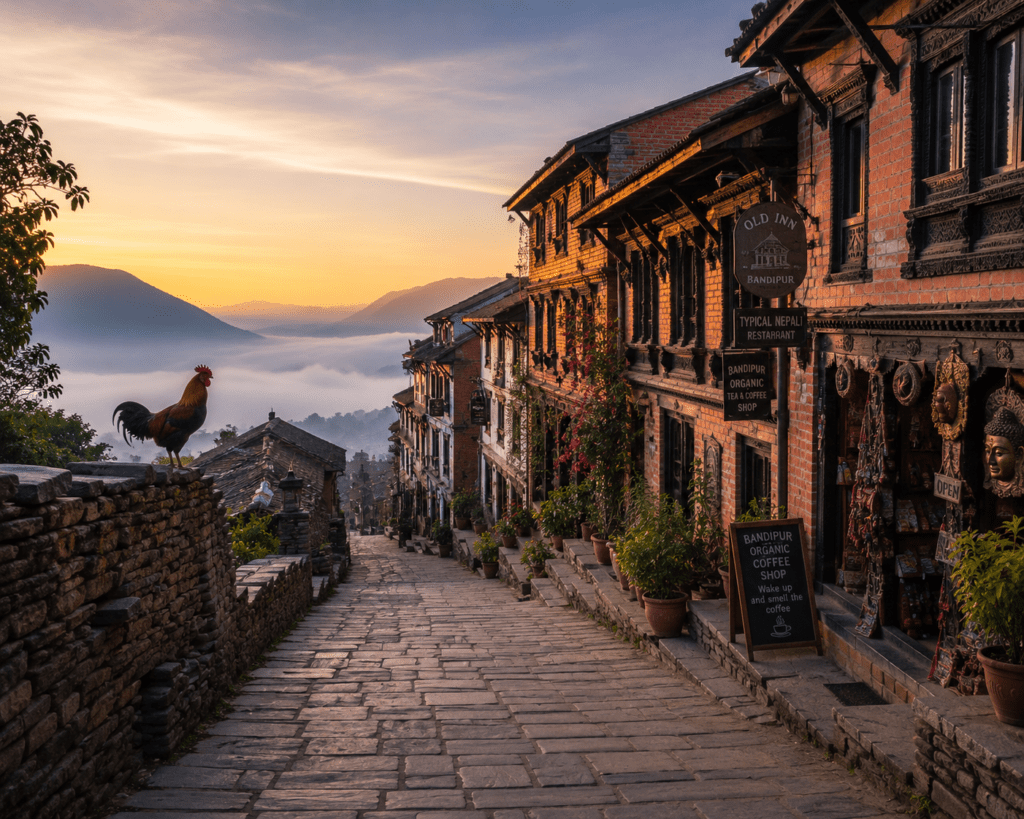
Off the main tourist trail between Kathmandu and Pokhara, Bandipur is a perfectly preserved Newari hilltop village — stone-paved streets, traditional architecture, no motorised vehicles in the centre, extraordinary views of the Annapurna range. The Bandipur Bazaar main street looks almost exactly as it did a century ago.
A night in Bandipur, walking the streets after the day-trippers have left, is one of the most pleasantly quiet experiences in Nepal. Old Inn Bandipur (NPR 3,000–6,000/night) is the heritage accommodation of choice
Trekking in Nepal — The Complete 2026 Guide
Understanding the Trek Categories
Difficulty levels:
- Easy: Ghorepani Poon Hill, Langtang Valley lower section, Nagarkot day walk — suitable for beginners with reasonable fitness
- Moderate: Annapurna Base Camp, Everest Base Camp, Langtang Valley — requires trekking experience and proper gear
- Challenging: Annapurna Circuit, Manaslu Circuit — longer duration, higher altitude, more remote
- Extremely Challenging: Three Passes Trek (Everest region), Thorong La crossing, Dolpo — experienced trekkers only
What to budget for trekking (per person per day):
- Budget (teahouse accommodation + meals): $25–40/day NPR 3,300–5,300
- Mid-range (better teahouses, private rooms): $50–80/day
- Guided trek with agency (includes guide, porter, permits): $80–150/day all-inclusive
Trek 1: Ghorepani Poon Hill — The Perfect First Trek
Duration: 4–5 days Difficulty: Easy–Moderate Highest point: Poon Hill, 3,210m Best season: October–November, March–April, February (cold but excellent views) Permits required: ACAP (NPR 3,000) + TIMS (NPR 2,000) + licensed guide
Why this is the most popular short trek in Nepal: Poon Hill delivers maximum visual impact with minimum commitment. The famous sunrise view — a 180° panorama including Dhaulagiri (8,167m), Annapurna South, Annapurna I, Machapuchare, and Hiunchuli — is one of the most photographed mountain views on earth. And the trail passes through Gurung and Magar villages where the culture is as compelling as the landscape.
Day-by-Day:
- Day 1: Drive Pokhara to Nayapul (1 hour) → trek to Tikhedhunga or Ulleri (4–6 hours)
- Day 2: Trek to Ghorepani (5–6 hours) — rhododendron forest section
- Day 3: Pre-dawn hike to Poon Hill for sunrise → trek to Tadapani (5–6 hours)
- Day 4: Trek to Ghandruk (4–5 hours) → optional trek to Nayapul or drive Pokhara
- Day 5 (optional): Ghandruk village exploration → drive Pokhara
Accommodation on the trail: Teahouses at each overnight point. Private rooms NPR 300–800/night. Meals NPR 400–700 per meal. Dal Bhat (rice, lentil soup, vegetables, pickles) is the trekkers’ standard — always available, always reliable.
Cost estimate (4 days, per person):
- Budget: NPR 8,000–12,000 ($60–90)
- Mid-range with guide: NPR 25,000–35,000 ($185–260)
- All-inclusive agency package: NPR 40,000–55,000 ($300–410)
Trek 2: Everest Base Camp (EBC) — The One on Everyone’s List
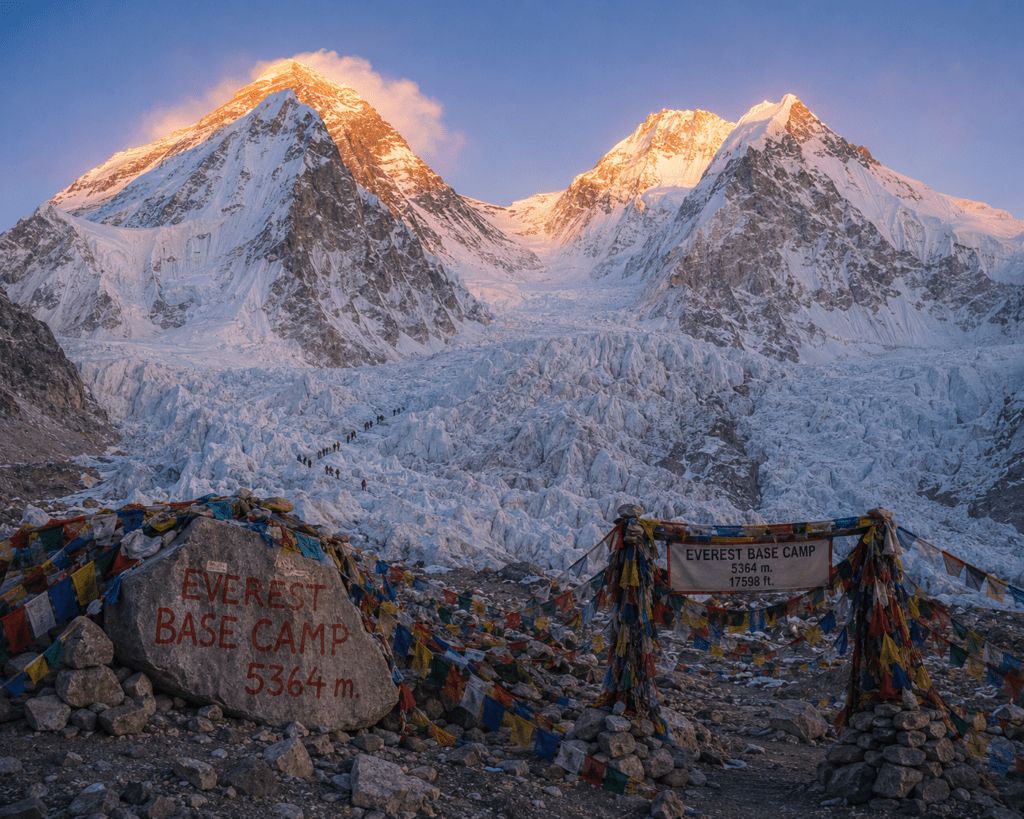
Duration: 12–14 days (from Lukla) Difficulty: Moderate–Challenging Highest point: Kala Patthar, 5,644m (for the best view of Everest itself) Best season: October–November, March–May Permits required: Khumbu Pasang Lhamu Municipality Permit (NPR 3,000) + Sagarmatha National Park (NPR 3,000 + 13% VAT) + licensed guide mandatory
The honest EBC experience:
Everest Base Camp is not the most beautiful trek in Nepal. The Annapurna region has better scenery per kilometre. What EBC offers is something different — the specific feeling of walking to the base of the world’s highest mountain. The Khumbu Icefall grinding slowly above base camp. The sherpas who have summited multiple times passing you on the trail with loads that should be impossible. Namche Bazaar, the Sherpa capital, with its extraordinary culture and mountain backdrop. And Kala Patthar at dawn — the place where you can see Everest’s full profile above the clouds.
Day-by-Day (abbreviated):
- Day 1: Fly Kathmandu to Lukla (35 minutes, the world’s most dramatic airport approach) → trek to Phakding
- Day 2: Trek to Namche Bazaar (3,440m) — acclimatise here for 2 nights
- Day 3: Acclimatisation day in Namche — hike to Everest View Hotel (3,880m) for the famous view
- Day 4–5: Namche → Tengboche → Dingboche
- Day 6: Acclimatisation day at Dingboche (4,410m)
- Day 7–8: Dingboche → Lobuche → Gorak Shep (5,140m)
- Day 9: Gorak Shep → Everest Base Camp (5,364m) → back to Gorak Shep
- Day 10: Pre-dawn Kala Patthar (5,644m) → descend to Pheriche
- Day 11–12: Rapid descent Pheriche → Namche → Lukla
- Day 13: Fly Lukla → Kathmandu (weather-dependent — build extra days)
Important 2026 note: Lukla flight slots are very limited and weather cancellations are common. Always build 2 buffer days on your return from Lukla before any international flight. Many experienced Nepal travellers have missed international connections due to Lukla fog.
Cost estimate (13 days, per person):
- Budget solo (teahouses, own gear): $700–1,000 (permits + accommodation + food + guide fee)
- Full agency package: $1,500–2,500 (guide, porter, permits, accommodation, most meals)
Trek 3: Annapurna Base Camp (ABC) — The Most Spectacular Short Trek
Duration: 7–10 days Difficulty: Moderate Highest point: Annapurna Base Camp, 4,130m Best season: October–November, March–April Permits required: ACAP + TIMS + licensed guide
Why ABC beats EBC for most people: ABC delivers a more visually dramatic destination than EBC — you arrive not at a glacier base with a mountain somewhere above you, but inside a cirque completely surrounded by eight-thousanders. Annapurna I (8,091m), Annapurna South, Machapuchare, Hiunchuli — a 360° arena of peaks.
The trail passes through Modi Khola gorge, rhododendron forests, Gurung villages, and natural hot springs at Jhinu Danda (the best post-trek reward available anywhere in Nepal).
Day-by-Day (abbreviated):
- Day 1: Pokhara → Nayapul → Tikhedhunga
- Day 2–3: Trek to Ghorepani (optional Poon Hill sunrise)
- Day 4: Trek to Bamboo/Doban
- Day 5: Trek to Deurali
- Day 6: Annapurna Base Camp (4,130m)
- Day 7–8: Return via Bamboo → Jhinu Danda hot springs → Nayapul → Pokhara
Cost estimate (8 days, per person):
- Budget: $400–600 (permits, teahouses, food, guide)
- Agency package: $900–1,400
Trek 4: Langtang Valley — The Closest Trek to Kathmandu
Duration: 7–10 days (Langtang Valley) or 14–17 days (Langtang-Gosainkund-Helambu circuit) Difficulty: Moderate Highest point: Tserko Ri, 4,984m (Langtang Valley) Best season: October–November, March–April Permits required: Langtang National Park entry (NPR 3,000) + TIMS + licensed guide
The story of Langtang: On April 25, 2015, the Gorkha earthquake triggered a massive avalanche that destroyed much of Langtang village in seconds — 243 people, including 175 foreign trekkers, were killed. The village has been rebuilt. The trails are fully open. The rebuilt teahouses are run by the same Tamang families who survived, determined to restore what they lost. Trekking in Langtang in 2026 is an act of solidarity with one of the most resilient communities in the Himalayas.
Why Langtang for most people: It’s 3 hours from Kathmandu by road to the trailhead. The Langtang Valley is a high-altitude glacial valley of extraordinary beauty. The Tamang culture here is distinct and deeply traditional. And the acclimatisation-to-scenery ratio is excellent.
Trek 5: Manaslu Circuit — The Best Trek You Haven’t Heard Of
Duration: 14–18 days Difficulty: Challenging Highest point: Larkya La Pass, 5,160m Best season: October–November, March–May Permits required: Manaslu Restricted Area Permit ($100/week Sept–Nov, $75/week other seasons) + Manaslu Conservation Area Permit (NPR 3,000) + licensed guide mandatory
Why Manaslu is the 2026 recommendation for experienced trekkers: While Annapurna and Everest trails have become increasingly crowded, Manaslu remains quieter — a full circuit of the world’s eighth highest mountain (8,163m) through a more remote landscape, with authentic teahouse culture, high Tibetan-influenced villages, and the Larkya La pass crossing that equals the Thorong La in drama.
Trek 6: Upper Mustang — The Forbidden Kingdom
Duration: 10–14 days minimum Difficulty: Moderate (dry, arid, very remote) Highest point: Approximately 3,800m Best season: May–October (the only area open during monsoon) Permits required: Upper Mustang Restricted Area Permit ($500 for first 10 days + $50/day after) + ACAP + licensed guide + registered agency mandatory
What makes Mustang unique: Upper Mustang was closed to foreigners until 1992 and still sees far fewer visitors than other Himalayan regions. The landscape is Tibetan plateau — arid, ochre, carved by wind into formations that look like Cappadocia with Himalayan peaks. Lo Manthang, the walled ancient capital, has been unchanged for centuries. The cave monasteries carved into the cliffs are among the most extraordinary Buddhist sites in South Asia.
The permit cost is high but the experience is completely distinct from anything else available in Nepal.
Itineraries — From 3 Days to 20 Days
3–4 Day Nepal Itinerary (Kathmandu + Pokhara)
Who it’s for: First-time visitors on a short trip, business travellers adding a long weekend, those using Nepal as a connecting destination
Day 1: Kathmandu
- Morning: Swayambhunath (Monkey Temple) — start here for the valley overview
- Midday: Thamel for lunch, gear shopping, permit arrangements
- Afternoon: Boudhanath Stupa — arrive by 4:30pm for the evening kora
- Evening: Pashupatinath for the evening aarti
- Dinner: Thamel restaurant strip — see food guide below
Day 2: Kathmandu Valley
- Morning: Bhaktapur Durbar Square (UNESCO) — start early before tourist buses arrive
- Afternoon: Patan Durbar Square + Patan Museum (finest collection of Nepali art and artifacts)
- Evening: Return to Kathmandu. Rooftop dinner in Thamel.
Day 3: Pokhara
- Morning: Fly or bus to Pokhara (25-minute flight or 7-8 hour bus)
- Afternoon: Phewa Lake rowboat to Tal Barahi Temple, lakeside walk
- Evening: Sunset from Sarangkot or lakeside sunset point
Day 4: Pokhara (Sunrise + Activities)
- Pre-dawn: Sarangkot for Annapurna sunrise
- Morning: Paragliding (NPR 6,000–9,000) or zip-lining
- Afternoon: Davis Falls, Gupteshwor Cave
- Return to Kathmandu for departure
Budget (4 days, per person, excluding international flights):
- Budget: $150–220
- Mid-range: $350–550
- Luxury: $800–1,500+
6–7 Day Nepal Itinerary (Culture + Mini Trek)
Day 1: Arrive Kathmandu — Thamel, acclimatise Day 2: Kathmandu Valley UNESCO sights — Boudhanath, Pashupatinath, Bhaktapur Day 3: Fly/bus to Pokhara — Phewa Lake Day 4: Trek Day 1 — Pokhara → Nayapul → Tikhedhunga (for Poon Hill trek) Day 5: Trek Day 2 — Tikhedhunga → Ghorepani Day 6: Pre-dawn Poon Hill sunrise → Trek to Ghandruk → Jeep back to Pokhara Day 7: Pokhara → Kathmandu → Departure
Budget (7 days, per person):
- Budget (with guide): $250–350
- Mid-range: $500–750
- Luxury (flights, good hotels, quality guide): $1,200–1,800
10–12 Day Nepal Itinerary (The Classic Combination)
Days 1–2: Kathmandu — Durbar Squares, Boudhanath, Pashupatinath, Swayambhunath Day 3: Kathmandu → Pokhara (fly or bus) Days 4–9: Annapurna Base Camp Trek (6 days with guide) Day 10: Return to Pokhara — Jhinu Danda hot springs, lakeside rest Day 11: Pokhara optional activities or fly back to Kathmandu Day 12: Kathmandu — last shopping, Thamel, departure
Budget (12 days, per person):
- Budget: $500–800
- Mid-range: $1,000–1,500
- Luxury: $2,500–4,000
15–20 Day Nepal Itinerary (The Full Experience)
Days 1–3: Kathmandu (all sights + day trip to Nagarkot for sunrise) Day 4: Kathmandu → Chitwan (fly or bus) Days 5–6: Chitwan National Park — jeep safari, canoeing, bird watching Day 7: Chitwan → Pokhara Days 8–19: Everest Base Camp Trek (12 days with guide, including Kala Patthar) Day 20: Kathmandu — final day, Thamel shopping, depart
Alternative for 15 days with less trekking: Days 1–2: Kathmandu | Day 3: Nagarkot | Days 4–5: Chitwan | Days 6–7: Pokhara | Days 8–12: Poon Hill + ABC short version | Day 13: Lumbini | Days 14–15: Kathmandu + departure
Budget (20 days, per person):
- Budget: $900–1,400
- Mid-range: $2,000–3,000
- Luxury: $5,000–8,000+
Hotels, Homestays & Luxury Stays
Kathmandu
Budget (NPR 1,000–3,000 / $7–22 per night):
Thamel Eco Resort (Thamel): One of the best budget options in Kathmandu — solar-powered, garden, excellent common areas. Dorm NPR 900, private NPR 2,000–3,500.
Zostel Kathmandu (Thamel): The social hostel choice. Rooftop, community vibe, meets other travellers instantly. Dorm NPR 700–1,200, private NPR 2,500–4,000.
Mid-Range (NPR 4,000–12,000 / $30–90 per night):
Hotel Shanker (Lazimpat): A converted Rana palace — heritage architecture, central garden, excellent breakfast. NPR 7,000–14,000.
Kantipur Temple House (Thamel): Newari architecture, courtyard, rooftop terrace with Himalayan views on clear days. NPR 6,000–12,000.
Luxury (NPR 20,000+ / $150+ per night):
Dwarika’s Hotel: The finest heritage property in Kathmandu — a collection of rescued ancient Newari buildings assembled into one extraordinary hotel. Every wood-carved window, every courtyard, every room is a piece of living museum. NPR 35,000–80,000/night.
Hyatt Regency Kathmandu: International luxury with mountain views, spa, pool. NPR 25,000–50,000/night.
Pokhara
Budget (NPR 800–2,500): Sacred Valley Inn (lakeside): Lakeside location, good value, friendly owners. NPR 1,200–2,500.
Mid-Range (NPR 4,000–12,000): Temple Tree Resort (Lakeside): Gardens, pool, mountain views, excellent restaurant. NPR 7,000–15,000.
Luxury (NPR 15,000+): Tiger Mountain Pokhara Lodge: Boutique eco-lodge above the city — stone cottages with unobstructed Annapurna views, infinity pool, organic garden. NPR 25,000–55,000/night all-inclusive.
Atithi Resort & Spa: Lakeside property with pool, spa, mountain views. NPR 18,000–35,000.
Teahouse Accommodation on Treks
On all major trekking routes, teahouses (family-run guesthouses) provide basic accommodation and meals. The model: rooms are cheap (NPR 300–800 for a private room; some are free if you buy meals from the same teahouse), meals are the main income.
On EBC trail: Basic teahouse rooms NPR 400–1,200. Meals NPR 500–900. As altitude increases, prices increase.
On Annapurna region: Similar pricing but slightly lower at mid-elevations.
Luxury trekking lodges: The Everest region has a selection of luxury lodges — Yeti Mountain Home properties (EBC trail, $150–300/night all-inclusive) offer the best high-altitude accommodation in Nepal.
Food in Nepal — What to Eat, Where to Eat It
Nepali Street Food
Dal Bhat: The national dish and the trekker’s lifeline. Dal (lentil soup) + Bhat (steamed rice) + Tarkari (vegetable curry) + pickles + papad. Served on a steel plate or a banana leaf. The rule of Dal Bhat: most restaurants offer unlimited refills of dal and rice (ask for “Thaha Dinus” — “please give more”). A complete, balanced meal. Price: NPR 250–500 at local restaurants | NPR 600–1,200 on the trekking trail Taste: Comforting, nourishing, slightly different in every region. The dal in the high Himalayas, made with local herbs and cooked in high-altitude water, genuinely tastes different from the one in Kathmandu.
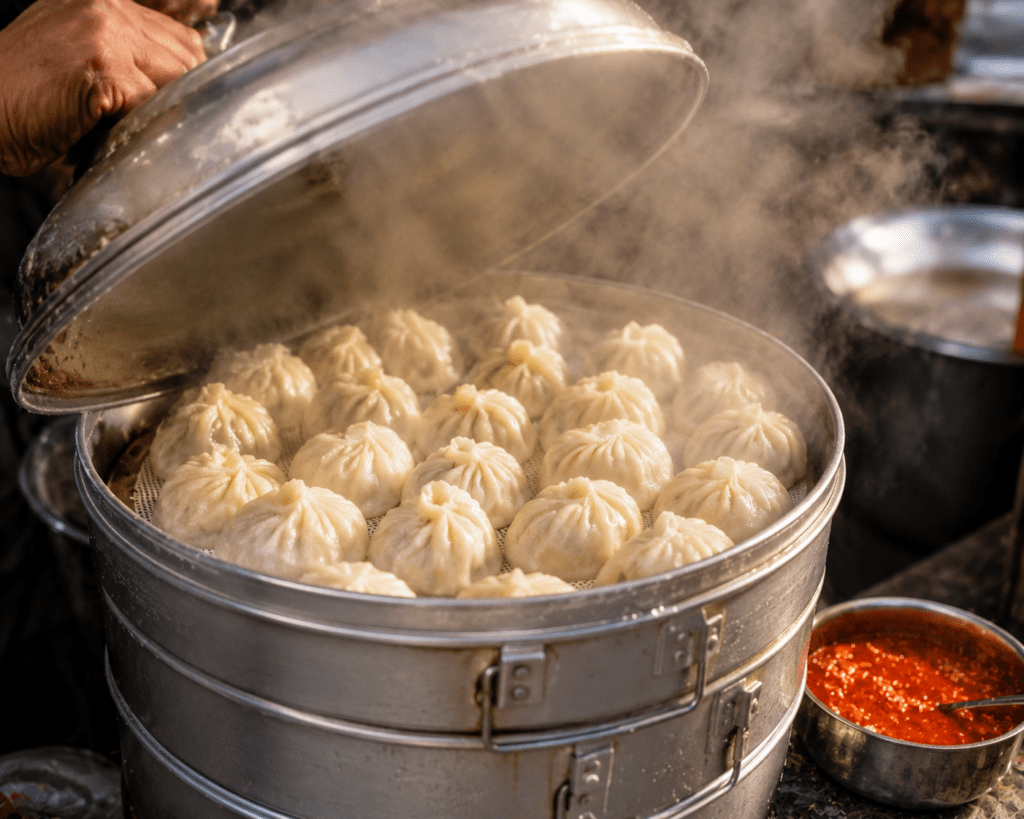
Momos (Nepal-style dumplings): Nepal’s most beloved street food — steamed or fried dumplings filled with buffalo, chicken, vegetables, or cheese, served with a tomato-sesame dipping sauce. Nepali momos are smaller and more intensely spiced than Tibetan versions. Best in Kathmandu: Momo Star (Thamel), Roadhouse Café (multiple), and essentially any busy street stall near Asan Tole. Price: NPR 150–300 for a plate of 10
Sel Roti: A traditional ring-shaped fried bread made from rice flour — crispy outside, chewy inside, slightly sweet. Street food and festival food simultaneously. NPR 30–60 per piece.
Chiya (Tea): Nepali tea is different from Indian chai — milkier, less spiced, sweeter, and drunk constantly from small glasses. Butter tea (Himalayan style) is served in the trekking regions. On any cold morning at altitude, a hot glass of chiya is one of the most comforting things available. Price: NPR 25–60 at street stalls
Best Restaurants in Kathmandu
Himalayan Java Coffee (Multiple branches): Nepal’s premium coffee chain — the first specialty coffee in Nepal, using single-origin Himalayan Arabica beans. The Thamel branch has the best rooftop seating. Filter coffee NPR 250–400, food NPR 400–700 per dish. Good for breakfast, working, meeting people.
Chez Caroline (Thamel): The best French-Nepali restaurant in Kathmandu — croissants, quiche, and Nepali fusion dishes. Good for a different breakfast experience. NPR 600–1,200 per person.
Bhojan Griha (Dilli Bazaar): Traditional Nepali cuisine in a converted Rana mansion — cultural shows at dinner time, elaborate thali served in brass vessels, servers in traditional dress. NPR 2,500–4,000 per person for the full experience. The most immersive traditional Nepali dining available.
Roadhouse Café (Thamel): The popular spot for wood-fired pizza (the best in Kathmandu), good momos, and a lively bar. NPR 600–1,200 per person. Where trekkers celebrate return from trails.
Third Eye Restaurant (Thamel): Indian and Nepali cuisine on a rooftop with views over Thamel. Dal Makhani, butter chicken, and Nepali thali. One of the most consistently recommended restaurants in Kathmandu for Indian food. NPR 600–1,200 per person.
Juniper Restaurant (Dwarika’s Hotel): Fine dining Nepali cuisine — traditional recipes with modern presentation, best ingredients, extraordinary setting. NPR 3,000–6,000 per person. For a special night.
Best Restaurants in Pokhara
Moondance Restaurant (Lakeside): The Pokhara institution — excellent pasta, Nepali food, and a lakeside terrace that makes every meal an occasion. NPR 600–1,200 per person.
Bistro Caroline (Lakeside): French-Nepali café in a colonial building — crepes, coffee, and lakeside views. Breakfast and lunch only. NPR 400–900.
OR2K (Lakeside): Vegetarian restaurant with cushion seating, roof terrace, and Middle Eastern-Nepali fusion that shouldn’t work as well as it does. NPR 500–900 per person. Popular with long-stay travellers.
Lemon Tree Restaurant (Lakeside): Local-price Nepali food, good Dal Bhat, friendly service. NPR 250–500 per person. Budget-friendly without compromising quality.
Adventure Activities Beyond Trekking
White Water Rafting
Nepal’s rivers offer some of the finest white water rafting in the world, from gentle grade II to extreme grade V.
Seti River (Pokhara): Grade II–III — excellent for beginners. Half-day trips from Pokhara. NPR 2,500–4,000/person.
Trishuli River (Kathmandu–Pokhara route): Grade III–IV — the most popular rafting destination. Easily combined with a Kathmandu–Pokhara bus journey. 1–3 day trips. NPR 4,000–8,000/person/day.
Kali Gandaki River: Grade IV–V — for experienced rafters. Multi-day expedition. NPR 10,000–18,000/person/day.
Sun Koshi River: 8–10 day expedition — one of the great river journeys of Asia, rated among the world’s 10 best rafting destinations. NPR 80,000–120,000/person for the full expedition.
Paragliding (Pokhara)
Already mentioned — NPR 6,000–9,000 for tandem. The most booked adventure activity in Nepal after trekking. Blue Sky Paragliding and Sunrise Paragliding are the two most established operators with the best safety records.
Bungee Jumping
The Last Resort (near the Tibet border, 3 hours from Kathmandu): Nepal’s most famous bungee — 160m drop into the Bhote Koshi gorge. One of the highest bungee jumps in the world. NPR 12,000–15,000 ($90–112). The associated suspension bridge crossing (Nepal’s longest at 166m) is also extraordinary.
Mountain Biking
Kathmandu Valley rim road, Dhulikhel to Namobuddha circuit, and the downhill from Nagarkot to Bhaktapur are excellent mountain biking routes. Bike rental in Kathmandu: NPR 1,200–2,500/day for a quality hardtail.
Rock Climbing
Balthali, Nagarjun Forest, and areas near Pokhara have established climbing routes. Day guiding with all equipment: NPR 4,000–7,000/person.
Nightlife in Nepal
Kathmandu Nightlife — Thamel After Dark
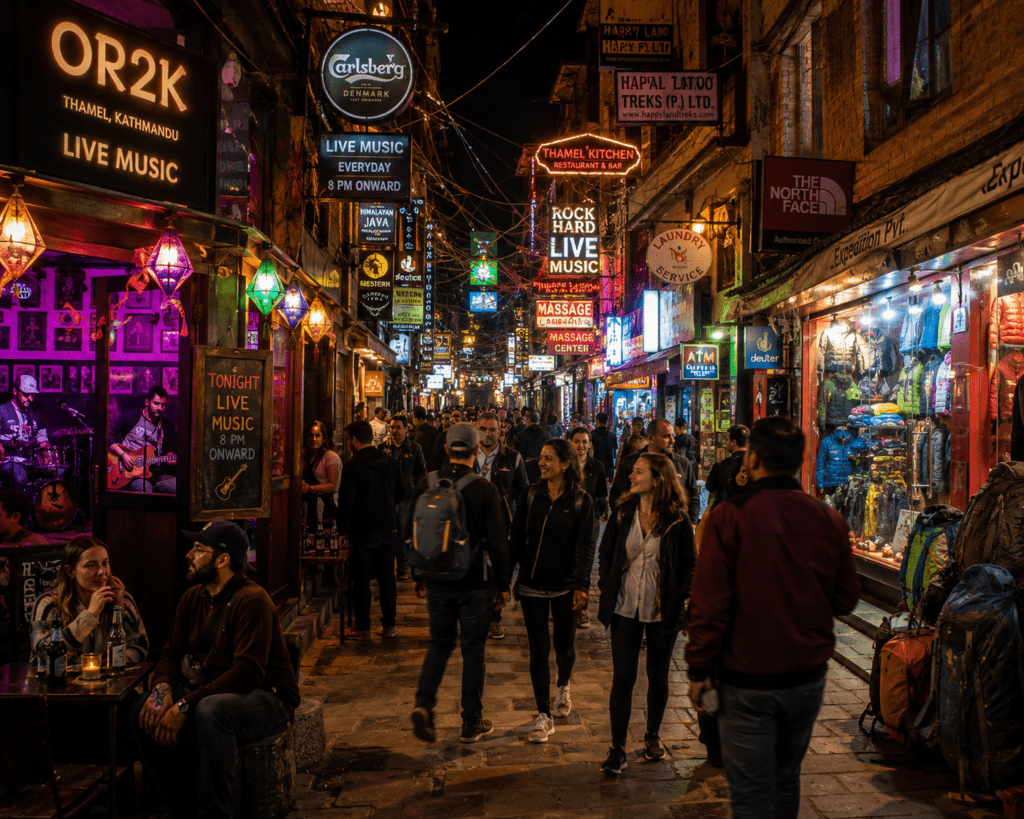
Thamel transforms after 8pm — the lanes fill with music, the rooftop bars light up, and the returning trekking crowd joins the digital nomads and long-term travellers for a distinctly international after-dark scene.
Purple Haze Rock Bar (Thamel): The legendary Kathmandu rock bar — live rock music nightly, a venue that’s been the centre of Thamel’s nightlife for over a decade. Beer NPR 350–550. Cover NPR 300–500 on live music nights.
Tom & Jerry Pub (Thamel): The backpacker favourite — pool tables, cheap drinks, a mix of every nationality. Beer NPR 300–450. No cover.
Sam’s Bar (Thamel): Sports bar with screens, darts, football — good for watching live matches. Beer NPR 300–500.
Club Upstairs (Thamel): Kathmandu’s most established nightclub — electronic music, occasional DJ nights, late closing. Cover NPR 500–1,000.
Oasis Rooftop Bar: The most atmospheric bar in Thamel — rooftop with views over the lane chaos below. Good cocktails, reasonable prices, excellent sunset drinks. Cocktails NPR 600–900.
Things to know about Kathmandu nightlife:
- Most venues close by 2am (legal closing time)
- Thamel is safe to walk at night — stay in the main lanes
- Alcohol is freely available; marijuana and other substances are illegal (serious penalties)
- Purchasing, possessing, or consuming illegal drugs, including marijuana and hashish, could result in both fines and jail time
- Driving in Nepal after consuming any amount of alcohol could result in arrest
Pokhara Nightlife — Lakeside After Dark
Pokhara’s nightlife is more relaxed than Kathmandu — the lakeside strip of bars from Bistro Caroline south to Busy Bee Café is the after-dark circuit. Jazz Bistro on the lake is excellent for live acoustic music. The Club Bar has dancing until late.
Shopping in Nepal — What to Buy
Kathmandu Shopping Guide
Where to shop:
- Thamel: Everything — trekking gear, souvenirs, thangkas, pashmina, books
- Asan Tole: Local market — spices, daily goods, authentic non-tourist prices
- Indra Chowk: Pashmina and bead jewellery
- Patan: Metalwork and traditional arts (direct from artisans, better quality than Thamel shops)
What to buy:
Pashmina Shawls: The real deal — genuine Pashmina is made from the undercoat of Changthangi goats from high-altitude regions. Soft, light, warm. The test: real Pashmina can be pulled through a ring; most Thamel “Pashmina” is viscose or a blend.
- Where to buy: Jamal area or Patan’s fixed-price shops for genuine Pashmina
- Price: NPR 3,000–12,000 for genuine Pashmina; NPR 500–1,500 for blend scarves
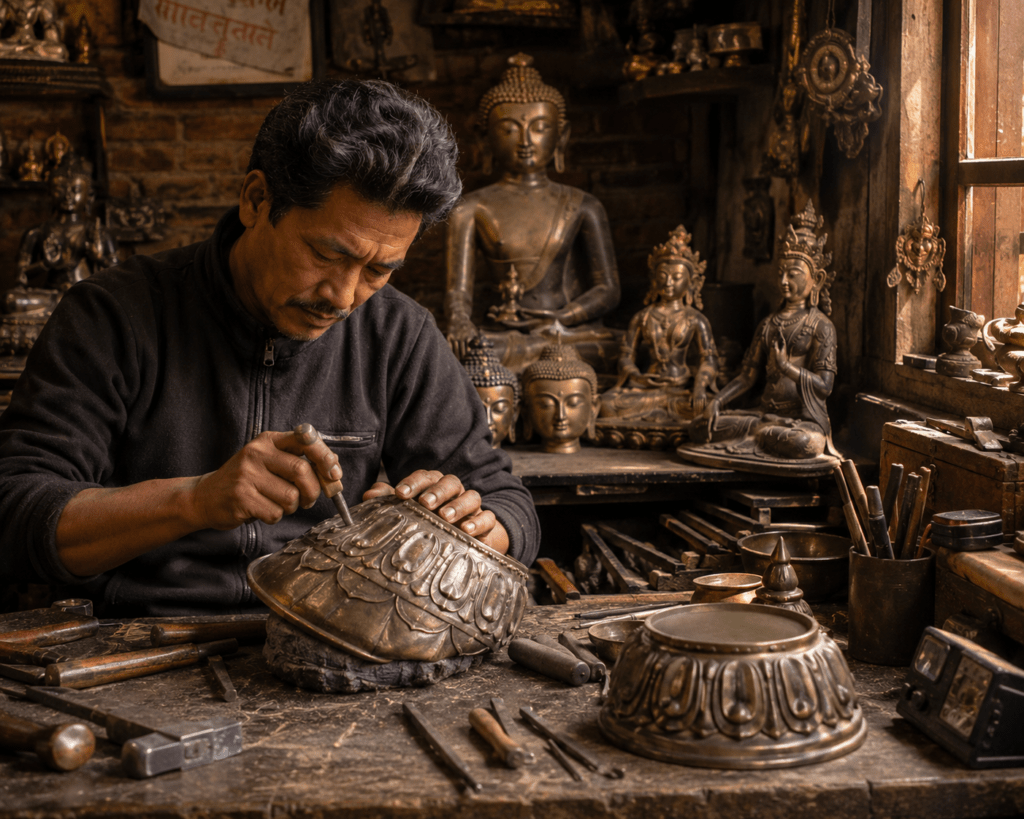
Thangka Paintings: Traditional Tibetan Buddhist scroll paintings — hand-painted on cotton or silk. High-quality Thangkas are works of art requiring months of work. Cheap Thamel versions are screen-printed on aged fabric.
- Where to buy: Boudhanath area (nearest to authentic Tibetan artists), Patan artisan studios
- Price: NPR 3,000–5,00,000+ depending on quality and size
Singing Bowls: Himalayan singing bowls for meditation — hand-hammered (more expensive, better quality) vs machine-made. A good quality hand-hammered bowl produces a sound that sustains for 30+ seconds.
- Price: NPR 500–15,000 depending on size and quality
Trekking Gear: Thamel is lined with shops selling North Face, Mammut, Arc’teryx, and Marmot — most of it is replica. Replicas range from poor to very good quality. For actual safety-critical gear (harnesses, carabiners, crampons) — buy original gear. For fleece layers, trekking poles, and general trail clothing — Thamel replicas are functional and cheap.
Khukuri (Gurkha Knife): The iconic curved blade of the Gurkha soldiers — handmade in Nepal, good quality pieces have a full-tang blade. The Khukuri House in Thamel is the most reliable source.
- Price: NPR 2,000–15,000 for quality pieces
Yak Wool Products: Thick, warm, slightly rough-textured blankets, socks, and hats. Authentically Nepali and excellent value.
- Price: NPR 500–3,000 for various items
Budget Guide — What Nepal Costs in 2026
Daily Budget Breakdown (Per Person)
| Expense | Shoestring | Budget | Mid-Range | Luxury |
|---|---|---|---|---|
| Accommodation | NPR 500–900 (dorm) | NPR 1,500–3,000 | NPR 5,000–12,000 | NPR 20,000+ |
| Food | NPR 500–800 | NPR 900–1,500 | NPR 1,500–3,000 | NPR 3,000–8,000 |
| Transport | NPR 300–600 | NPR 600–1,500 | NPR 1,500–4,000 | NPR 4,000+ |
| Activities | NPR 200–500 | NPR 500–1,500 | NPR 1,500–4,000 | NPR 5,000+ |
| Daily Total | NPR 1,500–2,800 ($11–21) | NPR 3,500–7,500 ($26–56) | NPR 9,500–24,000 ($71–179) | NPR 32,000+ ($239+) |
Trekking Add-On Costs (Per Person)
| Item | Cost |
|---|---|
| Licensed guide (per day) | NPR 3,000–5,000 ($22–37) |
| Porter (per day) | NPR 2,000–3,500 ($15–26) |
| Teahouse accommodation (per night) | NPR 400–1,200 ($3–9) |
| Teahouse meals (per day) | NPR 1,500–3,000 ($11–22) |
| TIMS Card | NPR 2,000 ($15) |
| ACAP Permit | NPR 3,000 ($22) |
| Sagarmatha NP Permit | NPR 3,000 + 13% VAT ($28) |
Things to Know Before You Go
10 Things Every Nepal Traveller Needs to Know
1. Altitude sickness is real and doesn’t discriminate. AMS affects fit young people as readily as older or less fit travellers. Acclimatise properly — never ascend more than 500m of elevation gain per day above 3,000m. Know the symptoms: persistent headache, nausea, dizziness, breathlessness at rest. If symptoms appear — stop ascending. If they worsen — descend immediately.
2. Carry travel insurance with helicopter evacuation coverage. Many Americans and international travellers need helicopter rescues in Nepal’s mountains. Helicopter companies usually want to see evacuation insurance, pre-approval from your health insurance, or a credit card before helping. World Nomads and SafetyWing both cover Nepal helicopter evacuation.
3. Cash is king outside Kathmandu and Pokhara. ATMs exist in Kathmandu and Pokhara. On the trekking trails, you may see occasional payment QR codes but cash (NPR) is the reliable option. Withdraw enough before entering any trekking region.
4. Domestic flights are frequently cancelled. Nepal’s mountain weather is highly changeable. Lukla, Jomsom, Humla, and other domestic airports experience weather cancellations regularly. During peak trekking seasons make advance booking for hotel rooms and plan for possible flight/airport delays. Leave ample time to catch outbound international flights when connecting from domestic flights.
5. The licensed guide requirement is real and enforced. Since April 1, 2023, Nepal government regulations mandate licensed guides for foreign trekkers in most regions. Failure to comply may result in considerable fines. Budget for a guide — a licensed, certified guide costs NPR 3,000–5,000/day and is worth every rupee for safety and cultural context.
6. Download offline maps before entering trekking regions. Mobile data is very limited on most trails above 3,000m. Download your route on Maps.me or Google Maps offline before leaving the last town with reliable connectivity.
7. Bargain, but with respect. Fixed prices exist at most proper shops and restaurants. Street vendors and tuk-tuk drivers expect negotiation. The rule: negotiate once or twice, agree on a fair price, and move on. Excessive bargaining over small amounts is poor form.
8. Nepal is seismically active. Earthquakes can destabilise mountainous areas, causing landslides. Flooding during monsoon season also increases the risk of landslides. Know your evacuation route from your hotel. Many older Kathmandu buildings don’t meet international earthquake safety standards.
9. Dress codes apply at religious sites. Cover shoulders and knees at all temple complexes. Remove shoes before entering temples. Do not touch religious items without permission. Photography inside the most sacred areas of temples is often restricted.
10. Nepal time is UTC+5:45. Nepal is the only country in the world with a 45-minute UTC offset. Phone clocks auto-adjust, but it’s worth knowing for scheduling.
FAQ Section
Q: Do I need a visa to visit Nepal in 2026?
A: Most nationalities can get a Tourist Visa on Arrival at Kathmandu airport or designated land borders. Fees are $30 (15 days), $50 (30 days), or $125 (90 days) paid in USD. Indian nationals are visa-free. A small number of nationalities (Nigeria, Ghana, and others) must apply in advance at a Nepali embassy. Pre-registration via the NepaliPort online system is recommended to reduce arrival queue times.
Q: Can I trek solo in Nepal in 2026?
A: No — as of April 2023, Nepal requires all foreign trekkers to use a licensed guide in national parks and most trekking regions. This applies regardless of your experience level. You must book through a registered trekking agency. Guides cost approximately NPR 3,000–5,000 per day and significantly enhance both safety and experience.
Q: What is the best time to visit Nepal?
A: October and November (post-monsoon autumn) offer the clearest skies, most stable weather, and best mountain visibility. March and April (spring) are the second-best window, with rhododendrons in bloom. February is excellent for fewer crowds and lower prices. Avoid July and August in most regions due to heavy monsoon rainfall and landslide risk.
Q: How much does Everest Base Camp trek cost?
A: For a 12–14 day EBC trek, budget travellers can manage $700–1,000 per person including permits, guide, accommodation, and food but not flights to/from Lukla. A full agency-organised package including guide, porter, permits, teahouse accommodation, and most meals costs $1,500–2,500 per person. Add $400–600 per person for Lukla flights (round trip from Kathmandu).
Q: What permits do I need for trekking in Nepal?
A: For most popular treks: TIMS Card (NPR 2,000) + relevant conservation area or national park permit (NPR 3,000). Everest region uses a municipality permit instead of TIMS. Restricted areas (Upper Mustang, Manaslu, Dolpo) require additional restricted area permits costing $75–500+ depending on the region. All permits are now QR-code tracked at trail checkpoints.
Q: What is the best budget for Nepal travel?
A: Budget travellers can manage $30–50/day ($11 in rural areas up to $50 in Kathmandu with a private room and restaurant meals). Mid-range travellers typically spend $80–150/day. Trekking adds $60–150/day for guided trips. A complete 10-day Nepal trip (including budget trekking) can be done for $600–900 per person excluding international flights.
Q: What should I pack for Nepal?
A: For Kathmandu and Pokhara: light clothing, modest layers for temples, rain jacket. For trekking: insulated jacket, thermal base layers, waterproof outer shell, good trekking boots broken in before arrival, sun protection (SPF 50+, glacier glasses), a down sleeping bag liner (teahouse blankets are provided but thin), trekking poles, first aid kit with altitude medication (discuss Diamox with your doctor), and a 40L trekking daypack.
Conclusion — Why Nepal in 2026
Nepal does not need a sales pitch. The mountains are the sales pitch. The culture is the sales pitch. The kindness of the Sherpa family running a teahouse at 4,000m who makes you butter tea at 5am before you continue toward a summit you can’t quite see yet — that is the sales pitch.
What Nepal needs is preparation. And now you have it.
The permits, the guides, the best time, the right gear, the correct trails for your fitness level, the restaurants that feed you well, the places to sleep that feel like somewhere rather than just a bed. This guide has all of it, verified for 2026, with real prices and honest assessments.
One more thing: Nepal’s 2015 earthquake killed nearly 9,000 people and damaged thousands of heritage sites. The country rebuilt with extraordinary determination. The Langtang villages reopened. The damaged temples of Kathmandu’s Durbar Squares are being restored. Every traveller who comes to Nepal in 2026 contributes to that recovery.
Go. Trek slowly. Eat the Dal Bhat. Thank your guide. Watch the sunrise from Poon Hill.
Come back different.
Namaste.