

Let me be straight with you: Thailand is not as cheap as it was in 2015. The cat’s out of the bag. Instagram happened. Digital nomads happened. Post-COVID “revenge travel” happened. And yet — Thailand is still one of the best-value destinations on the planet if you know where to look and what to skip.
I’ve spoken to travelers who blew ₹1.5 lakh in 10 days doing nothing particularly fancy, and others who stretched ₹55,000 across three weeks and came home with better stories. The difference? Information. And that’s exactly what this guide is.
Whether you’re a first-timer from Mumbai who’s never left India, or a seasoned backpacker recalibrating for 2026 costs, this is the no-fluff, field-tested breakdown you actually need.
Quick Summary Table
| Category | Budget Option | Mid-Range | Premium |
|---|---|---|---|
| Accommodation (per night) | ₹600–₹1,200 (hostel/guesthouse) | ₹2,000–₹4,500 (3-star hotel) | ₹7,000+ (resort/boutique) |
| Meals (per day) | ₹400–₹700 (street food) | ₹1,200–₹2,500 (mix) | ₹4,000+ (restaurants) |
| Transport (intercity) | ₹500–₹900 (bus/train) | ₹1,500–₹3,000 (sleeper/budget flight) | ₹4,000+ (flights) |
| Activities (per day) | ₹300–₹800 (temples, beaches) | ₹1,500–₹3,000 (tours) | ₹5,000+ (private experiences) |
| Daily Total Estimate | ₹1,500–₹2,800 | ₹5,500–₹10,000 | ₹18,000+ |
| 10-Day Trip (all-in) | ₹35,000–₹55,000 | ₹80,000–₹1,20,000 | ₹2,00,000+ |
Note: Flights from India to Bangkok not included. Budget ₹15,000–₹25,000 return.
When to Go — And When to Absolutely Not
The Sweet Spot for Budget Travelers
November to February is peak season — weather’s perfect, but prices spike 20–40%. If you’re traveling on a budget and have flexibility, aim for late September to mid-November. The rains are tapering off, crowds are thin, and you’ll often find accommodation at 30–50% lower than peak prices.
Avoid: December 25th to January 5th. Prices go full-on absurd. Hostels that normally charge ₹800/night casually list for ₹2,500+. Same rooms, better Wi-Fi marketing.
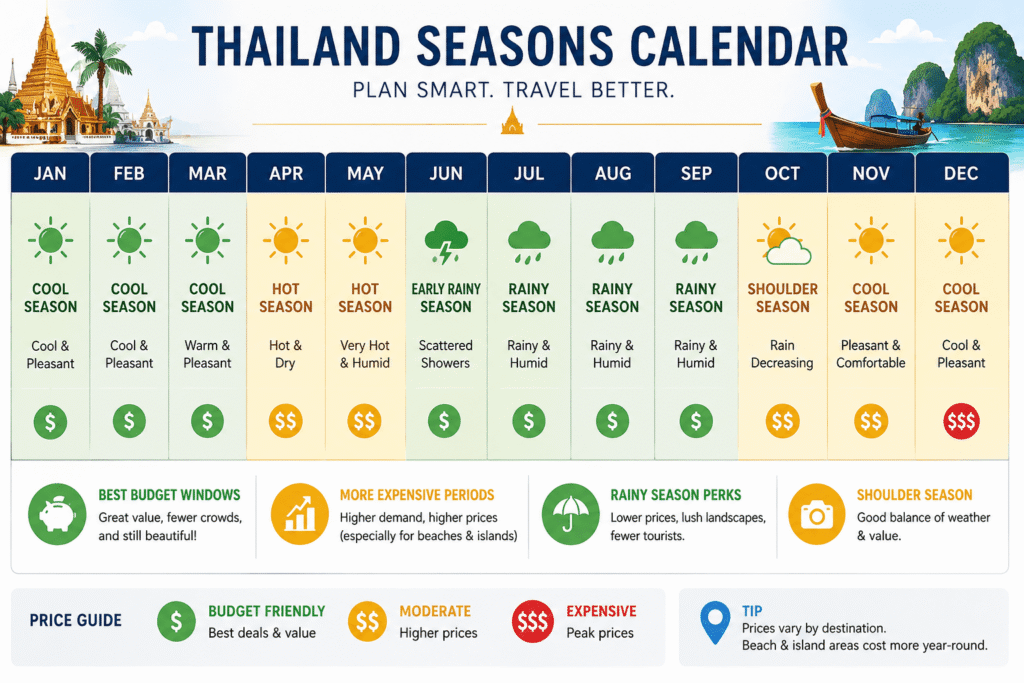
For Indian travelers specifically: The Songkran festival (Thai New Year, mid-April) is a bucket-list experience but coincides with peak summer pricing. Factor that in — it’s worth it once, but go in knowing costs rise.
Getting There Without Getting Robbed by Airlines
Flights from India
Bangkok’s Suvarnabhumi (BKK) is your main gateway. Don InMueang (DMK) handles most low-cost carriers. Know the difference before you book.
Best airlines from India on budget: IndiGo, AirAsia India, Thai AirAsia. Watch for sales in February and August — these carriers run aggressive promotions. Set Google Flights price alerts 8–12 weeks out.
From Mumbai or Delhi, expect ₹14,000–₹22,000 return in economy if you book smart. Chennai and Kolkata sometimes have better deals due to less competition on routes.
Pro Tip: Flying into Chiang Mai instead of Bangkok can shave ₹2,000–₹5,000 off your airfare if you're planning to start in the north anyway.
Where to Stay — The Real Options
Bangkok
For budget stays, Khao San Road area is iconic but increasingly touristy and overpriced for what you get. Better bets: Silom, Ari, or Lat Phrao neighborhoods for guesthouses that actually have functioning air conditioning and don’t smell like the 90s.
Recommended hostel range: Lub d Bangkok, NapPark Hostel (both well-rated, social, under ₹1,000/night for dorms).
For solo Indian travelers who prefer private rooms without blowing budget: look for “economy hotels” on Agoda — the Thai equivalent of a budget business hotel. Clean, functional, ₹1,200–₹1,800/night. Not glamorous. Totally fine.
Chiang Mai
Arguably better value than Bangkok right now. ₹700–₹1,000 gets you a solid guesthouse room in the Old City area. The Sunday Walking Street is free entertainment. The entire Nimman Road café scene is walkable. This city rewards slow travel on a small budget.
Islands (Koh Samui, Koh Phangan, Koh Tao)
Here’s where budgets go sideways. Island accommodation prices have surged post-2022. Koh Tao is still the most budget-friendly of the three. Expect ₹1,200–₹2,000/night minimum for a decent private room even at guesthouses. Koh Samui is basically mid-range minimum now.
Internal linking suggestion: Link to your article “Best Islands in Thailand for First-Timers” here.
Eating in Thailand — Street Food is Still King
This is where Thailand will make you feel like royalty on a pauper’s budget. Seriously.
What ₹300–₹500 Gets You
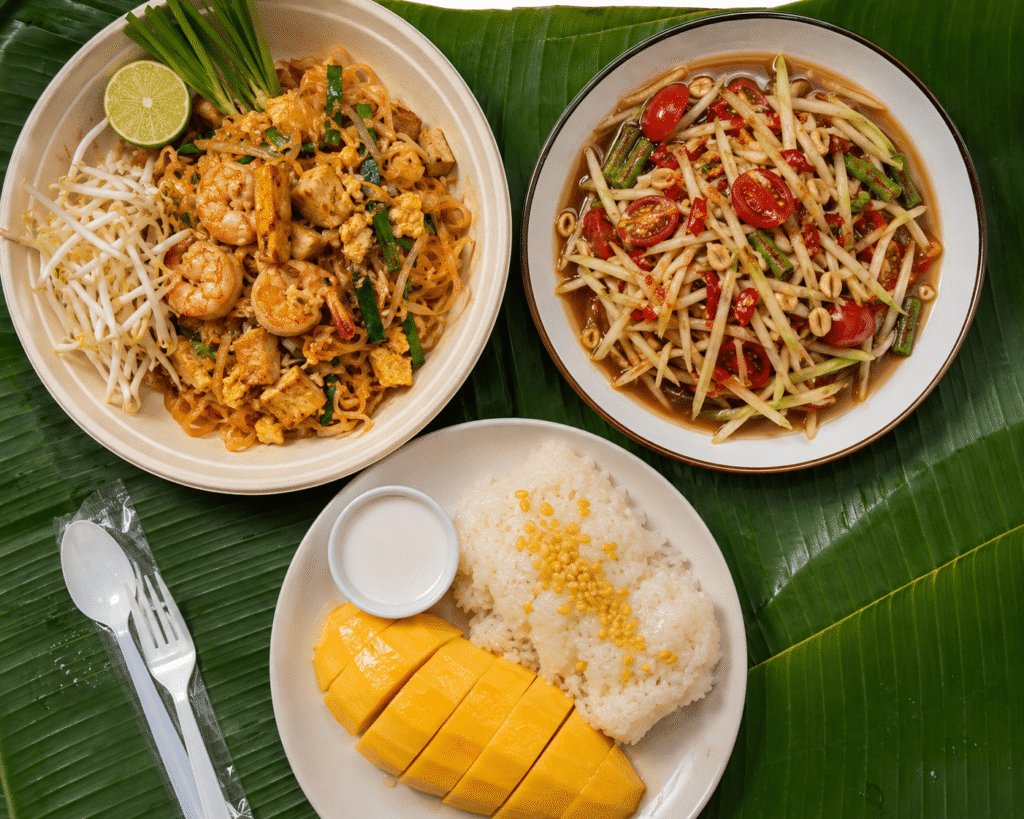
- Pad Thai from a street cart: ₹80–₹150
- Mango sticky rice (green mango season is April–June): ₹100–₹180
- Tom Yum soup at a local restaurant: ₹200–₹300
- Fresh coconut: ₹100
- Full breakfast at a neighborhood shophouse (rice soup, egg, coffee): ₹200
The golden rule: Eat where locals eat, not where the menu has photos. The moment a restaurant has a laminated menu with pictures and English translations on Khao San Road, you’re paying a 200% tourist premium.
Food Courts: The Underrated Hack
Every major mall in Bangkok has a food court. Terminal 21’s food court (Pier 21) is legendary — full meals for ₹150–₹250. Air-conditioned. Authentic. No tourist markup. This is not a downgrade; this is a life choice.
Getting Around Thailand
Bangkok
The BTS Skytrain and MRT Metro are your best friends. A single journey costs ₹25–₹75 depending on distance. Buy a Rabbit Card (BTS) or stored-value MRT card — saves you from buying single-journey tickets each time.
Tuk-tuks are for fun, not efficiency. Always agree on price before getting in. A short ride shouldn’t cost more than ₹150–₹200. If they quote ₹500, laugh politely and walk.
Intercity Travel
Train travel in Thailand is genuinely enjoyable and criminally underused by tourists. The overnight sleeper from Bangkok to Chiang Mai (₹700–₹1,200 for 2nd class sleeper) is comfortable, air-conditioned, and saves you a night’s accommodation cost. Book via the State Railway of Thailand website or 12Go Asia.
Bus travel is even cheaper but longer. For Bangkok to Chiang Mai, buses run ₹500–₹800. Fine for budget travel, though the overnight buses vary wildly in comfort.
Budget airlines (AirAsia, Nok Air, Thai Lion Air): Domestic flights can go for ₹800–₹2,500 if booked early. Bangkok to Phuket by air vs. 12-hour overnight bus? Sometimes the math actually works in flying’s favor once you add a guesthouse night.
My Personal Recommendations (Style Over Savings)
Look, I’m not here to tell you to eat only 7-Eleven food and skip every experience. Budget travel isn’t about deprivation — it’s about priorities.
Splurge on: A longtail boat tour of Bangkok’s canals (₹1,500–₹2,000 for 1–2 hours, worth every baht), one proper Thai massage (₹700–₹1,200 for 90 minutes at a reputable parlour, not a street stall), and the Doi Inthanon national park day trip from Chiang Mai.
Save on: Temple entries (most Bangkok temples are free or ₹100–₹200 entry), cooking classes (skip the expensive resort ones — neighborhood classes at ₹1,500 are often better), and shopping (Chatuchak Weekend Market for everything you’ll overbuy).
Pro Tips for 2026
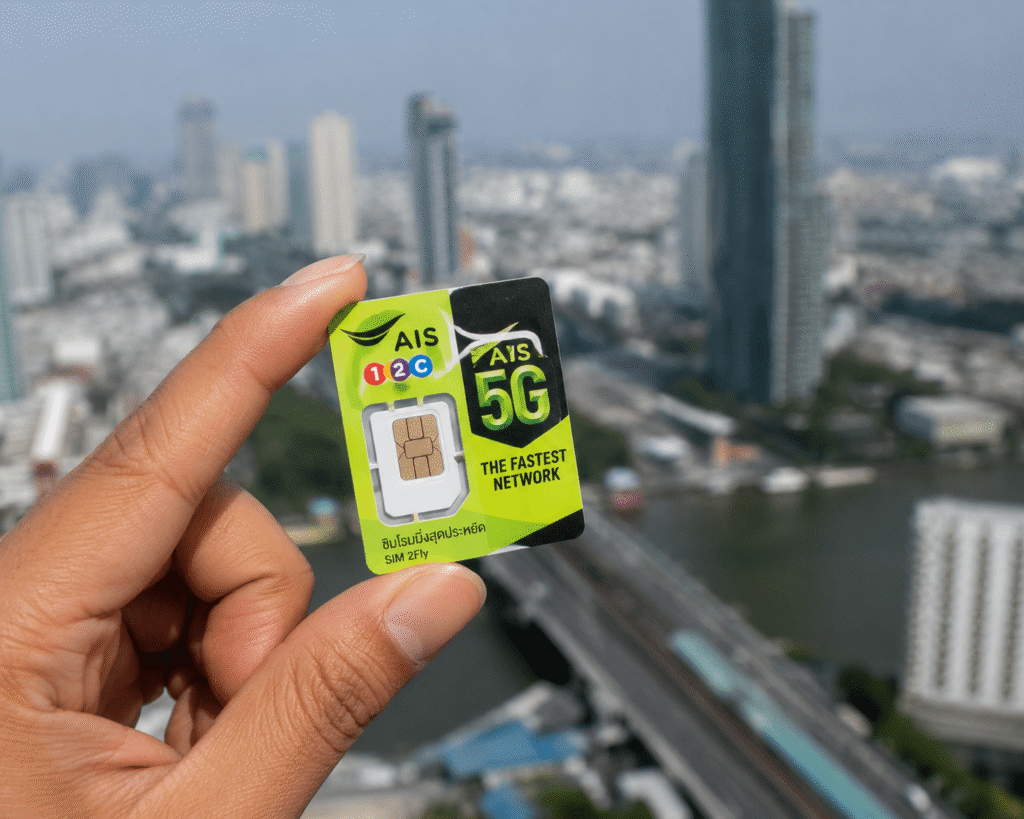
- Get a local SIM at the airport — AIS and DTAC offer 30-day tourist SIMs with 30–50GB data for ₹800–₹1,200. Your Indian roaming plan will bankrupt you.
- Use a zero-forex debit card — Cards like Niyo Global, HDFC Forex Card, or Wise card save you 3–5% on every transaction versus cash exchange at airport counters.
- Learn three Thai phrases — “Khop khun krap/ka” (thank you), “Phet nit noi” (a little spicy), and “Tao rai?” (how much?). Locals genuinely warm up, and sometimes prices quietly improve.
- Download Google Maps offline for every city before you land. Thai addresses can be labyrinthine.
- Book island ferry + accommodation combos via Lomprayah or Songserm — often cheaper than separate bookings.
Mistakes to Avoid
The “Grand Palace Closed Today” Scam: Random men near the Grand Palace will tell you it’s closed and offer to take you somewhere else first. It’s almost never closed. Walk in through the main gate.
Changing money at airport exchange: You’ll lose 5–8% versus in-city exchange booths (Superrich, the green one, is consistently the best rate in Bangkok).
Booking tours through your hotel: Hotels add 20–30% commission. Book directly via Klook or GetYourGuide, or walk into the operator’s office on Khao San Road.
Underestimating island transfer costs: Getting to Koh Phangan from Bangkok involves a train or bus, then a ferry. Budget ₹1,500–₹2,500 one-way, minimum. People get blindsided.
Assuming vegetarian food is easy to find: Thailand uses fish sauce in almost everything. The word you need: “Jay” (เจ) — strictly vegetarian Thai food, often found near temples. Indian vegetarians, make a note.
Budget Tips for Indian Travelers Specifically
- The Indian Rupee vs Thai Baht exchange hovers around 1 INR ≈ 0.43 THB (mid-2026). Roughly, 100 Baht ≈ ₹230–₹235. Easy mental math: divide Baht price by 4.3 for rupees.
- UPI doesn’t work in Thailand (yet). Carry a mix of Baht cash and a Wise/Niyo card.
- Vegetarian Indian food is available in Bangkok’s Little India area (Pahurat market) — useful for homesick days. Don’t overdo it though; you came for Pad Thai.
- Thai Airways and IndiGo sometimes run India-specific promotions. Subscribe to their newsletters and check airline deal aggregators like EaseMyTrip and Ixigo.
FAQ Section
Q: How much money do I need for 10 days in Thailand in 2026?
A: A realistic budget traveler from India should plan for ₹50,000–₹65,000 total including return flights, accommodation in mixed dorms or budget guesthouses, street food, local transport, and basic activities. Add ₹15,000–₹20,000 for a more comfortable mid-range experience.
Q: Is Thailand safe for solo Indian female travelers?
A: Generally yes — Thailand ranks among Southeast Asia’s safer destinations for solo women. Stick to well-lit tourist areas at night, don’t accept drinks from strangers, dress conservatively at temples, and trust your instincts. Chiang Mai and Pai are particularly solo-female-friendly.
Q: Do I need a visa for Thailand if I’m Indian?
A: As of 2026, Indian passport holders can enter Thailand visa-free for up to 60 days (extended from the earlier 30-day policy). Always verify current rules at the Royal Thai Embassy website before travel, as policies can change.
Q: What is the best time to visit Thailand for Indian tourists on a budget?
A: Late September through early November hits the sweet spot — the rains are mostly done, crowds are minimal, and prices are 20–40% lower than December-February peak season.
Q: Can I use UPI or Paytm in Thailand?
A: Not yet at most places. Some tourist-heavy areas have begun accepting QR-based payments, but it’s not reliable. Carry Thai Baht cash and a travel-friendly debit card like Wise or Niyo Global.
Q: Which city in Thailand is cheapest to visit?
A: Chiang Mai consistently offers the best value — lower accommodation costs, cheaper food, free temple visits, and excellent access to nature without the island price premiums.
Q: Is street food in Thailand safe for Indians?
A: Largely yes, with some common-sense precautions. Stick to stalls with high turnover (busy = fresh), avoid raw shellfish in non-coastal cities, and carry Norflox tablets just in case. Most seasoned India-based travelers find Thai street food hygiene comparable to or better than Indian street food.
Conclusion
Thailand in 2026 rewards the traveler who does a little homework and doesn’t expect 2010 prices. It’s still genuinely one of the best-value destinations globally — especially for Indians who get solid exchange rates, direct flights, and a cultural experience that’s simultaneously exotic and oddly familiar.
The temples, the food, the beaches, the chaos of Bangkok’s streets at midnight — it’s all still there, just requiring slightly smarter choices. Use the tips in this guide, book a few things in advance, and leave some room to be spontaneously delighted.
Because that’s the thing about Thailand. It rewards the wanderers as much as the planners.
Go eat the mango sticky rice. You’ll thank me later.