

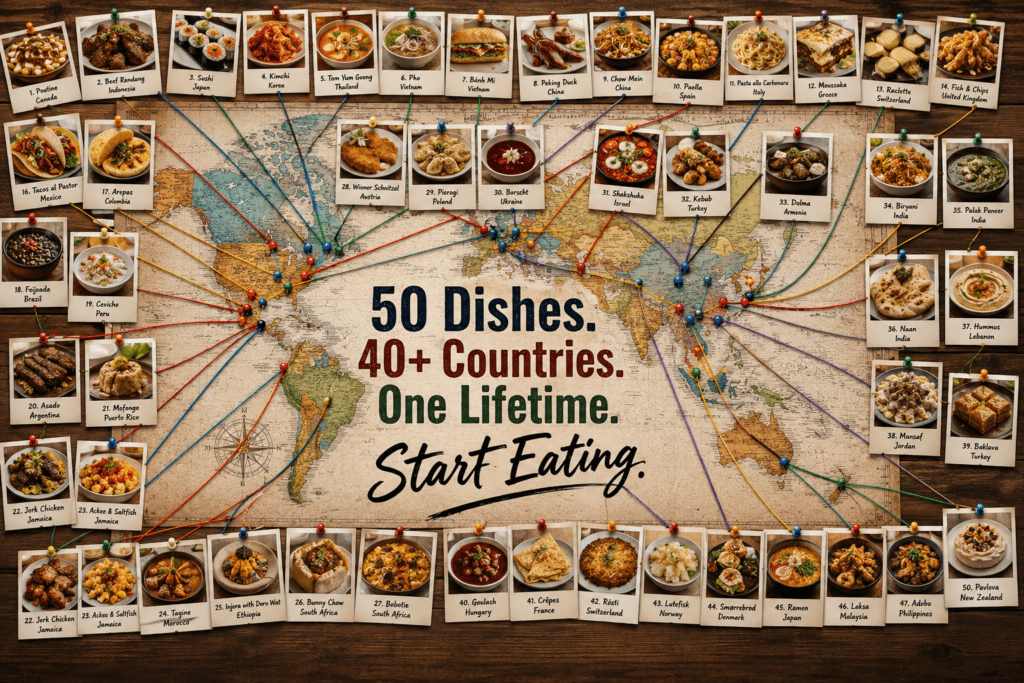
A NOTE BEFORE WE BEGIN: This list contains 50 dishes from 40+ countries. Some of them will require a flight. Some require a specific city. One or two require finding a specific dhaba, hawker stall, or hole-in-the-wall that has been doing one thing extraordinarily well for fifty years. All of them are worth it. Not one of them will disappoint you. That is the promise this list makes.
The Meal That Started This List
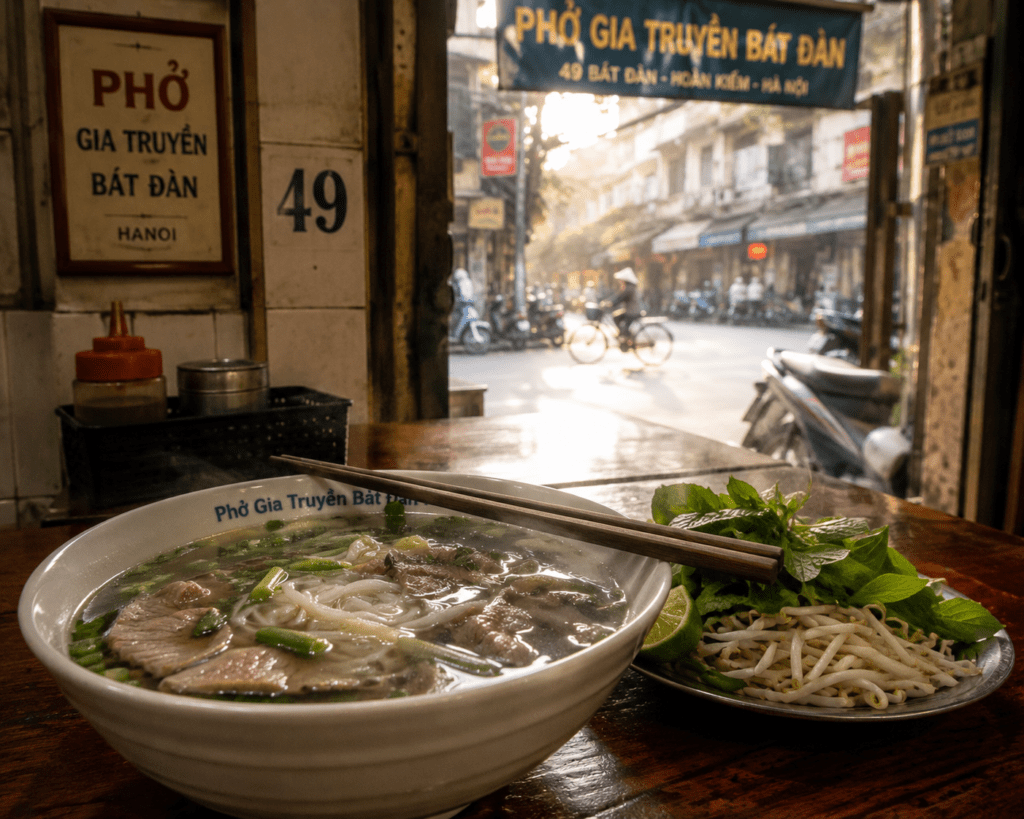
I was in Hanoi at 7am, sitting on a plastic stool so small my knees were almost touching my chin, eating a bowl of pho from a woman who had been making it since before I was born.
The broth had been simmering since midnight. The beef was sliced thin enough to read through. The herbs — Thai basil, bean sprouts, a wedge of lime — were fresh and cold and sharp against the warm bowl. There was a side of hoisin and sriracha that I wasn’t sure what to do with until she pointed at the broth and nodded, and I added them, and the whole thing became something else entirely.
I ate two bowls. Then I walked around Hanoi for an hour thinking about the broth. Just the broth.
That is what great food does. It occupies you. It makes you think about it at inconvenient moments — in a meeting, on a train, at 2am when you should be sleeping but instead you’re googling flights to Hanoi because you want that bowl again.
This list is the 50 dishes that have done this to people — to me, to the food writers and chefs and travellers whose accounts I’ve read obsessively, to the millions of people who eat these dishes daily in the cities and towns and road-side stalls where they were born.
Some are street food. Some are restaurant food. Some are home food that you can only get if you know someone’s grandmother. All fifty of them will make you think about them afterward.
Here they are.
Quick Reference: 50 Dishes by Country
| # | Dish | Country | Type | Approx Price |
|---|---|---|---|---|
| 1 | Pho | Vietnam | Street food | $1–3 |
| 2 | Masala Dosa | India (South) | Street food | ₹50–150 |
| 3 | Peking Duck | China | Restaurant | $15–40 |
| 4 | Neapolitan Pizza | Italy | Restaurant/street | €8–15 |
| 5 | Ramen | Japan | Restaurant | $8–20 |
| 6 | Tacos al Pastor | Mexico | Street food | $1–3 |
| 7 | Pad Thai | Thailand | Street food | $1–2 |
| 8 | Butter Chicken | India (North) | Restaurant | ₹300–600 |
| 9 | Paella | Spain | Restaurant | €12–25 |
| 10 | Croissant (proper one) | France | Bakery | €1.50–3 |
| 11 | Hyderabadi Biryani | India | Restaurant | ₹250–500 |
| 12 | Chili Crab | Singapore | Restaurant | SGD 50–80 |
| 13 | Ceviche | Peru | Restaurant/street | $5–15 |
| 14 | Jerk Chicken | Jamaica | Street food | $5–10 |
| 15 | Khao Soi | Thailand (North) | Restaurant | $2–5 |
| 16 | Poutine | Canada | Street food | CAD 8–15 |
| 17 | Moussaka | Greece | Restaurant | €12–18 |
| 18 | Rendang | Indonesia | Restaurant/home | IDR 30,000–80,000 |
| 19 | Bobotie | South Africa | Restaurant | ZAR 90–180 |
| 20 | Tom Yum Soup | Thailand | Restaurant | $3–8 |
| 21 | Sushi (Omakase) | Japan | Fine dining | $80–300+ |
| 22 | Tagine | Morocco | Restaurant | MAD 80–150 |
| 23 | Cacio e Pepe | Italy | Restaurant | €12–18 |
| 24 | Banh Mi | Vietnam | Street food | $1–2 |
| 25 | Laksa | Malaysia/Singapore | Street food | SGD 4–8 |
| 26 | Haggis | Scotland | Restaurant/pub | £10–18 |
| 27 | Lechon | Philippines | Festival/restaurant | PHP 500–1,500 |
| 28 | Jollof Rice | West Africa | Home/restaurant | $3–8 |
| 29 | Dal Baati Churma | India (Rajasthan) | Dhaba | ₹150–350 |
| 30 | Fish and Chips | UK | Street food | £6–12 |
| 31 | Feijoada | Brazil | Restaurant | BRL 30–60 |
| 32 | Dim Sum | Hong Kong/China | Restaurant | HKD 30–50/basket |
| 33 | Goulash | Hungary | Restaurant | HUF 2,500–5,000 |
| 34 | Shawarma | Lebanon/Middle East | Street food | $2–5 |
| 35 | Escargot | France | Restaurant | €12–20 |
| 36 | Injera with Tibs | Ethiopia | Restaurant | ETB 150–300 |
| 37 | Gelato (proper) | Italy | Gelateria | €2–4 |
| 38 | Khachapuri | Georgia | Restaurant | GEL 12–20 |
| 39 | Döner Kebab | Turkey | Street food | TRY 80–150 |
| 40 | Maple-Glazed Salmon | Canada/Pacific NW | Restaurant | CAD 25–40 |
| 41 | Bunny Chow | South Africa | Street food | ZAR 40–80 |
| 42 | Nasi Goreng | Indonesia | Street food | IDR 20,000–50,000 |
| 43 | Po’Boy | USA (New Orleans) | Street food | $8–15 |
| 44 | Soup Dumplings (XLB) | China (Shanghai) | Restaurant | RMB 30–60 |
| 45 | Jerk Lobster | Jamaica | Restaurant | $20–40 |
| 46 | Mole Negro | Mexico | Restaurant | $10–18 |
| 47 | Borscht | Ukraine/Russia | Restaurant | $3–8 |
| 48 | Churros with Chocolate | Spain | Café/street | €3–6 |
| 49 | Kerala Fish Curry | India (South) | Restaurant | ₹200–400 |
| 50 | Smørrebrød | Denmark | Restaurant | DKK 60–150 |
THE 50 DISHES — COMPLETE GUIDE
1. PHO — Vietnam’s Soul in a Bowl
Country: Vietnam Best city: Hanoi (beef pho) | Ho Chi Minh City (slightly sweeter southern version) Type: Street food / Restaurant Price: 40,000–80,000 VND ($1.50–3)
What is it? Pho is a Vietnamese dish made of rice noodles and meat — usually beef (pho bo) or chicken (pho ga) — served in a broth that has been simmering for 6–12 hours with star anise, cinnamon, ginger, and charred onion. Topped with fresh herbs (Thai basil, coriander), bean sprouts, lime, and chilli. A popular street food item, Pho is flavourful yet balanced in nature — a perfect dish to have on a winter evening.
Why you must eat it: The broth is what destroys you. It’s not heavy. It’s not opaque. It’s this clear, deep, mysteriously complex liquid that tastes like it’s been thinking about you for hours. The herbs add freshness. The noodles add body. The beef — thinly sliced, half-cooked by the hot broth — adds texture. The whole thing is layered and balanced and warming without being heavy.
The honest bit: The best pho you’ll eat is probably not in a restaurant. It’s from a stall where the owner has been making one type of pho since 1970 and is not interested in your feedback.
Best place to try:
- Pho Gia Truyen Bat Dan, Hanoi: 49 Bat Dan Street, Hoan Kiem, Hanoi. Open 6am–10am and 6pm–8pm. Cash only. Queue always present. The broth here is the benchmark.
- Pho Thin, Hanoi: 13 Lo Duc, Hai Ba Trung District — slightly different preparation, equally brilliant.
For Indians visiting Vietnam: This is comfort food in a completely different language. The warmth is familiar, the flavours are not — and that tension is precisely why it’s extraordinary.
2. MASALA DOSA — South India’s Greatest Export
Country: India Best city: Bengaluru | Chennai | Mysore Type: Street food / Restaurant Price: ₹50–200
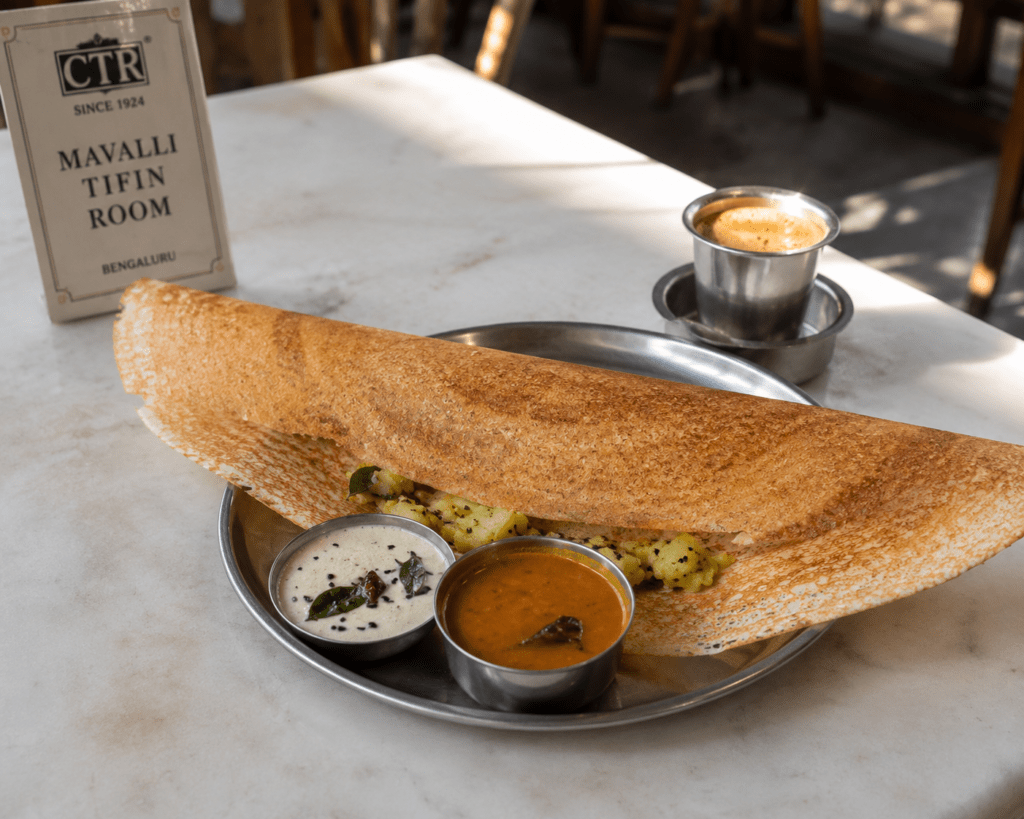
What is it? The plate-covering, paper-thin pancake is made from rice and lentils, cooked to lacy perfection on a hot griddle. What creates the more-ish flavour is a spiced concoction of mashed cooked potatoes and fried onions, served with a liberal dose of garlicky chutney. Sambar (a lentil and vegetable broth) on the side. The dosa itself is crisp at the edges and slightly soft at the centre where the potato filling creates a steam pocket.
Why you must eat it: Because it’s simultaneously the most accessible and the most complex breakfast in the world. The fermented batter has a sourness. The potato masala has warmth from turmeric and mustard seeds. The coconut chutney is cool and fresh. The sambar is earthy and complex. All four elements together in one bite is one of the great flavour combinations in global food.
Masala Dosa has made it to the list of ’10 foods to try before you die’ compiled by the Huffington Post, alongside Peking duck from China and BBQ ribs from the US.
Best places to try:
- CTR (Central Tiffin Room), Bengaluru: 7th Cross, Malleshwaram. Queue before 9am. The benne (butter) masala dosa here is the benchmark.
- Vidyarthi Bhavan, Bengaluru: Gandhi Bazaar. Since 1943. The most consistently argued-about “best dosa in India” contender.
- Hotel Saravana Bhavan, Chennai: Multiple locations. The chain that proved South Indian food could be consistent at scale.
Price context: The most expensive masala dosa in the world costs less than a bad cup of coffee in London. That’s not an accident.
3. PEKING DUCK — Beijing’s 600-Year-Old Masterpiece
Country: China Best city: Beijing Type: Restaurant Price: RMB 200–500 ($28–70) for half a duck
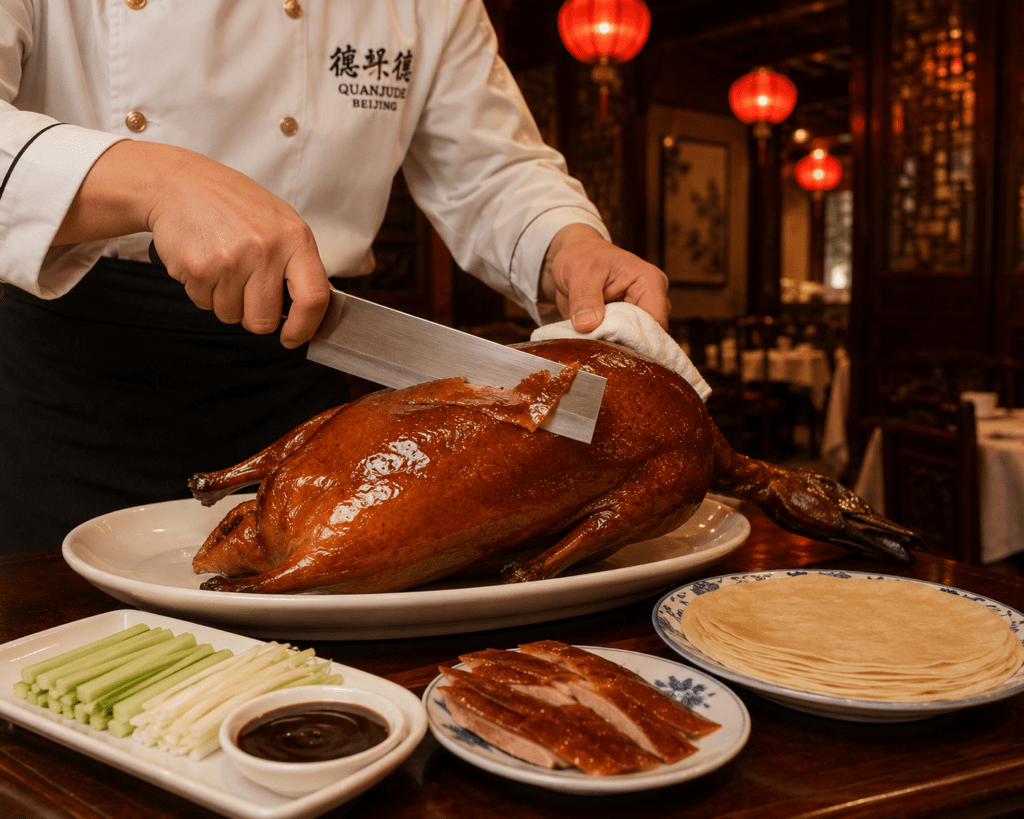
What is it? The ducks for this dish are specially bred and slaughtered after 60 days and seasoned first before being roasted in closed ovens. This gives the meat a crisp skin and thin texture. The dish is served with cucumbers, spring onion, and sweet bean sauce. The dish is cut in front of the diners and then served in three parts: first with sugar and garlic sauce, then with pancakes.
Why you must eat it: It’s not just about the meat. It’s about the ceremony. The chef carves at your table. The skin — lacquered, crackling, mahogany — is sliced separately from the meat. You wrap everything in a paper-thin mandarin pancake with a swipe of hoisin, a piece of cucumber, a green onion. Then you eat it. And you understand why this dish has survived six centuries.
The honest bit: You can get “Peking duck” in Chinese restaurants across the world. You cannot get this Peking duck anywhere except Beijing. The smoke from fruitwood used in the roasting oven, the specific breed of duck, the mountain spring water some restaurants claim to use — these things are not marketing copy. They make a difference.
Best places to try:
- Da Dong Roast Duck Restaurant, Beijing: 3/F, Nanxincang International Plaza, 22A Dongsishitiao, Dongcheng District. The theatrical presentation here is legendary.
- Quanjude, Beijing (Qianmen branch): 32 Qianmen Street, Dongcheng District. Since 1864. Over 200 million ducks served since opening. The history is real.
4. NEAPOLITAN PIZZA — The Original and Still the Best
Country: Italy Best city: Naples (Napoli) Type: Restaurant / Pizzeria Price: €6–12 for a whole pizza
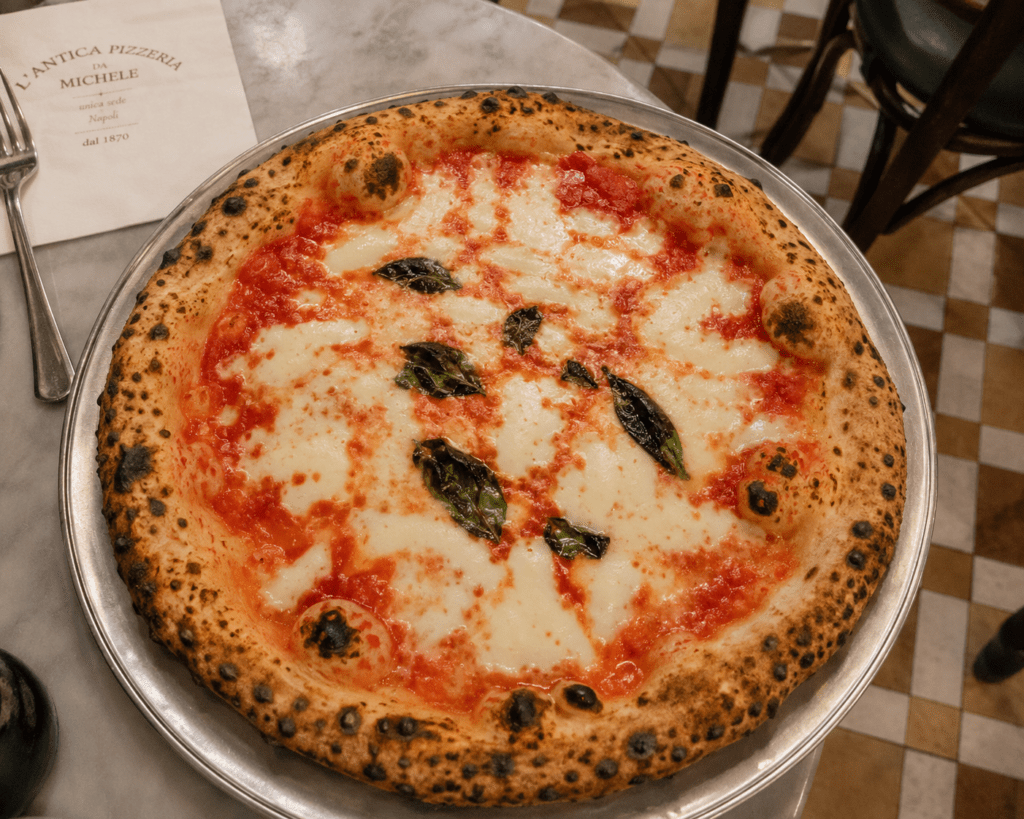
What is it? A pizza Margherita from Naples is not the same thing as pizza. It is specifically: San Marzano tomatoes from the volcanic soils of Mt. Vesuvius, fior di latte mozzarella or buffalo mozzarella from Campania, fresh basil, extra-virgin olive oil, and a dough made from 00 flour, water, salt, and yeast — fermented 24–72 hours and cooked in a wood-fired oven at 485°C for 60–90 seconds.
Why you must eat it: Because eating a pizza Margherita in Naples is the moment you stop thinking of pizza as food and start thinking of it as an argument for civilisation.
The charred leopard spots on the crust. The irregular way the cheese melts and pools. The way the centre of the pizza is soft and slightly wet (this is correct — it’s called “al taglio” style and it’s not a mistake). The smell of wood smoke. The tomato that is both sweet and acidic simultaneously.
Best places to try:
- L’Antica Pizzeria da Michele, Naples: Via Cesare Sersale 1, Napoli. Since 1870. Only two options: Margherita or Marinara. The queue can be 45 minutes. Worth every minute.
- Sorbillo, Naples: Via dei Tribunali 32. The other contender.
The rule: Eat your Neapolitan pizza immediately. Standing up if necessary. A Neapolitan pizza waits for no one, and it deteriorates faster than most relationships.
5. RAMEN — Japan’s Comfort in Complexity
Country: Japan Best city: Tokyo | Sapporo | Fukuoka Type: Restaurant Price: ¥800–1,500 ($5–10)
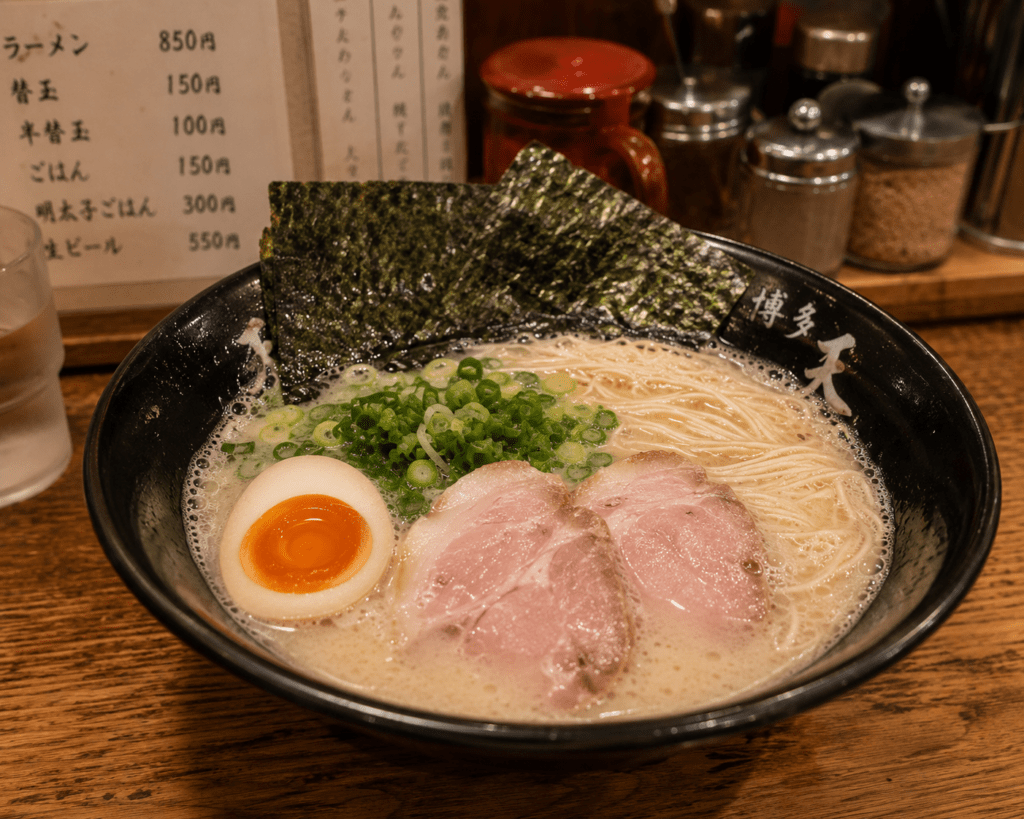
What is it? Ramen is wheat noodles in a broth that has been developed to an almost obsessive degree of precision by Japanese chefs. The four main regional styles: Sapporo (miso base, hearty), Tokyo (soy sauce, lighter), Hakata/Fukuoka (tonkotsu — creamy pork bone broth, rich and cloudy), and Kyoto (chicken-soy). Topped with chashu pork, a soft-boiled marinated egg, nori, spring onion, and bamboo shoots.
Why you must eat it: Because Japanese ramen chefs dedicate years — sometimes decades — to perfecting a single broth. The Hakata tonkotsu broth is the most extreme example: pork bones boiled at a rolling boil for 12–18 hours until the collagen dissolves into the liquid and turns it white and creamy and extraordinarily rich. Then the noodles are thin and straight, the pork is slow-braised, the egg is marinated in soy overnight. Everything has been thought about.
Best places to try:
- Ichiran Ramen (multiple Japan locations): The single-serving booth format where you order via a form, eat alone at a personal booth, and customise every element. Antisocial? Maybe. The bowl of tonkotsu is not.
- Fuunji, Shinjuku, Tokyo: 2-14-3 Yoyogi, Shinjuku — the tsukemen (dipping ramen) here is one of Tokyo’s most celebrated.
- Shin-Shin, Fukuoka: 3-2-19 Tenjin, Chuo-ku — the Hakata tonkotsu benchmark.
6. TACOS AL PASTOR — Mexico City’s Perfect Street Food
Country: Mexico Best city: Mexico City Type: Street food Price: 15–30 MXN ($0.75–1.50 per taco)
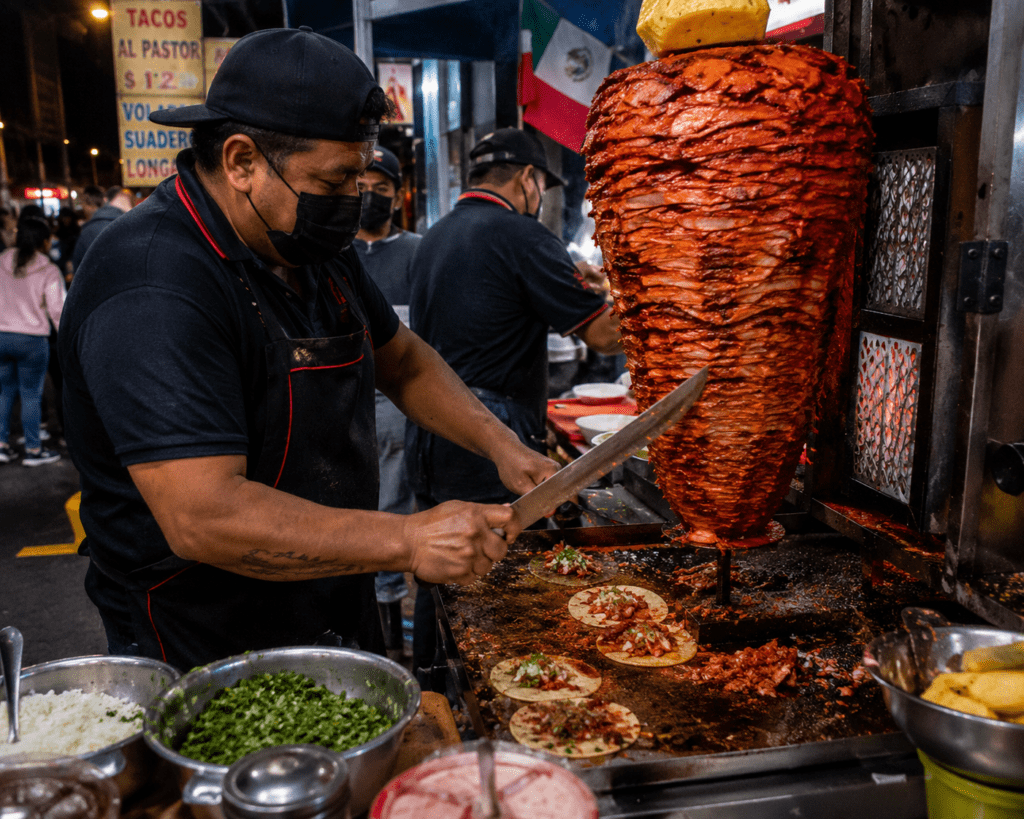
What is it? Tacos al Pastor are made from pork that has been marinated in dried chillies (guajillo, ancho), achiote, and spices, then stacked on a vertical spit (trompo) with a pineapple on top and slow-roasted. The taquero shaves thin slices off the rotating spit directly onto small corn tortillas, adds raw onion, fresh coriander, and a slice of pineapple carved from the top. Served with salsa verde and salsa roja on the side.
Why you must eat it: The pork is simultaneously caramelised and juicy. The pineapple adds sweetness. The fresh tortilla adds corn earthiness. The salsa adds heat and acid. In one hand, two bites. This is the platonic ideal of street food.
The trompo — the vertical spit — is the show. Watching an experienced taquero spin the meat, shave slices, and carve pineapple with one continuous motion is street performance that earns its Michelin-adjacent reverence.
Best places to try:
- El Huequito, Mexico City: Ayuntamiento 21, Centro Histórico — since 1959, claimed inventor of tacos al pastor in Mexico City.
- Tacos Don Juan, Mexico City: Laredo 163, Hipódromo Condesa — the Condesa neighbourhood favourite.
For vegetarians: Ask for tacos de rajas (roasted poblano pepper strips) or nopales (cactus paddle). Equally extraordinary and genuinely vegetarian.
7. PAD THAI — Thailand’s Most Famous Export
Country: Thailand Best city: Bangkok | Chiang Mai Type: Street food / Restaurant Price: 50–120 THB ($1.50–3.50)
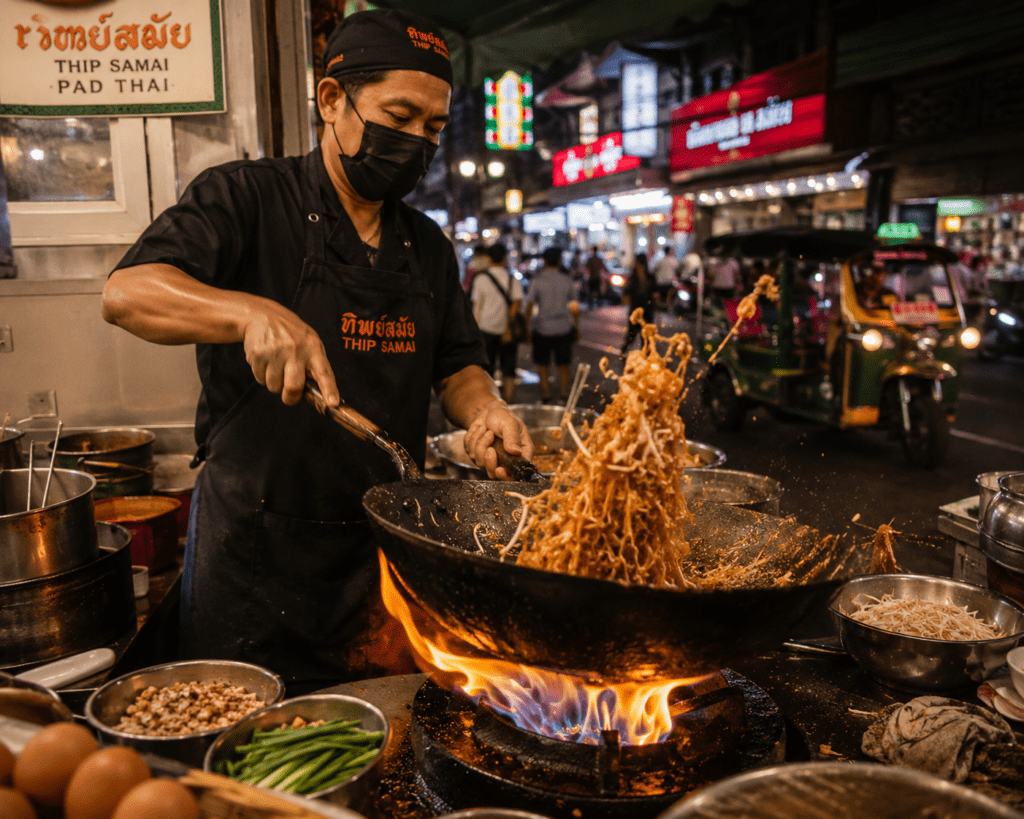
What is it? Rice noodles stir-fried at very high heat in a wok with egg, tofu or protein (shrimp and chicken most common), tamarind sauce, fish sauce, palm sugar, bean sprouts, and garlic chives. Served with ground peanuts, dried chilli, and a wedge of lime. The key: the wok hei — the specific smoky, slightly charred flavour that only comes from cooking at temperatures a domestic kitchen stove cannot achieve.
Why you must eat it: Because the version you’ve had at an Indian-Thai restaurant or ordered from Zomato is approximately 40% as good as the version from a Bangkok street cart. The tamarind-fish sauce balance, the texture of the noodles (should have slight chew, never soft), the peanuts, the lime — these things combine into something that is both more simple and more complex than it sounds.
Best places to try:
- Thip Samai, Bangkok: 313-315 Mahachai Road, Samranrat, Phra Nakhon — the most famous Pad Thai stall in Thailand. The pad thai served wrapped in an egg omelette is the signature. Arrive before 7pm or wait 45 minutes.
- Jay Fai, Bangkok (Michelin 1 Star): 327 Maha Chai Road — technically not pad thai, but the crab omelette and drunken noodles here are worth the long queue and high (for Bangkok) prices.
8. BUTTER CHICKEN (MURGH MAKHANI) — Delhi’s Gift to the World
Country: India Best city: Delhi | Amritsar Type: Restaurant Price: ₹300–700
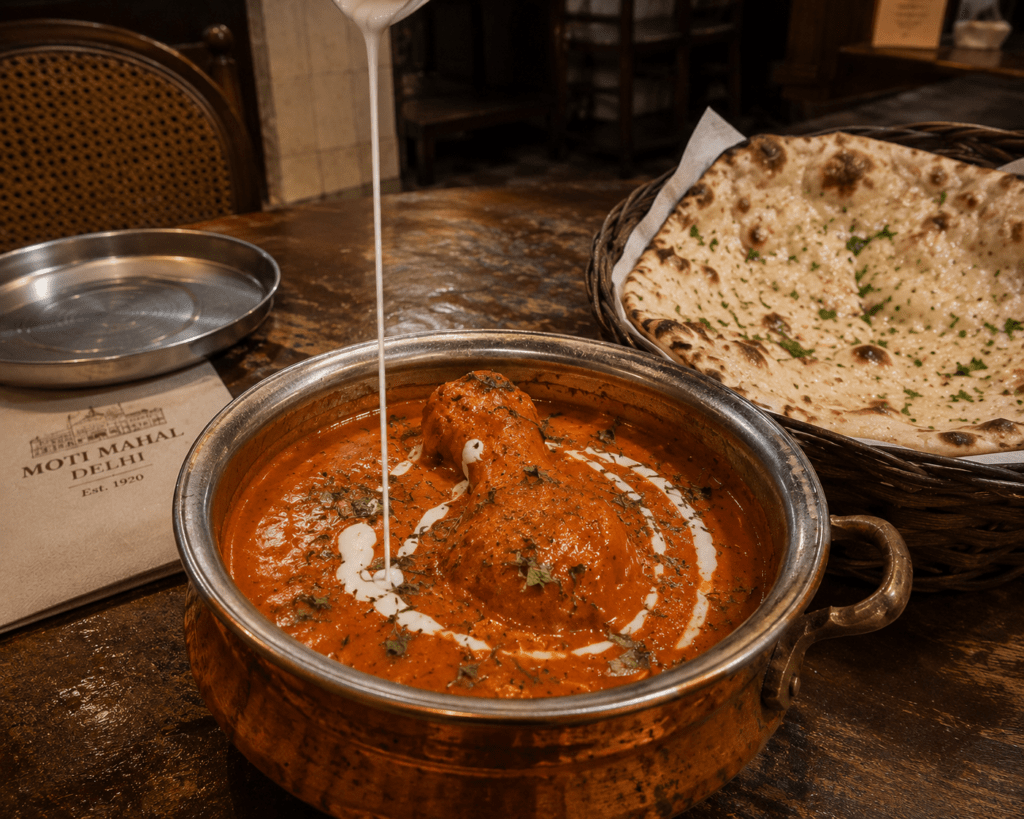
What is it? Chicken marinated in yoghurt and spices, cooked in a tandoor until charred, then simmered in a sauce made from tomatoes, butter, cream, garlic, ginger, and a specific set of spices including fenugreek leaves (kasuri methi) — the ingredient that gives butter chicken its distinctive slightly bitter-sweet back note. The sauce is smooth, rich, and deeply orange.
The origin story: Butter chicken was invented at Moti Mahal restaurant in Delhi’s Daryaganj in the late 1940s by Kundan Lal Gujral and later developed by Kundan Lal Jaggi. The story goes that the leftover tandoori chicken was simmered in tomato-butter-cream sauce to prevent it from drying out. The dish that resulted became the most replicated Indian recipe in the world.
Why you must eat it: Because the original, at Moti Mahal, is still different from every version you’ve had elsewhere. The butter quantity is the tell — a proper murgh makhani is rich in a way that makes you stop halfway through the bowl and have a small moment of reckoning about your choices.
Best places to try:
- Moti Mahal, Delhi: 3703 Netaji Subhash Marg, Daryaganj, New Delhi. The birthplace. Open since the 1940s.
- Gulati Restaurant, Delhi: 6 Pandara Road Market, New Delhi — the Pandara Road strip is Delhi’s finest restaurant mile and Gulati’s butter chicken is the landmark preparation.
- Bukhara (ITC Maurya, Delhi): The luxury version — priced accordingly but genuinely extraordinary.
9. PAELLA VALENCIANA — Spain’s Most Debated Dish
Country: Spain Best city: Valencia (nowhere else counts for the original) Type: Restaurant Price: €12–25 per person
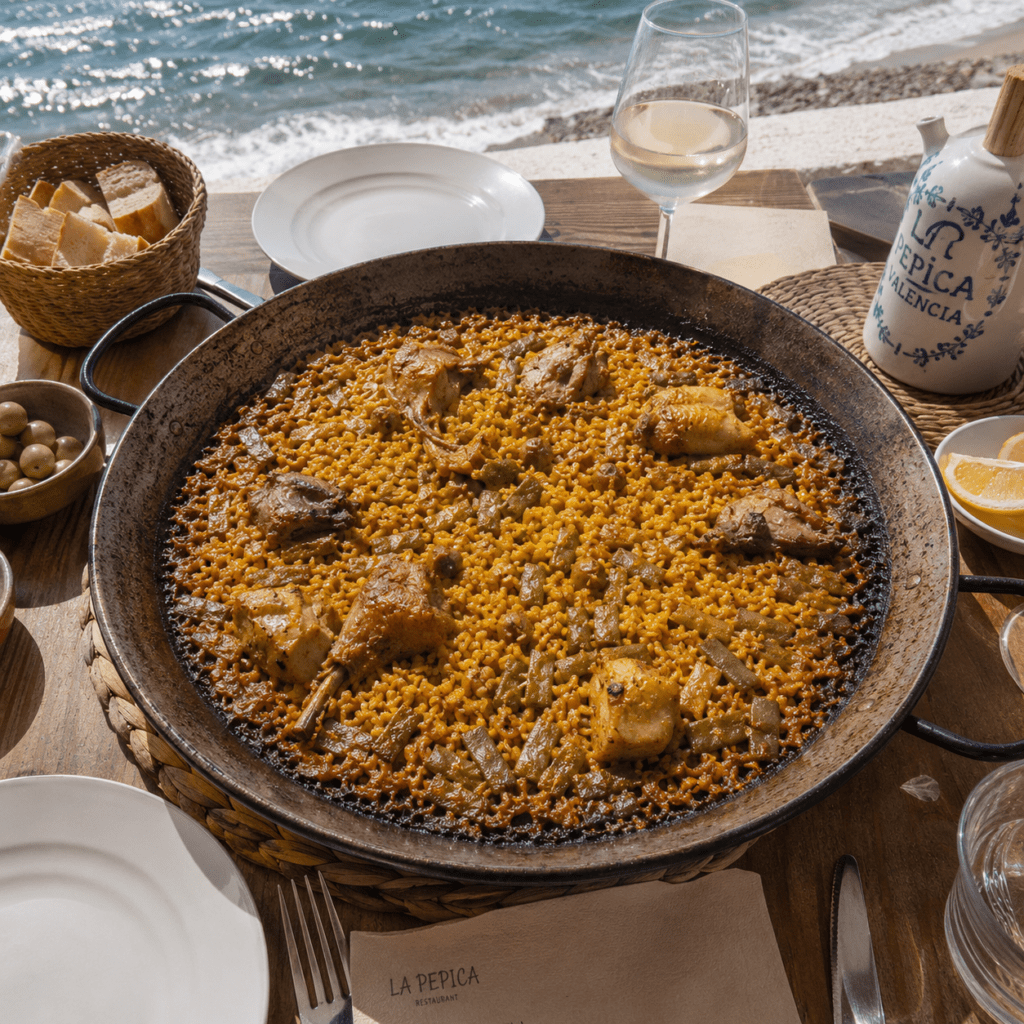
What is it? The original Paella Valenciana is not a seafood dish — that is a popular misconception. The authentic version, from the Valencia region, is made with rabbit, chicken, snails, white beans, runner beans, tomato, saffron, and short-grain rice cooked in a wide, flat pan (the paella pan) over an open wood fire. The socarrat — the caramelised crust of rice at the bottom of the pan — is the prized element.
Why you must eat it: Because paella done correctly — the saffron turning the rice gold, the socarrat forming without burning, the stock absorbed completely — is one of the finest demonstrations of technique available in European cooking. And because eating it outdoors in Valencia on a Sunday afternoon with a glass of horchata is one of the great simple pleasures of European travel.
Best places to try:
- La Pepica, Valencia: Paseo de Neptuno 6, Playa de Las Arenas. A Valencia institution since 1898. Ernest Hemingway ate here. The paella Valenciana on Sunday lunch is the reason to visit.
- Restaurante El Palmar, Albufera (Valencia): On the lake that gives paella its origin story. More rustic, more authentic.
The rule: Paella is a Sunday lunch dish. If you order it anywhere in Spain at dinner, you’re already doing it slightly wrong.
10. THE PROPER FRENCH CROISSANT — Paris’s Quiet Miracle
Country: France Best city: Paris Type: Boulangerie (bakery) Price: €1.20–2.50
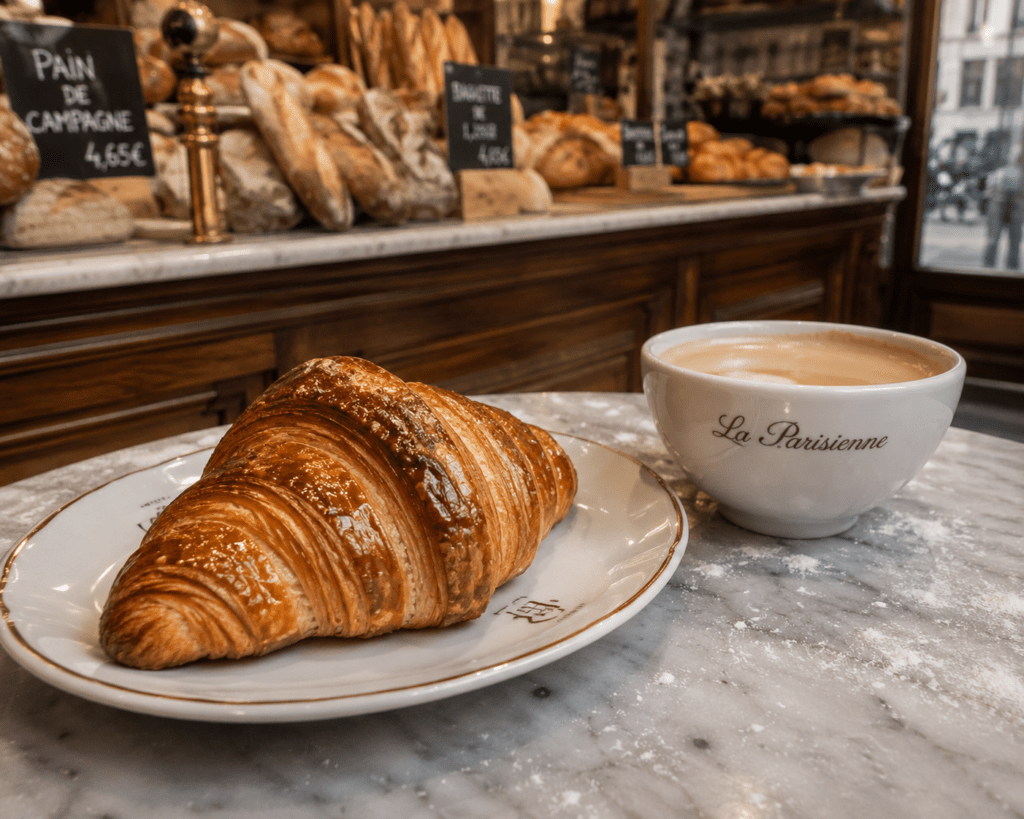
What is it? Croissant dough is made from flour, water, salt, sugar, yeast, milk, and a quantity of butter that will alarm you — up to 25% of the flour weight. The butter is folded into the dough through a process called lamination: 27 layers are created by folding cold butter and dough together repeatedly. The result: a pastry that shatters into flakes when you bite it, is honeyed from the caramelised butter, is slightly chewy at the very centre, and smells like something deeply good is happening.
Why you must eat it: Because the croissant you’ve been eating at airport cafés and hotel breakfast buffets is not the croissant. The croissant is eaten at 8am on a Paris street, still warm, while walking to somewhere or nowhere in particular, with flakes of pastry on your shirt and no regret whatsoever.
The test: A good croissant must leave butter on your fingers. If your fingers are clean, you’ve been sold a lie.
Best places to try:
- Du Pain et des Idées, Paris: 34 Rue Yves Toudic, 10th arrondissement. Closed weekends (correct bakery behaviour). The croissant here is described by serious bakers as one of the best in Paris.
- Maison Landemaine, Paris: Multiple locations. Consistently excellent.
- Any neighbourhood boulangerie with a queue outside at 8am is always a better choice than a tourist-facing café charging €4.
11. HYDERABADI BIRYANI — The Pinnacle of the Pot
Country: India Best city: Hyderabad Type: Restaurant / Street food Price: ₹200–500
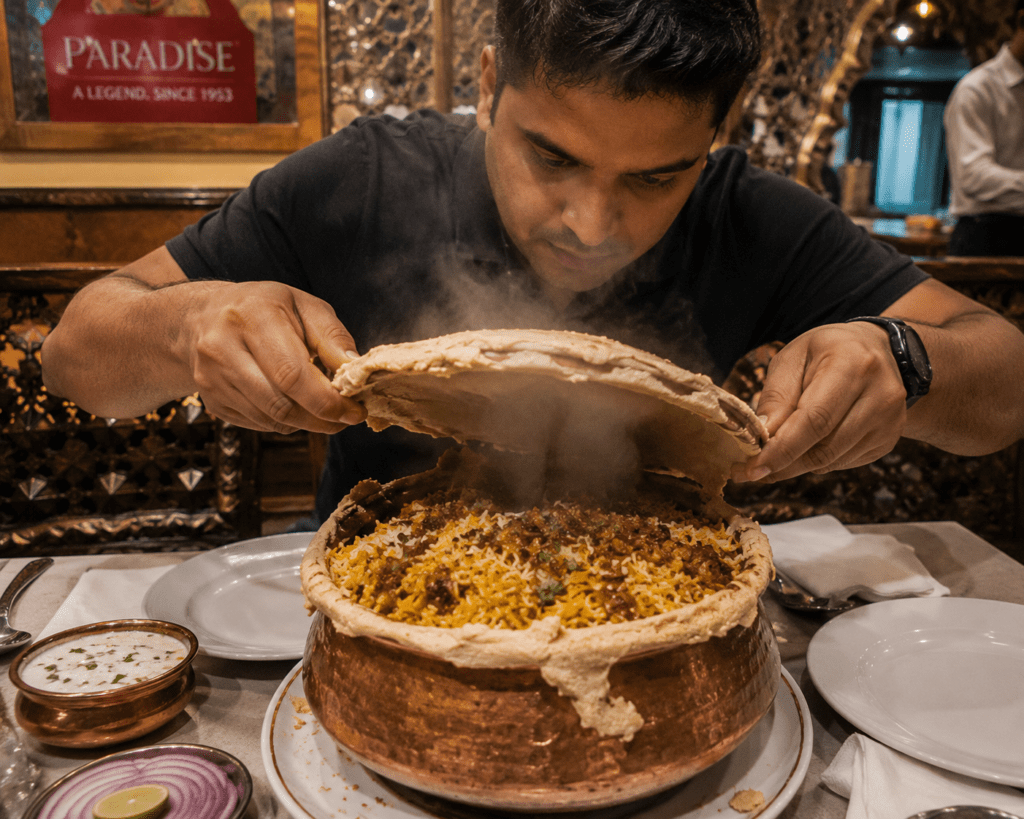
What is it? The Hyderabadi Kacchi biryani (the true version) is made by marinating raw meat — usually mutton — overnight in yoghurt and spices, then layering it with par-cooked basmati rice in a pot, sealing the pot with dough, and slow-cooking over low heat. The meat cooks in its own juices and the marinade steams the rice from below. Saffron and fried onions (birista) go on the top layer. The result: perfectly separated grains of rice, juicy meat, a saffron-gold top layer, and a flavour that is simultaneously simple and impossibly deep.
Why you must eat it: Because the Hyderabadi biryani question is the most reliably passionate food argument in India. Everyone has a position. Every position is defensible. The only way to have your own position is to eat it from the right source.
Best places to try:
- Paradise Restaurant, Hyderabad: MG Road, Secunderabad — since 1953. The most famous. The queue is the endorsement.
- Shah Ghouse Café, Hyderabad: Old City, near Charminar — considered the most authentic by Hyderabad’s old-city community.
- Bawarchi Restaurant, Hyderabad: RTC Cross Roads — the fierce local rival to Paradise.
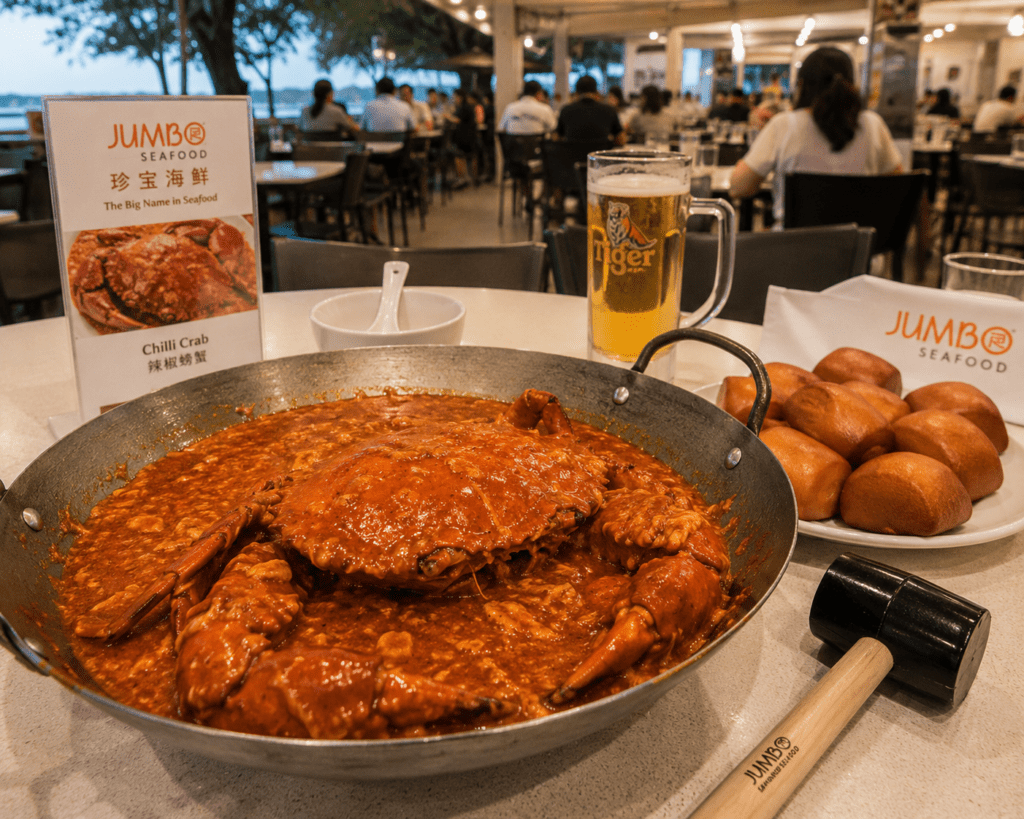
12. CHILI CRAB — Singapore’s Unofficial National Dish
Country: Singapore Best city: Singapore Type: Restaurant Price: SGD 50–100 per crab (market price)
What is it? Mud crabs stir-fried in a wok with a sauce made from tomatoes, chilli paste, fermented black beans, egg, and a slightly sweet, slightly sour base that is uniquely Singapore. The sauce is neither properly fiery nor properly sweet — it occupies a specific flavour territory that has no exact equivalent anywhere else. There’s absolutely nothing in the world quite like Chili Crab in Singapore. Served with fried mantou buns for dipping in the sauce.
Why you must eat it: The sauce. The sauce is the reason. The crab is sweet and fresh and important, but the sauce — the orange-red, slightly spicy, egg-ribboned, utterly specific sauce — is the thing. You eat the crab, then you eat the sauce with the mantou bun, and then you order more mantou just for the sauce.
Best places to try:
- Jumbo Seafood, Singapore: 1206 East Coast Parkway, #01-07/08, East Coast Seafood Centre — the most consistently recommended.
- No Signboard Seafood, Singapore: 414 Geylang Road — the challeng to Jumbo’s position and worth the comparison.
- Long Beach Seafood, Singapore: Multiple locations — the claim to have invented the dish.
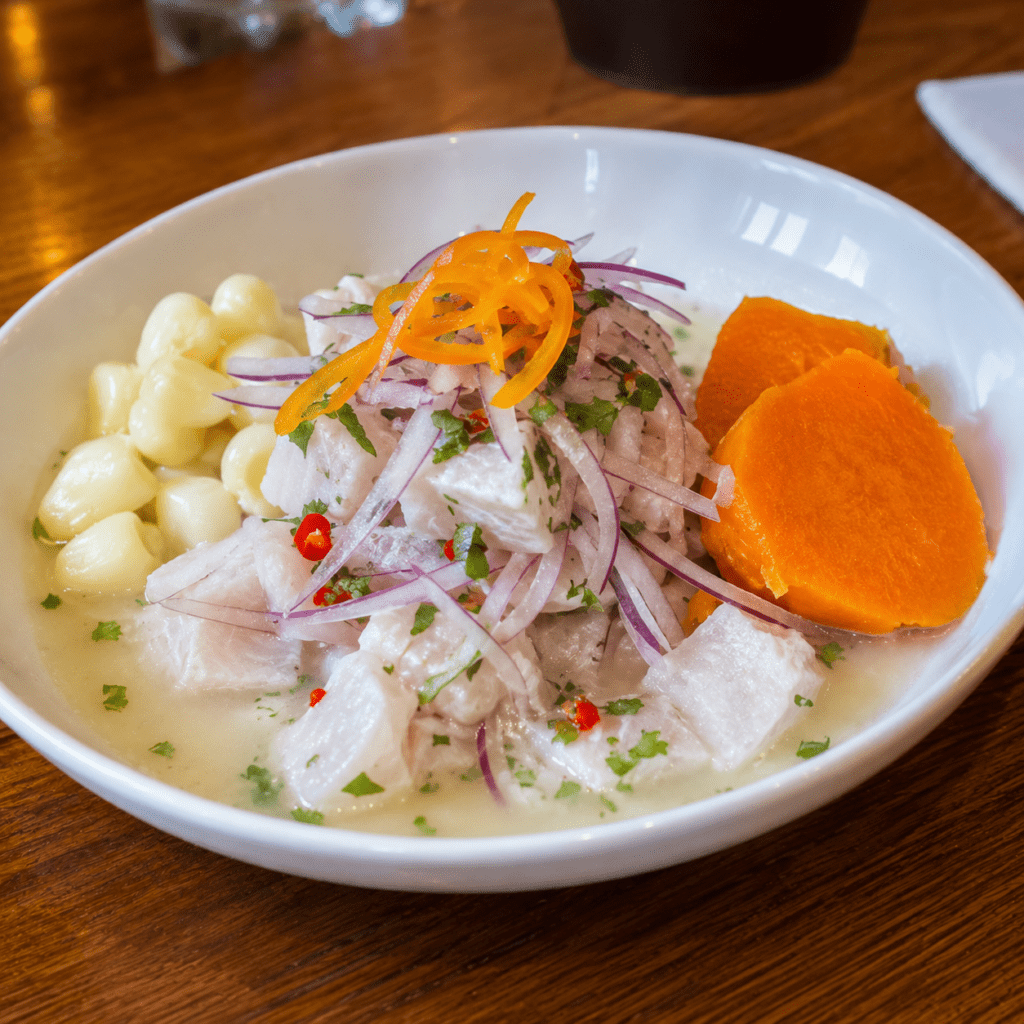
13. CEVICHE — Peru’s Acid-Bright National Dish
Country: Peru Best city: Lima | Coastal Peru Type: Restaurant / Street food Price: $5–20
What is it? Fresh raw fish (usually sea bass/corvina or sole) cut into cubes and “cooked” in lime juice — the acid denatures the proteins in the fish, giving it a texture similar to cooked fish without heat. Seasoned with ají amarillo (yellow chilli), red onion thinly sliced, fresh coriander, and salt. Served with choclo (giant corn kernels), camote (sweet potato), and cancha (toasted corn). The lime juice from the bottom of the bowl is called leche de tigre (tiger’s milk) and is consumed as the final, concentrated reward.
Why you must eat it: Because Lima is one of the world’s great food cities (three restaurants in the World’s 50 Best simultaneously in recent years), and ceviche is where that food culture was born. The combination of acid, chilli, and perfectly fresh fish is bright and precise in a way that feels uniquely South American.
Best places to try:
- La Mar, Lima: Av. La Mar 770, Miraflores, Lima — Chef Gastón Acurio’s cevichería. The reference standard.
- El Mercado, Lima: Hipólito Unanue 203, Miraflores — slightly more relaxed, equally excellent.
- Any market cevichería in Lima at lunchtime — ceviche is a lunch dish; it’s rarely served for dinner in Peru.
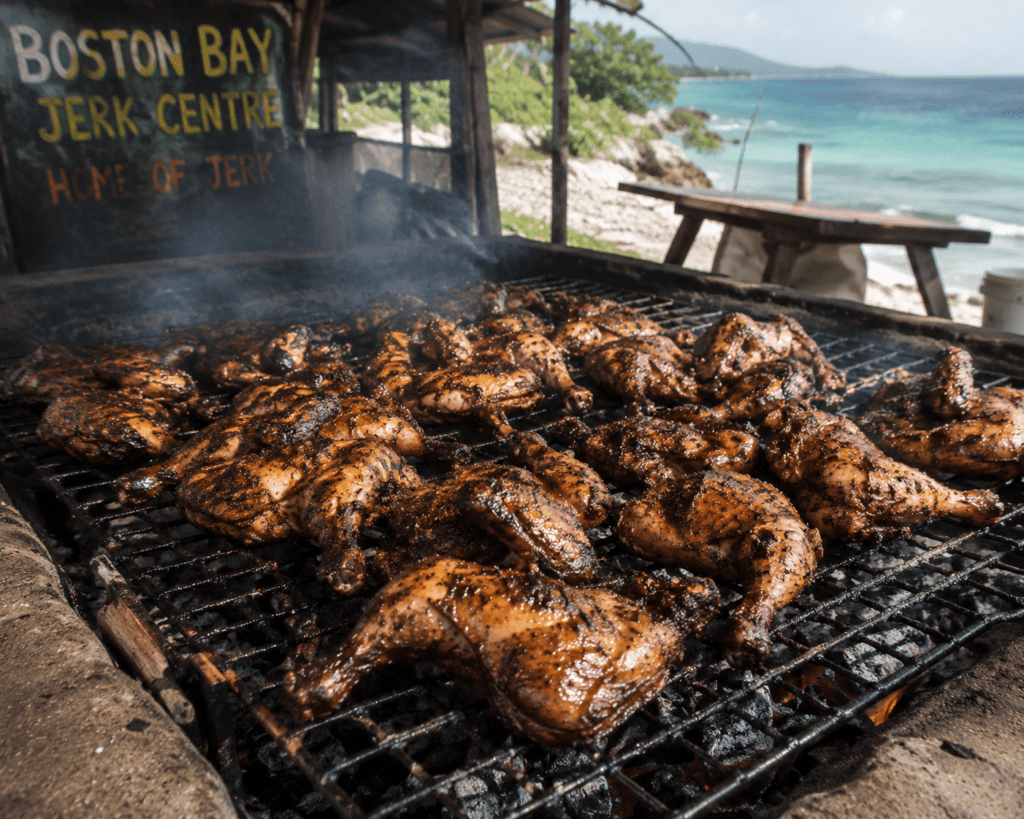
14. JERK CHICKEN — Jamaica’s Wood-Smoke Glory
Country: Jamaica Best city: Boston Bay (Portland Parish) — the birthplace | Kingston Type: Street food Price: $5–12
What is it? Chicken marinated in a paste of Scotch bonnet chillies, allspice, thyme, ginger, garlic, spring onion, and cinnamon — then slow-cooked over a pit of pimento wood (allspice tree wood) for 2–3 hours. The pimento wood smoke is the flavour element that cannot be replicated outside Jamaica — it adds a specific aromatic quality that distinguishes genuine jerk from all imitations.
Why you must eat it: Because the Scotch bonnet heat is real and the pimento smoke is irreplaceable and the chicken — juicy inside, charred outside, with the marinade forming a crust — is one of the great flavour experiences available from a roadside pit grill anywhere in the world.
Best places to try:
- Boston Bay, Portland Parish, Jamaica: The original location — roadside pits on the beach, eaten on paper with hard dough bread and festival (fried sweet dough). No addresses because the best ones don’t have them.
- Scotchies, Montego Bay: Located on the main highway between Montego Bay and Falmouth. The most celebrated name in Jamaican jerk tourism.
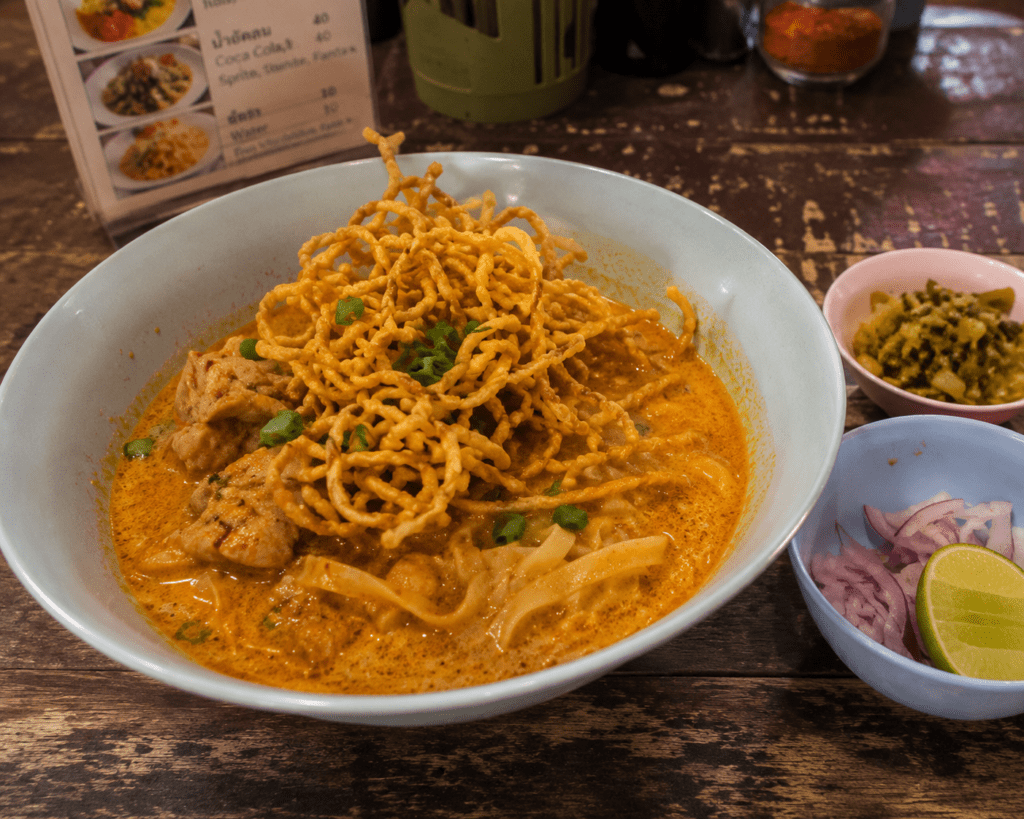
15. KHAO SOI — Northern Thailand’s Hidden Treasure
Country: Thailand Best city: Chiang Mai Type: Restaurant Price: 60–120 THB ($1.75–3.50)
What is it? Khao Soi is a northern Thai curry noodle soup — a rich, slightly sweet coconut milk curry broth with egg noodles (both soft, submerged in the broth AND crispy, deep-fried on top), served with your choice of protein (chicken thigh, beef, or tofu). Garnished with pickled mustard greens, shallots, lime, and chilli oil. It’s a Burmese-influenced dish from the Shan State that migrated into northern Thailand’s Chiang Mai-Chiang Rai corridor.
Why you must eat it: Because it combines every texture simultaneously (crispy and soft noodles, tender meat) and every flavour simultaneously (sweet coconut, sour lime, salty broth, hot chilli) in one bowl. Also because most people visiting Thailand don’t go to Chiang Mai specifically for Khao Soi and they should.
Best places to try:
- Khao Soi Khun Yai, Chiang Mai: 90/1 Sirimangkalanajarn Road — widely considered the benchmark. Cash only, no English menu, point at the pot.
- Khao Soi Islam, Chiang Mai: Near Charoenrat Road bridge — the Muslim community version, beef-based, exceptional.
- Khao Soi Maesai (multiple): Chiang Mai’s oldest khao soi stalls near the Sunday walking street.
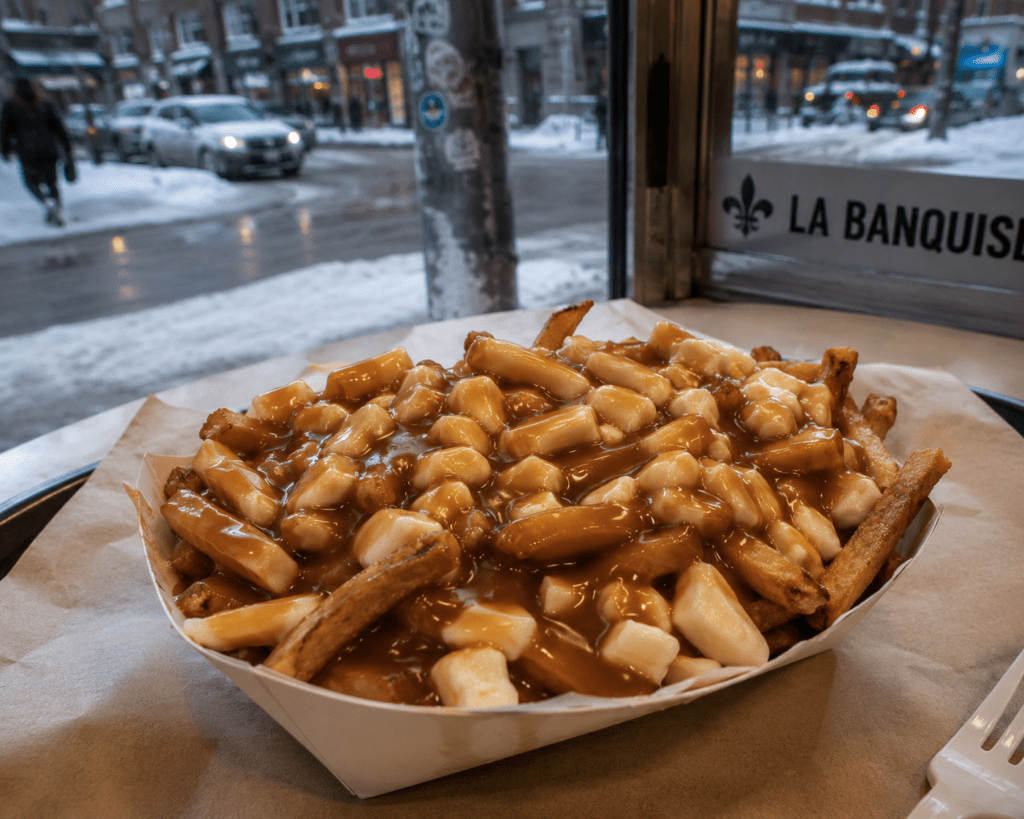
16. POUTINE — Canada’s National Comfort Food
Country: Canada Best city: Montreal (Quebec origin) Type: Street food / Restaurant Price: CAD 8–18 ($6–13)
What is it? Poutine includes french fries and cheese curds topped with traditional brown chicken gravy. The cheese curds must be fresh — they squeak against your teeth, which is the correct experience and not a malfunction. The gravy must be hot enough to slightly melt the curds without dissolving them. The fries must be crisp enough to hold up under the gravy without becoming mush. This is more precision engineering than it looks.
Why you must eat it: Because it sounds simple and tastes like a warm room on a cold day. Quebec winters created this dish out of necessity and Quebec summers could not un-create it because it was too good.
Best places to try:
- La Banquise, Montreal: 994 Rue Rachel Est — open 24 hours, 35 varieties of poutine, the Montreal institution.
- Au Pied de Cochon, Montreal: 536 Duluth Ave E — Chef Martin Picard’s foie gras poutine is either the greatest thing or the most excessive thing, depending on your position.
- Smoke’s Poutinerie (chain): Multiple Canadian cities for consistent quality anywhere.
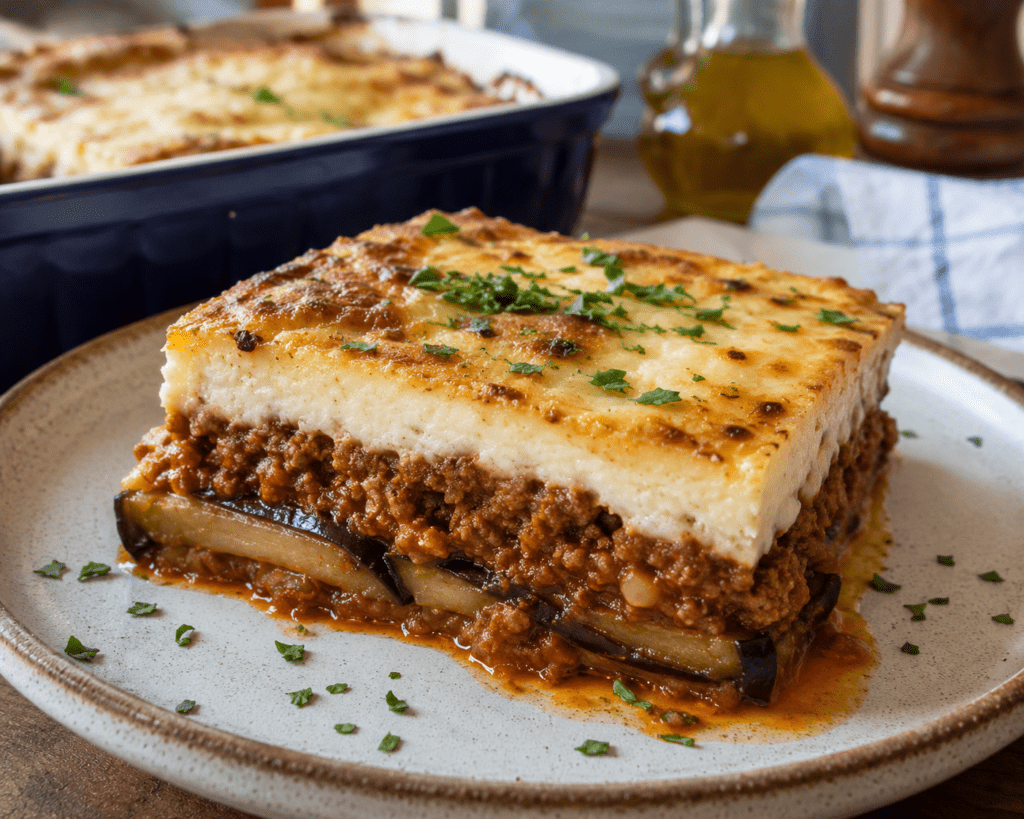
17. MOUSSAKA — Greece’s Answer to Everything
Country: Greece Best city: Athens | Thessaloniki Type: Restaurant Price: €10–18
What is it? Moussaka is the Greek answer to the Italian lasagne. Layers of eggplant (aubergine), spiced minced lamb with cinnamon and allspice, and a thick béchamel sauce baked until the top is golden brown. The result is rich, slightly sweet from the cinnamon, and deeply satisfying in the way that only slow-cooked, oven-baked dishes can be.
Why you must eat it: Because moussaka done well is one of the most underrated comfort food dishes in European cooking. The cinnamon in the meat — the specifically Greek use of warm spice in a savoury preparation — is the flavour distinction that separates it from any ragu-based dish.
Best places to try:
- Manesis Restaurant, Athens: Christou Lada 3, Monastiraki — traditional taverna, excellent moussaka.
- Mama Roux, Athens: Iosiph Ton Rogon 2 — the kitchen here approaches traditional recipes with care.
- Any local taverna in the Plaka or Monastiraki neighbourhood serving the daily special (the moussaka that’s been in the oven since morning).
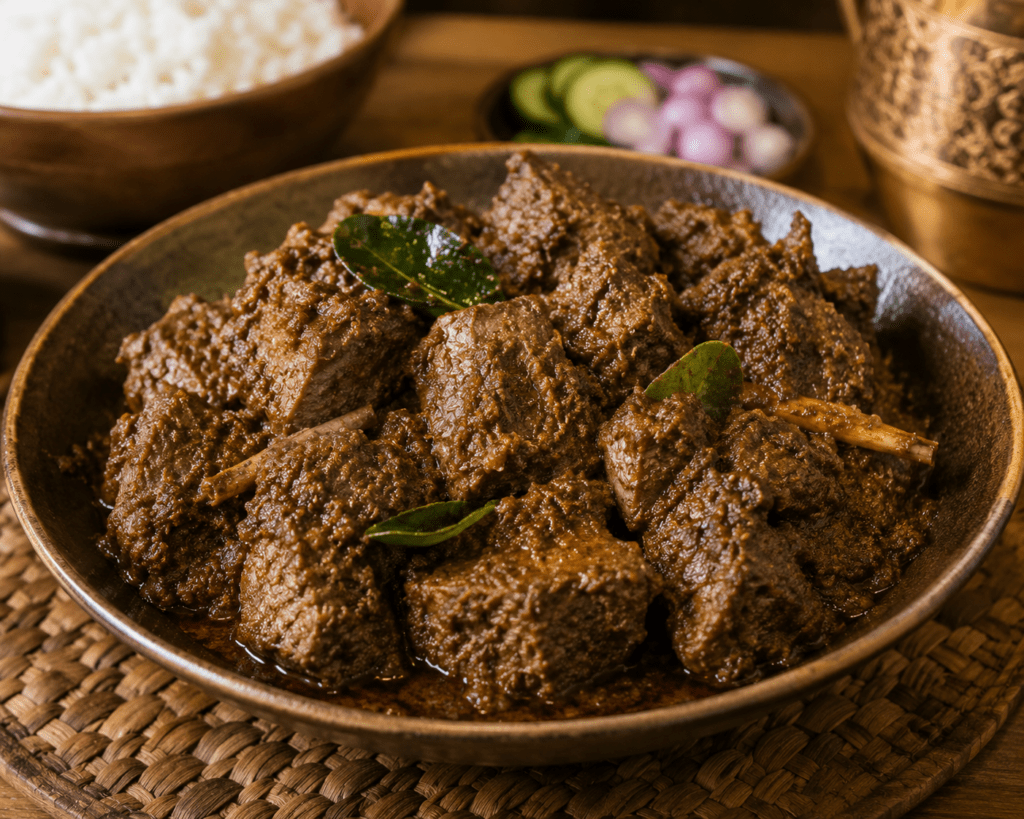
18. BEEF RENDANG — Indonesia’s Slow-Cooked Masterpiece
Country: Indonesia (Minangkabau, West Sumatra origin) Best city: Padang (Sumatra) | Kuala Lumpur (Malaysian version also excellent) Type: Restaurant / Home cooking Price: IDR 30,000–80,000 ($2–5)
What is it? Beef dry-cooked in a spice paste of lemongrass, galangal, turmeric, ginger, chilli, shallots, and garlic, plus coconut milk — then simmered for 3–4 hours until the coconut milk is completely absorbed and caramelised. The result is not a curry. The result is almost-dry meat coated in a concentrated, deeply spiced, slightly sweet glaze. CNN Travel’s World’s 50 Most Delicious Foods poll named rendang #1. That is not wrong.
Why you must eat it: Because the patience required to make it is evident in every bite. The lemongrass is there. The galangal is there. The dried chilli heat builds slowly. The coconut caramelises into something that is sweet and nutty and complex. This is a dish that respects your time by having spent enormous amounts of its own.
Best places to try:
- Restoran Sederhana, Padang, Sumatra: Multiple locations — the source. Padang restaurants work on a “bring everything to the table” system and you pay for what you eat.
- Any Padang restaurant in Indonesia or Malaysia — the format is standardised enough that quality is consistent.
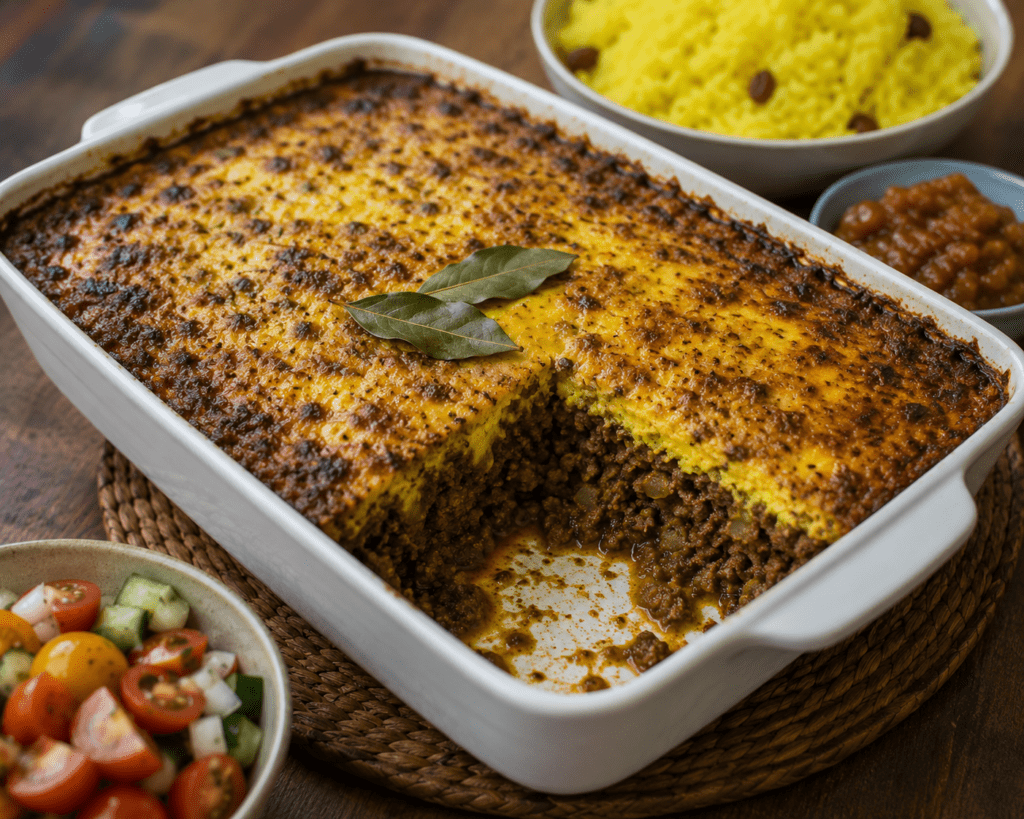
19. BOBOTIE — South Africa’s Cape Malay Classic
Country: South Africa Best city: Cape Town Type: Restaurant / Home cooking Price: ZAR 90–180 ($5–10)
What is it? Bobotie is a Cape Malay dish of minced meat (usually beef or lamb) spiced with curry leaves, turmeric, ginger, and apricot jam, topped with a custard of egg and milk baked until set and golden. Served with yellow rice (turmeric-flavoured) and sambal of tomato and onion. It is simultaneously sweet, savoury, slightly curried, and custard-topped. Nothing else in the world is quite like it.
Why you must eat it: Because South Africa is criminally underrated as a food destination. South Africa is probably the most underrated culinary area in the world and should have more Michelin stars than restaurants. Bobotie is the dish that tells the story of Cape Malay cooking — the Malay community brought to the Cape by the Dutch East India Company in the 17th century, whose food tradition merged with local ingredients to create something completely original.
Best places to try:
- Biesmiellah Restaurant, Cape Town: Upper Wale Street, Bo-Kaap — in the heart of the Cape Malay neighbourhood, the most authentic version.
- The Shortmarket Club, Cape Town: 88 Shortmarket St — a more refined interpretation.
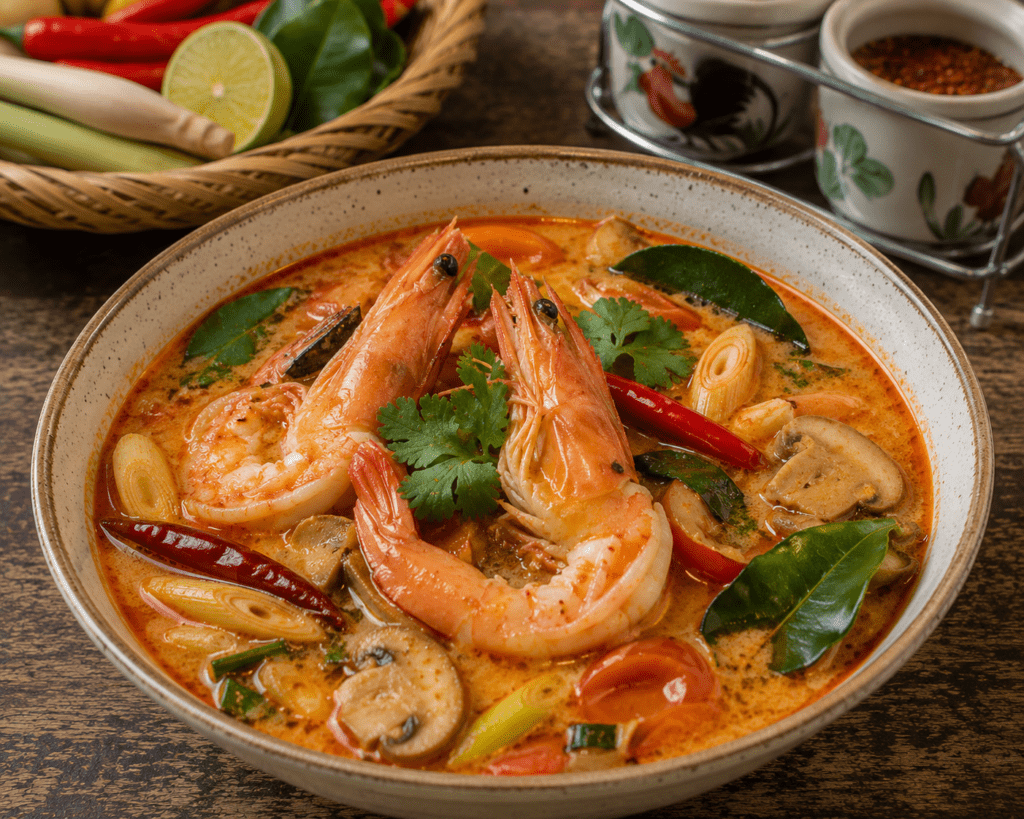
20. TOM YUM GOONG — Thailand’s Most Aromatic Soup
Country: Thailand Best city: Bangkok Type: Restaurant Price: 80–200 THB ($2.50–6)
What is it? A hot and sour Thai soup made with lemongrass, kaffir lime leaves, galangal, fish sauce, lime juice, and fresh chilli — with large prawns (goong) as the protein. The soup is simultaneously hot from the chilli, sour from the lime, aromatic from the lemongrass, and savoury from the fish sauce. A rich version (tom yum goong nam khon) adds coconut milk and chilli paste, making it creamy and deeper.
Why you must eat it: Because the aromatics in this soup — the lemongrass and kaffir lime and galangal — are irreplaceable. You cannot make tom yum goong in London with lemon instead of kaffir lime and call it the same dish. It is structurally different. Eating the real version in Bangkok explains every inferior version you’ve had elsewhere by contrast.
Best place to try:
- Jeh O Chula, Bangkok: 113 Charoen Krung Road — the late-night institution famous for its tom yum mama noodles and seafood tom yum. 11pm–5am hours. Always a queue.
21. SUSHI OMAKASE — Japan’s Most Intimate Dining
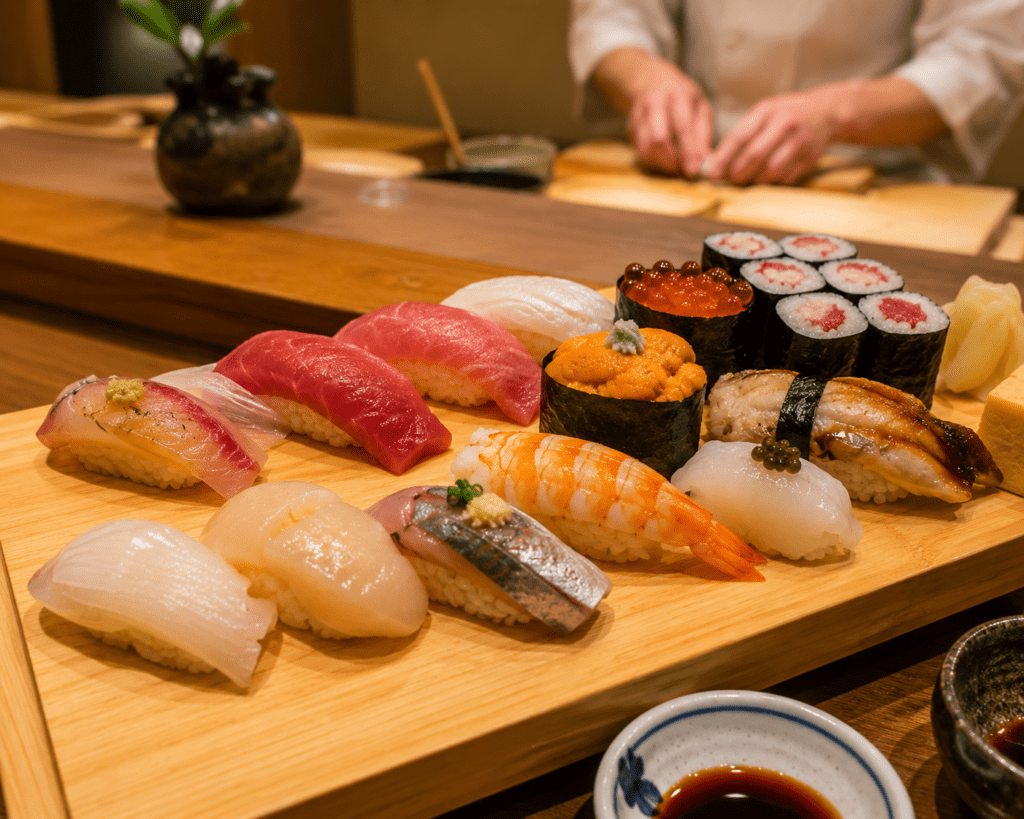
Country: Japan Best city: Tokyo (Shinjuku, Ginza) Type: Fine dining Price: ¥15,000–80,000 ($100–550+) depending on restaurant tier
What is it? Omakase means “I leave it to you” — the chef selects and serves each piece of sushi in sequence, one at a time, making decisions based on the best fish available that day, the season, and their reading of the guest. At the highest level, the chef stands 18 inches from you across a hinoki wood counter. You eat each piece immediately after it’s placed. 12–20 courses. The shari (vinegared rice) is warm, not cold.
Why you must eat it: Because at its best, omakase sushi is the most intimate fine dining available anywhere in the world. The chef-to-guest ratio is 1:1 or 1:2. The fish is the best available that morning from Toyosu Market. The rice has been seasoned and formed by someone who has done nothing else for twenty years. You eat with your hands, because that is correct. It is extraordinary.
Best places to try:
- Sukiyabashi Jiro (Honten), Tokyo: B1F Tsukamoto Sogyo Building, 2-15 Ginza — three Michelin stars, 20-minute meals, legendary. Book through your hotel concierge.
- Sushi Saito, Tokyo: Reservation only through introduction.
- Sushi Yoshitake, Tokyo: 3-chome-8-7 Ginza, Chuo — three Michelin stars, accessible via direct reservation.
22. MOROCCAN TAGINE — The Slow-Cooked North African Poetry
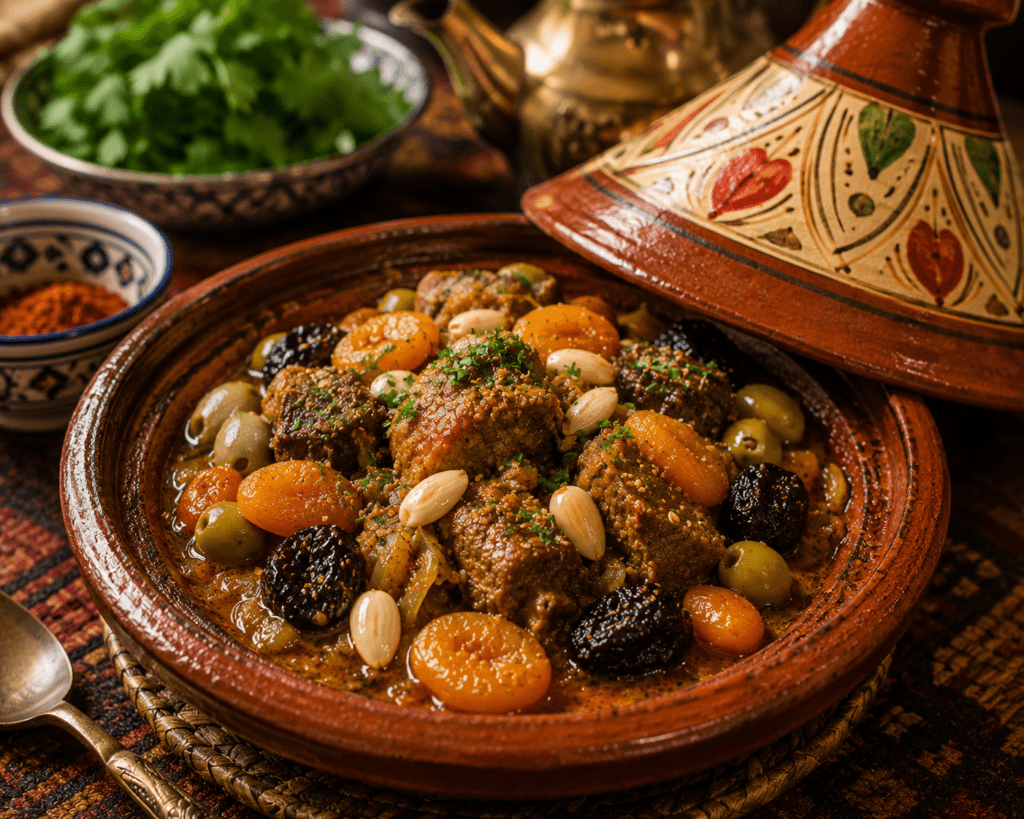
Country: Morocco Best city: Marrakech | Fez Type: Restaurant Price: MAD 80–180 ($8–18)
What is it? Steamed to perfection, a tagine is big bursts of flavour mellowed through time, and when you have one that’s just right, it’s as satisfying as anything else. Meat (lamb, chicken, or beef), preserved lemons, olives, and vegetables slow-cooked in the eponymous conical clay pot that traps steam and circulates it back through the food. The preserved lemon and olive combination is the North African flavour signature — salty, sour, deeply savoury against tender meat.
Best places to try:
- Dar Yacout, Marrakech: 79 Sidi Ahmed Soussi — the traditional Moroccan riad dining experience with tagine at its centre.
- Le Jardin, Marrakech: 32 Souk Sidi Abdelaziz, Medina — the courtyard garden setting is perfect for lunch tagine.
23. CACIO E PEPE — Rome’s Most Difficult Simple Dish
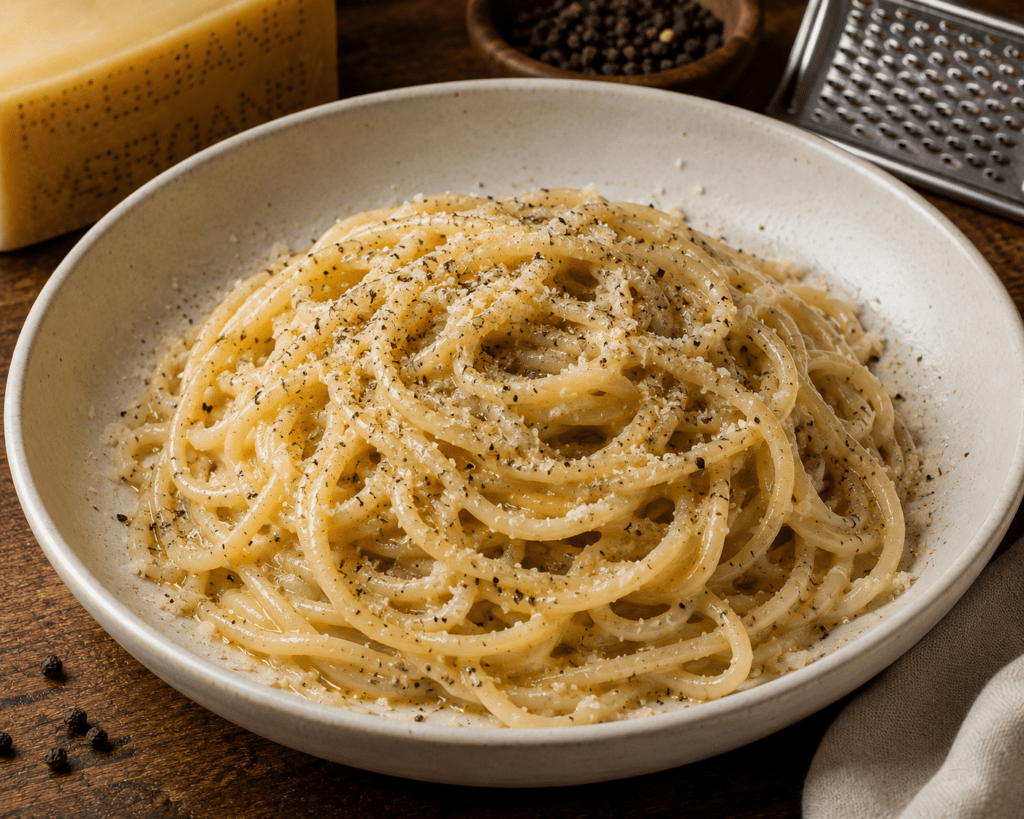
Country: Italy Best city: Rome Type: Restaurant Price: €10–18
What is it? Pasta (traditionally tonnarelli or spaghetti) tossed with aged Pecorino Romano cheese and freshly ground black pepper — nothing else. No cream, no butter, no garlic. Three ingredients. The technique makes it: the cheese must be grated fine and added off the heat with pasta water to create an emulsification rather than a clump. When done correctly, it coats the pasta in a silky, peppery, intensely cheesy sauce. When done incorrectly (which is most of the time), the cheese clumps.
Why you must eat it: Because the restraint required to make three ingredients this extraordinary is the definition of Italian cooking confidence. And because Rome is the only city where you’ll eat the version that justifies the dish’s reputation.
Best places to try:
- Tonnarello, Rome: Via della Paglia 1/2/3, Trastevere — the neighbourhood trattoria version.
- Roscioli, Rome: Via dei Giubbonari 21/22 — the more celebrated, more expensive version using aged Pecorino Sardo.
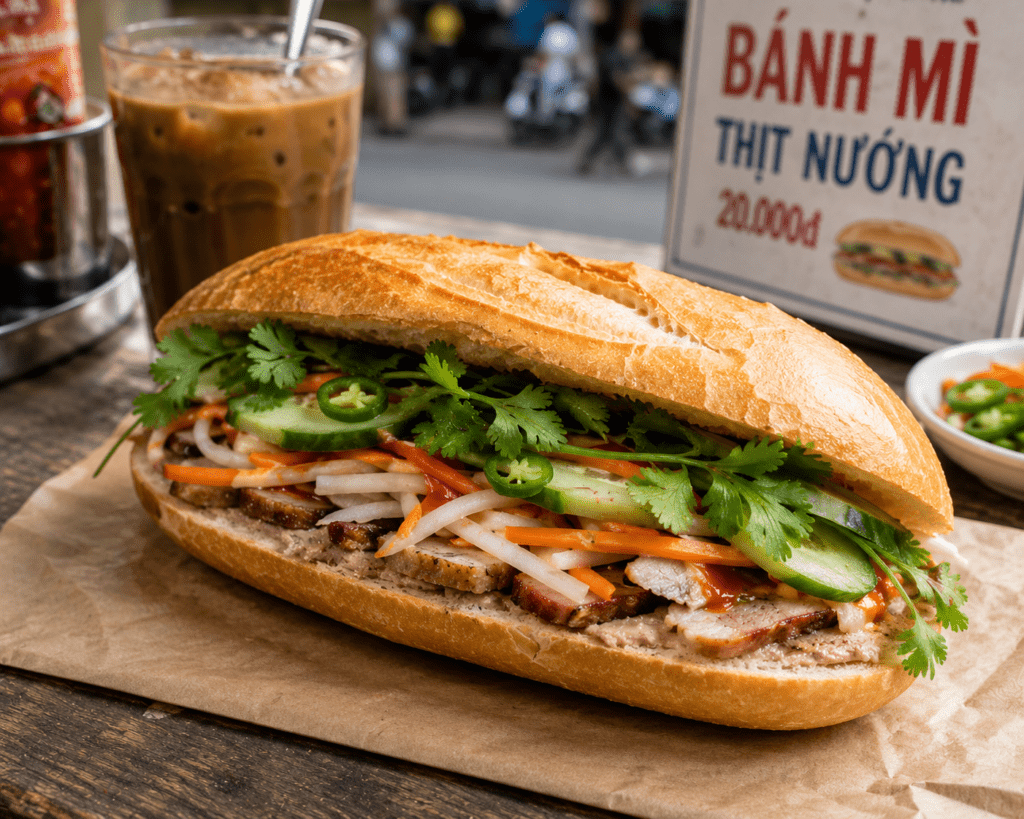
24. BÁNH MÌ — Vietnam’s Perfect Sandwich
Country: Vietnam Best city: Hoi An | Saigon (Ho Chi Minh City) Type: Street food Price: 20,000–40,000 VND ($0.80–1.60)
What is it? The bánh mì is a French colonial legacy adapted into something uniquely Vietnamese. A baguette (lighter and crispier than the French version, made with rice flour) filled with pâté, mayonnaise, pickled daikon and carrot, cucumber, fresh coriander, spring onion, and your choice of protein — most commonly char siu pork, Vietnamese ham, or cha lua (pork sausage). Fresh chilli on the side.
Why you must eat it: Because the entire concept of a bánh mì is the entire concept of Vietnamese food — take a French colonial ingredient and make it better by adding freshness, pickled acidity, and heat. A perfect bánh mì is eaten standing, it gets your hands sticky, and it costs less than a Mumbai auto-rickshaw ride.
Best places to try:
- Bánh Mì Phương, Hoi An: 2B Phan Chau Trinh Street — Anthony Bourdain’s most celebrated bánh mì endorsement. Queue before 7:30am.
- Bánh Mì 37 Nguyễn Trãi, Saigon (HCMC): The legendary overnight bánh mì stall that operates from 11pm to dawn.
25. LAKSA — Southeast Asia’s Most Addictive Noodle Soup
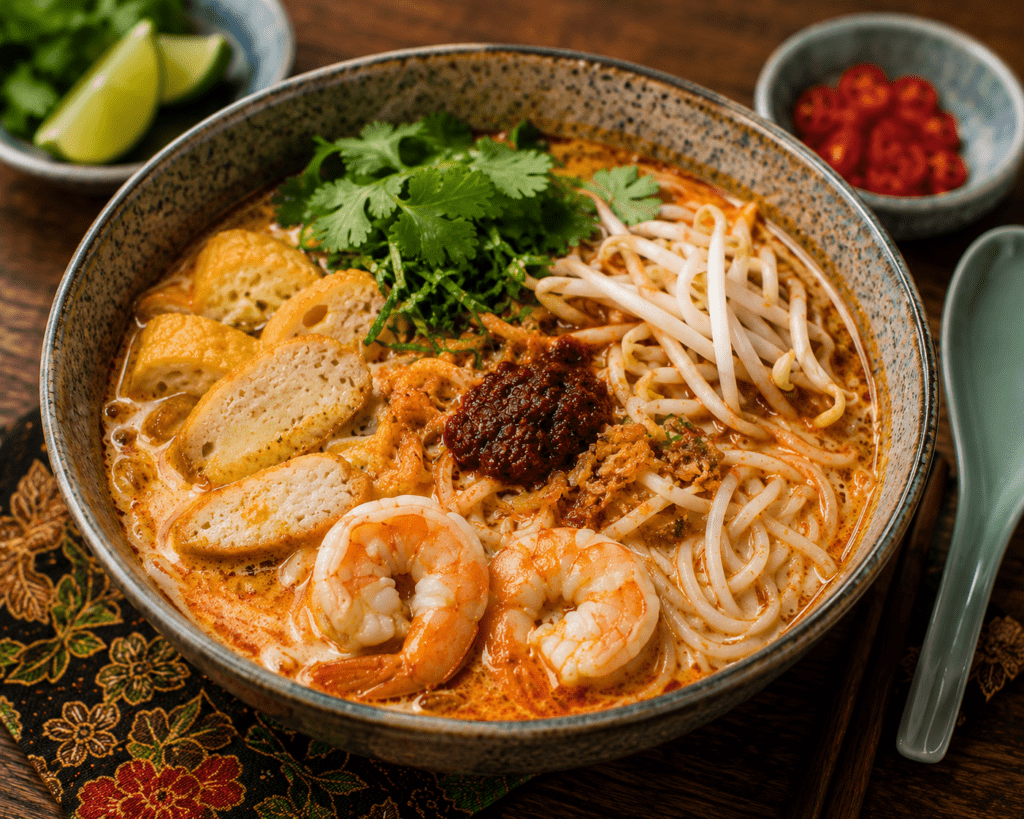
Country: Malaysia / Singapore Best city: Penang (Asam Laksa) | Singapore (Katong Laksa) Type: Street food / Restaurant Price: SGD 4–10 / MYR 8–15
What is it? Laksa comes in two main versions. Curry laksa: rice noodles in a spicy coconut milk curry broth with seafood or chicken, tofu puffs, bean sprouts, and egg. Asam laksa (Penang): rice noodles in a tamarind-based fish broth, sour and intensely flavoured, topped with flaked mackerel, cucumber, onion, mint, and pineapple — not coconut milk, not spicy in the conventional sense.
Why you must eat it: The Penang Asam Laksa is specifically extraordinary — the tamarind broth’s sourness is unlike any other noodle soup in the world. CNN Travel’s World Street Food Survey repeatedly places it in the top 10 global street foods.
Best places to try:
- Penang Road Famous Teochew Chendul, Penang (for Asam Laksa): 27 Jalan Penang, Georgetown.
- 328 Katong Laksa, Singapore: Multiple locations in the Katong/East Coast area — the Singapore curry laksa benchmark.
26. HAGGIS — Scotland’s Most Honest Food
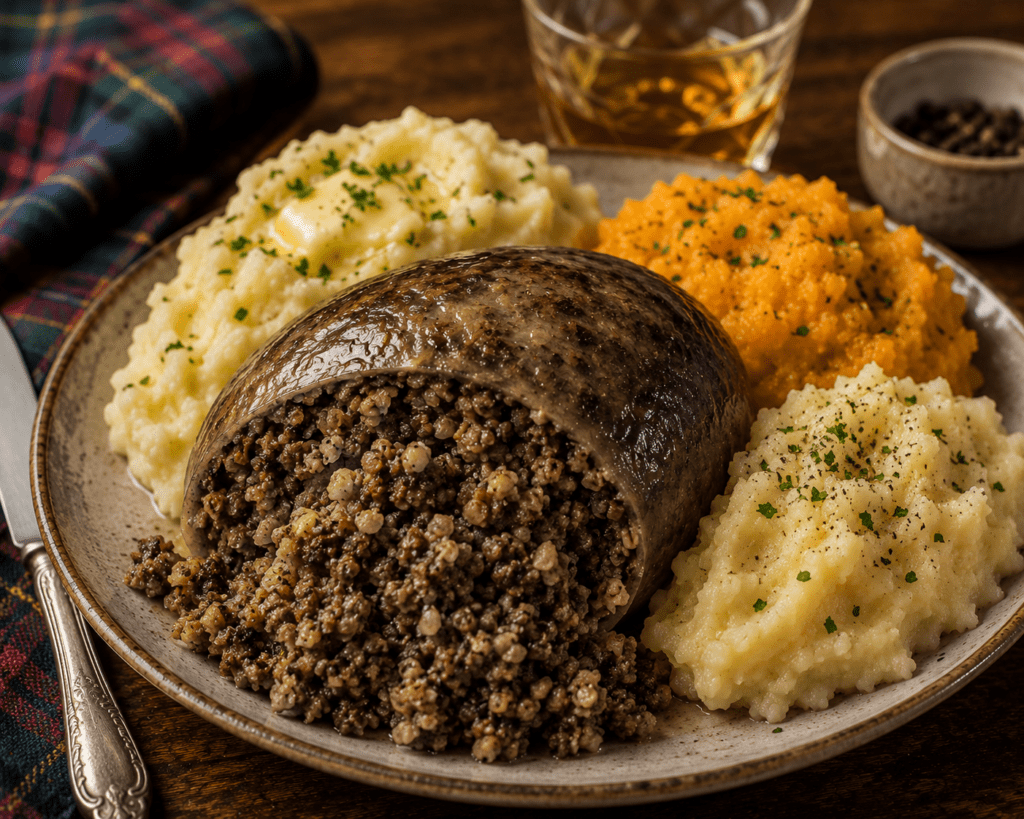
Country: Scotland Best city: Edinburgh Type: Restaurant / Pub Price: £10–18
What is it? Haggis is minced sheep offal (heart, liver, lungs) mixed with oatmeal, onion, suet, and spices, traditionally cooked in a sheep’s stomach. Served with neeps (swede/turnip) and tatties (mashed potato) — “haggis, neeps, and tatties” is the combination.
Why you must eat it: Because haggis is nutritious, genuinely delicious, and unfairly maligned. The offal smell that people fear doesn’t survive cooking. What remains is a richly spiced, slightly gamey, oatmeal-textured preparation that is warming, filling, and honest in a way that says a great deal about Scottish cooking culture.
Best places to try:
- The Witchery by the Castle, Edinburgh: Castlehill, Royal Mile — the most atmospheric Edinburgh dinner, haggis done with respect.
- Any Scottish pub on Burns Night (January 25th) — the haggis is addressed with a Robert Burns poem before eating. It is one of the most charming dining rituals in the world.
27. LECHON — The Philippines’ Greatest Occasion Food
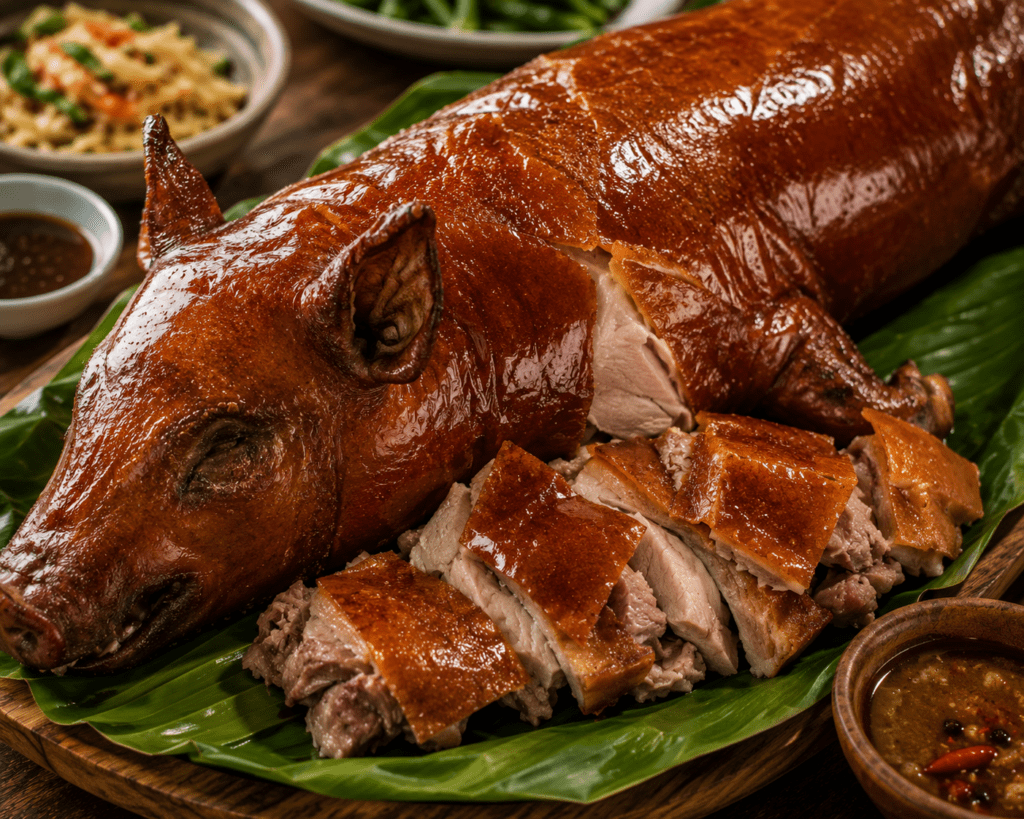
Country: Philippines Best city: Cebu Type: Festival / Restaurant Price: PHP 500–2,000 for a serving
What is it? A whole pig stuffed with lemongrass, garlic, onion, and laurel leaves, then slow-roasted on a spit over charcoal for 4–6 hours, basted continuously, until the skin is crackling and golden and the meat is juicy and fragrant from the aromatics. The Cebu version is drier-spiced and eaten without the liver sauce that Manila versions use.
Why you must eat it: Anthony Bourdain called the Cebu lechon “the best pig I’ve ever eaten.” The skin achieves a crackling quality — thin, shattering, richly flavoured — that rivals anything a Chinese restaurant does to its roast pork.
Best places to try:
- CnT Lechon, Cebu City: Osmeña Boulevard — the most famous name in Cebu lechon.
- Rico’s Lechon, Cebu: Multiple locations — the reliable alternative.
28. JOLLOF RICE — West Africa’s Most Passionate Debate
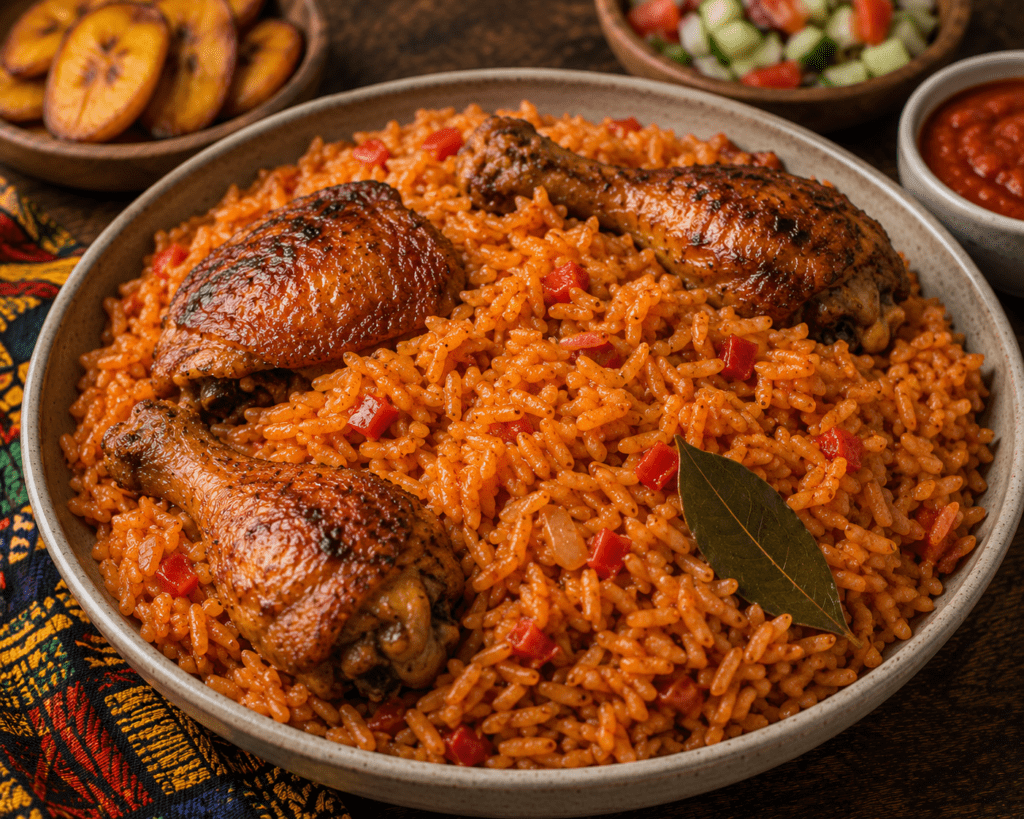
Country: West Africa (Ghana / Nigeria — the argument is ongoing) Best city: Lagos (Nigerian version) | Accra (Ghanaian version) Type: Home cooking / Restaurant Price: $3–8
What is it? Long-grain rice cooked in a tomato-pepper-onion base with stock and spices (scotch bonnet, garlic, ginger) until the rice absorbs all the liquid and develops a slightly smoked, concentrated crust at the bottom called “bottom pot” — the prize of jollof. Served with fried plantain, chicken, beef, or fish.
Why you must eat it: The jollof debate — Ghana vs Nigeria — is one of the great food arguments of the 21st century social media era. Both sides are correct that theirs is better. The only way to have a position is to eat both.
Best places to try:
- Any Nigerian home kitchen — jollof is party food, home food, everyday food. Your best version will be from someone’s grandmother.
- Nkoyo, Lagos: Victoria Island — the upscale Nigerian restaurant that takes jollof seriously.
29. DAL BAATI CHURMA — Rajasthan’s Desert Trinity
Country: India Best city: Jaipur | Jodhpur | Jaisalmer Type: Dhaba / Restaurant Price: ₹150–350
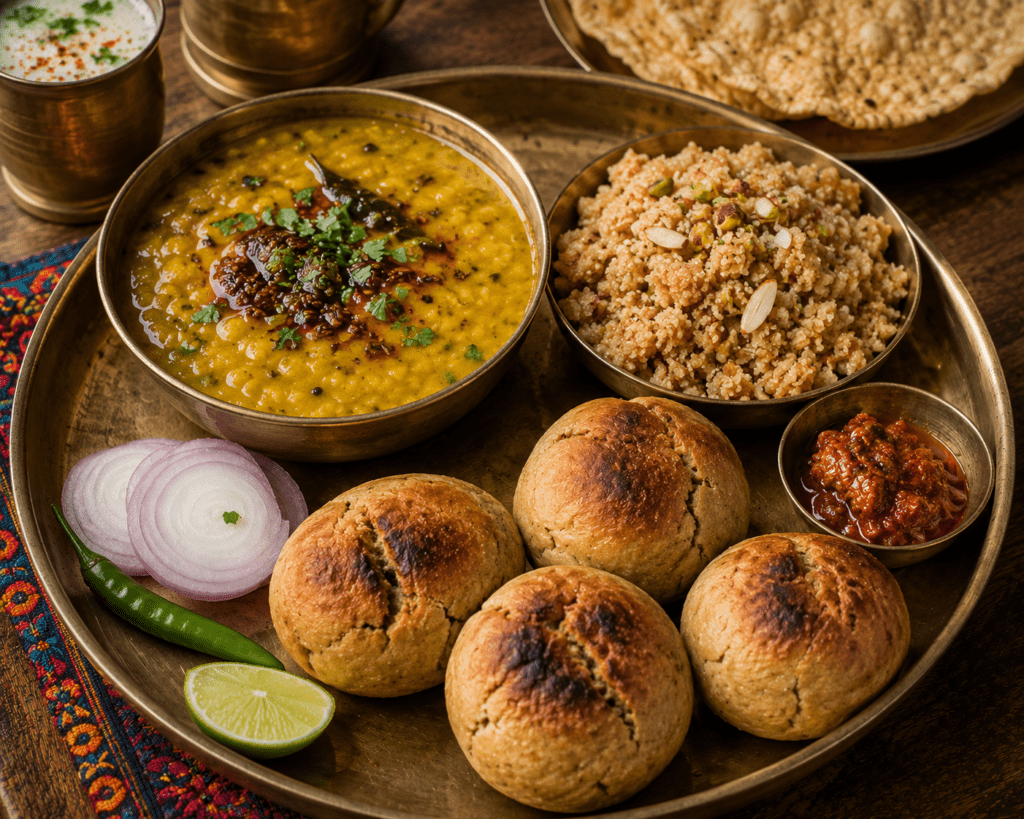
What is it? Three things in combination: Dal (five-lentil curry cooked with garlic, tomato, and specific Rajasthani spices), Baati (hard wheat dumplings baked in a sand oven or wood fire — the shell is crisp, the inside dense and dry, designed to be crushed and drowned in ghee before eating), and Churma (the baati that’s been crumbled, mixed with jaggery and ghee into a coarse sweet — the dessert element that’s served alongside the savoury).
Why you must eat it: Because the Rajasthani landscape created this food — the baati was originally baked in sand heated by the sun, which tells you something about the ingenuity required to create a cuisine in a desert. The combination of all three, with enough ghee to make a doctor briefly consider career change, is one of India’s great meals.
Best places to try:
- Chokhi Dhani, Jaipur: Village-theme resort 20km from Jaipur city — the tourist version but genuinely excellent and atmospheric.
- Any roadside dhaba outside Jaipur on the Ajmer/Jodhpur highway — the village versions are cheaper, smaller, and better.
30. FISH AND CHIPS — Britain’s Most Honest Meal
Country: United Kingdom Best city: Whitby | Aldeburgh | London (for urban reference) Type: Street food Price: £6–14
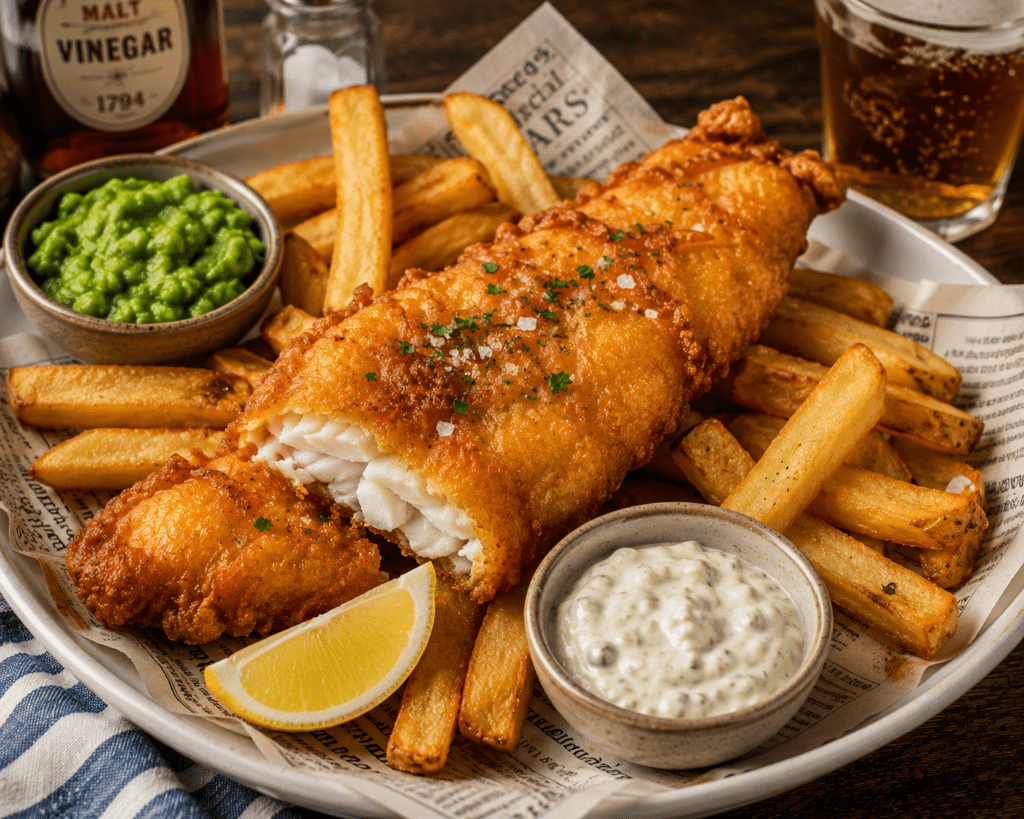
What is it? Cod or haddock fillets dipped in batter (flour, water, sometimes beer or vinegar) and deep-fried until the batter is golden and crackling, served with thick-cut chips (fries), mushy peas, and malt vinegar. Eaten from paper, standing up, ideally near the sea.
Why you must eat it: Because fish and chips from a proper chip shop in a coastal British town is the best version of comfort food that requires absolutely no pretension to deliver. The batter should shatter. The fish inside should be flaky and white and steaming. The chips should be soft inside and crisp-edged outside. Malt vinegar is mandatory.
Best places to try:
- Magpie Café, Whitby: 14 Pier Road, Whitby, North Yorkshire — frequently named the best fish and chips in England.
- The Golden Galleon, Aldeburgh, Suffolk: On the seafront, open since the 1960s.
31. FEIJOADA — Brazil’s National Soul Food
Country: Brazil Best city: Rio de Janeiro | São Paulo Type: Restaurant Price: BRL 30–80 ($6–16)
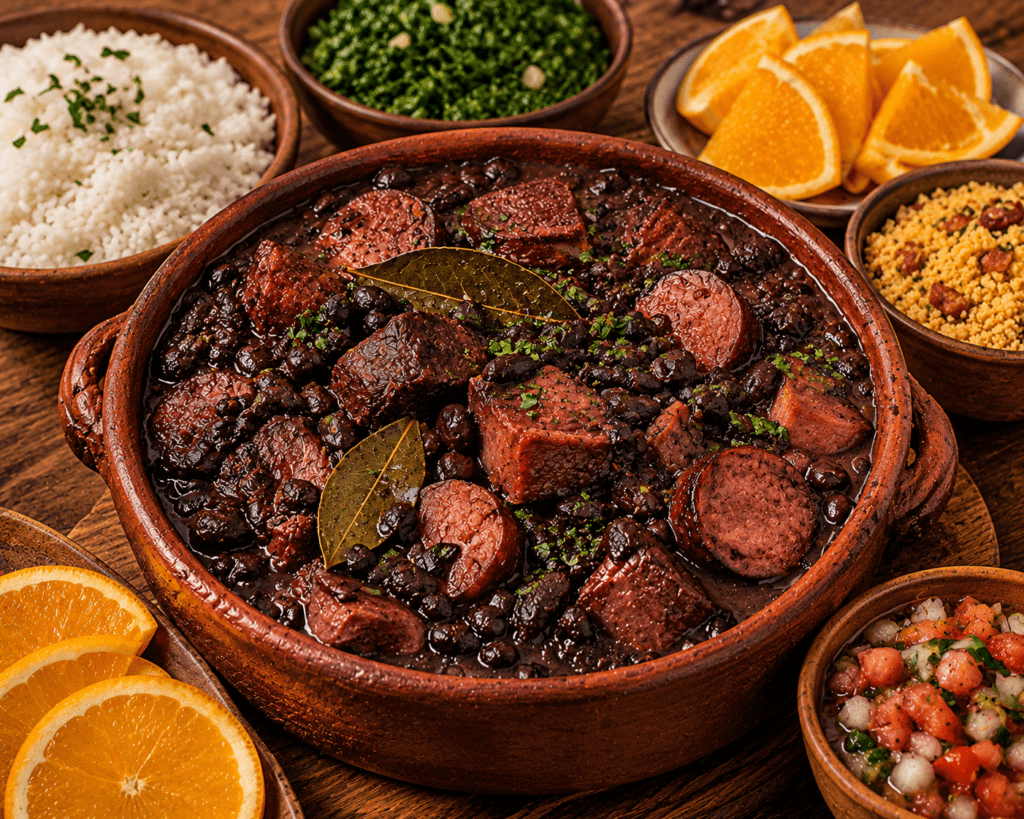
What is it? A rich black bean stew cooked with various cuts of pork — smoked sausage, salted pork ribs, pig’s ear, foot, and tail — seasoned with garlic and bay leaves. Served with white rice, farofa (toasted cassava flour), collard greens fried with garlic, and orange slices. The orange is not decorative — it cuts the richness of the stew.
Why you must eat it: Because feijoada is Saturday lunch in Brazil — a social institution, a reason to gather, the meal that takes all morning to prepare and all afternoon to recover from. Eating it in the right place (a traditional Rio restaurant on a Saturday) is to understand Brazil’s food culture as communal, abundant, and deeply satisfying.
Best places to try:
- Casa da Feijoada, Rio de Janeiro: Prudente de Morais 10, Ipanema — serves feijoada every day (unusual — most places only on Saturdays and Wednesdays).
- Bar do Mineiro, Santa Teresa, Rio de Janeiro: The neighbourhood classic.
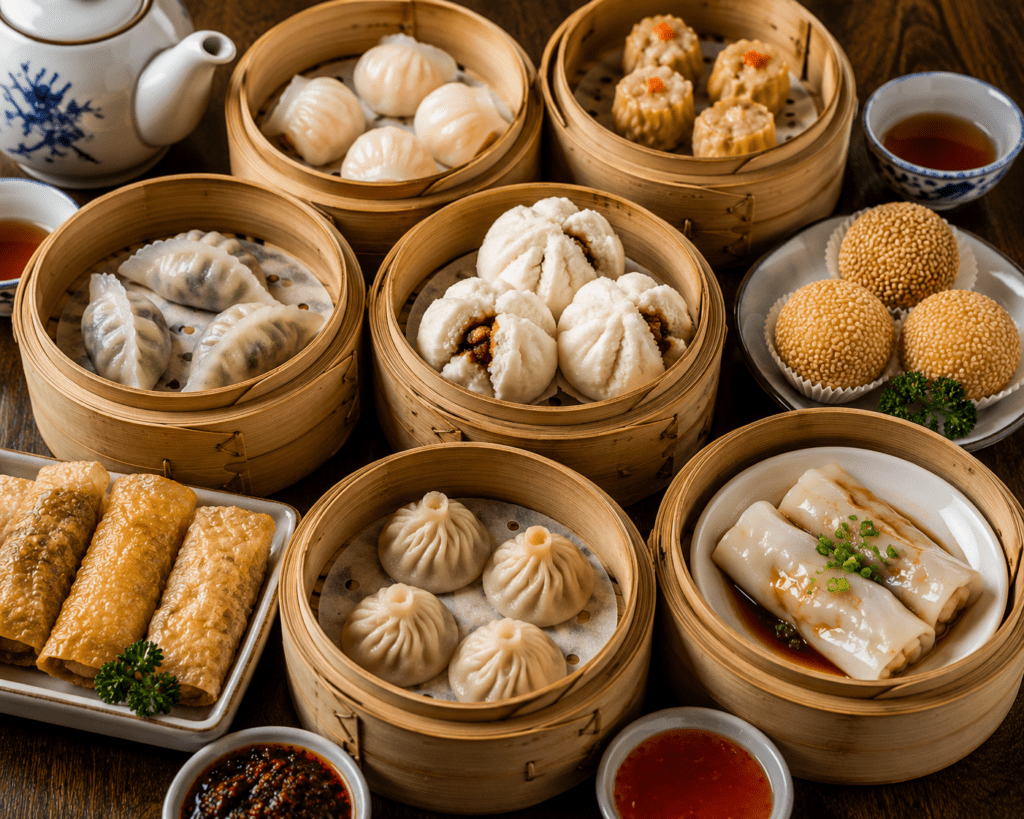
32. DIM SUM — Hong Kong’s Weekend Religion
Country: China / Hong Kong Best city: Hong Kong | Guangzhou Type: Restaurant Price: HKD 30–60 per basket ($4–8)
What is it? A collection of small dishes — dumplings, steamed buns, rice rolls, turnip cakes, egg tarts — served in bamboo steamers or on small plates. Traditionally eaten at yum cha (tea drinking) — you order dim sum alongside tea on Sunday morning with family. The trolley service (carts pushed through the restaurant, dishes called out by the server) is the traditional format; many restaurants now use order sheets.
Why you must eat it: The quality ceiling on dim sum in Hong Kong is higher than anywhere else in the world. The har gau (prawn dumplings) skin should be thin and slightly translucent, the prawn filling should be whole pieces not paste, the dumpling should be eaten immediately. The char siu bao (barbecue pork bun) should tear open with steam. The egg tart shell should shatter.
Best places to try:
- Tim Ho Wan, Hong Kong: Multiple locations — the Michelin-starred dim sum chain that delivers extraordinary quality at accessible prices. The baked BBQ pork bun here is the most famous single dim sum item in the world.
- Lung King Heen, Four Seasons Hong Kong: Three Michelin stars. The view of Victoria Harbour through the window while eating the finest har gau available.
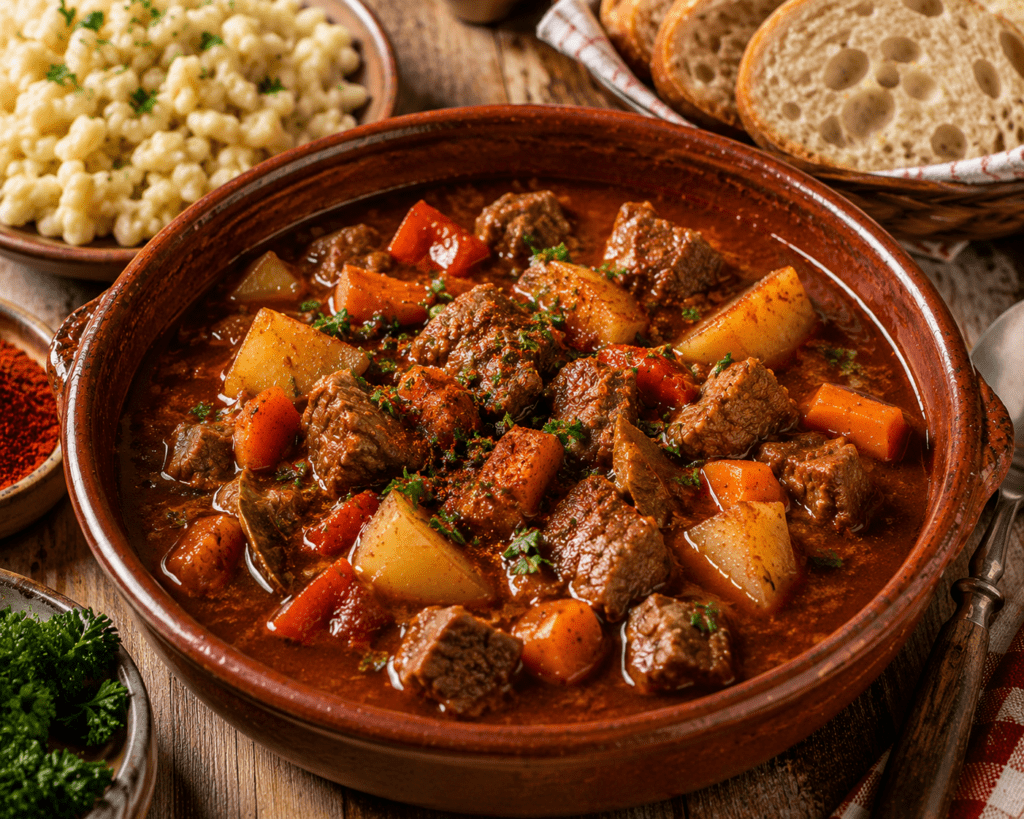
33. HUNGARIAN GOULASH — The Paprika-Stained Heart of Central Europe
Country: Hungary Best city: Budapest Type: Restaurant Price: HUF 2,500–5,500 ($7–15)
What is it? A beef stew — chunks of beef shin and onion slow-cooked with a generous quantity of Hungarian sweet paprika (the good kind, from Kalocsa or Szeged), caraway seeds, garlic, and beef stock. Served with egg noodles (csipetke) or bread. The paprika quantity is what makes this distinct from other beef stews — it’s not spice, it’s flavour volume.
Why you must eat it: Because Hungary’s paprika tradition is one of the most underrated ingredients in European cooking, and goulash is where it most completely expresses itself. A good Budapest goulash is a lesson in what paprika actually is — not a garnish but a flavouring agent capable of adding depth and complexity at the level of a slow-cooked sauce.
Best places to try:
- Menza, Budapest: Liszt Ferenc tér 2 — excellent modern Hungarian interpretation.
- Bock Bistro, Budapest: Erzsébet körút 43-49 — wine-paired Hungarian food at a high level.
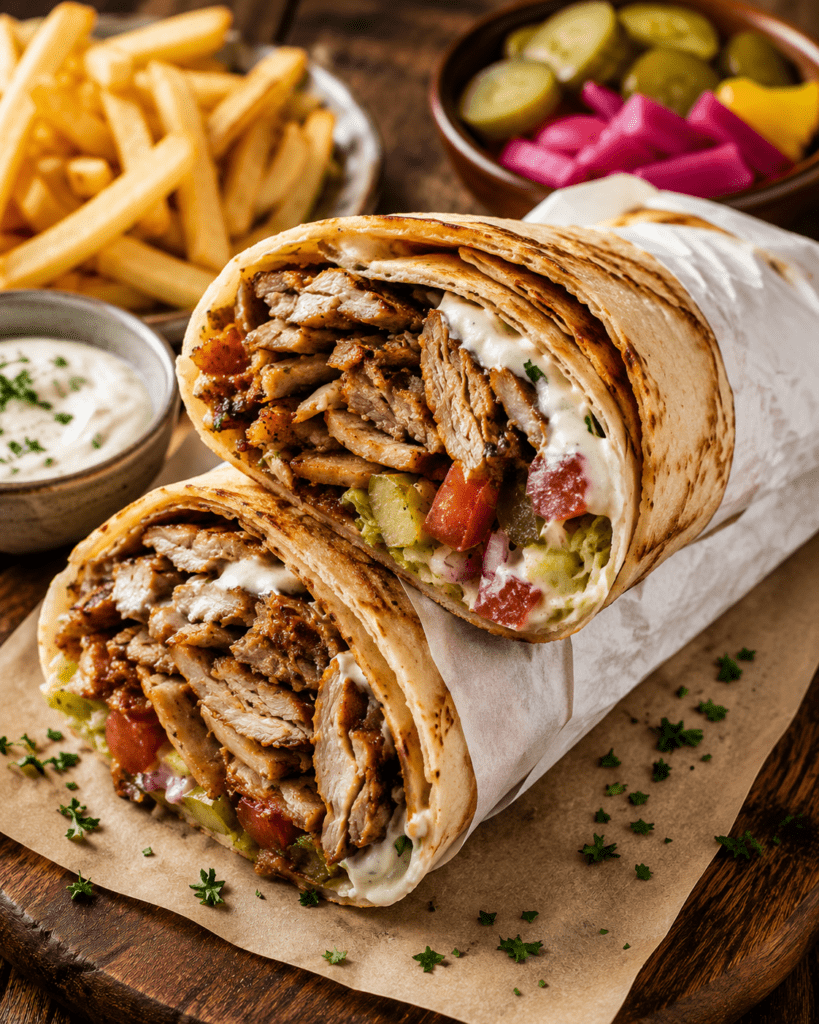
34. SHAWARMA — The Middle East’s Great Gift to Street Food
Country: Lebanon (origin) | Israel | Turkey Best city: Beirut | Tel Aviv | Istanbul Type: Street food Price: $2–6
What is it? Marinated meat (chicken, lamb, or mixed) slow-roasted on a vertical spit for hours, shaved in thin slices and served in pita or flatbread with tahini, garlic sauce, tomato, cucumber, and pickles. The marinade — cumin, coriander, turmeric, cinnamon, cardamom — creates the characteristic flavour profile.
Why you must eat it: The lamb shawarma from a Beirut hole-in-the-wall is one of the great late-night eating experiences in the Middle East. The shaved meat, the garlic sauce (toum — Lebanese garlic whip that’s essentially an emulsified garlic paste), the pickled turnips that are bright pink from the beet — this is a sandwich that rewards attention.
Best places to try:
- Shawarma Sahyoun, Beirut: Corner of Abdel Aziz and Spears Streets — the most beloved name in Beirut shawarma since the 1930s.
- Haj Kahil, Tel Aviv: 5 Kazerne Street, Jaffa — the Israeli Arab version using a different bread and spice profile, equally extraordinary.
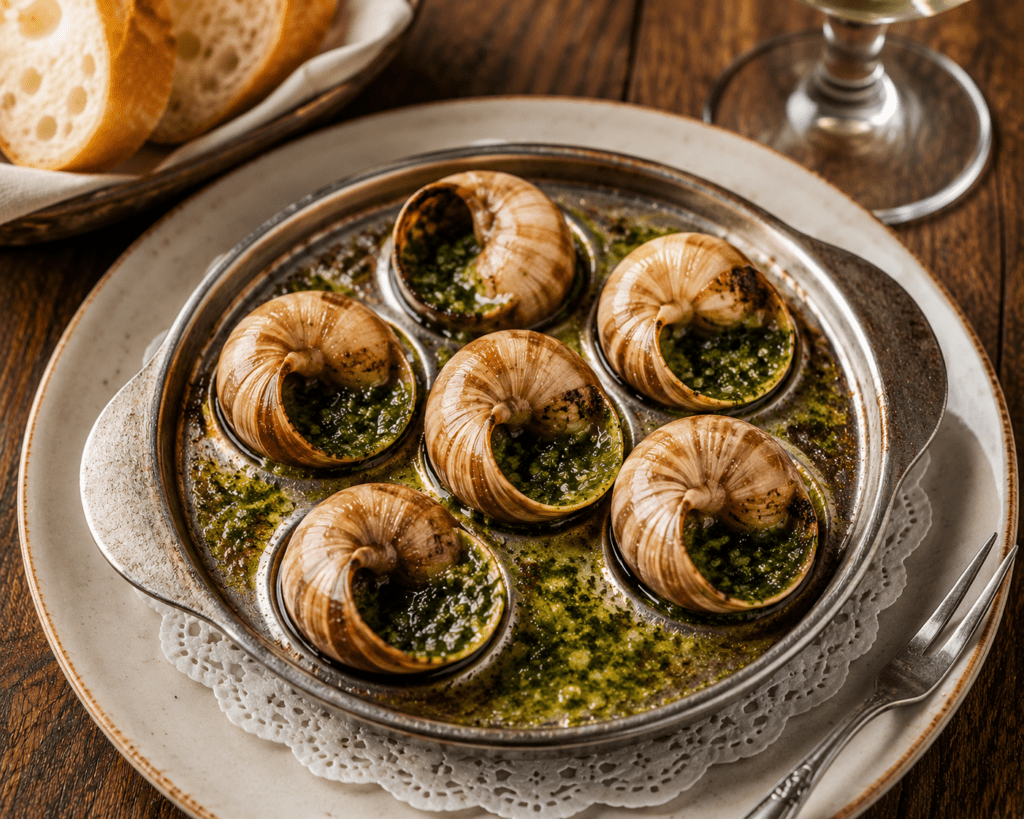
35. ESCARGOTS — France’s Most Confronting Delicacy
Country: France Best city: Paris | Lyon | Burgundy Type: Restaurant Price: €12–20 for six
What is it? Before you turn your nose up at the idea of eating snails, take a whiff of the garlicky butter they’re cooked in. You probably will change your mind. Snails removed from their shells, cooked in garlic-parsley butter, returned to the shells, baked until the butter is bubbling and fragrant. Eaten with a special fork and tongs. The snail itself is chewy and mild — the reason to eat this dish is the garlic-herb butter, which is one of the great French sauces.
Best places to try:
- L’Escargot Montorgueil, Paris: 38 Rue Montorgueil — since 1832, the most celebrated escargot restaurant in France.
- Any Burgundian brasserie — Burgundy is escargot country.
36. INJERA WITH TIBS — Ethiopia’s Communal Feast
Country: Ethiopia Best city: Addis Ababa Type: Restaurant Price: ETB 150–400 ($3–7)
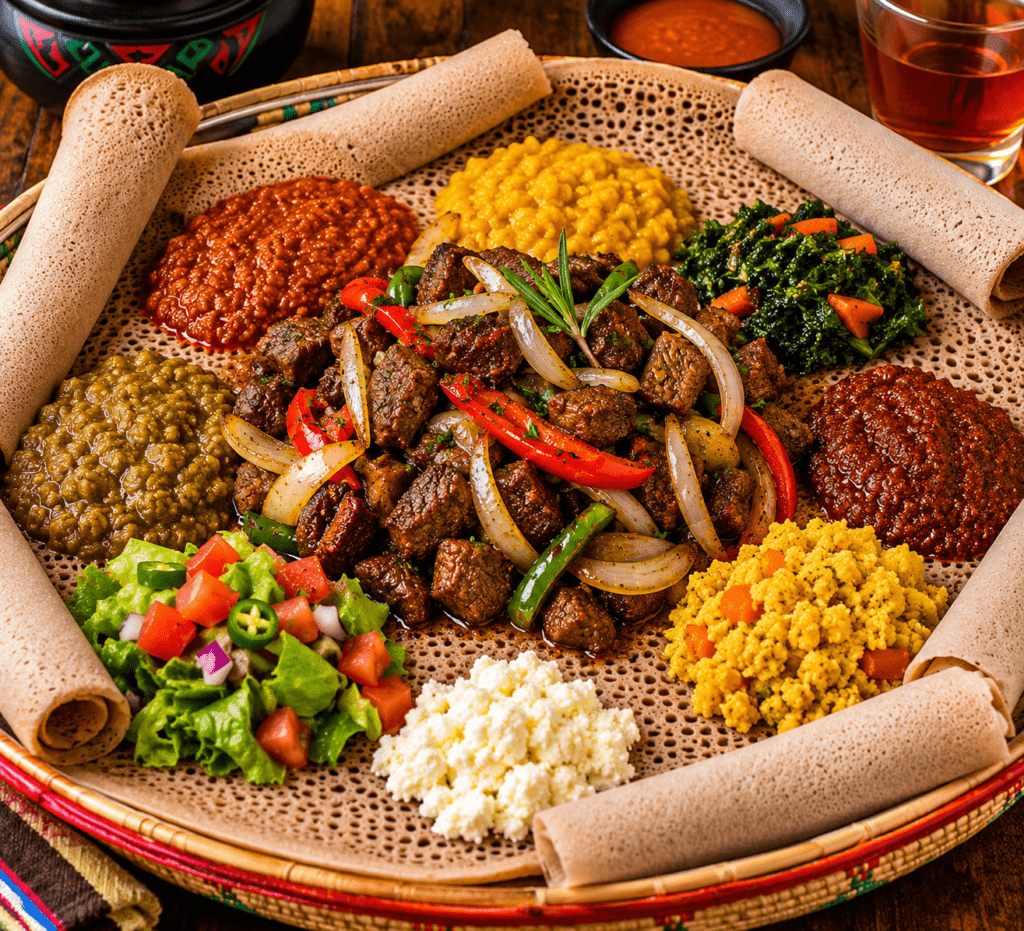
What is it? Injera is a spongy, slightly sour flatbread made from teff flour — it’s the plate, the utensil, and the food simultaneously. Tibs is sautéed beef or lamb with butter, berbere spice, and onion. Piled on top of the injera with other stews (lentil, split pea, collard greens), you tear off pieces of the injera with your right hand and use it to scoop the toppings. No cutlery. No individual plates. Communal eating.
Why you must eat it: Because the communal eating ritual, the specific sourness of the teff injera against the berbere spice heat of the tibs, and the physical act of eating with your hands from a shared plate is a dining experience that has no equivalent outside Ethiopia.
Best places to try:
- Yod Abyssinia, Addis Ababa: Bole Road — traditional food with cultural show in the evening.
- Habesha Restaurant, Addis Ababa: Bole sub-city — more local, less tourist-facing, equally good.
37. PROPER ITALIAN GELATO — The Cold That Changes Everything
Country: Italy Best city: Florence | Bologna | Rome Type: Gelateria Price: €2–4 for 2 scoops
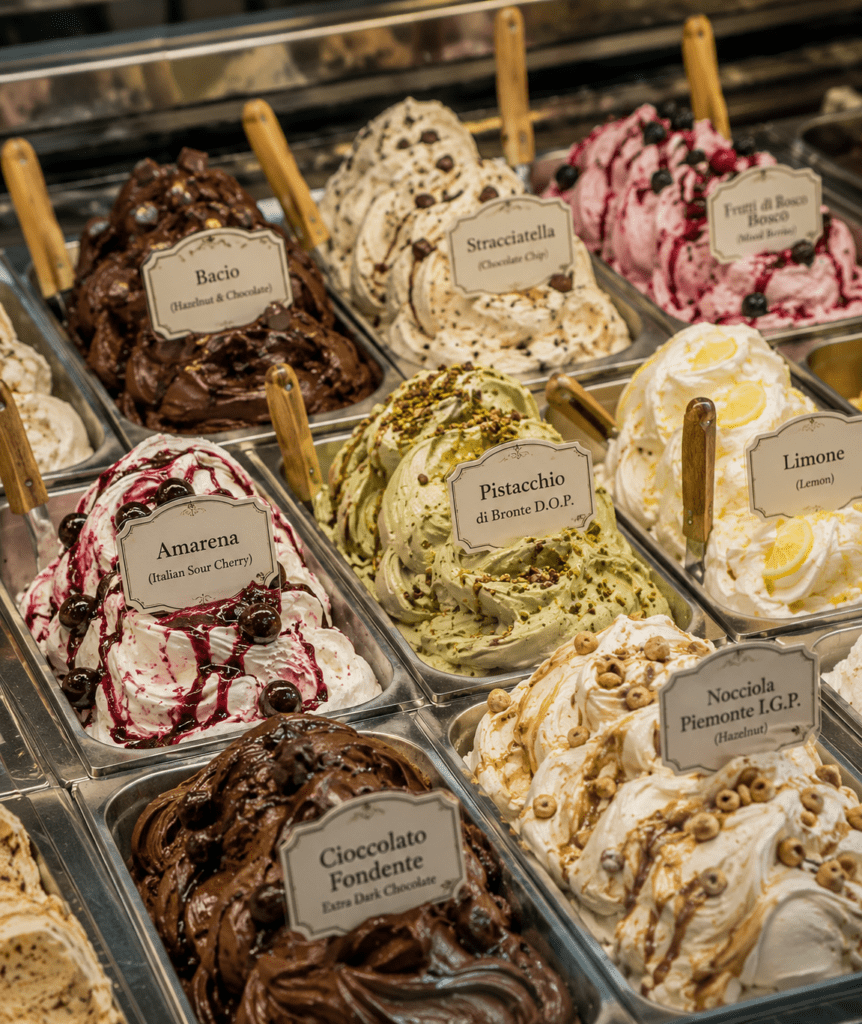
What is it? Gelato differs from ice cream in fat content (less milk fat), air content (significantly less air is churned in), and serving temperature (slightly warmer, which makes it more intense in flavour). The result is denser, more flavourful, and softer in texture. The flavours — pistachio from Bronte Sicily, hazelnut from Piedmont, stracciatella, fior di latte — at their best, are just the ingredient tasting like itself, concentrated.
Why you must eat it: Because the pistachio gelato at a Florence gelateria will ruin all other frozen desserts permanently. The intensity of real pistachios, unmixed with additives, concentrated by the gelato process, is something that takes a full five seconds to process when you eat it.
Best places to try:
- Gelateria Dei Neri, Florence: Via dei Neri 20/22R — the hazelnut and pistachio here are the reference standards.
- Cremeria Funivia, Bologna: Via Ugo Bassi 2/e — Bologna is Italy’s food capital and the gelato reflects this.
38. KHACHAPURI — Georgia’s Bread Boat of Cheese and Egg
Country: Georgia (the country) Best city: Tbilisi | Batumi Type: Restaurant / Bakery Price: GEL 12–20 ($4–7)
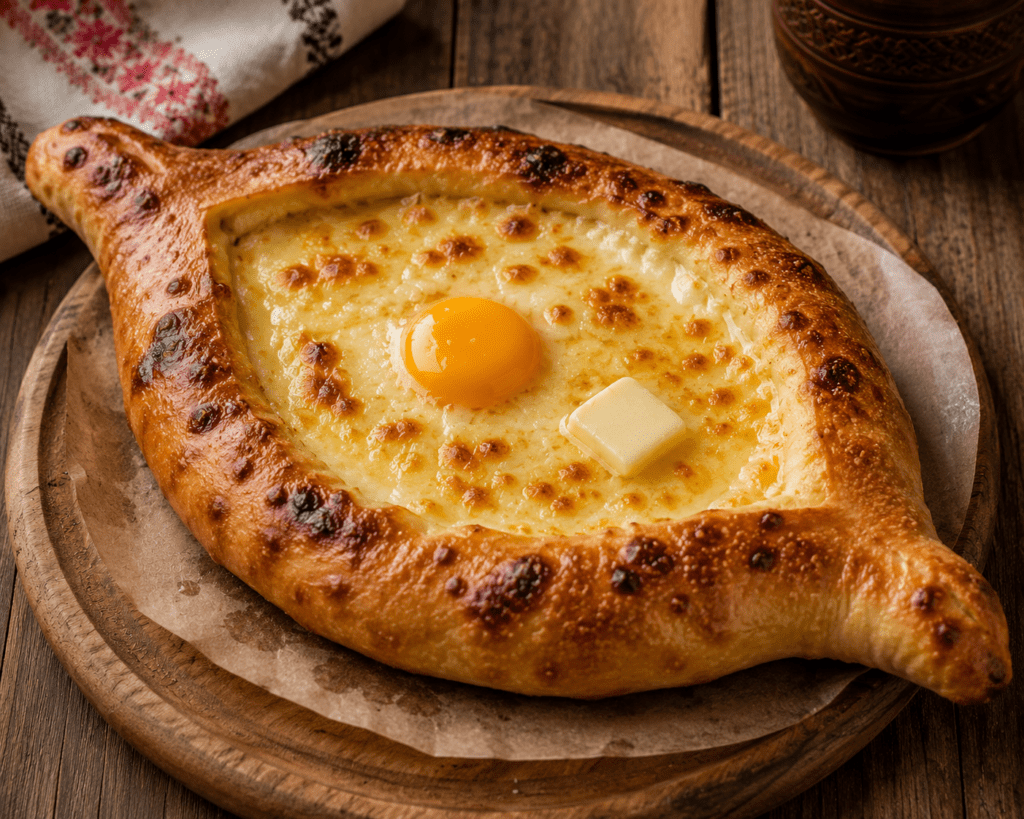
What is it? The Adjarian khachapuri is an open bread boat filled with sulguni cheese, with a raw egg cracked into it and a pat of butter — then returned to the oven briefly so the egg is partially cooked. You tear off the sides of the bread, stir them into the molten cheese-egg-butter mixture, and eat.
Why you must eat it: Because when you tear off a piece of that bread and dip it into the hot, cheese-and-egg-and-butter molten interior and put it in your mouth, you will think very clearly and with complete sincerity: “I am going to move to Georgia.”
Best places to try:
- Any bakery in Batumi (the Adjarian capital — the regional khachapuri is a point of pride)
- Barbarestan, Tbilisi: David Agmashenebeli Avenue 132/134 — the most celebrated restaurant in Tbilisi.
39. DÖNER KEBAB — Turkey’s Vertical Spit Legacy
Country: Turkey Best city: Istanbul | Ankara | Berlin (the best outside Turkey) Type: Street food Price: TRY 80–200 ($3–7) | €3–6 (Berlin)
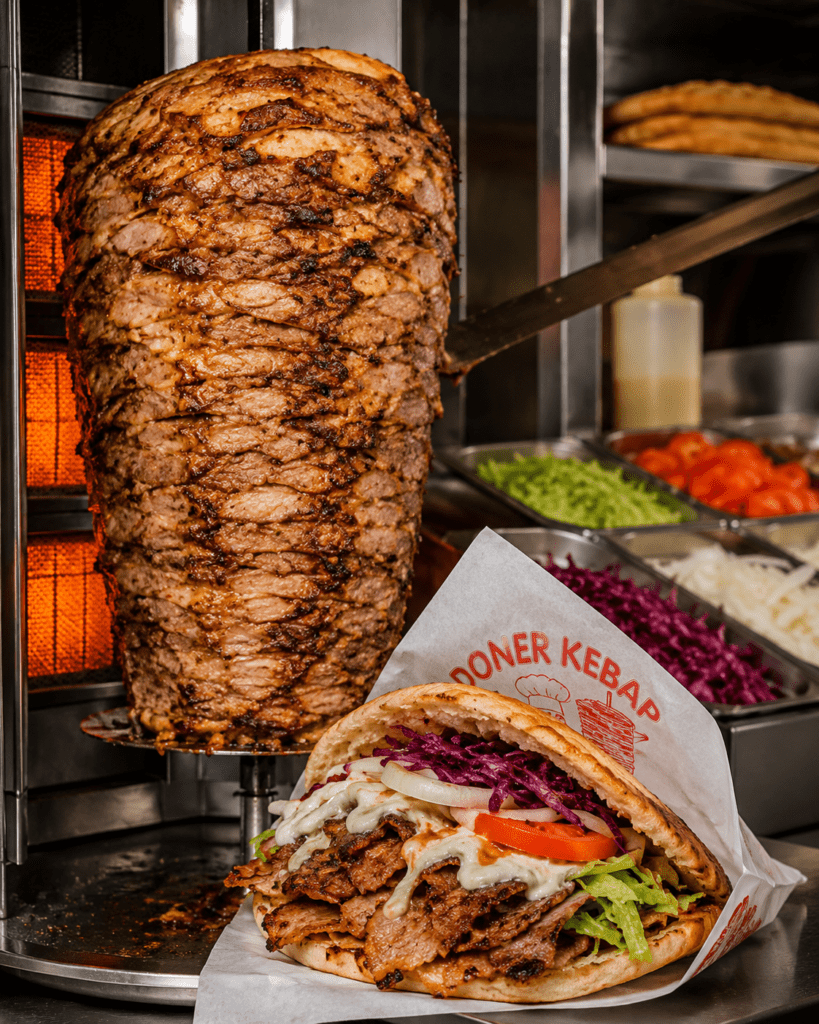
What is it? Lamb (or chicken or veal) marinated in spices, stacked on a vertical spit, and slow-cooked for hours, shaved and served in lavash bread or a pide roll with tomato, onion, and yoghurt sauce. The döner is the direct ancestor of shawarma and tacos al pastor — all three are variations of the vertical spit cooking method.
Best places to try:
- Durumzade, Istanbul: Kamer Hatun Caddesi 30/A, Galata — the celebrated Istanbul döner location.
- Mustafa’s Gemüse Kebab, Berlin: Mehringdamm 32 — the Berlin adaptation of the Turkish döner, with a legendary queue.
The Berlin thing: The Turkish community in Berlin created a specific Berlin version — with more vegetables, feta, and a different bread — that Germans claim as their own. The Turks are irritated. Everyone is eating it.
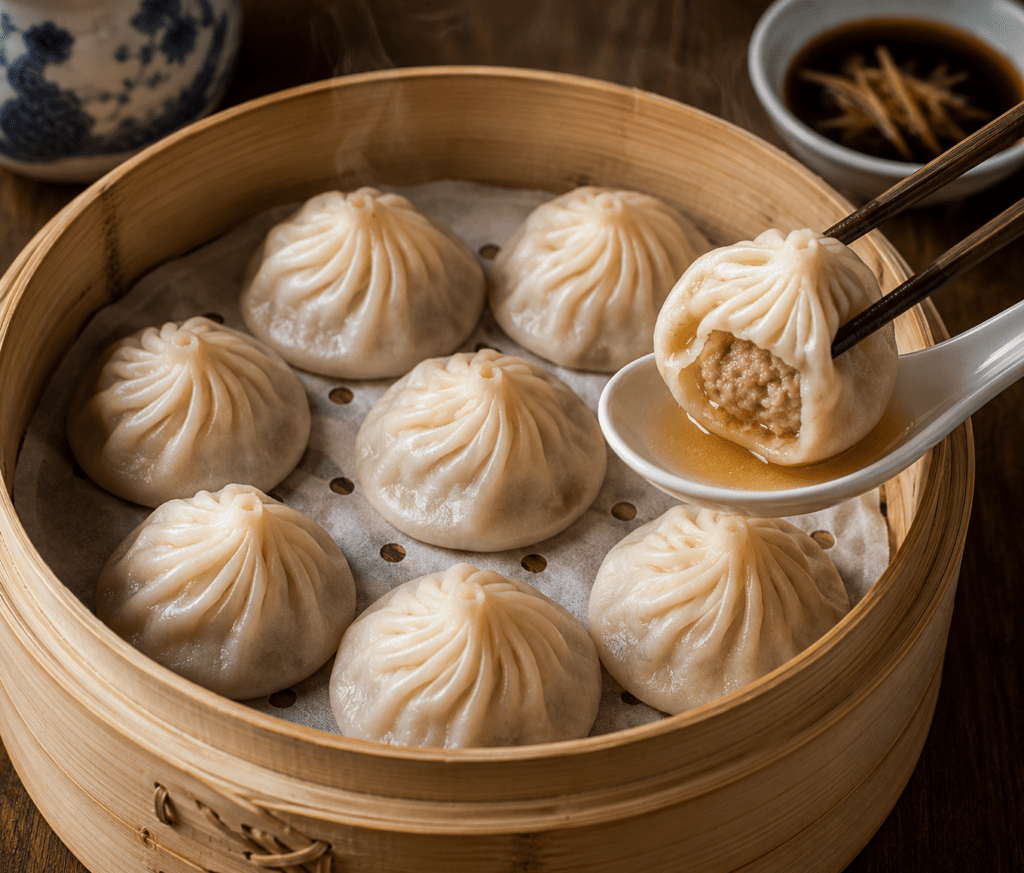
40. SOUP DUMPLINGS (XIAO LONG BAO) — Shanghai’s Greatest Achievement
Country: China Best city: Shanghai Type: Restaurant Price: RMB 25–80 ($3.50–11) per basket
What is it? Soup dumplings — xiaolongbao — are thin-skinned dumplings filled with seasoned pork and a small amount of jellied stock that liquefies when steamed. The technique requires precision: too thin a skin and it breaks before eating, releasing the soup; too thick and the textures are wrong. You pick them up carefully, bite a small hole in the side, drink the hot broth, then eat the rest.
Why you must eat it: Because the XLB eating ritual — the careful lift with chopsticks and spoon, the bite to release the steam, the soup that rushes out — is unlike anything else. And because the best xiaolongbao in Shanghai are made by people who have been folding this specific dumpling shape for thirty years.
Best places to try:
- Din Tai Fung, multiple Shanghai locations: The Taiwanese chain that made XLB internationally famous. Consistently excellent. The 18-fold minimum for each dumpling is enforced.
- Jia Jia Soup Dumplings (Jia Jia Tang Bao), Shanghai: Huanghe Road branch — the local Shanghai favourite, cash only, no English menu.
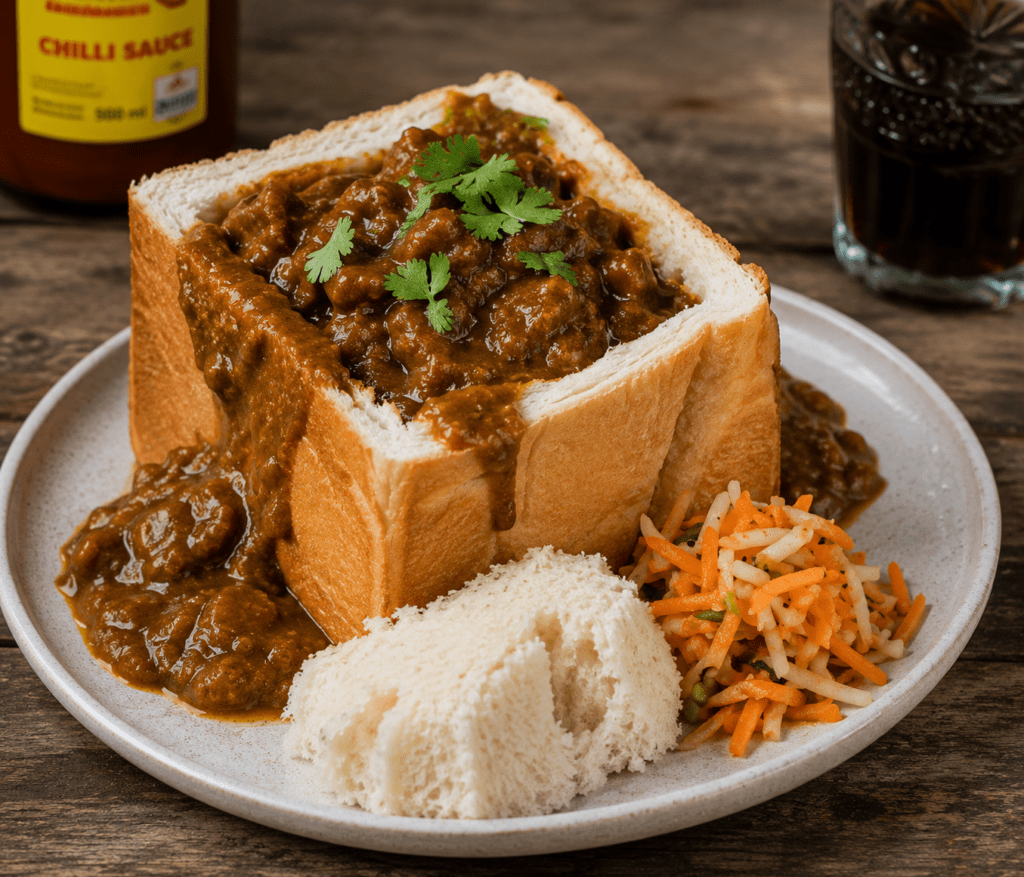
41. BUNNY CHOW — South Africa’s Durban Classic
Country: South Africa Best city: Durban Type: Street food Price: ZAR 40–100 ($2–5)
What is it? A hollowed-out half loaf of white bread filled with curry — bean curry (the vegetarian original), mutton, or chicken. The hollowed bread “lid” is placed on top. You eat the curry-soaked bread as you go down, then tear the rest of the bread from the loaf sides. It was created by the Indian community in Durban as takeaway food when restaurants were segregated.
Why you must eat it: Because bunny chow is history and lunch simultaneously. The Durban Indian community’s food culture — the specific Durban biryani, the bunny chow, the atchar (pickle) culture — is distinct from anything in India and distinct from anything in South Africa. It belongs to Durban.
Best places to try:
- Patel’s Vegetarian Refreshment Room, Durban: 555 Grey Street, Durban CBD — since the 1940s. The bean bunny chow here is the vegetarian original.
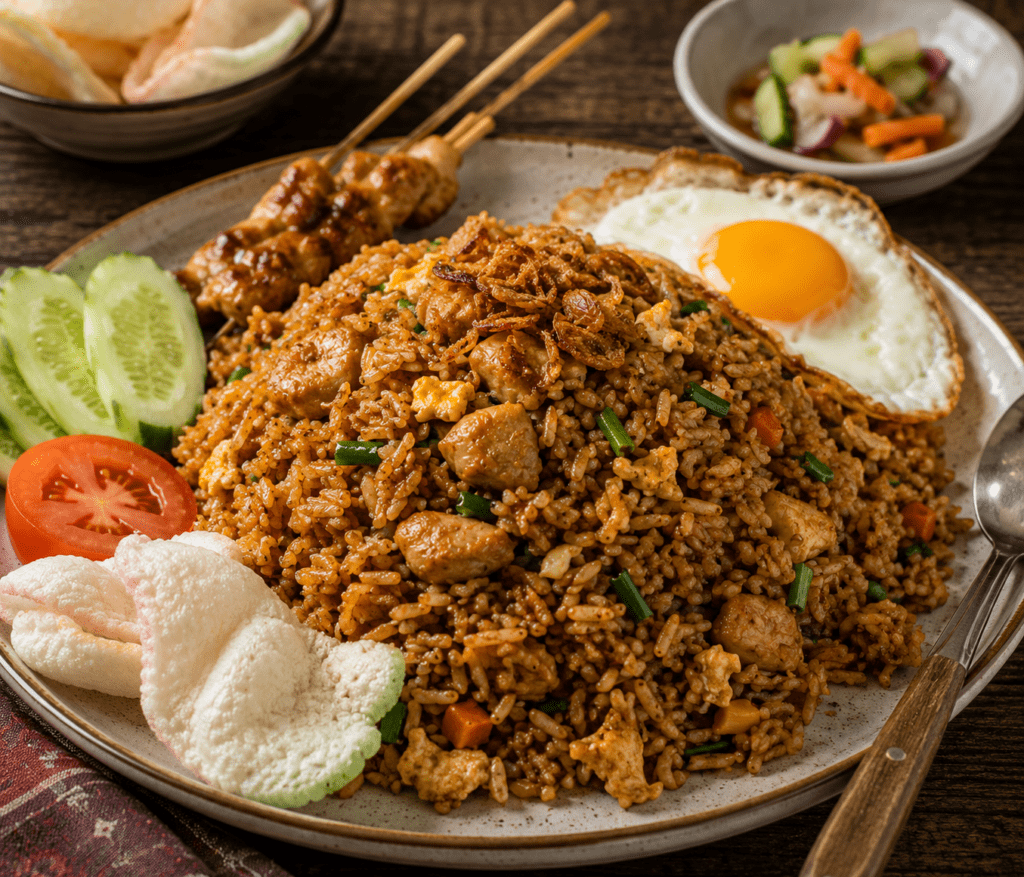
42. NASI GORENG — Indonesia’s Midnight Comfort
Country: Indonesia Best city: Jakarta | Bali | Yogyakarta Type: Street food Price: IDR 20,000–50,000 ($1.25–3)
What is it? Fried rice with kecap manis (sweet soy sauce), shrimp paste, chilli, garlic, and shallots — topped with a fried egg, prawn crackers, pickled cucumber, and sliced tomato. The kecap manis gives the rice a characteristic dark colour and a sweetness that is distinctly Indonesian. Often made from leftover rice, which creates the slightly dried texture that’s better for frying than fresh rice.
Why you must eat it: Because the version from a 2am street cart in Yogyakarta, where a man has been making this from a single wok on a bicycle cart since the 1980s and nothing has changed and nothing needs to change, is one of the most satisfying street food experiences in Southeast Asia.
Best places to try:
- Any late-night warung or street vendor in Java — the best nasi goreng is never in a restaurant.
- Bali’s morning warungs: The breakfast nasi goreng here with a fried egg and prawn crackers is the correct way to start a Bali day.
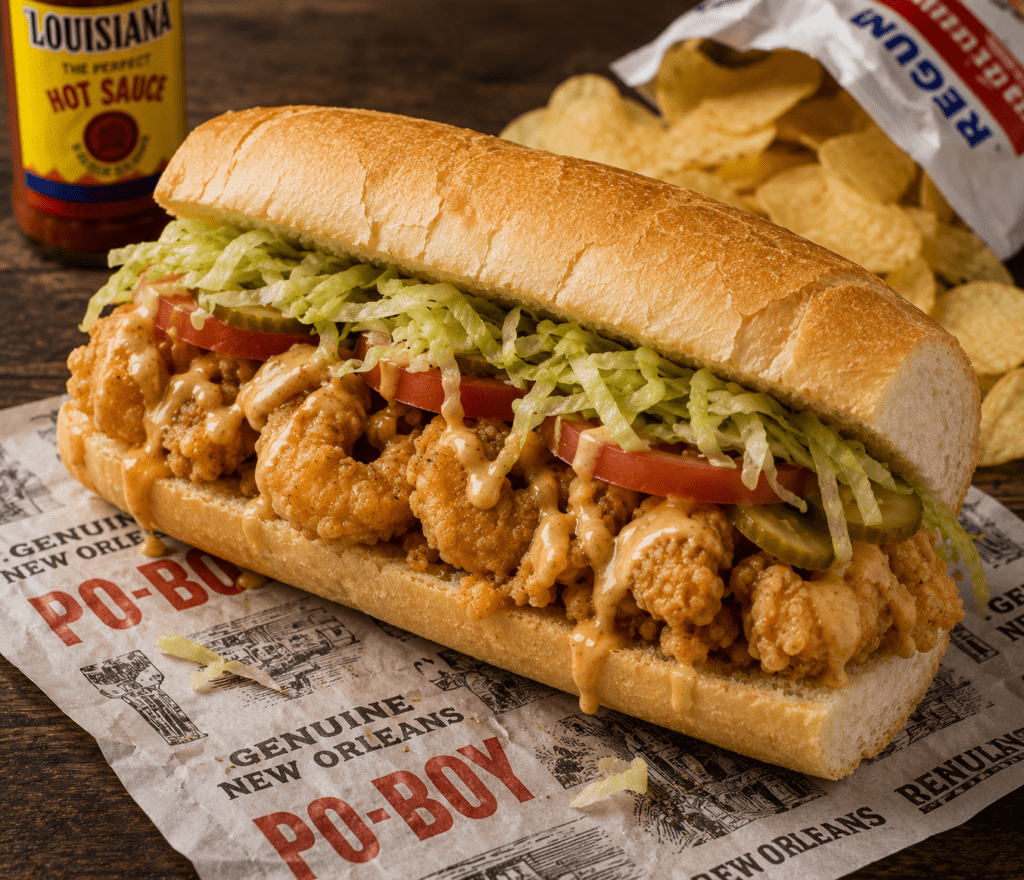
43. PO’BOY — New Orleans’ Bread-and-Filling Legend
Country: USA Best city: New Orleans, Louisiana Type: Street food / Restaurant Price: $8–16
What is it? The po’boy is the classic New Orleans sandwich. It can come with roast beef, fried catfish, chicken, oysters or even alligator, but the classic fried shrimp po’boy is the starting point. The bread is perfectly crispy on the outside and the shrimp may have a kick to them. The bread — a specific New Orleans French bread with a crispy crust and fluffy interior — is the structural element. The shrimp are battered and fried to order. “Dressed” means with lettuce, tomato, pickles, and mayonnaise (Creole mayonnaise ideally).
Best places to try:
- Domilise’s, New Orleans: 5240 Annunciation St — since 1918, the most beloved neighbourhood po’boy shop.
- Parkway Bakery and Tavern, New Orleans: 538 Hagan Ave — the roast beef po’boy here is drowning in gravy in the best possible way.
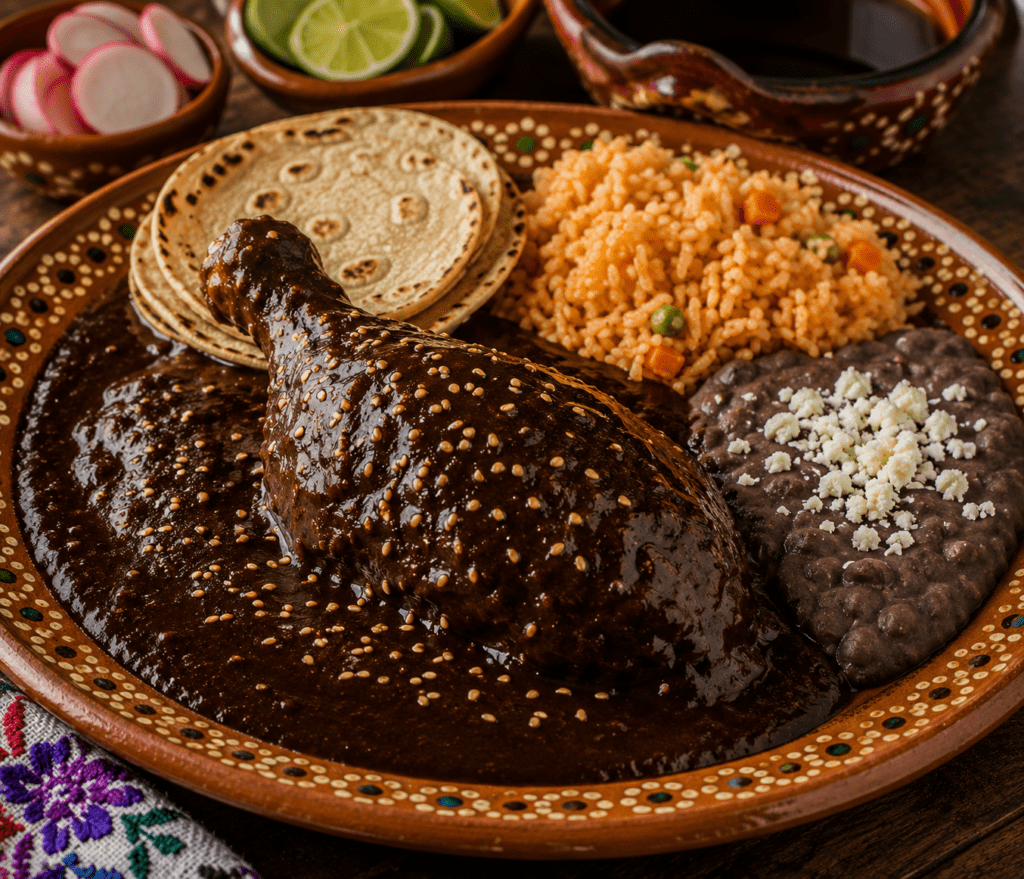
44. MOLE NEGRO — Mexico’s Most Complex Sauce
Country: Mexico Best city: Oaxaca Type: Restaurant Price: $10–22
What is it? Mole negro is a sauce of extraordinary complexity — up to 30 ingredients including multiple dried chillies (mulato, ancho, chihuacle), dark chocolate, tomatoes, plantain, nuts, seeds, raisins, charred tortilla, and various spices, blended and cooked for hours (sometimes days) to create a dark, almost black, deeply complex sauce served over turkey or chicken.
Why you must eat it: Because mole negro is one of the most sophisticated sauces in world cooking. The chocolate does not make it sweet — it adds depth. The multiple chillies provide layers of flavour (fruity, smoky, earthy, hot) that emerge at different moments. It is a sauce that takes 8 hours minimum to make and delivers proportionally.
Best places to try:
- La Olla, Oaxaca: Reforma 402, Centro, Oaxaca — traditional Oaxacan food, the mole negro over turkey is the signature.
- Zandunga, Oaxaca City: Manuel García Vigil 512 — Isthmus-style Oaxacan food.
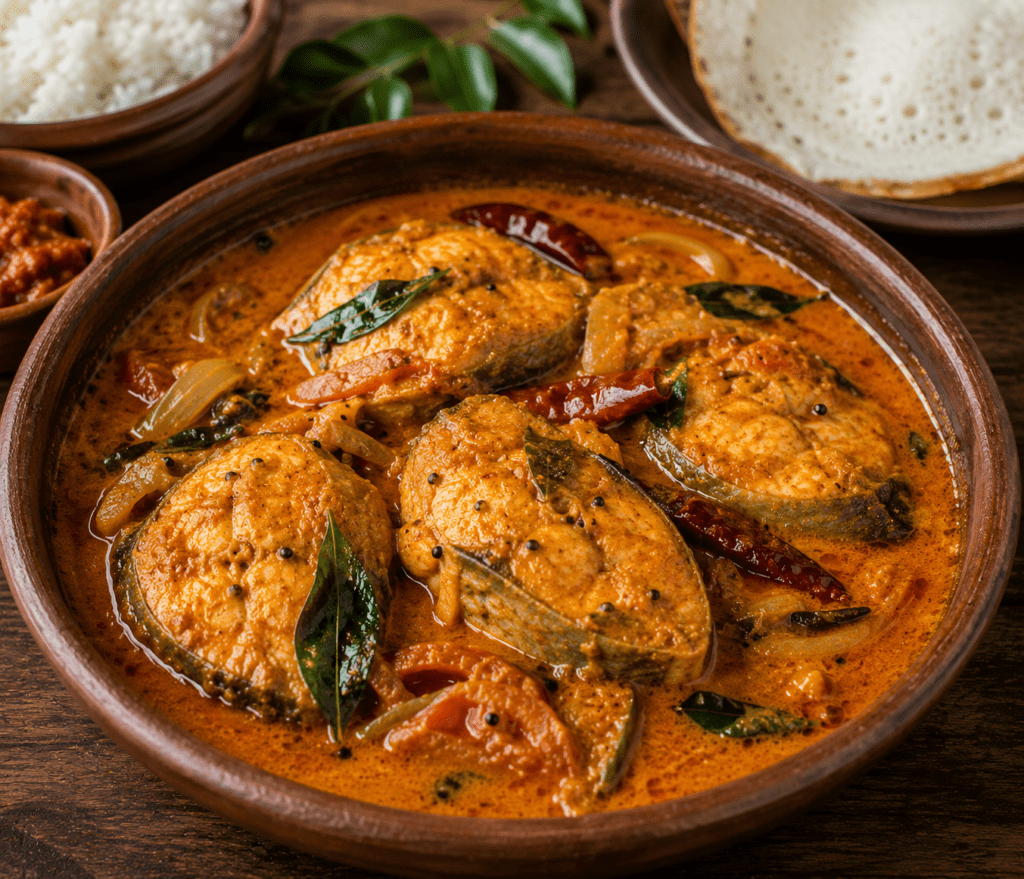
45. KERALA FISH CURRY — The Coastal Indian Pinnacle
Country: India Best city: Kochi | Alleppey | Thrissur Type: Restaurant / Home cooking Price: ₹200–450
What is it? Fish (kingfish, mackerel, or sardines depending on season) cooked in a sour-spicy sauce made from coconut milk, kudampuli (Malabar tamarind — a dried souring fruit specific to Kerala), chilli, turmeric, and mustard seeds tempered in coconut oil. The kudampuli gives the curry its distinctive sour note — more complex than regular tamarind, with a fruity undertone. Served with red Kerala rice and a papad.
Why you must eat it: Because the Kerala fish curry uses ingredients — kudampuli, coconut oil, coconut milk — that create a flavour profile genuinely specific to this coastline. Eating it in a Kerala household with red rice and crispy papad on a banana leaf while the backwaters are visible through the window is one of the great Indian meal experiences.
Best places to try:
- Dhe Puttu, Kochi: Opp. St. Francis Church, Fort Kochi — the modern Kerala restaurant that honours traditional preparations.
- Villa Maya, Thiruvananthapuram: Airport Road — heritage mansion, traditional Kerala thali including the fish curry.
- Any homestay on the Alleppey backwaters — the best Kerala fish curry is always served by the homestay owner at a wooden table with the canal visible outside.
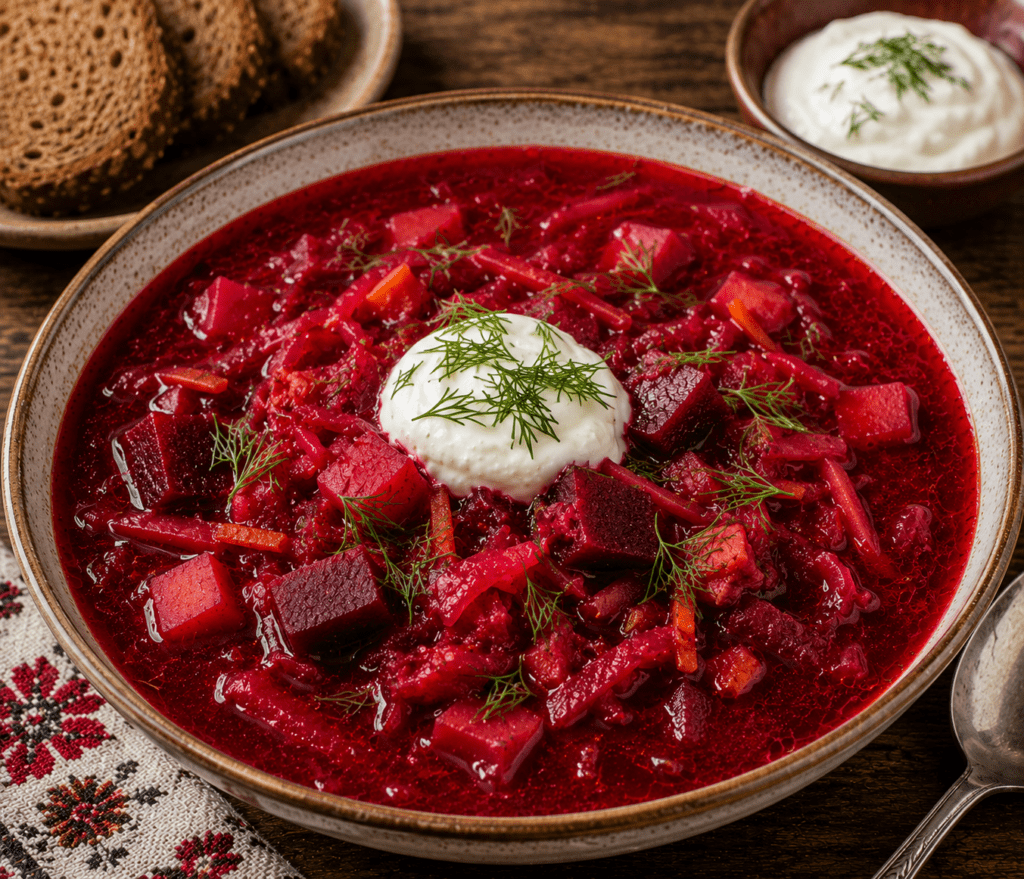
46. BORSCHT — Eastern Europe’s Crimson Classic
Country: Ukraine / Russia (Eastern Europe broadly) Best city: Kyiv | Warsaw | St. Petersburg Type: Restaurant / Home cooking Price: $3–10
What is it? A sour soup made primarily from beetroot, giving it its characteristic deep crimson colour. Slow-cooked with beef (or pork bones for the stock), cabbage, potato, carrot, and onion, seasoned with vinegar for the sourness. Served with a dollop of smetana (sour cream) and dark bread.
Why you must eat it: Because the colour alone is extraordinary — a deep, jewel-like crimson that looks too dramatic to be soup. The flavour is earthy from the beet, sour from the vinegar, rich from the stock. The sour cream softens everything. Dark bread mops up the rest. On a cold day, borscht is a specific kind of comfort.
Best places to try:
- Kanapa, Kyiv: Andriivskyi Uzviz 19 — traditional Ukrainian borscht in the most atmospheric street in Kyiv.
- Babka Fedora, Warsaw: Marszałkowska 8 — the Ukrainian restaurant in Poland that serves the version homesick Ukrainians recommend.
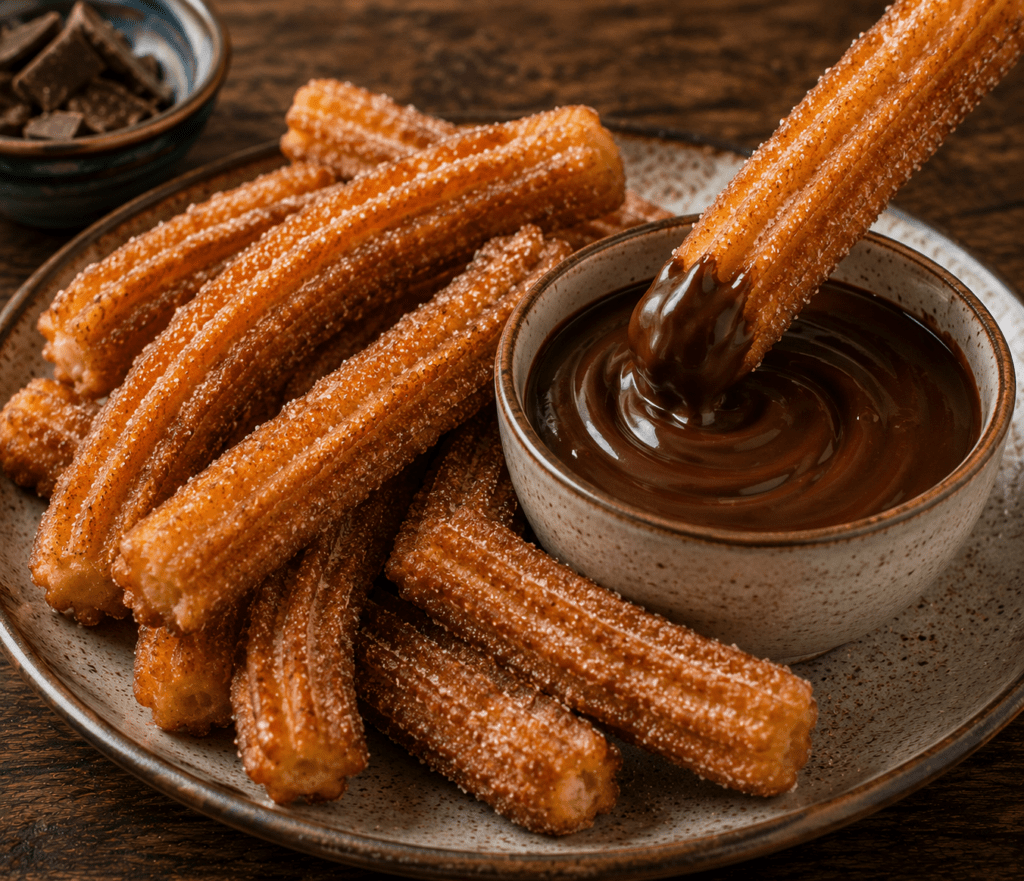
47. CHURROS WITH CHOCOLATE — Spain’s Best Morning Decision
Country: Spain Best city: Madrid Type: Café / Street food Price: €3–7 for churros + chocolate
What is it? Long ridged dough (made from flour and water, piped through a star-shaped nozzle and deep-fried) served with a cup of thick, dark hot chocolate — not drinking chocolate, not ganache. Spanish chocolate for dipping is specifically thick enough to coat the churro and stay on it, made by thickening melted dark chocolate with cornstarch. You dip. You eat. You reconsider every other breakfast you’ve ever had.
Why you must eat it: Because it’s 7am in Madrid and the churros are fresh from the oil and the chocolate is dark and thick and you’ve been dancing since midnight. That is the intended context. It works in other contexts too, but that one is the original.
Best places to try:
- Chocolatería San Ginés, Madrid: Pasadizo de San Ginés 5 — since 1894, open 24 hours, the most famous churros in Spain. Go at 3am for the full experience.
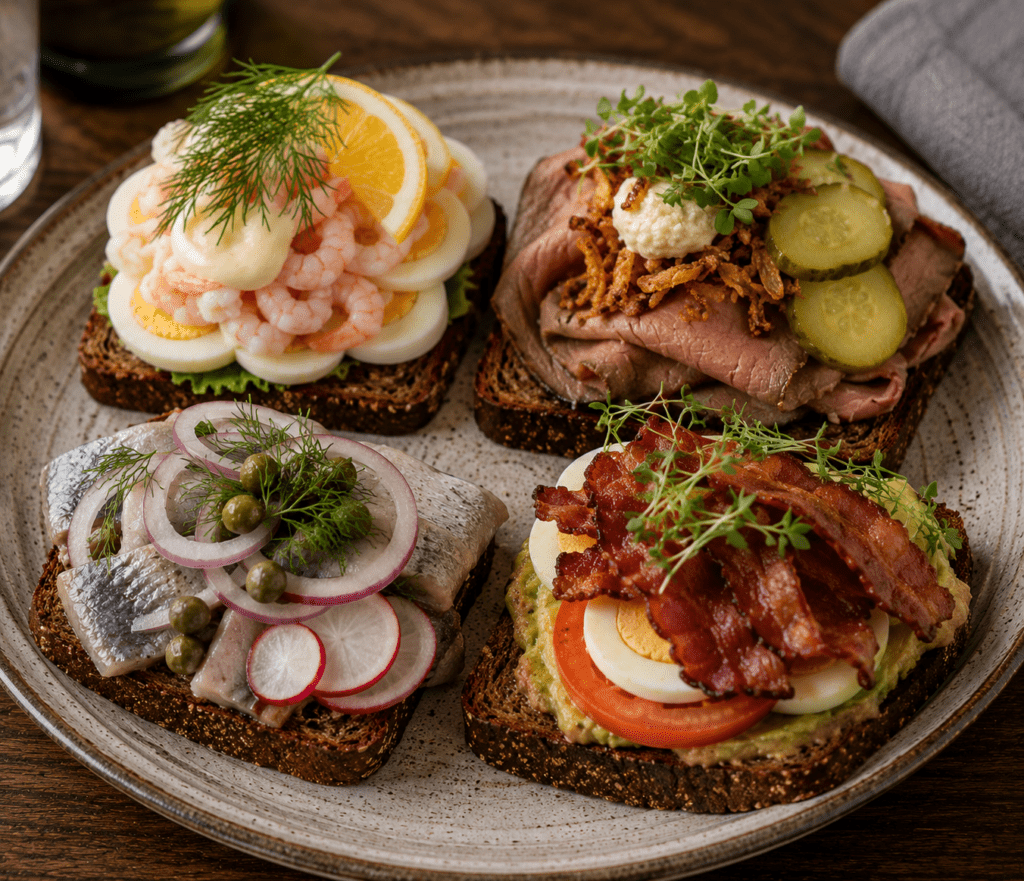
48. SMØRREBRØD — Denmark’s Open Sandwich Manifesto
Country: Denmark Best city: Copenhagen Type: Restaurant / Café Price: DKK 60–150 ($9–22) per piece
What is it? Open-faced sandwiches on dark rye bread (rugbrød) — typically a square piece of dense, slightly sour, whole grain bread topped with various combinations: herring with dill, beef tartare with capers and egg yolk, roast beef with remoulade and fried onion, smoked salmon with cream cheese. Each piece is a complete composition — the toppings are arranged precisely.
Why you must eat it: Because Danish smørrebrød is where you understand that a sandwich can be a work of considered thought. The rugbrød carries everything — its sourness and density are specifically designed to support rich toppings without becoming soggy. The combinations (pickled herring with aquavit-marinated cucumber, for instance) are calibrated.
Best places to try:
- Aamanns 1921, Copenhagen: Niels Hemmingsens Gade 19 — the most celebrated modern smørrebrød restaurant. Book ahead.
- Schønnemann, Copenhagen: Hauser Plads 16 — since 1877. The traditional version.
49. LAHMACUN — Turkey’s “Turkish Pizza” That Insults Both Words
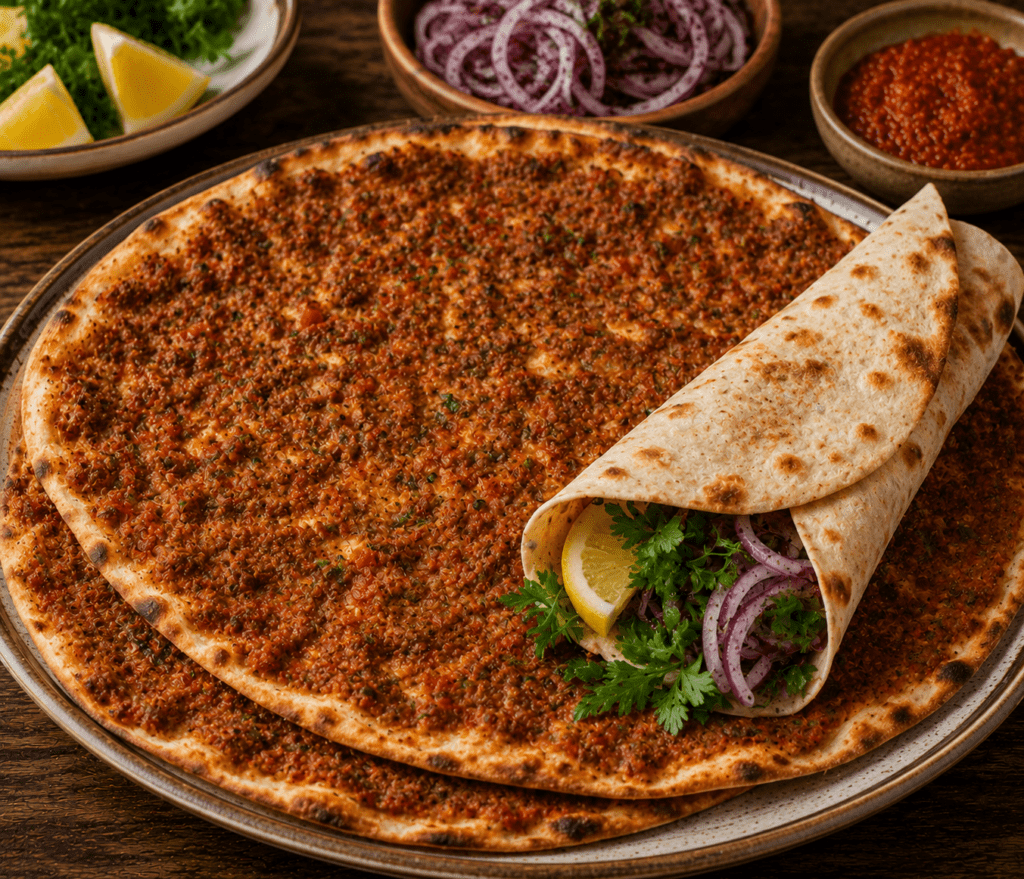
Country: Turkey Best city: Istanbul | Gaziantep Type: Street food / Restaurant Price: TRY 40–80 ($1.50–3)
What is it? A thin, crispy flatbread topped with a spread of finely minced lamb, onion, tomato, parsley, and spices (cumin, paprika, red pepper paste) baked at very high heat. Served with lemon juice squeezed over and rolled up with fresh parsley and sliced tomato inside. It is not a pizza — it has nothing to do with pizza except that it is flat and has a topping.
Why you must eat it: Because lahmacun is the fastest, most satisfying street food in Turkey. You eat it standing up, rolled into a cone, in four bites, with lemon juice all over your fingers. Then you order another one.
Best places to try:
- Borsam Taş Fırın, Istanbul: Multiple locations — the fırın (oven) style lahmacun.
- Imam Çağdaş, Gaziantep: Uzun Çarşı No. 49 — Gaziantep is Turkey’s food capital and the lahmacun here is considered the national benchmark.
50. NEHARI — Pakistan/Delhi’s Dawn Masterpiece
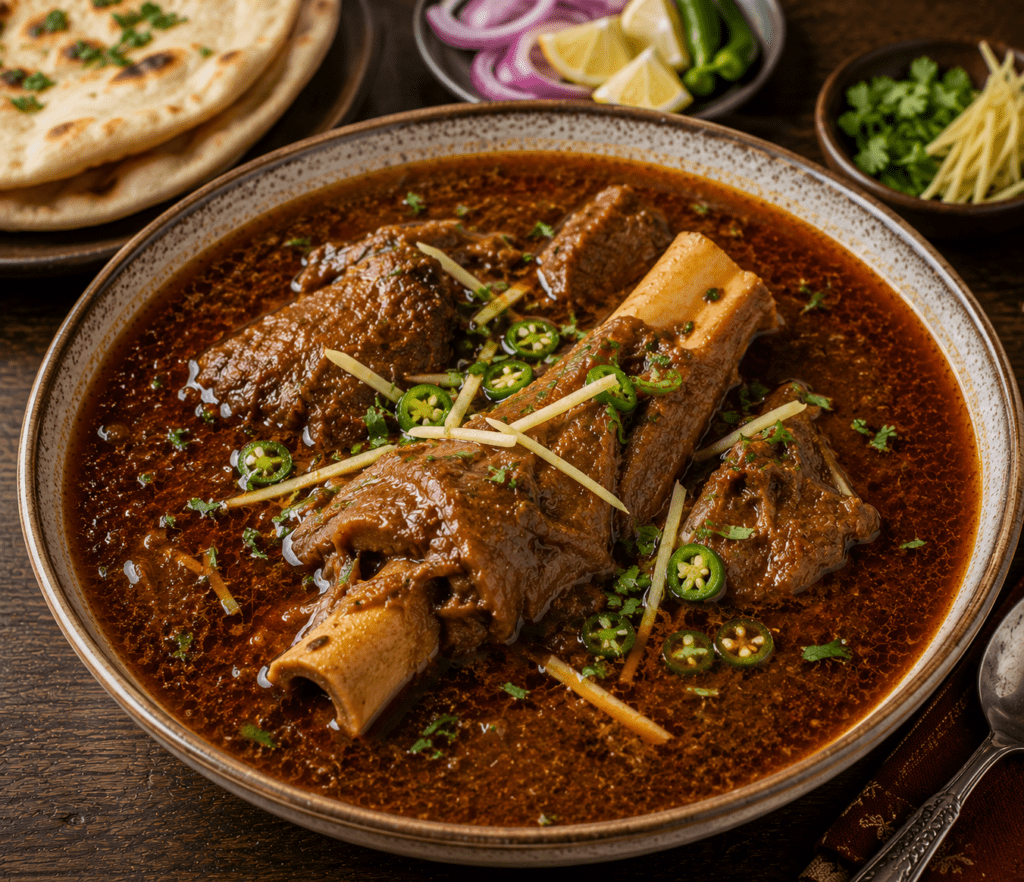
Country: India / Pakistan Best city: Delhi (Old Delhi) | Lahore | Karachi Type: Street food / Restaurant Price: ₹200–400 (India) | PKR 400–800 (Pakistan)
What is it? Nihari is a slow-cooked overnight stew of mutton (or beef in Pakistan) shanks and bone marrow, braised from midnight until morning in a deeply spiced broth that includes mace, nutmeg, cardamom, fennel, and a specific nihari masala that varies by cook. The marrow melts into the broth over eight hours. Served at dawn with sheermal (saffron flatbread), fresh ginger, green chilli, and lime. The word “nihari” comes from the Arabic nahar — morning.
Why you must eat it: Because nihari is the one dish on this list that requires you to set an alarm for 6am to eat it at its best. Eating nihari at Rahim’s in Lucknow’s Chowk at 7am, while the city wakes up around you, with a torn piece of sheermal absorbing the marrow-thick broth, is the specific experience that turns people into serious food travellers.
Best places to try:
- Karim’s, Delhi: 16, Gali Kababian, Jama Masjid, Old Delhi — since 1913. The Mughal court legacy.
- Rahim’s, Lucknow: Chowk, Aminabad — open 6am–10am only, runs out early, worth every minute of the queue.
- Waris Nihari, Old Delhi: Matia Mahal, Jama Masjid area — the Delhi institution specifically for nihari.
FAQ Section
Q: What is the #1 food to try before you die?
A: There is genuinely no single correct answer — food is too personal for that. But if forced to choose one: pho from a Hanoi street stall at 7am is the food experience that most consistently stops people in their tracks. It is simultaneously the most accessible (₹100 equivalent) and the most complex (12 hours of preparation) food on this list. After pho: masala dosa at CTR in Bengaluru, Peking duck in Beijing, and a proper Neapolitan pizza in Naples.
Q: Which country has the best food in the world?
A: Genuinely debated. The three best countries in the world for food are Peru, Vietnam, and Italy — a position many food writers agree with. Italy for sheer depth of tradition, Vietnam for the combination of freshness and complexity at extraordinary value, and Peru for the most exciting contemporary fine dining scene outside Europe. India deserves its own category — too large and diverse to rank against single-cuisine countries.
Q: What is the most expensive dish on this list?
A: Sushi omakase in Tokyo — particularly at three-Michelin-star venues like Sukiyabashi Jiro — can cost ¥30,000–80,000 ($200–550+) per person for 20 courses. It is worth it exactly once, and then you understand what perfection costs and make your peace with that knowledge.
Q: Which dishes on this list are vegetarian?
A: Masala dosa, Neapolitan pizza (Margherita), cacio e pepe, moussaka (many versions), poutine (check the gravy — some use chicken stock), proper Italian gelato, khachapuri, churros with chocolate, smørrebrød (some varieties), dal baati churma, and tagine (vegetable version). Pho, tom yum, and pad thai can be made vegetarian on request in most restaurants.
Q: Where is the cheapest food on this list?
A: Vietnam is consistently the best value — pho and bánh mì together cost under ₹200 ($2.50). Indonesia and Thailand follow closely. India offers masala dosa, dal baati churma, nihari, and biryani at prices that are frankly embarrassing relative to what you receive. The most expensive countries on this list for quality food are Japan, Singapore, and Denmark.
Q: Can I find these dishes in India?
A: Many, yes — India’s restaurant landscape in 2026 is genuinely global. Good ramen in Bengaluru (Imaa Ramen). Good tacos in Delhi (Perch Wine & Coffee Bar area). Good croissants in Mumbai (Suzette, La Folie). Good sushi in Mumbai (Wasabi by Morimoto at the Taj). The caveats: the pho will be 70% as good. The Peking duck will be 50%. For the dishes that originate in India — masala dosa, biryani, nihari, Kerala fish curry, dal baati churma — go to the source city. The original is always worth the trip.
Conclusion — The Only Bucket List That Matters
I want to be honest with you about something.
This list will never be complete. You can eat all 50 of these dishes and still have done less than 5% of what the world’s food has to offer. The pho has regional variations that would take a year to explore. The biryani debate has not been resolved and cannot be resolved because the answer depends on the cook’s grandmother’s specific interpretation of the masala blend and no two grandmothers agree.
But here is what this list does: it gives you 50 specific reasons to go somewhere, 50 restaurants and street stalls with actual addresses, and 50 meals that people have been eating for long enough that they’ve proven their worth across time.
The nihari in Lucknow has been made the same way for 150 years. The croissant in Paris has been refined across 200. The pho in Hanoi has been simmered since before most living people were born.
Eat them. All fifty if you can manage it. Even fifteen is a respectable life’s work. Even one, eaten in the right place at the right time with your full attention, will change something in you.
That’s what food does, when you let it.
Now go make a reservation.