

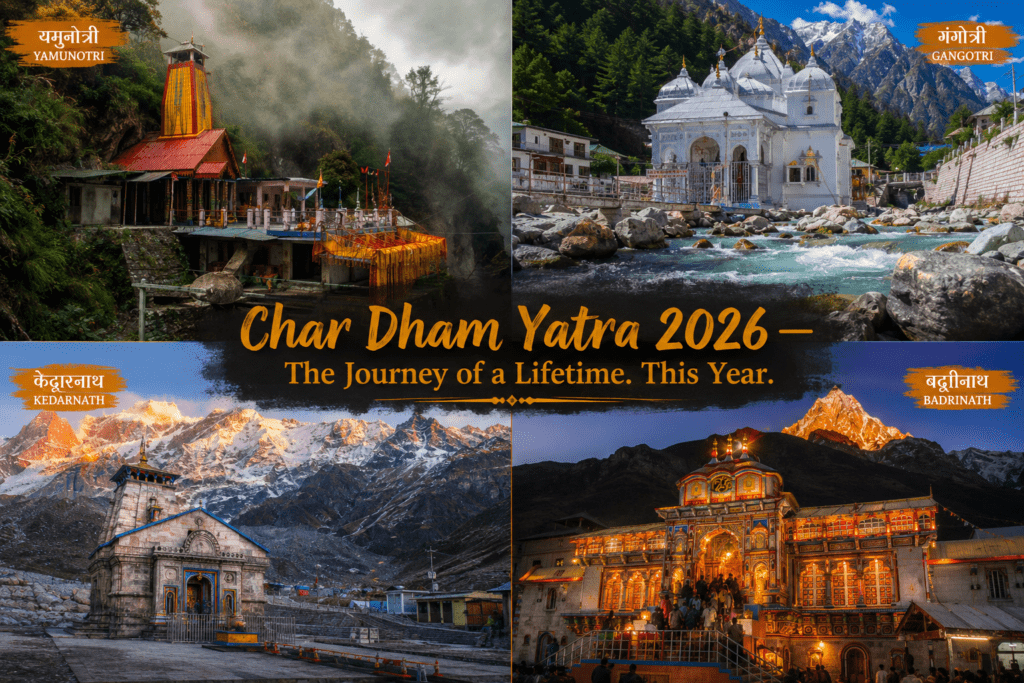
🙏 A NOTE BEFORE YOU BEGIN: The Char Dham Yatra is one of the most sacred pilgrimages in Hinduism — four temples set deep in the Himalayas of Uttarakhand, each with religious significance that stretches back thousands of years. This guide treats that significance with full respect. Whether you are a first-time pilgrim, a senior devotee, a backpacker, or a family planning a once-in-a-lifetime journey — this guide is written for you, with accurate 2026 data, real prices, and honest preparation advice.
⚠️ DISCLAIMER: All prices, registration links, helicopter fares, and travel data in this guide are verified from official 2026 sources as of May 2026. Mountain travel involves inherent risks — always consult your doctor before travel, follow official government guidelines, and respect the fragile Himalayan environment.
Why This Year Is the Year to Go
My grandmother went to Kedarnath in 1987. She walked the entire way from Gaurikund — 16 kilometres up a mountain path at the age of 58, in a cotton saree, with a small cloth bag containing her prasad and her rosary. She arrived at the temple at dawn and stood in the queue for four hours. She cried when she finally saw the Shivlinga.
She came back a different person. Not dramatically, not visibly — but something had settled in her that hadn’t been there before. A quietness. A completeness.
I tell you this not because your Char Dham Yatra will be the same as hers — the roads are better now, the registration is online, there are helicopters and palki services and HRTC buses with cushioned seats. But because the thing at the centre of all of this hasn’t changed. The Bhagirathi still runs ice-cold past the steps of Gangotri. Yamunotri still demands you earn it. Kedarnath still sits at 3,583 metres under a sky that doesn’t look like any other sky. And Badrinath — the last of the four — still sends people home feeling like something was completed.
This guide will get you there. All four of them. Safely, with full information, at whatever budget you’re working with. Let’s begin.
Quick Summary Table — Char Dham Yatra 2026
| Dham | Deity | Altitude | Opening Date 2026 | Trek Required? | Nearest Base |
|---|---|---|---|---|---|
| Yamunotri | Goddess Yamuna | 3,291m | April 19, 2026 | Yes — 6km from Janki Chatti | Barkot |
| Gangotri | Goddess Ganga | 3,415m | April 19, 2026 | No — road accessible | Uttarkashi |
| Kedarnath | Lord Shiva (Jyotirlinga) | 3,583m | April 22, 2026 | Yes — 16–18km from Gaurikund | Guptkashi/Sonprayag |
| Badrinath | Lord Vishnu | 3,133m | April 23, 2026 | No — road accessible | Joshimath |
| Category | Details |
|---|---|
| Traditional sequence | Yamunotri → Gangotri → Kedarnath → Badrinath |
| Registration | Mandatory for all pilgrims — FREE in 2026 |
| Official registration site | registrationandtouristcare.uk.gov.in |
| WhatsApp registration | Send “Yatra” to +91-8394833833 |
| Toll-free helpline | 0135-1364 |
| Season | April 19 to November 2026 |
| Ideal duration | 11–14 days for all four Dhams |
| Total distance (road circuit) | ~1,000–1,200km from Haridwar/Rishikesh |
| Helicopter booking (Kedarnath) | heliyatra.irctc.co.in (ONLY official site) |
Registration — The Non-Negotiable First Step
Why Registration Is Mandatory (And What Happens Without It)
The 2013 Kedarnath floods killed nearly 5,000 people. One of the biggest challenges authorities faced was that nobody knew exactly how many pilgrims were on the routes. That tragedy created the mandatory Char Dham Yatra registration system that every pilgrim must complete today.
Without a valid registration slip, you can be turned back at checkpoints — even if you’ve already reached Sonprayag or Joshimath after a long journey. No slip, no entry. It’s that simple.
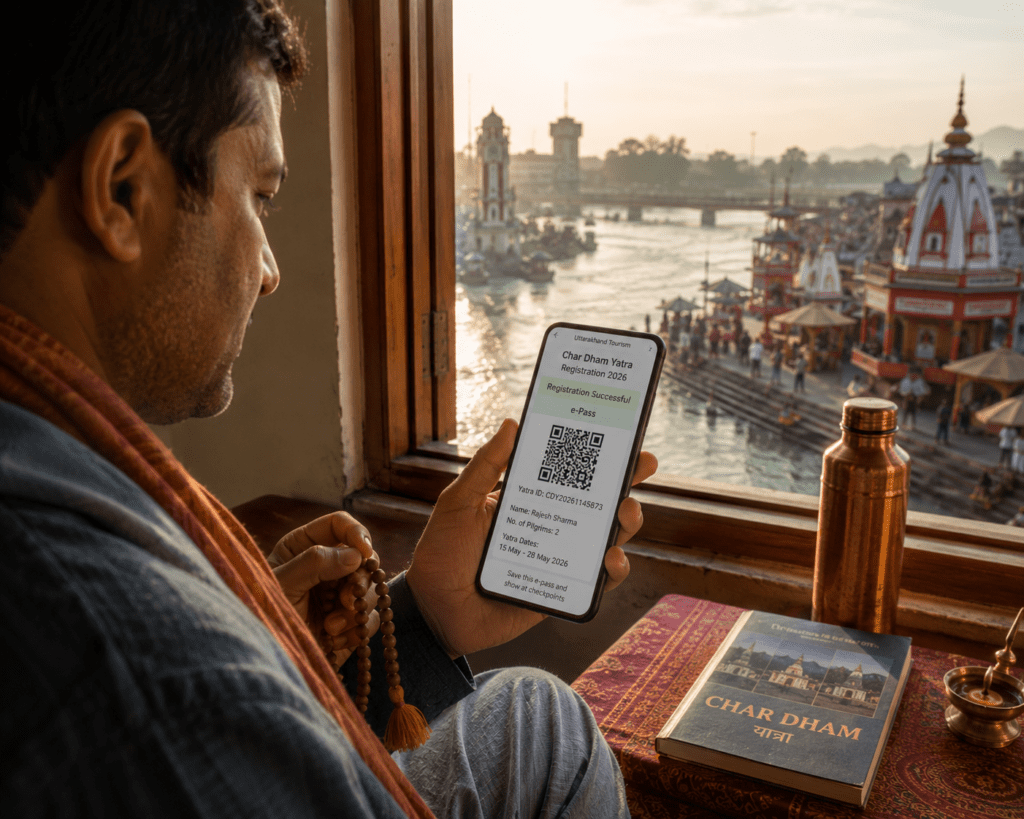
In 2026, the Uttarakhand government is using a GPS-based system to monitor crowd limits. Your QR-coded e-pass is scanned at multiple checkpoints on each route.
2026 Registration — Key Facts
More than 1.26 lakh registrations were done on the first day of Char Dham Yatra registration on 6 March 2026. This year the registration fee for Char Dham is NIL — completely free for both online and offline registration.
All four Dhams are now open for the summer season: Yamunotri and Gangotri opened April 19, 2026 (Akshaya Tritiya). Kedarnath opened April 22, 2026. Badrinath opened April 23, 2026.
How to Register — Four Official Methods
Method 1 — Online Portal (Recommended): Visit: registrationandtouristcare.uk.gov.in Steps:
- Create account with mobile number — OTP verification
- Login and click “Create/Manage Tour Info”
- Enter travel dates and which Dhams you will visit
- Add all pilgrim details (name, Aadhaar number, emergency contact)
- Upload ID proof
- Download e-pass with QR code — print one copy AND save on phone
Method 2 — Mobile App: Search “Tourist Care Uttarakhand” on Google Play Store or Apple App Store
Method 3 — WhatsApp: Send the message “Yatra” to +91-8394833833 and follow the automated prompts to receive your QR code.
Method 4 — Offline Counters: Offline Registration Counters open from 15 April 2026. There are 30 counters in Rishikesh and 20 in Haridwar. Also available at Dehradun, Guptkashi, and Sonprayag.
Documents Required for Registration
- Valid Aadhaar Card (mandatory — Aadhaar details required in 2026)
- Passport / Voter ID / Driving Licence as backup
- Active mobile number for OTP
- Emergency contact name and number
- Passport-size photograph (offline only)
Important Registration Rules
- Register for each pilgrim individually — group registration option available
- A few details can be modified after registration, such as travel dates and order of Dham visits. However, your name, Aadhaar details, and phone number cannot be changed.
- Children under 12 and adults over 65 require additional medical clearances.
- Keep phone charged — QR code is scanned at all checkpoints
- Carry a printed backup copy — mobile signal is patchy in the mountains
Understanding Each Dham — The Journey and What Awaits
Dham 1: Yamunotri — Where the Yamuna Begins
Altitude: 3,291m | Trek: 6km from Janki Chatti | Time to reach temple: 3–4 hours trekking
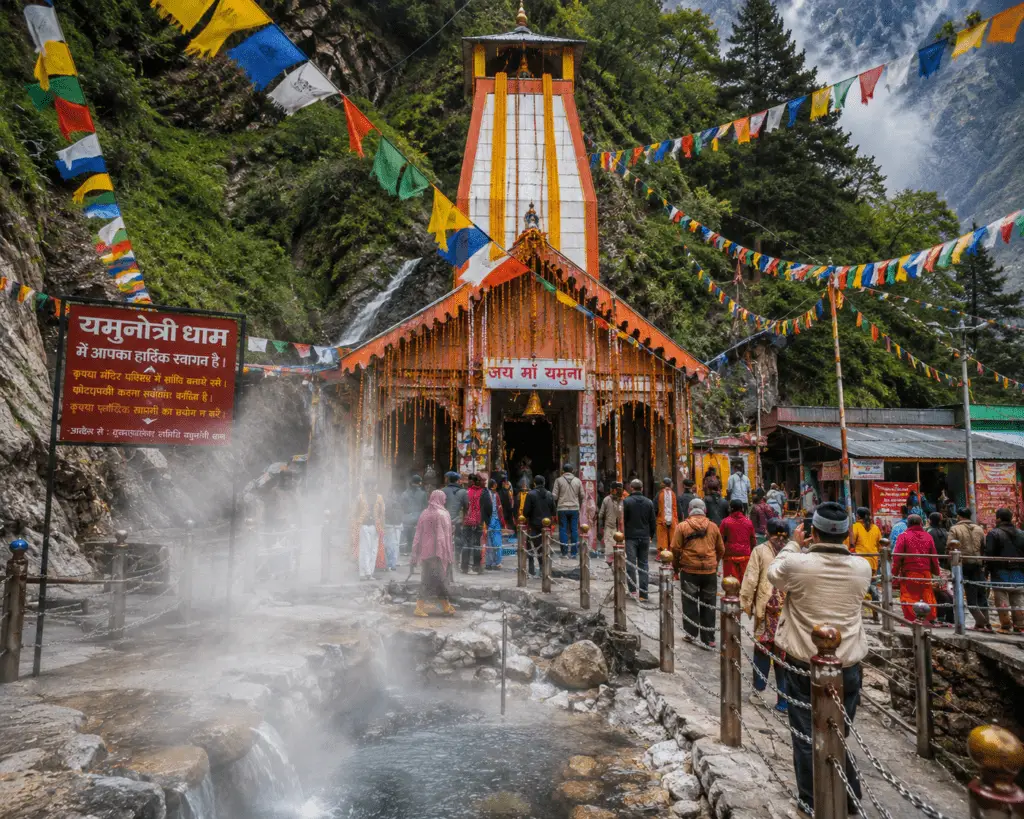
Yamunotri is the westernmost and traditionally the first Dham of the circuit. The source of the Yamuna River, dedicated to Goddess Yamuna. The temple sits in a narrow gorge, and the final approach is lined with natural hot springs — particularly the famous Surya Kund, where pilgrims cook rice and potatoes in the boiling water as prasad.
The trek begins from Janki Chatti — 6 kilometres of moderate incline through rhododendron forest, with the Yamuna River audible below most of the way.
What to expect at the temple: Shila Darshan (the black rock believed to be the seat of Goddess Yamuna), the hot springs for cooking prasad, and crowds that build significantly by mid-morning. Go early.
Key stop before Yamunotri: Barkot — your base village. Stay here the night before for the early morning start.
Dham 2: Gangotri — Road All the Way
Altitude: 3,415m | Trek: None — road accessible | Drive from Uttarkashi: 100km, 3–4 hours
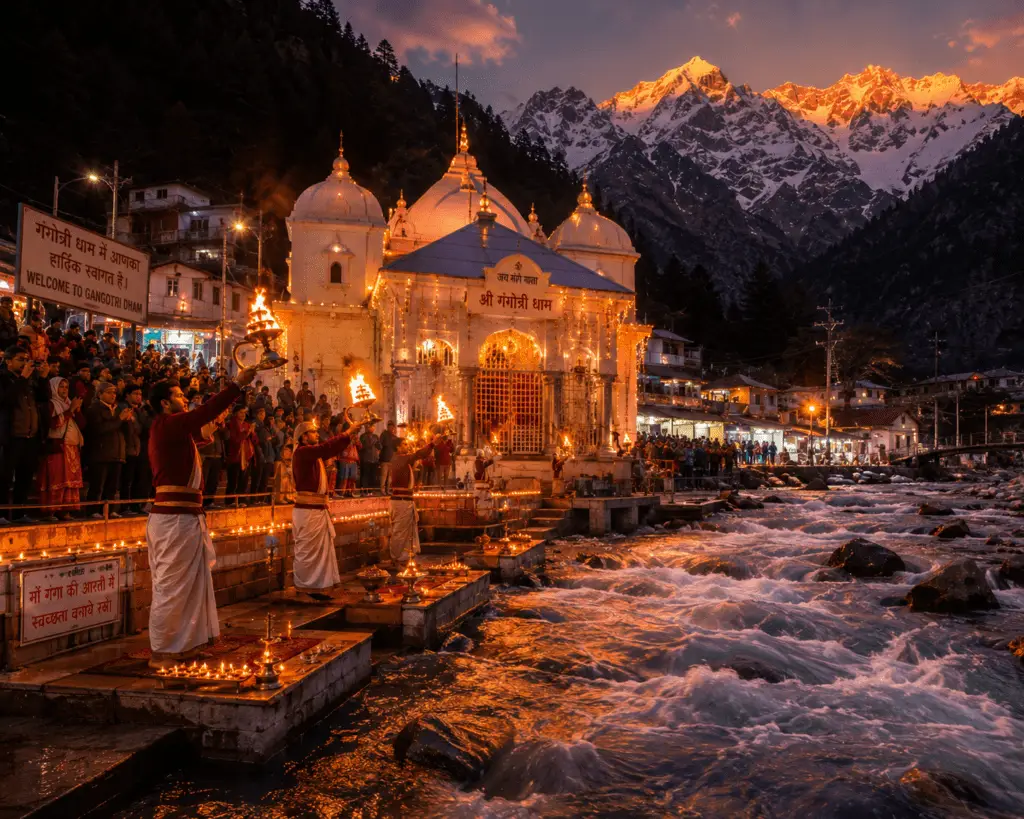
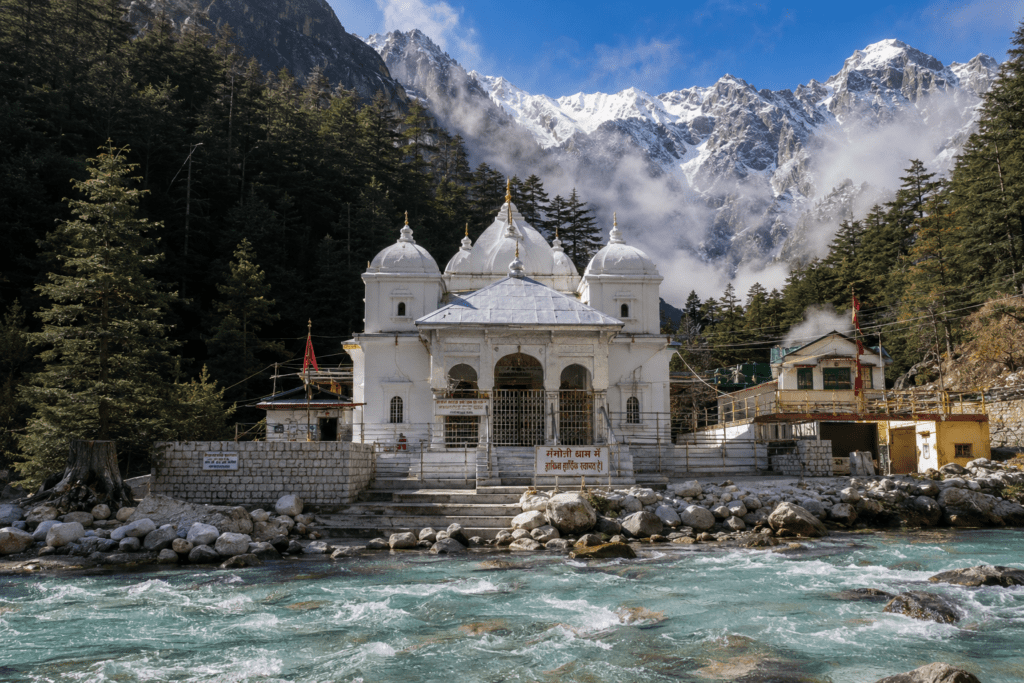
Gangotri is the most accessible of the four Dhams — the road goes all the way to the temple. The town sits at the origin of the Bhagirathi River (the main tributary of the Ganga), surrounded by dense deodar forest and overlooked by snow peaks.
The Gangotri temple — dedicated to Goddess Ganga — is a striking white marble structure on the bank of the Bhagirathi. The evening aarti here, with the river running fast and cold below the stone steps and the mountains turning dark behind the temple lights, is one of the most beautiful religious experiences in India.
Gangotri National Park: The road to Gaumukh (the actual glacier source of the Ganga) begins from Gangotri — 18km trekking. Most pilgrims don’t attempt this but it is India’s finest glacier trek for those with the time and fitness.
Key stop: Uttarkashi — the main town between Rishikesh and Gangotri. Good accommodation, good food, last reliable ATM before Gangotri.
Dham 3: Kedarnath — The One That Asks the Most of You
Altitude: 3,583m | Trek: 16–18km from Gaurikund | Opening date 2026: April 22
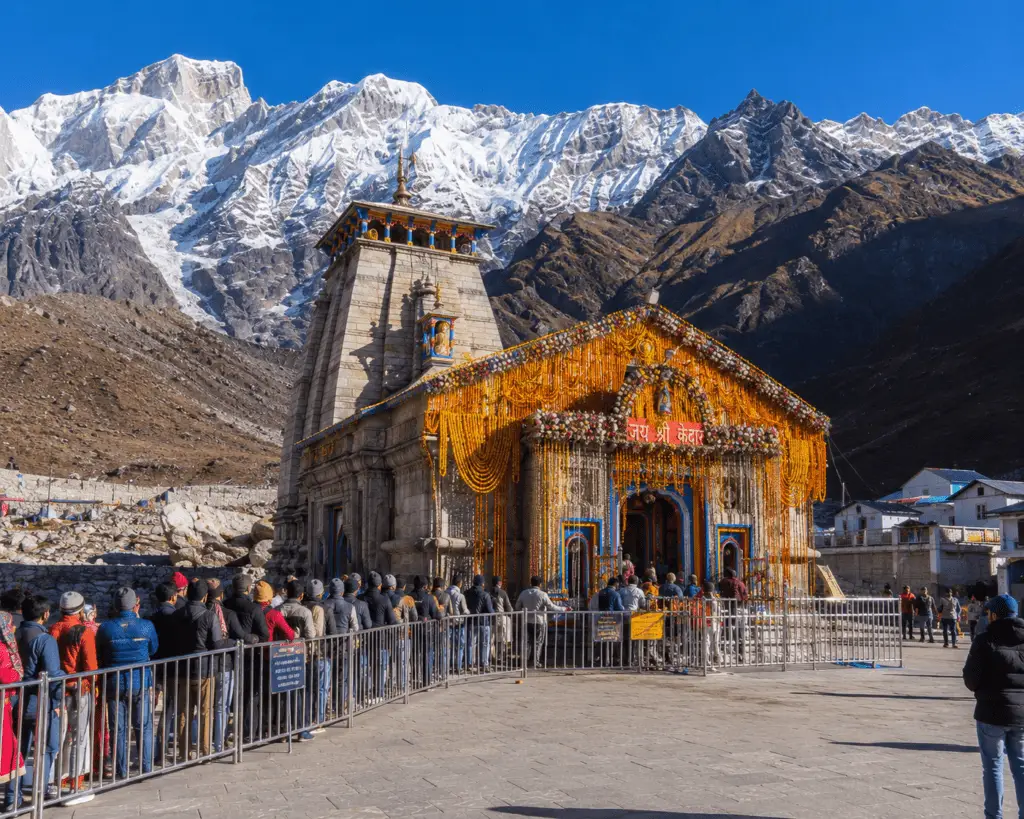
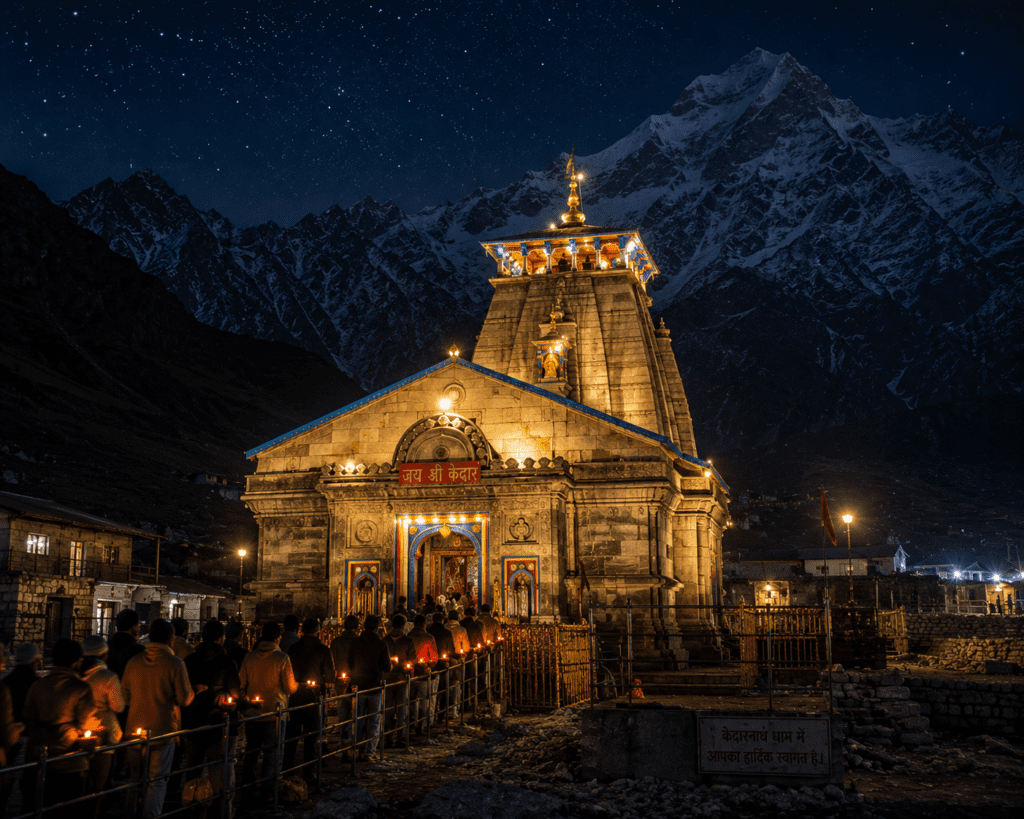
Kedarnath is the heart of the Char Dham — one of the 12 Jyotirlingas, the highest of them all, and the Dham that asks the most of every pilgrim before granting darshan. The ancient stone temple has stood since at least the 8th century, and it survived the catastrophic 2013 floods when a massive boulder — the Bhima Shila — came to rest directly behind the temple and deflected the floodwaters that destroyed everything around it.
Standing in front of Kedarnath temple at dawn, with the Kedarnath peak behind it still in shadow and the first light catching the temple spire, is the kind of moment that makes an entire difficult journey feel instantly, completely justified.
Getting to Kedarnath — All the Options (Full Detail in Part 6)
Dham 4: Badrinath — The Grand Finale
Altitude: 3,133m | Trek: None — road accessible | Opening date 2026: April 23
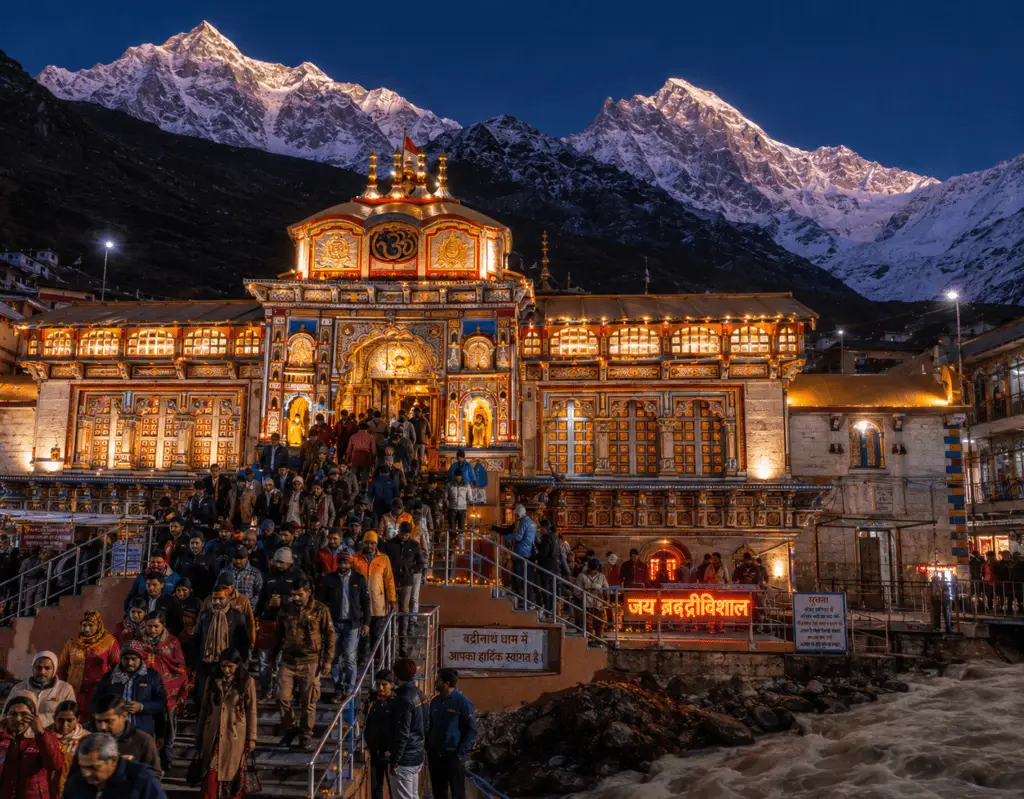
Badrinath is the final and most visited Dham — dedicated to Lord Vishnu in his Badrinarayan form, flanked by the Nar and Narayan peaks. The temple’s distinctive facade (colourful, layered, uniquely Garhwali in style) appears in photographs but doesn’t prepare you for the scale and the setting.
The Alaknanda River runs in front of the temple complex. The Tapt Kund hot spring beside the temple is where pilgrims bathe before darshan — the water is warm even at these altitudes and the contrast with the cold mountain air makes it extraordinary.
Mana Village: 3km from Badrinath — the last village before the Tibet border. Worth the detour for Bhim Pul (a single-stone bridge over the Saraswati River), Vyas Cave (where the Mahabharata was composed according to tradition), and the café that hangs a sign reading “Last Café Before China.”
Getting to Uttarakhand — Trains From All Major Cities
The Gateway Cities: Haridwar and Rishikesh
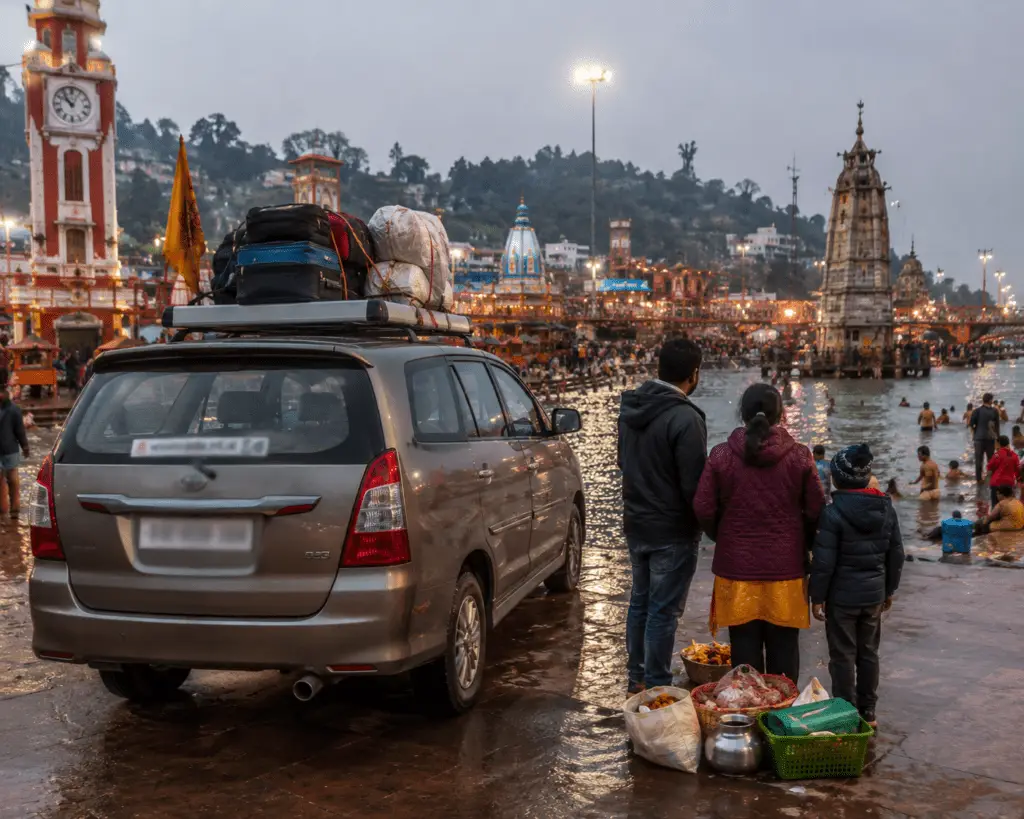
All Char Dham routes begin from either Haridwar or Rishikesh. The traditional circuit begins in Haridwar — the distance chart from key cities:
Haridwar is your gateway. Everything starts here.
Trains From Mumbai to Haridwar/Rishikesh
Best Trains:
| Train | Name | Departs | Arrives | Journey Time | Class Options | Fare (Approx) |
|---|---|---|---|---|---|---|
| 19031 | Haridwar Mail | Mumbai CSMT (10:05pm) | Haridwar (9:35am+1) | ~23 hrs | SL, 3AC, 2AC | ₹550–₹2,100 |
| 22917 | Humsafar Express | Mumbai Bandra (5:45pm) | Haridwar (4:30pm+1) | ~23 hrs | 3AC only | ₹1,400–₹1,800 |
| 12919 | Malwa Express | Mumbai CSMT → Dehradun | ~28 hrs | SL, 3AC, 2AC | ₹600–₹2,300 |
Mumbai → Haridwar booking tip: Book 60 days in advance on IRCTC. Tatkal opens 1 day before at significantly higher rates. The 19031 Haridwar Mail is the most direct and affordable option.
Alternative: Fly Mumbai → Dehradun (Jolly Grant Airport) — IndiGo, Air India, SpiceJet. ₹3,500–₹8,000 one way. Dehradun is 55km from Haridwar — cab ₹800–₹1,200.
Trains From Delhi to Haridwar/Rishikesh
Delhi has the best connectivity to Haridwar — multiple trains daily.
| Train | Name | From | Arrives Haridwar | Time | Fare |
|---|---|---|---|---|---|
| 12017 | Dehradun Shatabdi | New Delhi (6:45am) | Haridwar (10:10am) | 3h 25m | ₹700–₹1,400 (CC/EC) |
| 18477 | Uttarakhand Express | Delhi ANVT (9:40pm) | Haridwar (2:45am) | 5h | ₹250–₹1,800 |
| 14309 | Bhopal-Dehradun Exp | Various | Haridwar | 5–6h | ₹200–₹1,500 |
| 14041 | Mussoorie Express | Delhi Sarai Rohilla (10:15pm) | Dehradun (5:20am) | 7h | ₹250–₹1,700 |
Delhi best option for devotees: Dehradun Shatabdi — clean, fast, arrives Haridwar by 10am giving a full day to proceed.
Also: Volvo buses from ISBT Kashmiri Gate to Haridwar/Rishikesh run 24/7. Journey 5–6 hours. Cost ₹400–₹700. Comfortable and flexible — good if trains are full.
Trains From Bangalore to Haridwar
No direct train — change at Delhi or take connecting routes.
| Option | Route | Total Time | Approx Cost |
|---|---|---|---|
| Best Train | Bengaluru–Hazrat Nizamuddin (Rajdhani) + Delhi–Haridwar | 40–48 hrs total | ₹2,500–₹6,000 |
| Flight | BLR → DEL → Dehradun (Jolly Grant) | 4–6 hrs total | ₹4,000–₹12,000 |
| Direct Train | 22691 Rajdhani Exp → Delhi → Haridwar | ~35 hrs total | ₹2,800–₹5,500 |
Bangalore recommendation: Fly to Dehradun direct (IndiGo, Air India have seasonal direct flights BLR–DED). Cost ₹5,000–₹10,000. Saves 2 days of train travel.
Trains From UP (Lucknow/Varanasi/Allahabad) to Haridwar
UP pilgrims have excellent connectivity — Haridwar is relatively close.
| From | Train | Journey Time | Fare |
|---|---|---|---|
| Lucknow | 15001 Lucknow Mail | ~8–9 hrs | ₹200–₹1,200 |
| Varanasi | Via Delhi (14015 Sapt Kranti or 15017 Ganga Kaveri) | 14–16 hrs | ₹350–₹1,800 |
| Allahabad/Prayagraj | 19407 Vaishali Exp or via Lucknow | 10–12 hrs | ₹250–₹1,500 |
| Agra | Via Delhi, multiple options | 6–8 hrs total | ₹200–₹1,200 |
Trains From Gujarat (Ahmedabad/Surat) to Haridwar
| From | Train | Journey Time | Fare |
|---|---|---|---|
| Ahmedabad | 19031 Haridwar Mail (via Mumbai) OR 19707 Aravali Express | 20–22 hrs | ₹450–₹1,800 |
| Surat | 19031 Haridwar Mail (pickup at Surat) | 22–24 hrs | ₹500–₹2,000 |
| Vadodara | 19707 Aravali Express → Haridwar | 18–20 hrs | ₹400–₹1,700 |
Trains From Odisha (Bhubaneswar/Puri) to Haridwar
| From | Train | Journey Time | Fare |
|---|---|---|---|
| Bhubaneswar | 18477 Uttarakhand Express (Puri–Haridwar) | ~36 hrs direct | ₹550–₹2,200 |
| Puri | 18477 Uttarakhand Express — direct to Haridwar | ~38 hrs | ₹600–₹2,300 |
Odisha tip: The 18477 Puri–Haridwar Uttarakhand Express is the gift — book it directly to Haridwar without any change. Runs twice weekly. Book 60 days in advance.
Jolly Grant Airport (Dehradun) — For Flyers From All Cities
For those flying in, Jolly Grant Airport (DED) in Dehradun is the gateway. Cabs to Haridwar: ₹800–₹1,200. To Rishikesh: ₹600–₹900.
Direct flights available 2026 from: Mumbai, Delhi, Bengaluru, Hyderabad, Chennai, Ahmedabad, Kolkata (seasonal). Check Skyscanner or MakeMyTrip for current schedules.
Road Trips to Haridwar — From Major Metro Cities
Delhi to Haridwar (Road)
Distance: 250km | Time: 4–5 hours (NH-334) Route: Delhi → Meerut → Muzaffarnagar → Roorkee → Haridwar By own car/self-drive: Excellent 4-lane highway, entirely straightforward. Fuel: one full tank from Delhi. By cab: ₹2,500–₹4,000 one way for an Innova (split between family) Bus: Volvo from ISBT Kashmiri Gate — ₹350–₹600, departs every 30 minutes Bike: Smooth ride on NH-334, doable in 5–6 hours. Scenic after Roorkee.
Mumbai to Haridwar (Road Trip)
Distance: 1,440km | Time: 20–22 hours driving (2-day road trip) Route: Mumbai → Surat → Vadodara → Udaipur → Ajmer → Delhi bypass → Haridwar Budget per car: ₹5,000–₹8,000 fuel + tolls (roughly ₹12,000–₹15,000 return) Recommended: Break at Udaipur (Day 1) → Haridwar (Day 2). Much more manageable than a straight drive. By bus: Mumbai to Delhi (18 hours, ₹1,200–₹2,500) then Delhi to Haridwar (5 hours, ₹400–₹700).
Bangalore to Haridwar (Road Trip)
Distance: ~2,400km | Time: 36–40 hours driving Honestly: This is a 3-day road trip minimum. Most practical option — fly to Dehradun or take train to Delhi then drive/bus to Haridwar. If road tripping: BLR → Hyderabad → Nagpur → Bhopal → Agra → Delhi → Haridwar. Legendary drive but commit 4 days.
Kolkata to Haridwar (Road)
Distance: ~1,500km | Time: 22–24 hours Route: Kolkata → Patna → Varanasi → Lucknow → Haridwar Best option for Kolkata: Uttarakhand Express (Puri–Haridwar) is the most comfortable train option. Road via NH-19 is doable in 2 days.
The Char Dham Itinerary — Day by Day
Standard 12-Day Itinerary (Most Popular)
Day 1: Arrive Haridwar/Rishikesh
- Arrive by train, flight (via Dehradun), or road
- Check into hotel — rest and acclimatise to Haridwar altitude (314m, gentle start)
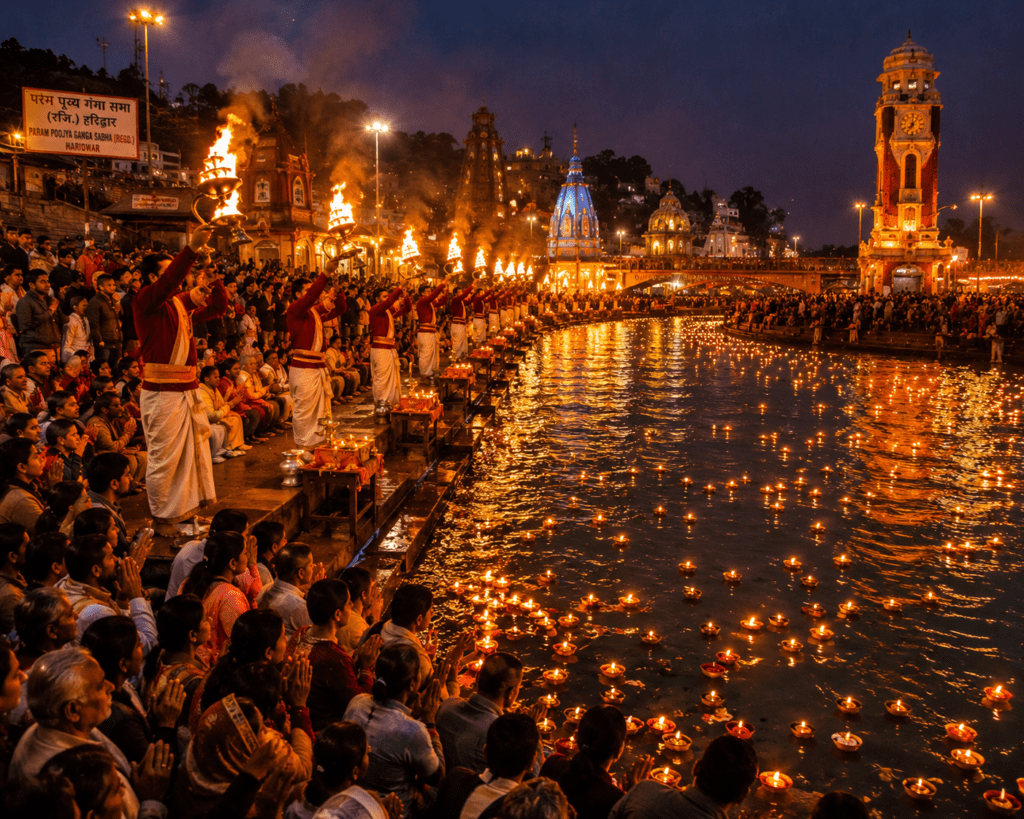
- Evening: Attend Ganga Aarti at Har Ki Pauri — one of the most moving religious ceremonies in India. Thousands of diyas (lamps) float down the Ganga at dusk. Arrive by 6pm for a good viewing spot.
- Complete Char Dham registration if not done already (counter available at Haridwar and Rishikesh)
Day 2: Haridwar → Barkot (Yamunotri base)
- Drive 200km to Barkot — 6–7 hours through Mussoorie and Uttarkashi highway
- Route: Haridwar → Rishikesh → Devprayag → Chamba → Barkot
- Stay in Barkot overnight — budget guesthouses ₹600–₹1,200, mid-range ₹2,000–₹4,000
Day 3: Barkot → Janki Chatti → Yamunotri → Barkot
- Drive 50km Barkot to Janki Chatti (1 hour)
- Trek 6km uphill to Yamunotri temple (3–4 hours up, 2.5 hours down)
- Cook rice in Surya Kund hot spring for prasad
- Temple darshan, return to Janki Chatti, drive back to Barkot
- For those unable to trek: Palki (chair carried by 2–4 people) and ponies available from Janki Chatti — prices below in Part 6
Day 4: Barkot → Uttarkashi
- Drive 100km to Uttarkashi (3–4 hours)
- Rest day — adjust to higher altitude (1,165m)
- Visit Kashi Vishwanath Temple in Uttarkashi town
- Prepare for next morning’s Gangotri visit
Day 5: Uttarkashi → Gangotri → Uttarkashi
- Drive 100km each way to Gangotri (3–4 hours up, check road conditions)
- Temple darshan, Bhagirathi River bath (very cold — brief dip, not a swim)
- Evening aarti at Gangotri — exceptionally beautiful
- Return to Uttarkashi for overnight
Day 6: Uttarkashi → Guptkashi/Sitapur
- Drive 230–250km through Tehri, Srinagar (Garhwal), Rudraprayag to Guptkashi
- 7–9 hours of mountain driving — start early
- Guptkashi is your base for Kedarnath — altitude 1,319m, good acclimatisation point
- Stay overnight in Guptkashi: budget ₹800–₹1,500, mid-range ₹2,500–₹5,000, premium up to ₹12,000
Day 7: Guptkashi → Sonprayag → Gaurikund → Kedarnath Trek (Start)
- Drive from Guptkashi to Sonprayag (30km) — Char Dham checkpoint here. QR code scanned.
- Sonprayag to Gaurikund: shared jeep (₹50–₹80/person, no private vehicles beyond Sonprayag)
- Gaurikund (1,982m): Trek registration, pony/palki booking if needed
- Begin 16–18km trek to Kedarnath OR take helicopter OR use pony/palki
- Reach Kedarnath (3,583m) by afternoon — altitude sickness risk high. Walk slowly.
- Stay at Kedarnath overnight — ESSENTIAL for early morning darshan
- Kedarnath darshan at 4:30–5:00am is the goal — the temple opens for abhishek puja at 4:30am and the crowd before general darshan opens is manageable
Day 8: Kedarnath Darshan → Return to Guptkashi
- Early morning darshan (4:30–7am)
- Trek back down to Gaurikund (faster than ascent — 4–5 hours)
- Return to Guptkashi by evening
Day 9: Guptkashi → Joshimath (Badrinath base)
- Drive 210km Guptkashi to Joshimath via Rudraprayag, Karnaprayag, Chamoli — 7–8 hours
- Joshimath is the base for Badrinath — altitude 1,890m
- Alternatively, drive directly to Badrinath if roads are good (another 45km)
Day 10: Joshimath → Badrinath → Mana Village
- Drive 45km Joshimath to Badrinath (1.5 hours)
- Morning: Tapt Kund bath (hot spring beside temple)
- Temple darshan — opens 4:30am, best to arrive early
- Afternoon: Mana Village (3km from Badrinath) — last village before Tibet border
- Visit Bhim Pul, Vyas Cave, Saraswati River origin
- Evening: Badrinath Aarti (7pm–8pm) — beautiful, atmospheric, deeply moving
- Stay in Badrinath or return to Joshimath
Day 11: Joshimath → Rishikesh/Haridwar
- Drive 250km back to Rishikesh/Haridwar — 8–9 hours
- Final Ganga bath at Haridwar
- Distribute prasad, rest, celebrate the completion
Day 12: Departure
- Return home by train, bus, or flight from Dehradun
Faster 9-Day Itinerary (For Those With Less Time)
| Day | Destination |
|---|---|
| Day 1 | Haridwar arrival + Ganga Aarti |
| Day 2 | Haridwar → Barkot |
| Day 3 | Yamunotri + return to Barkot |
| Day 4 | Barkot → Gangotri → Uttarkashi |
| Day 5 | Uttarkashi → Guptkashi |
| Day 6 | Kedarnath trek + overnight at Kedarnath |
| Day 7 | Kedarnath darshan + return to Guptkashi → drive toward Joshimath |
| Day 8 | Badrinath darshan + Mana + return |
| Day 9 | Drive to Haridwar + departure |
Helicopter-Only 5-Day Express Itinerary (Premium)
| Day | Activity | Details |
|---|---|---|
| Day 1 | Arrive Haridwar, transfer to Barkot | Ganga Aarti, Haridwar |
| Day 2 | Yamunotri by pony + Gangotri drive | Both Dhams in one day possible |
| Day 3 | Fly Sirsi/Phata/Guptkashi → Kedarnath | Helicopter + VIP darshan + return |
| Day 4 | Drive to Badrinath | Darshan + Mana Village |
| Day 5 | Return to Haridwar + departure | Done |
This itinerary is physically demanding despite using helicopter — altitude still affects even helicopter users at Kedarnath (3,583m).
Part 6: Reaching Kedarnath — Every Single Option Explained
The Trek — The Original Way
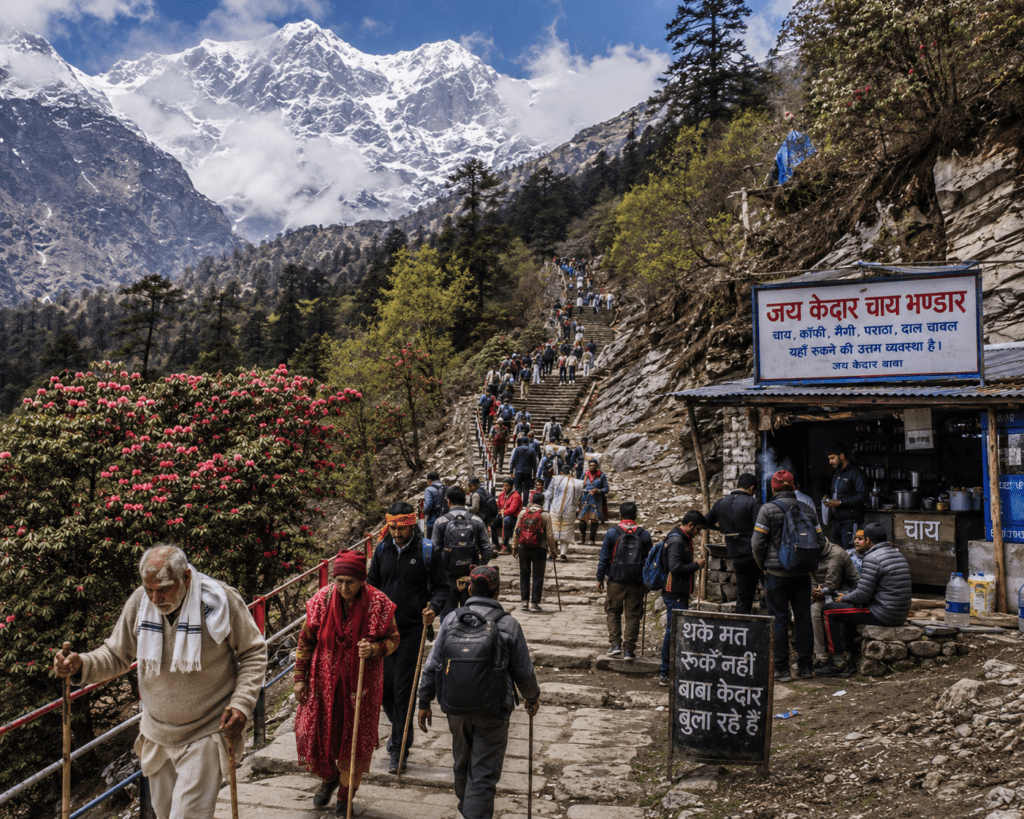
Route: Gaurikund (1,982m) → Kedarnath Temple (3,583m) Distance: 16–18km one way Elevation gain: ~1,600m Time: 6–8 hours uphill for average fitness | 4–5 hours downhill Trail type: Well-marked stone path, partly paved, partly gravel. Not technical but sustained and steep. Recommended start time: 4:30–5:30am from Gaurikund to reach Kedarnath by afternoon, acclimatise, and be ready for next morning’s early darshan.
What you’ll need for the trek:
- Sturdy trekking shoes or sports shoes with ankle support
- Warm layers (temperature at Kedarnath is 5–15°C in summer, drops below zero at night)
- Rain cover for bag — weather changes without warning
- Walking stick (available to rent at Gaurikund ₹50–₹100)
- Water and snacks — dhabas along the route sell chai, Maggi, and glucose biscuits
- Torch/headlamp for early morning starts
- Registered Char Dham e-pass (QR code scanned at Gaurikund before trek)
Dhabas on the trek route: Tea/chai every 3–4km. Meals at Rambara (halfway mark). Prices: Tea ₹30–₹50, Maggi ₹80–₹120, simple dal-rice ₹100–₹150.
Free luggage cloakroom: Available at Gaurikund — leave heavy bags, carry only essentials. Highly recommended.
Pony (Horse) Ride — The Most Common Assisted Option
Route: Gaurikund to Kedarnath on horseback Distance: 16km Time: 5–6 hours up, 4 hours down (horses walk) Cost 2026: ₹2,000–₹2,500 one way | ₹4,000–₹5,000 return (government-fixed rates) Availability: Large number of horses available at Gaurikund — queue up from early morning Booking: On-site at Gaurikund — no advance booking, first come first served What to know: You ride, the horse handler walks alongside. The path is steep and the horse knows it well. Slightly uncomfortable on steep sections — hold the saddle pommel. A good option for those with moderate fitness who want assistance. Horse weight limit: Generally 80–90kg rider weight maximum Important: Horses do not operate in heavy rain or snow conditions
Palki/Doli — Carried Chair
What it is: A wooden or metal chair (palki/doli) carried on the shoulders of 2–4 men (called khandis or dolis). You sit in the chair and are carried the full 16km. Cost 2026: ₹6,000–₹10,000 one way | ₹12,000–₹18,000 return (rates vary by carrier association — confirm before starting) 2-man carry vs 4-man carry: 2-man palki: ₹6,000–₹8,000 one way. 4-man palki (faster, more stable): ₹8,000–₹12,000 one way Who uses it: Elderly pilgrims, those with limited mobility, seriously ill devotees, and those for whom the trek is medically inadvisable Availability: Gaurikund — multiple registered carrier associations. Book directly on arrival. What to carry: Minimum weight with you — carriers are carrying you, not your bags Respect: The men who carry palkis walk 16km uphill with a passenger. They are strong, professional, and deserve respect and appropriate tip (₹200–₹500 on top of agreed fare). Weight limit: Most palki associations have a weight limit of 80–100kg
Pittu (Back-Carrier for Luggage Only)
What it is: A porter who carries your luggage up and down the trek route on their back (conical wicker basket or backpack) Cost 2026: ₹800–₹1,500 per bag one way depending on weight and negotiation Maximum weight: 25–30kg per porter Booking: At Gaurikund — negotiate before departure, agree on price clearly Smart use: Most pilgrims send their main luggage up by pittu, carry only water and snacks themselves, and trek lighter
Helicopter to Kedarnath — The Complete 2026 Guide
This is the most important section for many pilgrims — elderly devotees, those with health conditions, those with very limited time. Here is every detail you need.
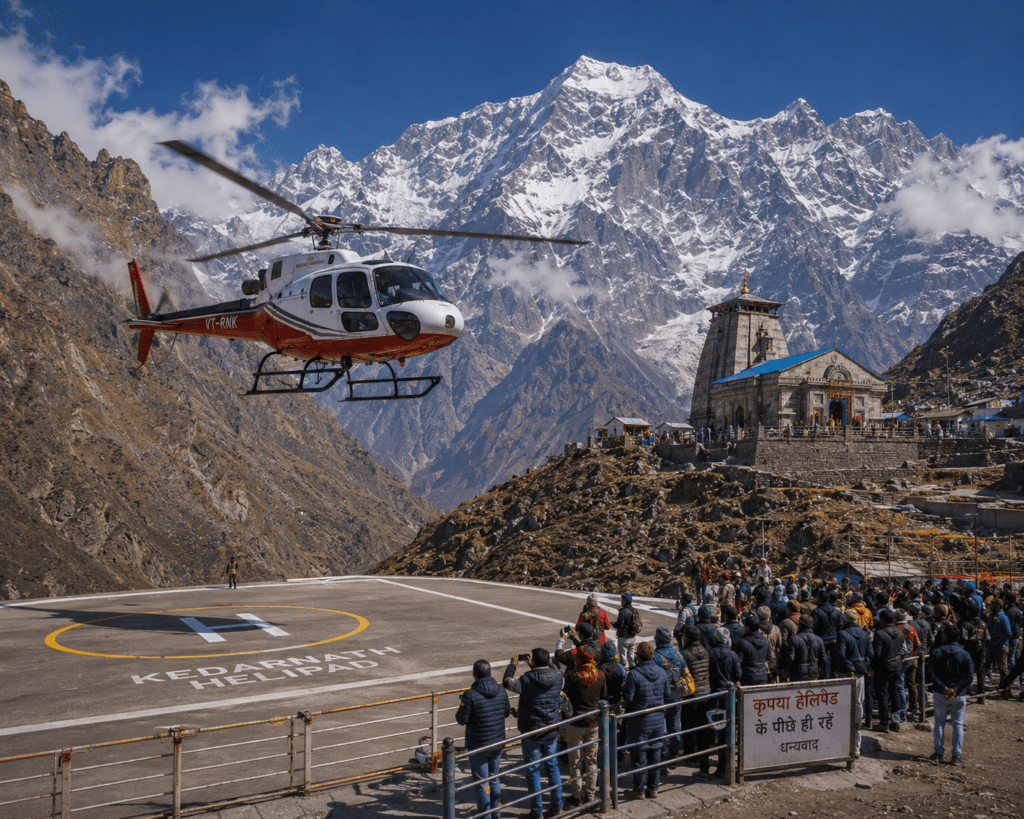
CRITICAL WARNING: The only authorized platform for helicopter tickets is heliyatra.irctc.co.in. You cannot even log into the IRCTC heli-portal without your Yatra Registration Number. Complete your Yatra registration first, then use that ID to book your flight.
Do NOT book from any other website, WhatsApp agent, or travel agent claiming to have IRCTC tickets. These are scams.
Official Helicopter Prices 2026 (IRCTC Fixed Rates — UCADA Regulated)
Official round-trip fares from IRCTC HeliYatra 2026:
- Guptkashi → Kedarnath: ₹12,762 per passenger
- Phata → Kedarnath: ₹10,164 per passenger
- Sirsi → Kedarnath: ₹6,390 per passenger
All prices above are for round-trip. Add ₹300 IRCTC convenience fee + 18% GST.
Total cost per person (including all charges, approximate):
| Helipad | Base Fare (RT) | + ₹300 fee | + 18% GST | Total Approx |
|---|---|---|---|---|
| Sirsi | ₹6,390 | ₹300 | ₹1,151 | ~₹7,841 |
| Phata | ₹10,164 | ₹300 | ₹1,830 | ~₹12,294 |
| Guptkashi | ₹12,762 | ₹300 | ₹2,297 | ~₹15,359 |
Luxury charter helicopter from Dehradun: ₹1,20,000 to ₹2,25,000 per person — private charter, flexible departure, door-to-temple service for those wanting maximum comfort.
Three Helipads — Which One to Choose?
| Helipad | Distance from Temple | Flight Time | Nearest Town | Best For |
|---|---|---|---|---|
| Sirsi | 9km | ~7 minutes | Sitapur | Budget helicopter pilgrims — cheapest option |
| Phata | 30km | ~9 minutes | Phata village | Mid-range — good road access from Rudraprayag |
| Guptkashi | 44km | ~12 minutes | Guptkashi | Most accommodation options; good acclimatisation base |
Recommendation: Guptkashi sits at 1,319m versus Kedarnath at 3,583m — spending a night at Guptkashi gives your body a gradual acclimatisation buffer. Guptkashi also has 30+ stay options within a 5km radius; Sirsi has fewer than 10. That matters if your flight is rescheduled and you need a bed the same night.
Authorised Helicopter Operators 2026
Government-approved operators authorised by UCADA for Kedarnath helicopter services: Pawan Hans, Himalayan Heli, Trans Bharat Aviation, Arrow Aviation, Thumby Aviation, Castle Aviation, and Aero Aircraft. Also: United Helicharters, Rajas Aerosports, Pilgrimage Aviation.
All bookings go through IRCTC regardless of operator — you don’t choose the operator, you choose the helipad and time slot.
Step-by-Step IRCTC Helicopter Booking Guide 2026
Before you start: Have your Char Dham Yatra Registration Number ready. Without this, you cannot proceed.
Step 1: Complete Char Dham Yatra registration at registrationandtouristcare.uk.gov.in → Get your Yatra Registration Number
Step 2: Go to heliyatra.irctc.co.in (official site — bookmark this, do not search Google and click random links)
Step 3: Click “Register/Sign Up” — enter Name, Mobile, Email, State, create password
Step 4: Login using registered mobile + password
Step 5: Enter your Yatra Registration Number (individual) or Group ID (groups)
Step 6: Select “Kedarnath Temple” → Choose preferred helipad (Sirsi/Phata/Guptkashi)
Step 7: Choose date and available time slot
Step 8: Select passengers (max 6 per booking; max 12 per user ID using 2 bookings)
Step 9: Upload ID proof for each passenger
Step 10: Click “Pay & Confirm” → IRCTC payment gateway → Complete payment
Step 11: Download ticket → Print + save on phone → Keep throughout yatra
💡 Booking tip from 2026 experience: Slots for Guptkashi helipad in May–June sold out within 90 minutes on opening day. Rehearse the process on the official site one day before at dummy values so the portal layout feels familiar. Use Chrome or Edge on a desktop — mobile browsers choke under peak load.
Dynamic Pricing Warning
Dynamic pricing applies: +20% (6–15 days before travel), +40% (1–5 days before), +50% same day. Book as early as possible to get base fare.
Helicopter Booking Rules
- Maximum 2 helicopter tickets per user ID, up to 6 passengers per ticket (12 total per ID)
- Children above 2 years: full adult fare. Children under 2: free (no separate seat)
- Weight limit: 80kg per passenger. Extra weight: ₹150/kg
- Reach helipad 1 hour before flight; reach entry point 2 hours before
- Full refund if cancelled due to weather — credited within 5–7 working days
- Refund queries: heliyatra@irctc.co.in within 15 days of departure date
What Helicopter Pilgrims Must Know
- Helicopter drops you at Kedarnath helipad — still a 500m walk to the temple
- You are at 3,583m altitude — altitude sickness can affect helicopter pilgrims too. Do not rush.
- Weather can cancel flights at any time. Flexibility in your itinerary is essential.
- VIP darshan access is included with helicopter ticket — separate queue, shorter wait
- Carry only what you need — luggage is very restricted on helicopters (usually 5–7kg)
Medical Guidance — The Most Important Section of This Guide
Who Must Read This Carefully
A mandatory medical check-up is required before undertaking the journey, especially for individuals above 55 years of age or those suffering from pre-existing conditions such as heart disease, asthma, diabetes, or hypertension. The state government has significantly upgraded medical infrastructure along the pilgrimage routes.
Altitude and Why It Matters
The Char Dham circuit involves significant altitude gain:
- Haridwar: 314m
- Barkot (Yamunotri base): 1,220m
- Yamunotri temple: 3,291m
- Gangotri: 3,415m
- Kedarnath: 3,583m
- Badrinath: 3,133m
Altitude Sickness (AMS — Acute Mountain Sickness) can affect anyone at above 2,500m, regardless of fitness. Symptoms: persistent headache, nausea, dizziness, breathlessness, loss of appetite, difficulty sleeping.
Golden rule: Ascend slowly. Acclimatise. Never ignore symptoms.
Medical Checklist Before You Leave Home
For everyone:
- Full medical check-up including ECG and blood pressure measurement
- Blood sugar test
- Lung function test if any respiratory history
- Discuss current medications with your doctor — some blood pressure medications and diabetic medications need dosage adjustment at altitude
For those above 55:
- Doctor’s fitness certificate (now mandatory for registration in some cases)
- Stress ECG or treadmill test recommended
- Additional consultation if any cardiac history
- Medical certificate may be required at certain checkpoints
For diabetics:
- Blood sugar monitoring at altitude behaves differently — discuss with endocrinologist
- Carry more glucose tablets and snacks than you think you need
- Dehydration + altitude + exertion affect insulin sensitivity significantly
For those with hypertension:
- Altitude raises blood pressure further — medication may need adjustment
- Inform your doctor of the altitudes you’ll be visiting
- Blood pressure monitor essential to carry
For those with asthma/respiratory conditions:
- Consult pulmonologist before travel
- Higher altitude = less oxygen = harder breathing even without exertion
- Carry all inhalers, ensure they’re full
- Avoid cold air at dawn without face cover
What to Carry in Your Medical Kit
Every pilgrim should have:
- Paracetamol (500mg or 650mg) — for headache/fever
- ORS sachets — dehydration is very common at altitude
- Digene / antacid — mountain food and exertion cause acidity
- Imodium / Norflox — traveller’s diarrhoea
- Band-aids and antiseptic cream — for trek blisters and minor cuts
- Pulse oximeter — cheap (₹800–₹1,500 online) and essential. Shows your blood oxygen level. Below 90% at rest = descend immediately.
- Portable oxygen can — available in Sonprayag and Gaurikund (₹200–₹400). Use if breathlessness is sudden and severe.
- Lip balm + moisturiser — mountain air is extremely dry
- Sunscreen SPF 50+ — UV radiation is high at altitude even on cloudy days
If prescribed by your doctor:
- Diamox (Acetazolamide) 250mg — for altitude sickness prevention
- Dexamethasone — emergency severe AMS treatment (prescription required)
Medical Facilities on the Route
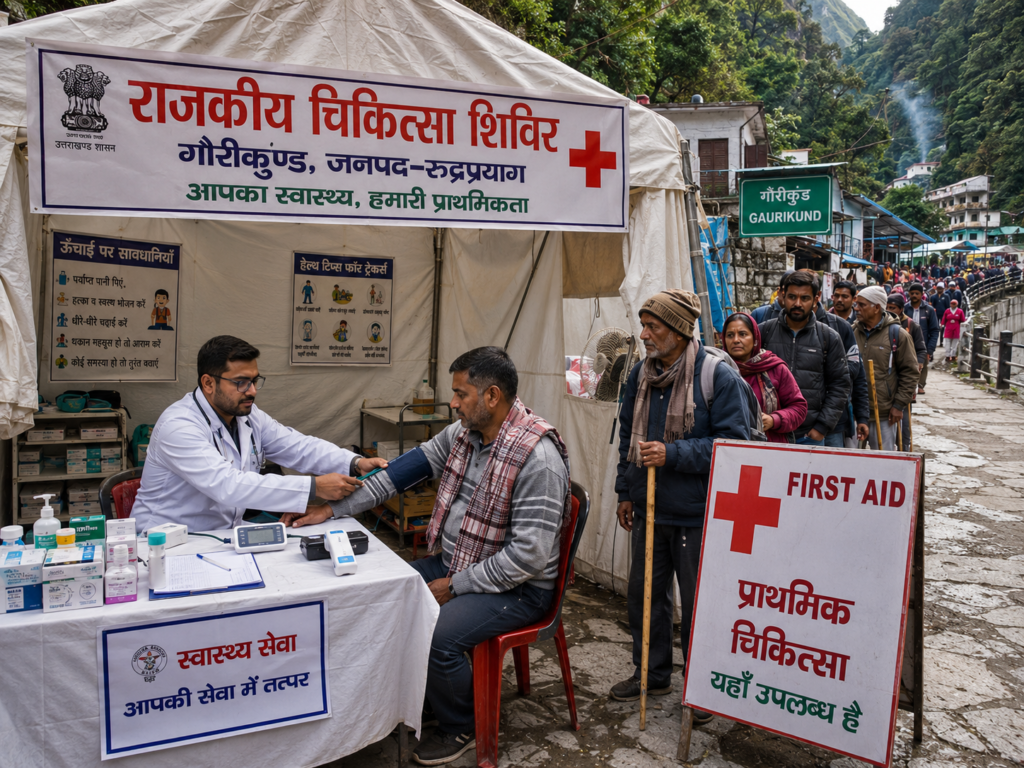
- Sonprayag: Government medical camp, doctor on duty during season
- Gaurikund: Medical camp, first aid, SDRF team stationed
- Kedarnath (at the camp): Medical team, oxygen cylinders, emergency tent
- Badrinath: Hospital at Joshimath (nearest full facility)
- Uttarkashi: District hospital — the main medical facility for Gangotri/Yamunotri route
SDRF Rescue: Uttarakhand State Disaster Response Force has teams stationed at all four Dhams. If someone collapses or requires emergency evacuation, they handle helicopter rescue. This is why registration is mandatory — they can find you.
Emergency number Uttarakhand: 112 | SDRF helpline: 1070
When to Descend Immediately — No Arguments
- Confusion, disorientation, or loss of coordination
- Inability to walk straight
- Severe breathlessness at rest
- Pulse oximeter reading below 85%
- Persistent vomiting
- Chest pain of any kind
- Blue tinge to lips or fingernails
Descend first, seek medical help second. Altitude sickness resolves rapidly on descent.
Traveller Types — Specific Guidance for Each
For Senior Citizens and Elderly Devotees 🙏
Char Dham Yatra is one of the most common final pilgrimage goals for elderly devotees. The mountains accommodate all devotees, but seniors must plan with more care.
Best route for seniors: Hire a private cab for the entire circuit — flexibility to rest, stop, and adjust pace is essential. Do not rush between Dhams.
Kedarnath options for seniors: Palki (carried chair — ₹6,000–₹18,000 one way), helicopter (₹7,841–₹15,359 per person round trip), or pony (₹2,000–₹2,500 one way). Discuss with your doctor which option suits your specific health condition.
Extra days: Build 1–2 extra rest days into the itinerary. A 14-day circuit works better than a 10-day rush for seniors.
Temperature: Evenings and nights are cold even in summer. Woollen shawl and thermal inner layers essential.
Specific cautions: Do not attempt early morning cold-water bath in river/stream — hypothermia risk in elderly. Use warm water at Tapt Kund (Badrinath) which is naturally warm.
Medical certificate: Keep doctor’s fitness certificate. Medical teams at checkpoints may ask for it for pilgrims who appear to be struggling.
For Solo Backpackers — The No-Budget Version
Char Dham Yatra on the absolute minimum is entirely possible. Here’s the framework:
Transport: HRTC government buses between all major stops. Haridwar → Barkot → Uttarkashi → Guptkashi → Joshimath all covered by bus. Shared jeeps for the shorter legs.
Accommodation: Ashrams and dharamshalas at all four Dhams offer free or ₹50–₹200/night lodging. Donations expected. Conditions are basic. Bring a sleeping bag liner.
Food: Bhandara (free community meals) available near all four temples during the Yatra season. Community kitchens run by religious organisations. Also available: langars at Sikh gurudwaras in Rishikesh.
Realistic minimum budget (excluding train to Haridwar): ₹500–₹800 per day if using buses, ashrams, and bhandara meals. 12-day trip: ₹6,000–₹10,000 excluding getting to Haridwar.
Bus route from Haridwar:
- Haridwar → Barkot (HRTC bus): ₹250–₹350
- Barkot → Uttarkashi → Guptkashi (HRTC/shared jeep): ₹400–₹600
- Guptkashi → Sonprayag (shared jeep): ₹80–₹120
- Joshimath → Badrinath (shared jeep): ₹100–₹150
For Families With Children
Best age for the trek: Children 8 years and above can manage the Yamunotri and Kedarnath treks with appropriate breaks. For younger children — ponies at Yamunotri and pony/palki at Kedarnath are good options.
Child helicopter fare: Children above 2 years pay full adult fare for Kedarnath helicopter.
Pack extra: Children dehydrate faster at altitude. Carry more ORS and water than you think. Glucose biscuits and light snacks throughout the day.
Vehicle: Own car or private cab with car seat/booster if child is under 10 — mountain road bumps make this a safety consideration.
For Couples
The Char Dham Yatra for couples is one of the most spiritually significant shared experiences available. The combination of physical challenge and sacred destination creates a journey that most couples describe as transformative.
Best for couples: Self-drive car (own or rented) gives the most flexibility. Mid-range hotels with attached bathrooms for comfort after tiring days.
Romantic moments: Evening aarti at Gangotri. Sunrise from Kedarnath base camp. The Badrinath night sky.
For Groups (Pilgrimage Groups, Corporate, Family Groups)
Best option: Chartered bus or Tempo Traveller from Haridwar for the entire circuit. Cost: ₹12,000–₹18,000/day for a 26-seater, ₹8,000–₹12,000 for a 12-seater Tempo Traveller.
Group registration: Use “Group” option on Char Dham portal — one Group ID for up to 25 people.
Group helicopter: Book multiple tickets under multiple user IDs (max 12 per user ID) in advance.
Designated group leader: One person handles all documentation, permits, hotel check-ins, and daily briefings. Rotational responsibility is fine but one designated person per day.
For Bike Riders — The Mountain Way
The Char Dham circuit by motorcycle is increasingly popular — the routes through Uttarkashi, Rudraprayag, and Chamoli are among the finest mountain roads in North India.
Recommended bikes: Royal Enfield Himalayan 450, Hero XPulse 400, Royal Enfield Classic 350 (for flatter sections). SUV roads throughout — no extreme off-road required.
Important: No two-wheelers are allowed beyond Sonprayag toward Gaurikund. Bike stays parked at Sonprayag — proceed by shared jeep to Gaurikund and then trek/pony/palki.
Ride the circuit: Haridwar → Barkot → Uttarkashi → Gangotri → Guptkashi → Rudraprayag → Joshimath → Badrinath → return via alternate route. Stunning ride throughout.
Weather caution: Mountain roads in the Himalayas — roads close after heavy rain due to landslides. Build buffer days. Check BRO road status daily.
Accommodation — Hotels and Stays at Every Budget
Haridwar (Starting Point)
| Budget | Property | Price/Night | Why |
|---|---|---|---|
| Free | Ashrams (Parmarth Niketan, etc.) | Donation | Spiritual, basic, good for solo pilgrims |
| Budget | Hotel Shivalik, Hotel Mansarovar | ₹700–₹1,500 | Close to Har Ki Pauri |
| Mid | Ganga Lahari Hotel | ₹2,500–₹4,500 | River-facing, clean |
| Premium | Radisson Blu Haridwar | ₹7,000–₹15,000 | Best property in Haridwar |
Rishikesh (Alternative Starting Point)
| Budget | Property | Price/Night |
|---|---|---|
| Budget | Zostel Rishikesh / Moustache Rishikesh | ₹700–₹1,800 |
| Mid | Aloha on the Ganges | ₹3,500–₹6,000 |
| Premium | Ananda in the Himalayas | ₹25,000–₹60,000 (resort) |
Barkot (Yamunotri Base)
Budget guesthouses: ₹500–₹1,200/night. Mid-range: GMVN Tourist Rest House ₹1,500–₹2,500 (book via gmvnl.com). Homestays available from ₹400–₹800 including meals.
Uttarkashi (Gangotri Base)
Budget guesthouses: ₹600–₹1,500. Hotel Rishiraj: ₹2,000–₹3,500 (mid-range). GMVN Tourist Rest House: ₹1,200–₹2,500.
Guptkashi/Sitapur (Kedarnath Base)
The most important base to get right — you spend 2 nights here.
| Budget | Property | Price/Night |
|---|---|---|
| Budget | Local guesthouses | ₹600–₹1,200 |
| Mid | Hotel Kedar Palace, Guptkashi | ₹2,500–₹4,500 |
| Mid-Premium | Skand Puran Hotel | ₹3,500–₹6,000 |
| Premium | Zostel Guptkashi | ₹1,000–₹3,500 |
At Kedarnath Temple
Staying at Kedarnath is essential for the early morning darshan experience.
| Option | Price/Night | Notes |
|---|---|---|
| GMVN tents | ₹1,500–₹3,000 | Government tents — book via gmvnl.com |
| Private camp tents | ₹800–₹2,000 | Basic, functional |
| GMVN cottages | ₹2,500–₹4,500 | More comfortable — book far in advance |
| Dharamshalas | ₹100–₹500 | Basic, temple trust run |
GMVN booking: gmvnl.com — book as early as possible, especially July-August peak.
Joshimath/Badrinath
| Budget | Property | Price |
|---|---|---|
| Budget | Local Dharamshalas | Free–₹500 |
| Mid | Hotel Narayan Palace, Joshimath | ₹2,000–₹4,000 |
| Mid | Hotel Snow Crest, Badrinath | ₹1,500–₹3,000 |
| Premium | Mana Resorts, Badrinath | ₹5,000–₹9,000 |
What to Eat on the Char Dham Circuit
The Mountain Pilgrim’s Table
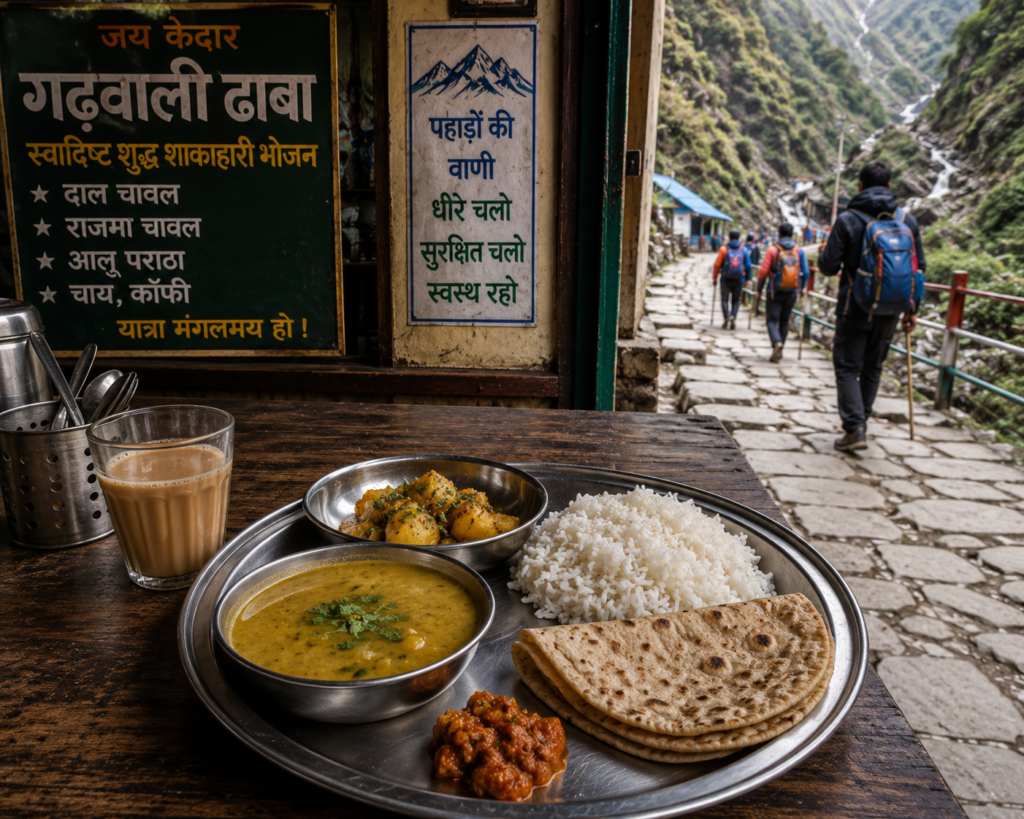
The Char Dham route feeds pilgrims with simple, nourishing mountain food. Expect dal, rice, roti, and vegetable curries as the backbone of every meal. Most restaurants along the route are vegetarian — no meat or eggs typically sold.
Haridwar and Rishikesh: The best food options of the circuit. Chhotiwala Restaurant in Rishikesh (₹150–₹350 for a thali, legendary dal), Chotiwala in Haridwar, Mohan Restaurant for North Indian. Rishikesh has international cafés (German Bakery, Little Buddha Café) if you want variety.
Uttarkashi: Good dhabas on the main road. Dal-roti-sabji ₹100–₹150. Rajma-rice a speciality.
Barkot/Janki Chatti: Simple dhabas. Sindhi curry (local yellow lentil), rice, and local ghee. Very affordable — full meal ₹80–₹130.
On the Kedarnath trek: Chai every 3–4km. Maggi (₹80–₹120) is the universal trekker meal. At Rambara (halfway): simple rice and dal available. At Kedarnath base: multiple dhabas serving hot food — thali ₹150–₹200.
Kedarnath itself: Food is more expensive at altitude (everything is carried up). Simple thali ₹200–₹300. Carry your own snacks.
Badrinath: Good dhabas near the temple. Try the local Garhwali thali — includes chainsoo (black lentil), kafuli (leafy green curry), and badi (sun-dried lentil dumplings). Full thali ₹150–₹250.
Free meals (Bhandara): Community meals are served near all four temples during the yatra season. Temple trusts, religious organisations, and community groups sponsor these. Typically rice, dal, and sabji. No cost — donation if you wish.
Important for diabetics: Manage expectations about food timing on trek days — eat before starting, carry glucose biscuits, maintain water intake.
Char Dham Packages — Organised Tours
GMVN (Government of Uttarakhand)
The most trusted source for Char Dham packages — government-run, transparent pricing, includes GMVN accommodation throughout.
GMVN Char Dham Package 2026:
- Duration: 11 nights / 12 days from Haridwar
- Includes: AC/non-AC transport, GMVN accommodation (twin sharing), daily breakfast + dinner
- Cost: ₹18,000–₹35,000 per person depending on vehicle and room type
- Booking: gmvnl.com
GMVN Helicopter Package (Kedarnath): Includes helicopter ticket + GMVN accommodation + transport for other Dhams. ₹45,000–₹75,000 per person.
Private Packages — What to Expect at Each Level
Budget Package (₹18,000–₹30,000/person, 12 days):
- Non-AC shared cab (Tata Sumo or similar)
- Budget guesthouses, twin sharing
- Breakfast + dinner included
- No helicopter — full trek at Kedarnath and Yamunotri
Mid-Range Package (₹35,000–₹60,000/person, 12 days):
- AC Innova Crysta private cab
- Mid-range hotels, twin sharing
- All meals included
- Pony/palki at Kedarnath or helicopter upgrade option
Premium/Luxury Package (₹80,000–₹2,00,000+/person, 12 days):
- Helicopter for Kedarnath (IRCTC official)
- Luxury hotels throughout (Radisson Haridwar, resort stays)
- Private vehicle throughout
- Personal guide, VIP darshan access, porter included
All-Helicopter Char Dham (Char Dham by Air): Starting from Dehradun. Helicopter to all four Dhams (Yamunotri and Gangotri via combination of helicopter + short walk). Cost: ₹1,50,000–₹2,50,000 per person for the full package. Includes luxury stays, private helicopter, VIP darshan. Available through Uttarakhand Tourism and GMVN.
Budget Breakdown — What Every Level Actually Costs
The No-Money Pilgrim (Bare Minimum)
Using ashrams, buses, bhandara meals
| Expense | Estimated Cost |
|---|---|
| Train to Haridwar (sleeper from major city) | ₹300–₹700 |
| Local buses Haridwar circuit | ₹1,500–₹2,500 |
| Ashram/dharamshala stays (12 nights) | ₹600–₹2,400 (₹50–₹200/night) |
| Food (bhandara + some meals) | ₹1,500–₹3,000 |
| Trek at Kedarnath (own walking) | ₹0 |
| Yamunotri trek (own walking) | ₹0 |
| Entry/registration fees | ₹0 (registration free 2026) |
| Miscellaneous | ₹1,000 |
| Total from Haridwar | ₹5,000–₹10,000 |
Budget Traveller (₹10,000–₹25,000 total from Haridwar)
- HRTC buses + shared jeeps
- Budget guesthouses ₹600–₹1,200/night
- Restaurant meals ₹150–₹300/day
- Pony at Kedarnath (₹2,000–₹2,500 one way)
- Pony at Yamunotri (₹800–₹1,200 one way)
Mid-Range Traveller (₹40,000–₹80,000 total from Haridwar)
- Private cab / Innova for the circuit
- Mid-range hotels
- All meals at proper restaurants
- Helicopter at Kedarnath (~₹12,000–₹15,000/person)
- Palki/pony at Yamunotri
Luxury Traveller (₹1,00,000–₹2,50,000+ total from Haridwar)
- Private luxury vehicle or all-helicopter circuit
- 4-star hotels throughout
- Personal guide + porter
- VIP darshan access
- Helicopter at Kedarnath + premium charter
What to Pack — By Traveller Type
The Universal Packing List (Everyone)
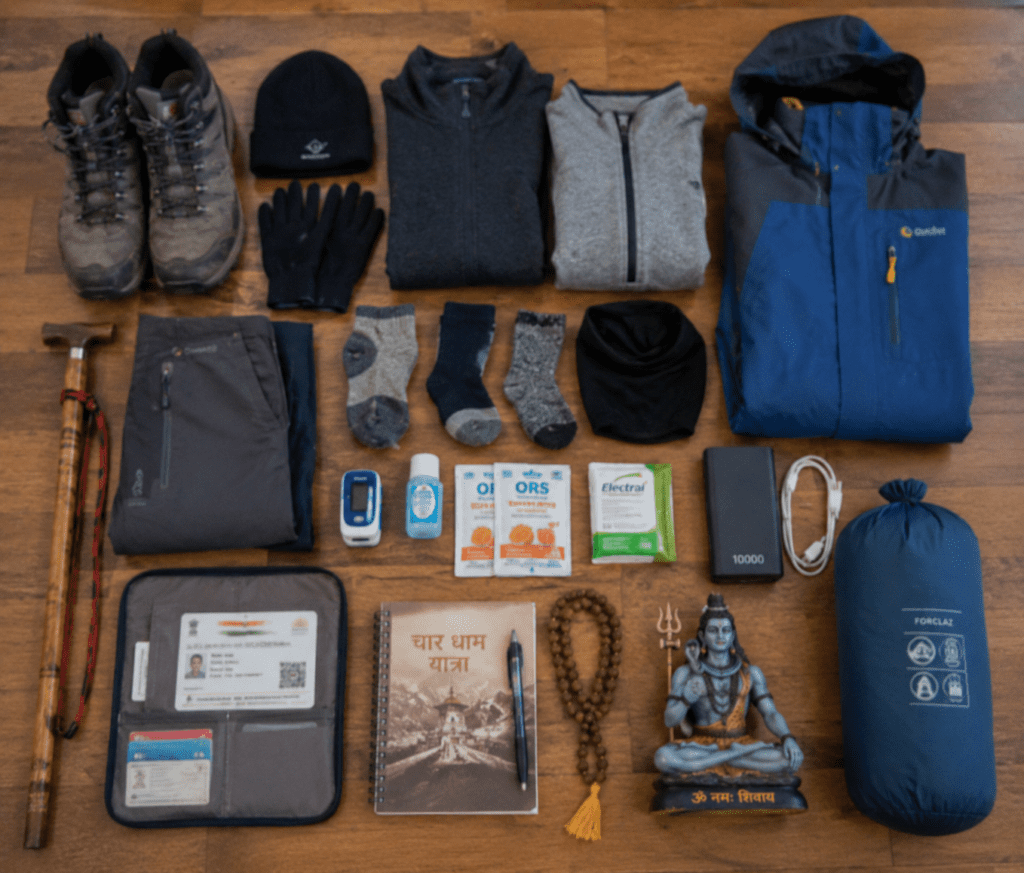
Documents:
- Char Dham e-pass (printed + phone)
- Aadhaar card (original — mandatory)
- ID copies (3 photocopies each)
- Doctor’s fitness certificate (if above 55)
- Emergency contact card in wallet (separate from phone)
Clothing:
- 3–4 sets comfortable cotton inner layers
- 2 warm fleece/woollen layers (nights are cold at all Dhams)
- 1 waterproof rain jacket (mountain rain is sudden and heavy)
- Sturdy walking shoes or trekking shoes (NOT sandals at Kedarnath or Yamunotri)
- Thick woollen socks — 4 pairs minimum
- Thermal inner wear (at least one set)
- Woollen cap and gloves (essential at Kedarnath even in May)
- Traditional/devotional attire for temple (comfortable salwar/kurta, saree)
- Flip-flops for dharamshalas and temple precincts
Medical (as detailed in Part 7):
- Pulse oximeter
- Portable oxygen can (buy at Sonprayag if unsure)
- ORS sachets, paracetamol, antacid, anti-diarrhoeal
- Band-aids, antiseptic, any personal medications (extra supply)
- Diamox if prescribed
Practical:
- Power bank (20,000mAh minimum — electricity unreliable at high camps)
- Universal adapter + multi-port USB charger
- Torch/headlamp with extra batteries
- Reusable water bottle + purification tablets
- Sunscreen SPF 50+, lip balm SPF
- UV400 sunglasses
- Small padlock for guesthouse rooms
- Dry bag / ziplock bags (keep documents and phone dry in rain)
- Trekking pole/walking stick (buy at Gaurikund if needed — ₹50–₹100)
- Plastic bag for wet/dirty clothes
Food to carry:
- Dry fruits, nuts, energy bars (glucose biscuits are the trail staple)
- Electrolyte sachets
- Chocolate (altitude energy + spirits booster)
Additional for Seniors
- Foldable walking stick (already discussed — carry from home)
- Blood pressure monitor
- Glucose monitor (diabetics)
- Extra warm clothing (one additional layer beyond what you think you need)
- Medical alert card (listing conditions and medications in English and Hindi)
Additional for Trekkers
- Lightweight trekking backpack (30–40L for the trek, separate from main luggage)
- Quick-dry towel
- Blister prevention tape
- Gaiters (for snow sections if trekking early season)
Leave at Home
- Heavy suitcases — use soft duffle bags you can leave at hotels
- Valuables (jewellery, expensive electronics)
- Non-vegetarian food — not appropriate to carry through temple towns
- Alcohol — not appropriate on this pilgrimage circuit and discouraged in temple towns
- Plastic bottles and single-use plastics — please carry reusable
Things to Know — Rules, Customs & What to Avoid
Temple Rules 2026
Entry restrictions have been implemented at certain temples, including Kedarnath, Badrinath, and Gangotri, where non-Hindus may face specific access conditions. Mobile phones and cameras inside temple premises are strictly prohibited to preserve the sanctity of the pilgrimage experience.
- Remove shoes before entering all temple precincts
- Dress modestly — shoulders and legs covered. Saree/salwar for women, kurta-pyjama or dhoti for men preferred
- No leather items (belts, wallets) inside the temple sanctum — leave them at the shoe counter
- Maintain silence in the sanctum sanctorum
- Follow the queue — VIP/helicopter queue is separate from general queue
Things to Strictly Avoid
On the trek and at Kedarnath:
- Do not litter. Ever. The mountains are struggling with plastic waste.
- Do not play loud music on the trek — it disturbs other pilgrims and wildlife
- Do not click photos inside the temple (rule enforced by security in 2026)
- Do not take prasad cooked in Surya Kund back home in plastic — use the leaf packets sold there
General:
- Do not engage touts offering “special darshan” for money — all queue systems are official and free
- Do not pay anyone for registration or helicopter tickets outside the official portals
- Do not book hotels from touts at bus stands or railway stations — book in advance online
- Do not ignore altitude symptoms in yourself or a travel companion
Scam Awareness
Helicopter ticket scams: Multiple fake websites and WhatsApp agents claim to sell “confirmed Kedarnath helicopter tickets.” The ONLY authorized platform is heliyatra.irctc.co.in. Report suspected fraud to Special Task Force helpline: 1090.
Registration scams: Registration is completely free at registrationandtouristcare.uk.gov.in. Anyone charging you for “Char Dham registration” or “e-pass” is scamming you.
Fake guides: Official licensed guides wear ID badges issued by Uttarakhand Tourism. Ask to see the badge.
Pro Tips for Char Dham Yatra 2026
- Register early. Registration opened March 6, 2026 with 1.26 lakh registrations on Day 1. If you’re going in peak season, register the day the portal opens.
- Book helicopter on opening day. Guptkashi slots sold out in 90 minutes last season. Have your Yatra Registration Number, IRCTC login, and payment method ready before 6pm on April 15.
- Start at Yamunotri, end at Badrinath. The traditional west-to-east sequence is traditional for a reason — it allows gradual altitude acclimatisation.
- Spend one full night at Kedarnath. Day-trippers who trek up, see the temple, and trek back the same day miss the early morning abhishek puja. The 4:30am darshan at Kedarnath is a different experience.
- The Gangotri evening aarti is non-negotiable. Most people rush through Gangotri in 2 hours. Stay for the evening aarti. You’ll understand why.
- BSNL and Jio have the best coverage on the circuit. Airtel is good in larger towns. WhatsApp calls work in most places. Download offline maps (Google Maps) for the entire circuit.
- Carry ₹20,000–₹30,000 cash. ATMs beyond Haridwar/Rishikesh are unreliable and have long queues in peak season. Most dhabas, dharamshalas, and small vendors are cash-only.
- Travel Tuesday through Thursday where possible. Friday-Sunday sees maximum crowd at all Dhams.
- Mana Village (3km from Badrinath) is genuinely wonderful and most pilgrims rush past it. Give it 2 hours. The chai at the Last Tea Shop Before China is worth it.
- The GMVN Tourist Rest Houses are the most reliable government accommodation at all four Dhams. Book at gmvnl.com as early as possible — peak season occupancy is 95%+.
FAQ Section
Q: Is Char Dham Yatra registration mandatory in 2026?
A: Yes — absolutely mandatory. Without a valid QR-coded e-pass, you will be turned back at checkpoints even if you’ve already reached Sonprayag or Joshimath. Registration is completely free in 2026 at registrationandtouristcare.uk.gov.in or via WhatsApp (+91-8394833833). Carry a printed copy and have it on your phone.
Q: What are the Char Dham opening dates in 2026?
A: Yamunotri and Gangotri opened April 19, 2026 (Akshaya Tritiya). Kedarnath opened April 22, 2026. Badrinath opened April 23, 2026. Temples close in November (typically after Bhai Dooj and Vijay Dashami). Hemkund Sahib opens May 23, 2026.
Q: What is the cost of Kedarnath helicopter ticket in 2026? A: Official IRCTC HeliYatra round-trip fares (before GST and convenience fee): Sirsi helipad ₹6,390, Phata helipad ₹10,164, Guptkashi helipad ₹12,762. Adding 18% GST and ₹300 convenience fee, total comes to approximately ₹7,841 (Sirsi), ₹12,294 (Phata), and ₹15,359 (Guptkashi) per person. Book ONLY at heliyatra.irctc.co.in.
Q: How difficult is the Kedarnath trek?
A: The Kedarnath trek is 16–18km one way from Gaurikund with 1,600m elevation gain — moderate to difficult for someone of average fitness. Elderly or less fit pilgrims should use the horse (₹2,000–₹2,500 one way), palki chair (₹6,000–₹12,000 one way), or helicopter. Fit pilgrims typically take 6–8 hours up and 4–5 hours down.
Q: How many days are required for the complete Char Dham Yatra?
A: Minimum 10 days from Haridwar, ideally 12–14 days for a comfortable, safe experience. Add 2 more days if any pilgrim in the group is senior or has health concerns. Rush tours of 7–8 days are not recommended — insufficient time for acclimatisation and increases health risk.
Q: What is the total budget for Char Dham Yatra? A: From Haridwar: budget travellers (buses, ashrams, own trek) can manage in ₹5,000–₹15,000 over 12 days. Mid-range (private cab, budget hotels, pony at Kedarnath): ₹30,000–₹60,000 per person. Luxury (helicopter, premium hotels): ₹80,000–₹2,50,000 per person. Add train/flight to Haridwar from your city.
Q: Can senior citizens do Char Dham Yatra?
A: Yes — with proper medical clearance and appropriate planning. Kedarnath is accessible by helicopter (recommended for seniors with any cardiac or respiratory condition), palki (carried chair), or pony. Yamunotri requires either trekking 6km or using a pony/palki from Janki Chatti. Gangotri and Badrinath are fully road-accessible. A mandatory medical check-up is required for those above 55 as of 2026.
Q: What should I not bring to Char Dham Yatra?
A: No leather items inside temple premises. No single-use plastic (strongly discouraged). No alcohol on the circuit (temple towns, and inappropriate for a pilgrimage). No non-vegetarian food on the route. No heavy suitcases — use soft duffle bags. Do not bring excessive valuables or jewellery.
Conclusion — The Yatra That Changes Everything
My grandmother didn’t know about registration portals or helicopter bookings or pulse oximeters. She had her faith, her sturdy feet, and her cotton saree.
You have all of that, plus this guide.
The four temples of the Char Dham are not tourist destinations. They are places where, for thousands of years, people have brought the full weight of their lives — their grief, their gratitude, their prayers for the people they love and the peace they haven’t yet found. The mountains hold all of it without complaint.
Whatever brings you to the Char Dham — the faith of a lifetime, a family tradition, a grandfather’s last wish, a personal need for something you can’t quite name — the circuit will meet you where you are.
Go well-prepared. Go with your health in order and your registration confirmed and your helicopter booked (if that’s your route) and your walking shoes broken in. But also go open-handed — ready to be surprised by what Gangotri does to you at sunset, or what the silence inside Kedarnath temple at dawn feels like when there’s nobody else there yet.
Har Har Mahadev. Jai Badri Vishal.
Come home safe. Come home changed.